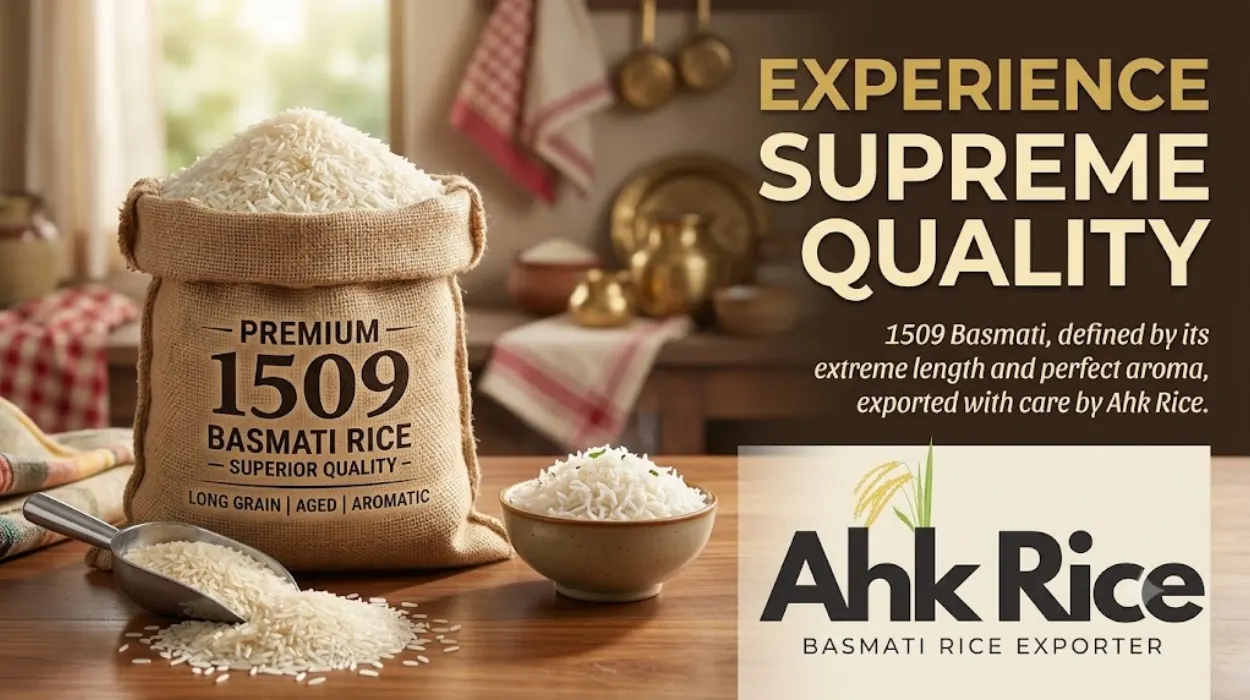
1509 White Basmati Rice Quality Controls and Shipping Schedules
1509 White Basmati Rice has become one of the most traded long-grain aromatic rice varieties from Pakistan because it combines attractive grain length, strong cooking performance, and cost efficiency. Buyers in Africa, the Middle East, Europe, and food-service markets frequently compare suppliers based on quality assurance procedures rather than price alone. A shipment that arrives with excessive moisture, inconsistent grain size, or documentation errors can create greater losses than a small difference in cost per metric ton.
For importers evaluating sourcing options, understanding the relationship between quality controls, grading standards, and export logistics is essential. If you are still exploring how this variety is grown, processed, and graded, readers can first review our educational guide on understanding Pakistan’s premium aromatic rice supply chain before evaluating supplier performance and export readiness.
The first mention of 1509 White Basmati Rice should also be evaluated alongside a supplier’s export capabilities, processing systems, and documentation procedures because these factors directly affect shipment reliability and customer satisfaction. AHK Rice, a Punjab-based exporter, uses end-to-end processing, quality verification, and export documentation systems designed for international buyers.
Specification Comparison Table: 1509 White Basmati Rice Export Standards
| Attribute | Export Grade A | Commercial Grade |
|---|---|---|
| Grain Length | Extra Long | Long |
| Moisture Content | Below 14% | Up to 15% |
| Broken Grains | Less than 2% | Up to 5% |
| Foreign Matter | Near Zero | Limited Tolerance |
| Color Consistency | Uniform White | Moderate Variation |
| Packaging Quality | Export Standard | Basic Commercial |
| Inspection Process | Internal + Third Party | Internal Only |
Export-focused buyers generally prefer Grade A specifications because they reduce complaints, improve shelf presentation, and minimize inventory losses. Exporters commonly test moisture, breakage percentage, grain uniformity, and cleanliness before container loading.
What Quality Controls Are Applied to 1509 White Basmati Rice Before Export?
The most effective quality-control systems combine paddy selection, cleaning, grading, polishing, moisture testing, sorting, laboratory analysis, packaging verification, and pre-shipment inspection to ensure every export lot meets agreed specifications and destination-country requirements.
Quality control starts long before rice reaches the export warehouse. The process begins with procurement of suitable paddy from approved growing regions in Punjab. Paddy quality influences grain length, aroma retention, milling recovery, and final appearance.
Modern rice mills use multiple cleaning stages to remove dust, stones, immature grains, and foreign particles. After cleaning, advanced sorters classify grains according to size and quality requirements.
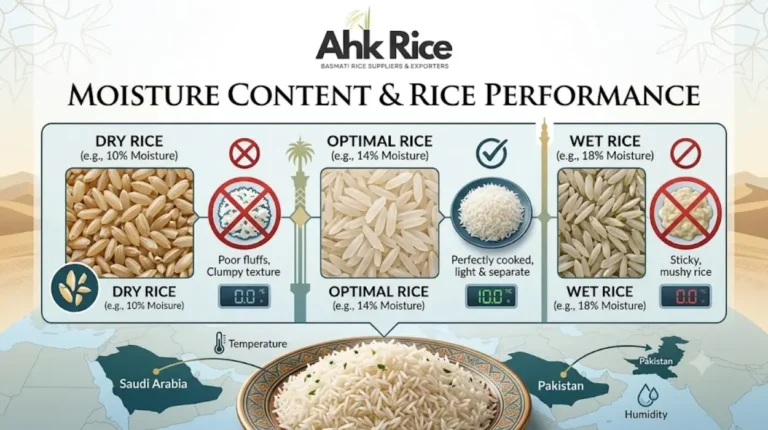
Moisture testing remains one of the most important control points. Rice exported with excessive moisture faces a higher risk of spoilage, mold development, and quality deterioration during ocean transport. Many exporters maintain moisture levels below 14% for export shipments.
Laboratory checks often verify:
- Moisture percentage
- Broken grain percentage
- Grain length
- Whiteness level
- Foreign matter content
- Purity level
- Cooking performance
Third-party inspection agencies such as SGS may conduct independent verification before shipment. This additional inspection layer increases buyer confidence and supports dispute prevention.
The Trade Development Authority of Pakistan also supports authenticity verification systems for Basmati exports through traceability and inspection procedures where required.
What Are the Available Solutions for Managing Rice Export Quality?
Importers generally choose between supplier self-inspection, third-party inspection, or comprehensive quality-assurance programs that combine internal controls with independent verification before shipment.
Different exporters use different quality-management approaches.
Solution 1: Supplier Self-Inspection
The exporter performs all inspections internally.
Advantages:
- Faster processing
- Lower costs
- Faster shipment release
Limitations:
- Reduced transparency
- Higher dependency on supplier integrity
Solution 2: Third-Party Inspection
Independent agencies inspect goods before shipment.
Advantages:
- Objective verification
- Reduced disputes
- Greater buyer confidence
Limitations:
- Additional inspection costs
- Slightly longer processing timeline
Solution 3: Integrated Quality Assurance
This combines internal quality control, laboratory testing, traceability documentation, and third-party inspection.
Advantages:
- Maximum transparency
- Consistent shipment quality
- Better compliance with import regulations
Limitations:
- Higher operational costs
- More documentation requirements
For large distributors and importers, integrated quality assurance generally delivers the best long-term results.
How Do Different Shipping Approaches Compare?
Containerized export shipments with documented scheduling, inspection checkpoints, and complete export paperwork provide the highest reliability compared with ad hoc shipping arrangements that prioritize speed over process control.
Export logistics influence both product quality and commercial performance.
Standard Export Schedule
A typical shipment process includes:
- Order confirmation
- Sample approval
- Production scheduling
- Quality inspection
- Packaging
- Documentation
- Container loading
- Vessel booking
- Ocean transit
Many exporters complete production and quality preparation within approximately 7–10 days before shipment, while complete export cycles commonly range from 4–6 weeks depending on destination and vessel schedules.
Shipping Method Comparison
| Factor | Planned Export Schedule | Reactive Shipment Model |
|---|---|---|
| Quality Consistency | High | Moderate |
| Documentation Accuracy | High | Variable |
| Transit Reliability | High | Moderate |
| Buyer Visibility | High | Limited |
| Supply Continuity | Strong | Inconsistent |
The planned export model is preferred by importers operating wholesale, retail, and food-service distribution networks.
Which Export Markets Have Different Grade Preferences?
Middle Eastern buyers often prioritize appearance and aroma, while African markets frequently balance quality and pricing, creating different preferences for grading specifications and packaging formats.
Middle East Market Preferences
Countries across the Gulf region typically prioritize:
- Long grain appearance
- Bright white color
- Premium packaging
- Low broken percentage
- Strong cooking elongation
These buyers often request stricter specifications and premium-grade lots.
African Market Preferences
African importers frequently focus on:
- Value per metric ton
- Consistent supply
- Reliable cooking performance
- Bulk packaging options
While quality remains important, purchasing decisions often emphasize the balance between specification and landed cost.
These differences explain why exporters maintain multiple grades and packaging configurations for different destination markets.
How Do Price Per Metric Ton and Shelf Life Affect Purchasing Decisions?
The best purchasing decisions consider total landed value rather than the lowest initial price because quality deviations, storage losses, and customer complaints often create greater costs than price differences between suppliers.
Price Comparison Considerations
Price per metric ton is influenced by:
- Crop year
- Grain length
- Broken percentage
- Moisture content
- Packaging requirements
- Inspection requirements
- Destination market
Premium export-grade rice typically commands higher prices because of stricter processing standards and lower defect rates.
Shelf Life Comparison
| Factor | Premium Export Grade | Commercial Grade |
|---|---|---|
| Storage Stability | Excellent | Good |
| Packaging Protection | High | Moderate |
| Moisture Control | Strict | Standard |
| Shelf Life | 12–24 Months | 12 Months+ |
Many export-quality rice products maintain shelf life ranging from 12 to 24 months when stored correctly in cool, dry environments.
Longer shelf stability benefits wholesalers, distributors, and retailers carrying larger inventories.
Which Method Works Best for Different Buyer Types?

The most suitable quality-control and shipping strategy depends on shipment volume, distribution model, destination regulations, and the buyer’s risk tolerance rather than on a single universal standard.
Food-Service Distributors
Best option:
- Grade A quality
- Third-party inspection
- Standard export schedule
Retail Brands
Best option:
- Custom packaging
- Integrated quality assurance
- Full documentation
Wholesalers
Best option:
- Flexible grading options
- Bulk packaging
- Scheduled container programs
Government and Institutional Buyers
Best option:
- Independent inspection
- Traceability documentation
- Formal compliance certificates
Each buyer category values different aspects of the supply chain.
What Are the Pros and Cons of Strict Export Quality Systems?
Comprehensive quality systems improve consistency and reduce commercial risk, although they require additional testing, documentation, and operational investment from exporters.
| Pros | Cons |
|---|---|
| Lower complaint rates | Higher processing costs |
| Better market reputation | More documentation |
| Stronger buyer confidence | Longer preparation time |
| Better inventory performance | Additional inspections |
| Reduced shipment disputes | Higher operational complexity |
What Decision Factors Should Importers Evaluate Before Selecting a Supplier?
The strongest supplier evaluation framework combines quality metrics, inspection systems, logistics performance, documentation capability, and long-term supply reliability rather than focusing solely on price.
Decision Framework
| Evaluation Factor | Why It Matters |
|---|---|
| Quality Specifications | Defines shipment consistency |
| Inspection Process | Reduces disputes |
| Export Experience | Improves reliability |
| Documentation Accuracy | Prevents customs delays |
| Shipping Performance | Supports inventory planning |
Importers should request:
- Product specifications
- Laboratory reports
- Sample approval process
- Packaging options
- Shipment schedules
- Export documentation list
Suppliers that provide complete visibility across these areas typically deliver stronger long-term performance.
Frequently Asked Questions
What moisture level is preferred for export-quality 1509 White Basmati Rice?
Most export programs target moisture levels below 14% because lower moisture improves storage stability and reduces the risk of quality deterioration during transportation and warehousing.
Why is third-party inspection important?
Third-party inspections provide independent verification of quality specifications, helping importers reduce commercial risk and avoid disputes related to grain quality or shipment compliance.
How long does a typical export shipment take?
Many exporters complete production, inspection, documentation, and shipping preparation within several weeks, while full export cycles commonly range from four to six weeks depending on destination and vessel schedules.
Which regions buy the most 1509 White Basmati Rice?
The variety is widely demanded across Middle Eastern, African, and international food-service markets because of its balance between grain quality and commercial value.
What certifications are commonly requested?
Buyers frequently request phytosanitary certificates, certificates of origin, inspection reports, and export documentation supporting food safety and trade compliance.