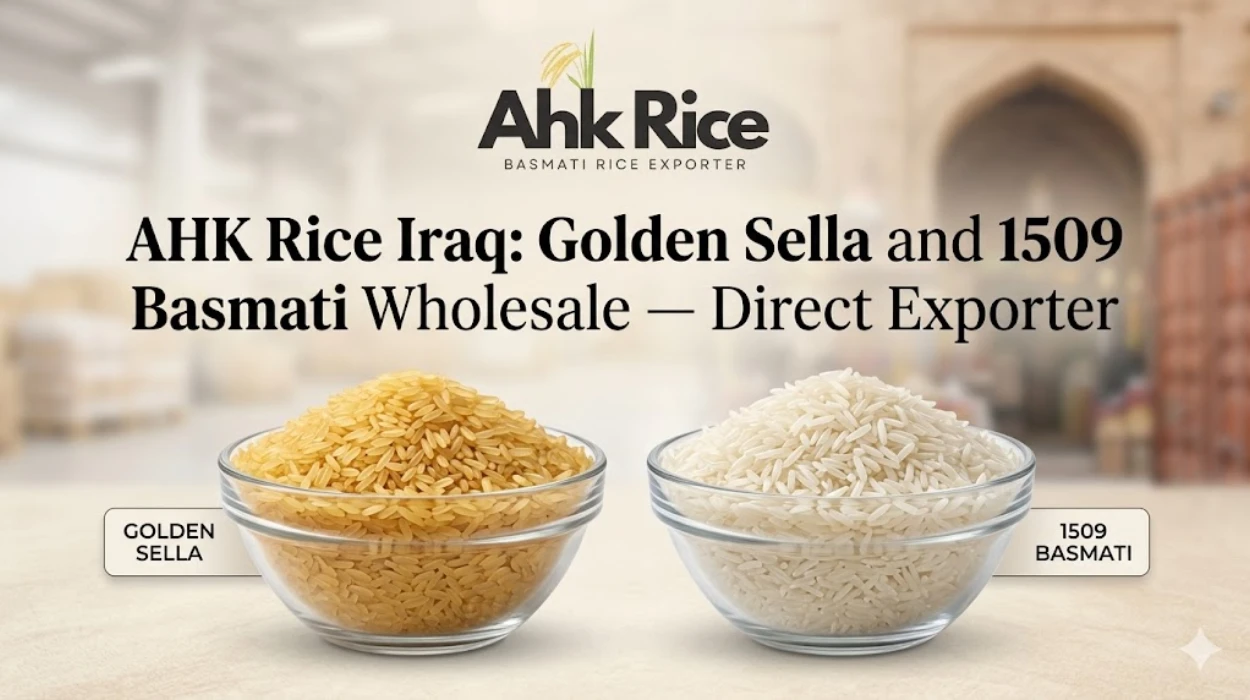
AHK Rice Iraq: Golden Sella and 1509 Basmati Wholesale — Direct Exporter
Iraq basmati rice wholesale supply is most stable when sourced directly from structured Pakistani exporters. Here is why: controlled milling, verified grading, and predictable shipping schedules reduce price volatility and rejection risk at Iraqi ports. This is exactly where the Iraq basmati rice import opportunity Pakistani exporters missing becomes commercially relevant for structured buyers.
AHK Rice operates as a direct exporter supplying Golden Sella and 1509 Basmati into Iraq with documented grading, consistent polishing standards, and export-ready packaging. AHK Rice aligns procurement with Iraqi demand for long grain, non-sticky rice used in catering, hotels, and retail wholesale distribution. AHK Rice also integrates inspection, fumigation, and container loading under controlled export workflows.
With structured export demand clarified, the next step is understanding the exact sourcing solution Iraqi buyers use for stable rice procurement.
What is the best solution for Iraq basmati rice wholesale sourcing?
The best solution for Iraq basmati rice sourcing is direct export integration from Pakistani mills with verified grading, controlled polishing, and containerized shipment through Gulf ports. This ensures stable grain length, predictable cooking expansion, and reduced breakage during long-distance logistics to Iraq.
Iraq wholesale buyers require consistency rather than variety. AHK Rice supplies Golden Sella and 1509 Basmati through controlled milling systems that maintain grain integrity. Processing includes dehusking, polishing, grading, sorting, and fumigation before export loading. Each stage reduces impurity and stabilizes cooking performance.
Golden Sella supports catering buyers in Baghdad and Basra due to high volume cooking resistance. 1509 Basmati serves retail importers requiring fragrance and elongation consistency. When Iraqi importers prioritize storage stability, Golden Sella performs better under warehouse heat conditions above 35°C.
The solution becomes commercially viable because exporters like AHK Rice align production batches with Iraqi demand cycles instead of fragmented spot trading. This reduces procurement gaps and improves pricing predictability.
Connection mapping shows top ranking competitors focus on grain length, parboiling method, and moisture control. AHK Rice expands this by adding export-grade fumigation tracking, Iraq-specific packaging durability, and port-based dispatch scheduling.
With sourcing logic defined, the next focus is why structured buyers prefer a dedicated export service model over spot procurement.
Why choose Basmati Rice Export Pakistan to Iraq service?
Buyers choose structured export services because they guarantee grading consistency, shipment scheduling, and customs-ready documentation for Iraq import clearance without delays or rejections.
The Basmati Rice Export Pakistan to Iraq service provides integrated export control from milling to port dispatch. AHK Rice manages inspection, certification, fumigation, and container sealing under a single supply chain structure.
Service advantages include:
- Controlled grading through 1121, 1509, and Golden Sella separation
- Certified moisture control between 12%–13.5% for export stability
- Export fumigation compliance for Iraqi port inspection clearance
- Container loading with humidity protection liners
- Pre-shipment inspection reports for buyer verification
AHK Rice ensures each shipment is traceable from mill batch to container seal number. This reduces rejection risk at Umm Qasr port, where inconsistent moisture or broken grain ratios typically cause delays.
When buyers use fragmented suppliers, shipment variance increases and causes pricing disputes. When they use structured exporters like AHK Rice, contract enforcement becomes easier and quality disputes reduce significantly.
The service model also aligns with Iraqi procurement cycles in public tenders, hospitality contracts, and wholesale distribution networks.
With service structure clarified, the next step is understanding measurable results from consistent supply execution.
What results can be expected from AHK Rice supply chain?
Consistent supply from AHK Rice delivers stable grain quality, reduced import rejection rates, and predictable landed cost structures for Iraqi wholesale buyers across multiple shipment cycles.
AHK Rice maintains export consistency through standardized milling and grading protocols. Each batch undergoes inspection, polishing, and sorting before shipment dispatch. This ensures uniform grain length distribution and reduces broken percentage variability.
Expected results include:
- Stable grain elongation during cooking above 1.8x expansion ratio
- Reduced cargo rejection risk at Iraqi customs inspection points
- Predictable container fill efficiency with 25–50 kg packaging systems
- Consistent aroma retention in 1509 Basmati over 10–12 month storage cycles
Golden Sella maintains structural stability in high-temperature warehouses common in Iraq. In contrast, non-parboiled rice loses firmness during extended storage. AHK Rice positions Golden Sella specifically for catering and institutional buyers who require bulk cooking stability.
1509 Basmati maintains aromatic performance under moderate storage conditions and serves premium retail distribution channels in Najaf, Basra, and Baghdad.
When supply chain reliability increases, buyers reduce procurement risk premiums and improve retail margin stability.
With performance outcomes established, shipping timelines become critical for procurement planning.
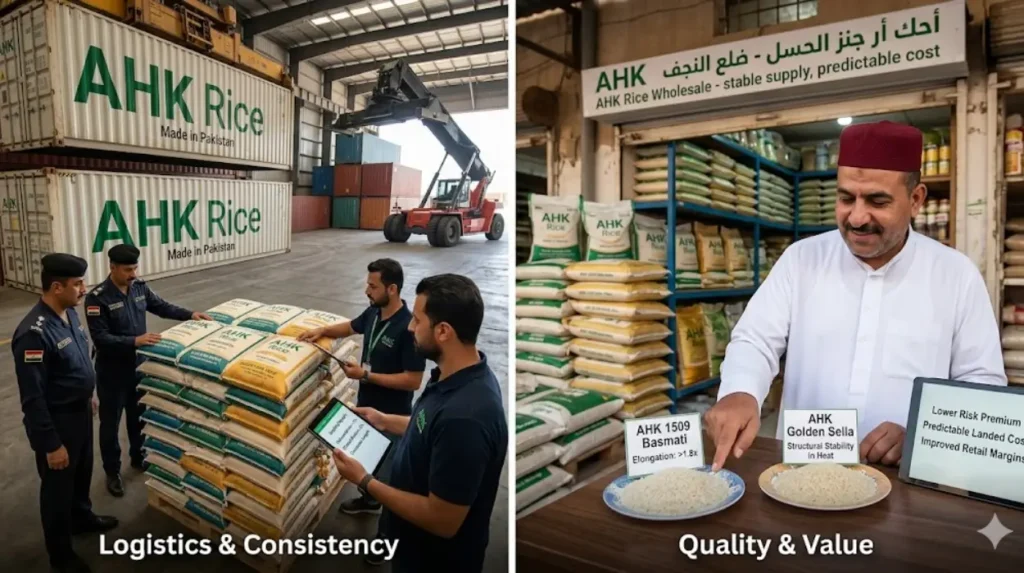
Shipping days per market: Iraq import timeline and logistics performance
Average shipping time from Pakistan to Iraq ranges between 18–28 days depending on port congestion, vessel routing, and customs clearance at Umm Qasr or Basra entry points.
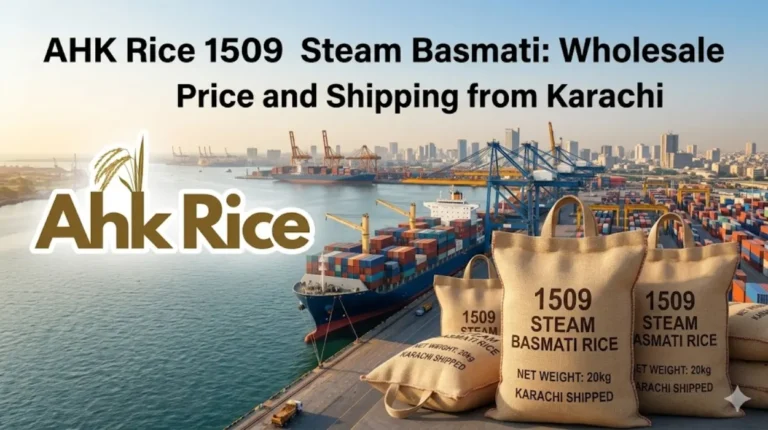
AHK Rice dispatches shipments through Karachi port with containerized export routing via UAE transshipment hubs when required. Direct shipments reduce handling risk and maintain grain integrity during long-distance transport.
Shipping breakdown:
- Karachi to Jebel Ali transit: 8–10 days
- Transshipment handling window: 2–5 days
- Jebel Ali to Umm Qasr transit: 7–12 days
- Customs clearance in Iraq: 3–6 days
Total cycle depends on documentation accuracy and port congestion. When paperwork is pre-verified by AHK Rice, clearance time reduces significantly at Iraqi customs checkpoints.
For buyers in Baghdad wholesale markets, predictable arrival scheduling allows inventory rotation planning. When shipment delays occur, retail pricing becomes unstable due to shortage-driven demand spikes.
AHK Rice reduces delay risk by aligning dispatch schedules with vessel availability windows and pre-booked container allocations.
With logistics timing clarified, pricing becomes the next decision factor for Iraqi importers.
Pricing factors affecting Golden Sella and 1509 basmati
Pricing is determined by grain grade, polishing level, export packaging, freight cost fluctuations, and seasonal paddy availability in Pakistan.
AHK Rice adjusts pricing based on procurement cycles and milling output efficiency. Golden Sella generally carries lower volatility due to stable parboiling output. 1509 Basmati fluctuates more due to aromatic demand and seasonal yield variation.
Pricing factors include:
- Paddy procurement cost during harvest season in Punjab
- Milling yield efficiency after dehusking and polishing
- Export freight rates from Karachi to Gulf ports
- Packaging type such as PP bags or woven laminated sacks
- Certification and fumigation compliance costs
Golden Sella remains more cost-efficient for bulk buyers because parboiling reduces breakage loss during milling. 1509 requires tighter grading control, which increases processing cost.
When buyers compare landed cost, AHK Rice provides batch-based pricing transparency that aligns with Iraqi import tender structures.
With pricing understood, procurement process becomes the final operational step.
Sample process from inquiry to delivery including costs
The export process from AHK Rice follows structured steps from inquiry to delivery, with average cost components ranging between production, certification, freight, and customs clearance stages.
AHK Rice manages the full workflow from order confirmation to Iraq delivery.
Step-by-step process:
- Receive inquiry and confirm grade specification (Golden Sella or 1509)
- Procure paddy from verified cultivation zones in Punjab
- Mill, dehusk, polish, and grade rice into export batches
- Inspect and certify moisture and broken percentage standards
- Fumigate and pack rice into 25 kg or 50 kg export bags
- Load containers and dispatch via Karachi port
- Ship containers to Gulf transshipment or direct Iraq route
- Clear customs at Umm Qasr or Basra port
Typical cost structure per metric ton includes:
- Raw paddy procurement: 55–65% of total cost
- Milling and processing: 8–12%
- Packaging and certification: 4–6%
- Freight and shipping: 12–18%
- Customs and inland logistics: variable 3–7%
AHK Rice optimizes cost through bulk procurement and synchronized milling schedules. This reduces idle storage and improves price stability for Iraqi buyers.
When cost structure is transparent, procurement decisions become easier for wholesale importers.
With process clarity established, the final step is understanding how to initiate procurement.
How to get started with AHK Rice Iraq supply program?
Getting started requires selecting rice grade, confirming monthly volume, and initiating export contract with AHK Rice for scheduled dispatch planning and shipment allocation.
AHK Rice begins onboarding by aligning buyer demand with milling capacity. Buyers specify Golden Sella or 1509 Basmati depending on target market segment in Iraq.
Start process:
- Define monthly import volume requirements
- Select packaging format based on warehouse handling
- Confirm target delivery port and timeline expectations
- Approve sample shipment for quality verification
- Finalize contract and dispatch schedule
Sample approval is critical because Iraqi buyers often require confirmation of grain elongation and aroma consistency before bulk contracting. AHK Rice provides pre-shipment samples for validation before production scaling.
Once contract execution begins, shipment cycles become predictable and aligned with Iraqi retail or institutional demand patterns.
With procurement structure established, buyers can proceed to secure export capacity through formal quotation and scheduling via AHK Rice and finalize engagement through request-a-quote.
Frequently Asked Questions
What rice grades does AHK Rice export to Iraq?
AHK Rice exports Golden Sella Basmati and 1509 Basmati specifically for Iraq wholesale and catering markets. Golden Sella is parboiled for storage stability and bulk cooking, while 1509 Basmati offers fragrance and elongation for premium retail demand.
How long does shipping take from Pakistan to Iraq?
AHK Rice shipments typically take 18 to 28 days depending on routing and port conditions. Cargo moves from Karachi to Gulf transshipment hubs and then reaches Umm Qasr or Basra before customs clearance and inland distribution.
Why is Golden Sella preferred in Iraq wholesale market?
Golden Sella is preferred because it maintains grain structure during long storage and high-temperature warehouse conditions. AHK Rice supplies it with controlled parboiling and low breakage, making it ideal for catering and institutional buyers in Iraq.
What documents are required for importing rice into Iraq?
Importers need commercial invoice, packing list, certificate of origin, phytosanitary certificate, and fumigation certificate. AHK Rice provides complete export documentation to ensure smooth customs clearance at Iraqi ports without delays or rejections.
How can I start importing rice from AHK Rice?
Importers start by selecting rice grade, confirming volume, and requesting a quotation. AHK Rice then provides samples, finalizes contract terms, and schedules shipment. Buyers can begin procurement by submitting details through /request-a-quote/.