Why Does Shipment Preparation Matter for Northern Ireland Food Buyers?
Shipment preparation matters because correct rice specification, secure packing, accurate documents, compliant labelling, and controlled container loading determine whether a Basmati rice consignment reaches Northern Ireland ready for inspection, clearance, and sale. Here is why: each preparation stage connects product quality with import compliance.
Northern Ireland food buyers source rice from global suppliers, including Pakistan. Basmati rice is a long-grain aromatic rice classified by grain characteristics and processing state. UK guidance recognises Basmati as a long-grain rice that can be white or brown.
What is shipment preparation for Northern Ireland food buyers?
Shipment preparation is the controlled process of specifying, testing, packing, documenting, loading, sealing, and dispatching food before import arrival. Each stage creates evidence that connects the physical rice with its declared specification and destination requirements.
Shipment preparation starts before container loading. The exporter confirms the rice variety, processing grade, packaging format, quantity, batch identity, and destination. The exporter then verifies quality parameters and prepares commercial and transport documentation.
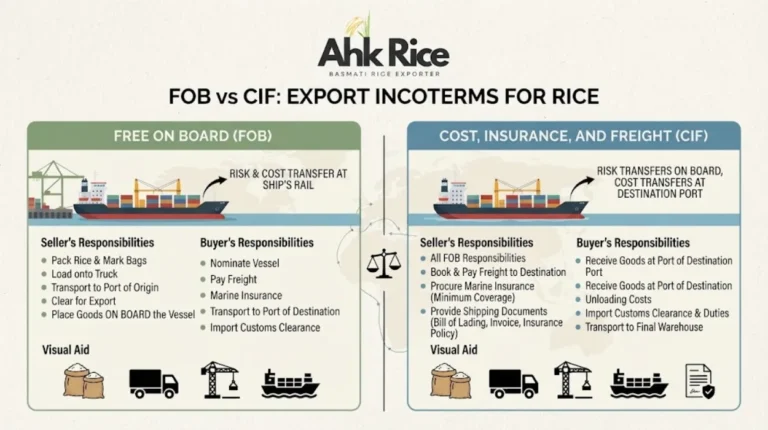
Northern Ireland follows specific import arrangements because its food supply operates within the Windsor Framework. Food entering Northern Ireland from outside the UK has requirements that differ according to product type and destination. The Food Standards Agency provides dedicated guidance for Northern Ireland imports.
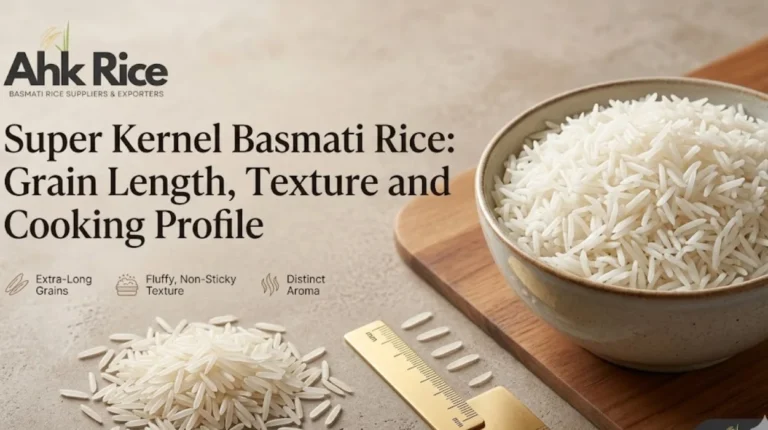
Rice is classified according to factors such as grain length and length-to-width ratio. UK classification guidance identifies long-grain rice as grain exceeding 6.0 mm. Basmati also has recognised varieties and specific customs classification considerations.
Shipment preparation therefore connects three entities: the rice product, the export shipment, and the Northern Ireland importer. A mismatch between these entities creates documentation, inspection, or receiving problems.
With the shipment definition established, the next question is how the preparation sequence works from rice selection to container dispatch.
How does shipment preparation work from Pakistan to Northern Ireland?
Shipment preparation follows a defined sequence: select rice, mill it, grade it, test it, pack it, document it, load it, seal it, and dispatch it. The sequence keeps product identity, quality evidence, packaging, and logistics records connected.
How is Basmati rice prepared before packing?
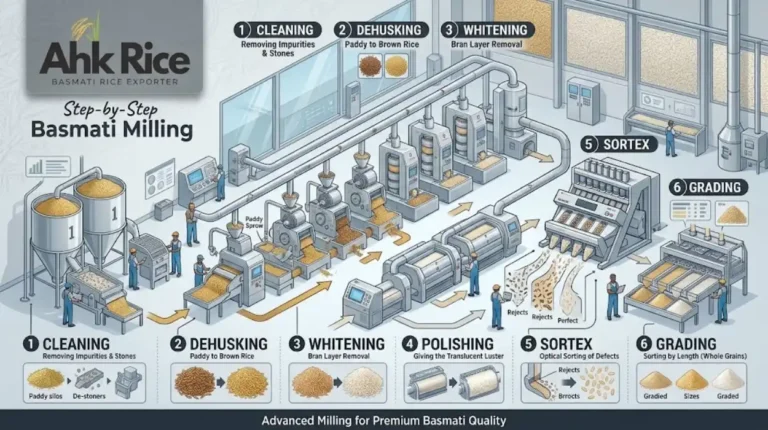
Basmati rice begins as paddy cultivated in agricultural regions of Pakistan. After harvesting, the paddy enters processing operations that remove unwanted material and prepare edible rice.
The processing sequence includes:
- Clean the paddy to remove stones, dust, straw, and other foreign material.
- De-husk the grain to remove the outer husk.
- Polish the grain according to the required rice grade.
- Grade the rice according to grain characteristics and processing requirements.
- Sort the grain using mechanical and optical sorting equipment.
- Remove defective grains according to the agreed specification.
- Test the rice for relevant quality parameters.
- Pack the rice into the selected food-grade packaging.
- Prepare the shipment using the verified batch and documentation records.
AHK Rice supplies Pakistani Basmati varieties including 1121, Super Kernel, and 1509. Available processing grades include 1121 Steam, 1121 White, 1121 Golden Sella, 1121 Creamy Sella, 1121 Brown, Super Kernel Steam, Super Kernel White, Super Kernel Sella, Super Kernel Parboiled, 1509 White, 1509 Golden Sella, and 1509 Steam.
How does packaging affect shipment preparation?
Packaging protects rice from contamination, moisture exposure, handling damage, and product identification errors. Common commercial formats include 5 kg, 10 kg, 20 kg, 25 kg, and 40 kg bags, depending on the buyer specification.
Packaging also carries product information. The label connects the rice variety, net weight, batch information, origin, and other required information with the physical product.
Northern Ireland buyers must also distinguish retail goods from other commercial food movements. The Windsor Framework introduced specific arrangements for certain retail food entering Northern Ireland, including labelling requirements for applicable goods.
The preparation process therefore protects both the rice and the identity of the shipment.
With processing and packing established, the next issue is the documentation and compliance evidence attached to the container.
What documents and certifications apply to Basmati rice shipments?

Core shipment records include commercial documentation, product specifications, packing information, transport records, and applicable conformity or regulatory documents. The exact documents depend on the rice classification, destination, importer status, packaging, and applicable UK requirements.
Which documents support customs clearance?
Customs documentation identifies the goods, value, quantity, origin, classification, and commercial parties. Rice classification uses commodity codes, while customs procedures depend on the movement route and applicable tariff treatment.
The UK Integrated Online Tariff determines applicable duty requirements for agricultural goods entering Northern Ireland. Goods entering Northern Ireland from outside the UK and EU can receive different duty treatment depending on whether they are considered at risk of onward movement into the EU.
Current tariff treatment also changes over time. HMRC updated measures affecting specified rice commodity codes in December 2025. The update changed certain third-country duty rates and removed the previous Certificate of Authenticity B requirement for specified commodity codes.
This demonstrates why shipment preparation requires current tariff verification rather than relying on an old document checklist.
Which quality certifications support buyer verification?
Certification demonstrates that a defined process, product, or management system meets a stated requirement. Common food-sector certifications include HACCP-based food safety systems, ISO 22000, BRCGS, Halal certification, and laboratory test reports, depending on the supplier and buyer specification.
Certification does not replace product testing. A certification covers a defined system or scope. A laboratory report provides analytical evidence for a particular sample or batch.
Northern Ireland buyers should therefore match each certificate with the product, facility, certification scope, and shipment requirement.
With documentation established, the next question is why physical container preparation matters after the paperwork is complete.
What are the key components of a prepared rice shipment?
A prepared rice shipment contains five connected components: product specification, quality evidence, packaging, documentation, and container logistics. Each component supports a different stage of receiving, inspection, customs clearance, storage, or commercial sale.
What product specifications should buyers confirm?
Product specifications identify the exact rice being purchased. Relevant fields include variety, processing grade, grain appearance, broken percentage, moisture, foreign matter, crop information, packaging, and net weight.
For example, a specification for 1121 Golden Sella identifies a parboiled Basmati processing grade rather than simply stating “Basmati rice.” A specification for 1509 White identifies a different variety and processing state.
The specification becomes the reference point for testing and receiving inspection.
What container controls protect the shipment?
Container controls include container cleanliness, structural condition, loading pattern, pallet or bag arrangement, product protection, seal identification, and loading records.
A clean container reduces contamination risk. A correct loading pattern reduces movement during transport. A documented seal number creates a physical reference between the loaded container and transport documentation.
The container therefore functions as both a transport unit and a controlled shipment environment.
What are the benefits of correct shipment preparation?
Correct preparation reduces specification disputes, documentation errors, loading problems, inspection delays, receiving discrepancies, and product-quality risks. It also gives buyers a traceable record connecting the approved specification with the shipped batch.
How does preparation improve traceability?
Traceability connects the shipment to identifiable records. These records can include batch numbers, packing dates, product specifications, laboratory reports, invoices, packing lists, container numbers, and seal numbers.
A buyer receiving 25 kg bags of 1121 White can compare the physical product with the declared batch and shipment records. This creates a structured receiving process.
How does preparation support compliance?
Compliance depends on meeting the rules that apply to the specific movement. The Food Standards Agency separates guidance for imports into Great Britain from guidance covering Northern Ireland.
Food of non-animal origin also has specific Northern Ireland procedures. The FSA states that requirements depend on the food type, trader status, and checks applying to the movement.
Preparation gives the importer the information required to apply the correct procedure.
With the benefits defined, the next section shows where shipment preparation becomes especially important for Northern Ireland buyers.
Where do Northern Ireland buyers use shipment preparation controls?
Northern Ireland wholesalers, retailers, foodservice distributors, manufacturers, and catering suppliers use shipment controls to manage rice purchasing, receiving, storage, and onward distribution. Each channel requires accurate product identification and dependable shipment records.
How do wholesalers use shipment preparation?
Wholesalers need consistent specifications across multiple deliveries. A shipment record helps compare batches by variety, grade, packaging, quantity, and quality results.
For example, a wholesaler sourcing 1121 Golden Sella in 25 kg bags needs the same declared product specification across repeated containers.
How do retailers use shipment preparation?
Retailers require accurate packaging and product information because consumer-facing bags must match the declared product. Packaging also needs to support traceability and applicable labelling rules.
Northern Ireland’s retail movement framework contains specific requirements for applicable retail goods. The current rules distinguish goods intended for the Northern Ireland market from goods entering the EU market.
How do foodservice buyers use shipment preparation?
Foodservice buyers focus on cooking performance, consistency, pack size, availability, and receiving controls. Large bags such as 20 kg and 40 kg formats support commercial kitchens and catering operations.
A defined specification helps foodservice operators procure the same rice grade across repeated orders.
These use cases show why preparation extends beyond customs and directly affects commercial receiving.
What common shipment preparation problems affect rice buyers?
Common problems include incorrect commodity codes, mismatched documents, wrong packaging details, incomplete batch records, unsuitable container loading, and inconsistent product specifications. Each problem creates a different operational consequence for the importer.
What happens when documents do not match the cargo?
Document mismatches create questions about quantity, product identity, origin, classification, or commercial value. A packing list showing one quantity while the container contains another creates a receiving discrepancy.
Accurate documents should therefore match the physical cargo before dispatch.
What happens when buyers use outdated import information?
Outdated information creates incorrect assumptions about tariffs, certificates, labelling, or movement procedures. HMRC’s December 2025 rice tariff update demonstrates that import requirements can change.
Buyers should verify current requirements before every shipment rather than copying documents from an earlier consignment.
What is a common misconception about shipment preparation?
A common misconception is that shipment preparation starts when the container reaches the port. Preparation actually begins with product specification and continues through processing, testing, packing, documentation, loading, sealing, and dispatch.
Northern Ireland buyers therefore evaluate the shipment as a complete chain rather than as a container alone.
What should Northern Ireland buyers check before accepting a Basmati rice shipment?
Buyers should verify the rice variety, processing grade, specification, test evidence, packaging, quantity, batch identity, documents, container details, and applicable Northern Ireland import requirements before acceptance.
A practical receiving check starts with the shipment documents. The buyer compares the invoice, packing list, product specification, container number, seal number, and quantity.
The buyer then checks the physical packaging. Bag markings, product name, net weight, batch information, and packaging condition should correspond with the approved specification.
Quality verification follows the agreed parameters. Buyers can review laboratory reports and conduct receiving inspections according to their internal quality procedures.
The final check concerns regulatory status. Northern Ireland food movements require the buyer to apply the rules relevant to the product and route. The FSA provides dedicated Northern Ireland import guidance and separates requirements by food category.
For a detailed explanation of the next logistical stage, the contextual article how Basmati rice containers are prepared before UK arrivalfits naturally after this section.
Frequently Asked Questions about rice shipment preparation?
Why does container preparation matter for Basmati rice?
Container preparation protects the shipment during transport and creates a controlled connection between the physical cargo, seal, documents, and receiving records.
What Basmati rice varieties does AHK Rice supply?
AHK Rice supplies 1121, Super Kernel, and 1509 Pakistani Basmati varieties, with multiple processing grades including White, Steam, Sella, Golden Sella, Creamy Sella, and Brown formats.
Does Northern Ireland use the same import rules as Great Britain?
Northern Ireland has dedicated food import arrangements. The Food Standards Agency provides separate guidance for imports into Northern Ireland and Great Britain.
Which documents should a rice importer verify?
The importer should verify the commercial invoice, packing list, product specification, transport records, applicable customs information, certificates, laboratory reports, and shipment identifiers.
Why should rice buyers verify commodity classification?
Commodity classification determines the customs treatment applied to the product. Rice classification considers factors including processing state, grain characteristics, and applicable commodity codes.
Which certifications apply to Basmati rice?
Applicable certifications depend on the buyer specification and supply chain. Common examples include HACCP-based systems, ISO 22000, BRCGS, Halal certification, and laboratory testing.