AHK Rice Supports Louisiana Buyers with Efficient Export Logistics
Louisiana rice buyers need more than a competitive FOB quotation. They need dependable Pakistani Basmati specifications, coordinated export documentation, realistic ocean transit planning, and a delivery route that connects the origin mill with the Gulf Coast efficiently. For importers serving New Orleans, Baton Rouge, Lafayette, Shreveport, and wider U.S. distribution networks, logistics performance directly affects landed cost, inventory availability, and customer fulfilment.
For buyers evaluating why port operations influence rice procurement, understanding:
How port logistics influence rice import performance provides the operational foundation. The commercial decision is then straightforward: select an exporter that controls production, quality verification, documentation, container preparation, and shipment coordination rather than treating ocean freight as a separate purchasing problem.
In 2026, U.S. rice import demand remains significant. USDA’s August 2026 Rice Outlook projects U.S. 2026/27 rice imports at a record 49.8 million hundredweight, while total U.S. rice supplies remain below the previous year’s level. This creates a stronger commercial case for importers to secure predictable supply arrangements instead of relying on emergency purchases.
What is the best solution for Louisiana rice buyers?
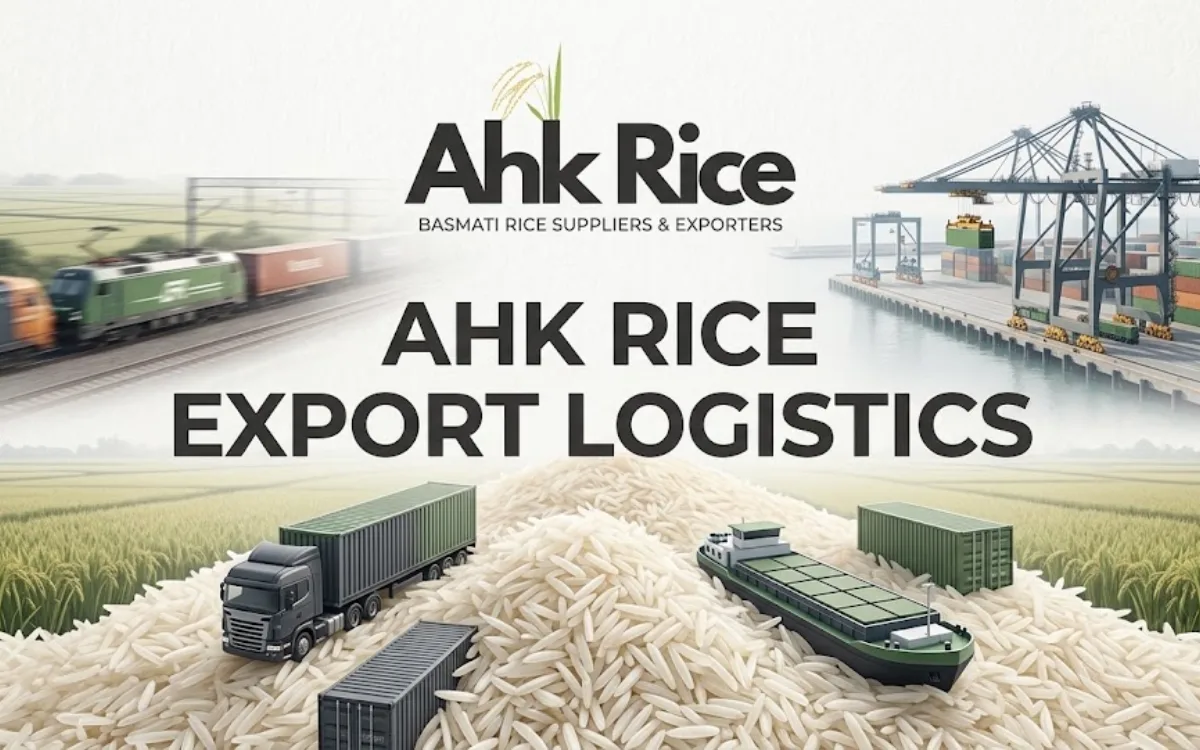
The best solution is an integrated Pakistan-to-Louisiana supply model combining defined rice specifications, controlled milling, export documentation, container planning, ocean freight coordination, and destination delivery scheduling to reduce avoidable delays and improve landed-cost visibility.
Louisiana buyers sourcing Pakistani Basmati typically need a supplier that manages more than the rice itself. The shipment must move through several connected stages before reaching a warehouse or distributor.
The process begins with product selection. The buyer confirms variety, grade, grain length, moisture specification, broken percentage, packing format, quantity, destination port, and Incoterm. These details determine production requirements and the commercial quotation.
AHK Rice supplies Pakistani Basmati varieties including 1121, Super Kernel, and 1509 from Punjab. Its USA export operation supports custom packaging, third-party inspection, export documentation, and container shipment coordination.
For Louisiana, the destination-port decision deserves particular attention. A buyer near New Orleans has different inland economics from a distributor receiving cargo through another U.S. gateway. The most efficient route depends on the final warehouse location, vessel availability, freight quotation, port handling, customs requirements, and inland transportation.
The practical objective is not simply the shortest sailing time. It is the lowest reliable landed cost with a delivery schedule that matches inventory requirements.
Why choose the USA export service for Louisiana procurement?
The USA export service fits Louisiana buyers because it combines Pakistani rice sourcing with processing, grading, packaging, inspection, export documentation, and shipment coordination, giving importers one commercial workflow instead of managing disconnected suppliers.
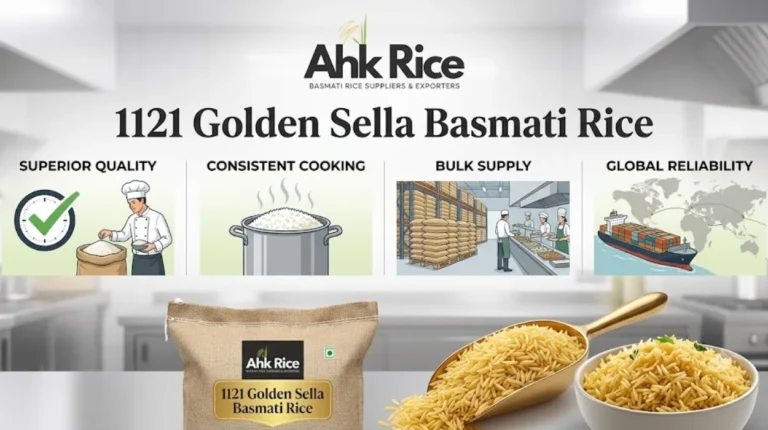
The USA Basmati rice export service is structured for U.S. importers purchasing Pakistani rice in commercial quantities. AHK Rice identifies 1121 Sella, Super Kernel, 1509, and other Basmati options for the American market.
The service supports different commercial packing requirements, including bulk PP bags, jute bags, and customized retail formats. Private-label packaging is also available for buyers building a branded distribution operation.
The operational advantage comes from controlling several stages through one exporter. AHK Rice operates from Punjab and manages paddy sourcing, milling, grading, colour sorting, packaging, documentation, and container loading.
This structure matters for Louisiana buyers because every additional handoff creates another point where specifications, documents, quantities, or timing can diverge.
Quality control is another decision factor. AHK Rice states that pre-shipment inspections can be conducted through internationally recognized organizations such as SGS and Bureau Veritas. Its stated certifications include ISO 22000:2018, HACCP, ISO 9001:2015, GMP, and Halal.
U.S. food imports also carry importer-side compliance responsibilities. FDA states that imported foods must meet applicable U.S. requirements, that facilities handling food generally require FDA registration where applicable, and that prior notice is required for incoming shipments. Imported food is also subject to FDA inspection at U.S. ports.
The exporter therefore needs to provide accurate commercial and shipping documentation while the U.S. importer maintains its own regulatory responsibilities.
How should Louisiana buyers plan shipping days by market?
Louisiana delivery planning requires separating ocean transit from total logistics time because vessel schedules, port handling, customs clearance, and inland trucking add days after the container leaves Karachi and before rice reaches the buyer’s warehouse.
AHK Rice’s current USA guidance gives approximately 25–35 days for door-to-door delivery to major U.S. destinations, while its more recent U.S. market guidance places typical Pakistan-to-USA shipment timing around 30–48 days depending on destination port, production, and logistics conditions.
For Louisiana procurement, buyers need a planning range rather than a single promised arrival date.
| Louisiana supply stage | Practical 2026 planning range |
|---|---|
| Quote and specification confirmation | 1–2 days |
| Sample approval | 5–7 days by courier |
| Production and processing | 5–10 days |
| Inspection and export documents | 3–5 days |
| Container booking and loading | 2–5 days |
| Ocean transit | Route dependent |
| U.S. port clearance and handling | 3–7 days |
| Inland movement to Louisiana | 1–5+ days |
| Total commercial planning window | Approximately 30–48 days |
These ranges are planning figures, not guaranteed arrival dates. Vessel schedules, port congestion, customs examination, blank sailings, weather, equipment availability, and inland transportation affect the final delivery date.
For a Louisiana importer, the final warehouse location also changes the calculation. A New Orleans-area distributor has a shorter inland leg than a buyer shipping cargo onward to a warehouse farther inland.
Port NOLA is also undergoing a major long-term expansion. On August 17, 2026, the U.S. Army Corps of Engineers granted the federal permit for the Louisiana International Terminal, a planned greenfield container port intended to increase Gulf Coast container capacity.
That development is strategically important, but buyers should base current 2026 purchase decisions on currently available port and carrier schedules rather than future capacity.
How does ocean freight planning affect the Louisiana delivery decision?
Ocean freight planning affects the commercial result through transit duration, container availability, destination charges, port selection, inland transport, and timing; comparing these variables before contracting prevents a low FOB price from becoming an expensive landed shipment.
Louisiana buyers should compare the complete logistics chain rather than selecting a supplier solely on rice price.
A practical comparison starts with the FOB quotation. The buyer then adds ocean freight, marine insurance where applicable, destination terminal charges, customs-related costs, broker charges, and inland transportation.
The result is the landed-cost estimate.
A supplier offering rice at a lower FOB price does not automatically offer the lowest delivered cost. A higher-quality grade with better specifications can also produce stronger commercial value if it reduces breakage, customer complaints, or rejected lots.
For buyers comparing freight structures:
Ocean freight planning and rice delivery timelines provides the wider logistics context before a Louisiana shipment is contracted.
AHK Rice also allows buyers to arrange their own freight forwarder if they prefer to control transportation separately. This gives experienced importers flexibility while retaining direct access to the exporter for rice specifications and documentation.
What rice specifications should Louisiana buyers put into the contract?
Louisiana buyers should specify variety, grain length, moisture, broken percentage, processing grade, packaging, quantity, inspection requirements, and documentation before production because precise specifications create measurable quality and procurement controls.
For example, AHK Rice’s USA product information lists 1121 Basmati with an average grain length of 8.3 mm or more, moisture below 12.5%, and broken grains below 1% for the listed specification.
However, buyers should contract against the exact commercial specification quoted for their shipment. Product specifications differ by grade and processing type.
A commercial specification sheet should identify:
| Specification | Buyer decision |
| Variety | 1121, Super Kernel, 1509, or selected grade |
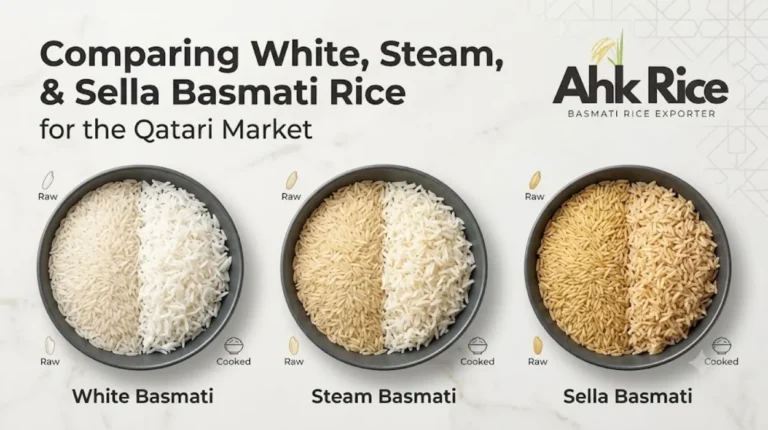
| Processing | White, Steam, Sella, or Golden Sella |
| Grain length | Agreed minimum |
| Broken grains | Agreed maximum |
| Moisture | Agreed maximum |
| Foreign matter | Agreed maximum |
| Packaging | Bulk, retail, or private label |
| Quantity | Metric tons and container count |
| Inspection | Internal or third-party |
| Documentation | Agreed U.S. import documents |
This level of detail reduces disputes because the commercial contract describes the actual product rather than relying on general terms such as “premium Basmati.”
What is the full rice sample process and cost?
A commercial sample process starts with specification confirmation, continues through sample preparation and courier shipment, then moves to buyer testing and approval before bulk production; separating product cost from courier and certification charges keeps evaluation costs transparent.
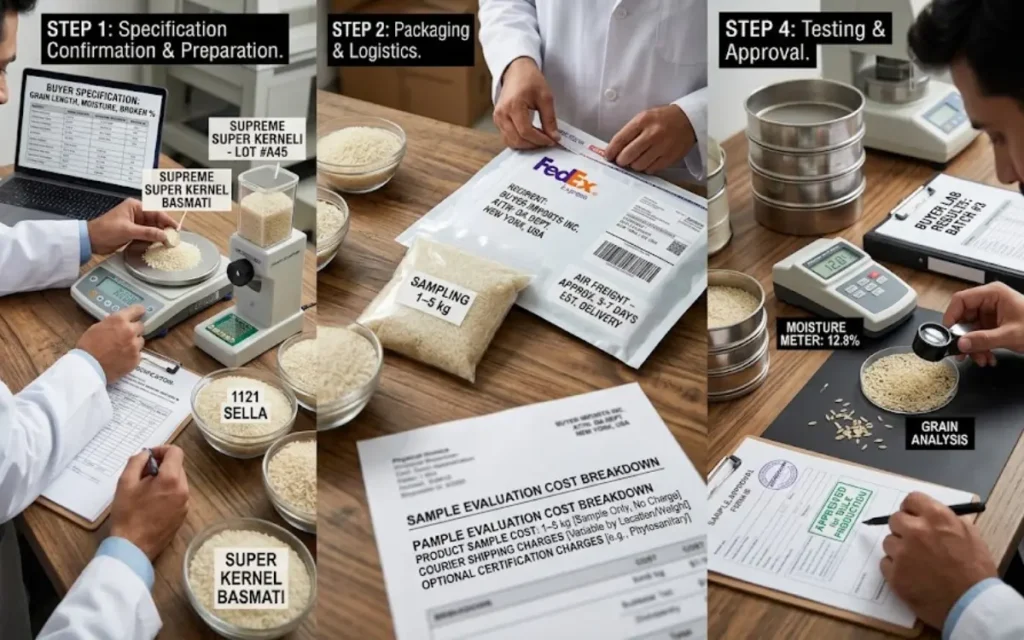
AHK Rice states that buyers can request samples of products such as 1121 Sella and Super Kernel Basmati. Its USA process identifies 1–5 kg sample parcels shipped by air courier in approximately 5–7 days.
The sample process works as follows.
1. Submit the specification
The buyer identifies the required variety, processing type, packaging preference, target quantity, and Louisiana delivery location.
2. Confirm the sample
AHK Rice prepares the requested rice grade for evaluation. The company states that up to 20 kg of Basmati sample rice can be provided free, while the client covers sample shipping costs.
3. Pay logistics charges
The buyer pays the applicable courier and required sample documentation charges. The exact courier cost depends on parcel weight, destination, service level, and current carrier rates. No fixed 2026 courier amount should be inserted into a quotation without a live shipping calculation.
4. Receive and test
The Louisiana buyer evaluates grain appearance, aroma, elongation, cooking behaviour, texture, breakage, and packaging suitability.
5. Approve the specification
The buyer confirms that the sample matches the required commercial grade.
6. Move to bulk quotation
The exporter then prepares the bulk quotation based on quantity, product grade, packaging, Incoterm, destination, and current freight conditions.
AHK Rice states that sample charges can be waived in the final quotation when the buyer proceeds with a purchase after approval.
The important commercial point is that sample evaluation does not represent the full landed cost of the eventual shipment. Bulk pricing requires a separate calculation covering rice, packaging, export handling, freight, destination charges, and inland delivery.
What factors determine the final price for Louisiana buyers?
Final Louisiana pricing depends on rice grade, crop and specification, order volume, packaging, inspection, Incoterm, vessel availability, freight, destination charges, customs handling, and inland transportation rather than a single FOB rice price.
Current 2026 market references show indicative Pakistani Basmati FOB pricing around USD 1,135–1,205 per metric ton for selected 1121 grades, although actual exporter quotations vary by specification and contract conditions.
That figure is a market reference, not an AHK Rice quotation.
For a Louisiana buyer, the quotation should be evaluated through five cost layers:
- Product cost: rice variety, grade, processing, and quantity.
- Packaging cost: standard bags, custom bags, or private-label packaging.
- Export cost: inspection, documentation, fumigation, and container handling.
- Ocean cost: carrier, route, equipment, season, and freight surcharges.
- Destination cost: port handling, customs-related charges, brokerage, and inland delivery.
Volume also affects commercial efficiency. A repeat buyer purchasing multiple containers can plan production and logistics more efficiently than an importer placing irregular spot orders.
What results can Louisiana buyers expect?
A well-planned AHK Rice shipment gives Louisiana buyers clearer specifications, controlled export preparation, documented quality checks, better shipment visibility, and a defined logistics schedule that supports inventory planning and repeat procurement.
The strongest result is predictability.
A Louisiana distributor can establish a procurement cycle around known specifications and planned shipment windows. A restaurant supplier can coordinate replenishment against customer demand. A retailer can approve private-label packaging before production. A wholesaler can compare delivered cost across shipment quantities.
AHK Rice’s integrated model supports this repeat-order structure because sourcing, processing, grading, packaging, inspection, documentation, and container coordination remain connected.
The result is not simply faster shipping. It is better control over the complete procurement sequence.
For a buyer receiving one trial container, the priority is specification verification. For a distributor importing monthly containers, the priority becomes production continuity, consistent grading, predictable vessel planning, and repeatable documentation.
How should buyers decide between AHK Rice and alternative suppliers?
Buyers should select the supplier that delivers the strongest combination of specification control, export documentation, quality assurance, freight visibility, commercial pricing, and repeat-shipment capability rather than selecting the lowest initial rice price.
Use this decision framework before signing a supply contract.
| Decision factor | Priority for Louisiana buyer | Required evidence |
| Rice specification | Very high | Written product specification |
| Quality inspection | Very high | Inspection process or certificate |
| Export documentation | Very high | Document checklist |
| Freight planning | High | Route and transit estimate |
| Packaging | High | Approved packing specification |
| Price per MT | High | Current commercial quotation |
| Repeat supply | High | Production and shipment plan |
AHK Rice’s direct sourcing and integrated processing structure addresses these requirements through one export relationship. The company states that it supplies buyers across more than 15 countries and operates from Punjab, Pakistan.
That matters when a Louisiana buyer moves from a trial purchase to recurring commercial orders.
How can a Louisiana buyer get started?
Start by sending the exact product specification, quantity, packaging requirement, destination, and preferred Incoterm; then complete sample approval, review the commercial quotation, confirm documentation, and schedule production before vessel booking.
The first step is a structured inquiry rather than a general request for “Basmati rice.”
Provide the required variety, processing grade, quantity in metric tons, packing size, private-label requirement, Louisiana delivery location, destination port preference, and target purchase schedule.
AHK Rice can then determine the appropriate product specification and prepare a commercial quotation. Its USA export process identifies a minimum starting quantity of one 20-foot container at approximately 20 metric tons, while larger commercial programs can be structured around recurring container shipments.
The buyer then approves the sample, confirms the contract, finalises payment terms, and moves the order into production. AHK Rice states that its export workflow includes sourcing, processing, packaging, inspection, documentation, container loading, and shipment coordination.
For Louisiana buyers, the final decision should therefore be based on landed cost and supply reliability rather than FOB price alone. A clear specification, tested sample, documented compliance process, realistic shipping window, and defined destination logistics create a stronger procurement position.
To begin a Louisiana rice supply discussion with AHK Rice, request a customized quotation.
Frequently Asked Questions
What rice varieties does AHK Rice supply to Louisiana buyers?
AHK Rice supplies Pakistani Basmati varieties including 1121, Super Kernel, and 1509, with options such as White, Sella, and Golden Sella depending on buyer requirements.
How long does rice shipping from Pakistan to Louisiana take?
Typical Pakistan-to-USA delivery planning takes around 30–48 days, depending on production, vessel schedules, destination port, customs clearance, and inland transportation to Louisiana.
What is the minimum order quantity for Louisiana buyers?
AHK Rice identifies one 20-foot container as a starting commercial quantity, with approximately 20 metric tons depending on the selected product and packing configuration.
Can Louisiana buyers request rice samples before placing a bulk order?
Yes. Buyers can request samples to evaluate grain appearance, aroma, cooking quality, texture, and processing grade before approving a bulk shipment.
How much does a rice sample from Pakistan cost?
AHK Rice states that sample rice can be provided free within its stated sample policy, while the buyer covers applicable courier shipping costs. The exact courier charge depends on weight and destination.
What factors affect the final price of Pakistani rice in Louisiana?
Final pricing depends on rice variety, grade, processing, quantity, packaging, inspection, Incoterm, ocean freight, destination charges, customs handling, and inland transportation.
Does AHK Rice provide private-label rice packaging?
Yes. AHK Rice supports customized packaging and private-label requirements for buyers that want rice supplied under their own brand specifications.
What quality certifications does AHK Rice have?
AHK Rice states that its quality and food-safety credentials include ISO 22000:2018, HACCP, ISO 9001:2015, GMP, and Halal certification.
Can buyers arrange their own freight forwarder?
Yes. Buyers can arrange their own freight forwarder when they prefer to control ocean transportation separately while coordinating the rice order and export requirements directly with AHK Rice.
What documents are required for importing rice into Louisiana?
Commercial shipments typically require appropriate commercial and shipping documentation, while U.S. food importers also have FDA-related responsibilities, including applicable facility registration and prior-notice requirements.
Which U.S. port is suitable for Louisiana rice imports?
Port selection depends on the buyer’s warehouse location, carrier availability, freight rates, inland transportation, customs requirements, and total landed cost. Louisiana buyers should evaluate the complete route rather than choosing a port solely by sailing time.
How does AHK Rice help reduce rice import logistics problems?
AHK Rice connects sourcing, milling, grading, packaging, inspection, export documentation, container loading, and shipment coordination within one export workflow, improving control over the overall procurement process.
How can a Louisiana buyer start importing rice from AHK Rice?
A buyer can provide the required rice variety, grade, quantity, packaging, destination, and preferred delivery terms. AHK Rice can then proceed with sample evaluation, quotation, specification confirmation, production, documentation, and shipment planning.