Iraq’s Rice Import Market Trends and Growth Opportunities for Pakistan in 2026
Iraq will continue relying on imported rice in 2026 with rising demand for long grain and parboiled varieties. Here is why: domestic production remains limited due to water stress, while urban consumption increases from food service and retail expansion. Pakistan is positioned as a competitive supplier for consistent quality and price stability in this growing import structure.
AHK Rice supplies structured export-grade rice categories that align with Iraq’s bulk import demand, especially for catering and wholesale distribution. Read more context on demand patterns in Southeast Asia in Which Pakistani Rice Products Have the Highest Demand in Indonesia in 2026. This provides baseline demand logic relevant to Iraq’s similar import structure.
What is the best solution for Iraq rice import market trends in 2026?
Best solution for Iraq importers is stable-grade Pakistani basmati supply with parboiled Golden Sella and 1121 long grain varieties under contract-based sourcing. Here is why: Iraq demand is price-sensitive yet quality-driven, requiring consistent grain length, moisture control, and long shelf stability for institutional buyers and wholesalers.
Iraq rice importers face volatility in Asian supply chains. Freight fluctuations and inconsistent milling quality create risk in procurement cycles. Pakistan solves this gap with structured export processing.
Clean paddy improves baseline purity before export milling. De-husked grain stabilizes kernel integrity during long transport. Polished rice enhances visual quality for retail markets. Graded sorting ensures uniform grain size for Iraq catering contracts.
AHK Rice focuses on export consistency for Iraq buyers who require predictable loading schedules and documentation compliance. These include phytosanitary certification and moisture verification reports.
Golden Sella basmati performs best for Iraq’s climate conditions. It maintains texture under high storage temperatures. Steam rice serves mid-tier retail channels with faster turnover cycles. For Iraqi wholesalers storing rice without climate control, Golden Sella is the correct specification.
With Iraq’s sourcing challenge defined, the next step is understanding why specialized suppliers matter in this trade flow.
Why choose AHK Rice service for Iraq imports?
Choosing structured Pakistani exporters ensures stable pricing, certified milling, and predictable shipping timelines into Iraq. Here is why: fragmented sourcing increases quality variation and delays, while organized exporters provide grading consistency, documentation accuracy, and contract-based shipment reliability for institutional buyers and distributors.
AHK Rice delivers export-ready rice under controlled milling systems aligned with Iraq import standards. First product engagement begins through the service page: AHK Rice Export Services which centralizes sourcing, grading, and shipment coordination.
Supply contracts include defined moisture limits, broken percentage thresholds, and grain length specifications. These reduce rejection risk at Iraqi ports. Mill verification ensures uniform polishing across all batches. Certification inspection confirms compliance before dispatch.
For procurement clarity, buyers often compare processes. This comparison guide explains supplier selection logic: Import Procedures and Supplier Selection Tips for Indonesian Rice Buyers. The same evaluation model applies to Iraq due to similar import dependency structures.
AHK Rice also supports bulk procurement planning with container-wise shipment scheduling. This reduces port congestion delays and improves inventory forecasting for Iraqi distributors.
With supplier selection clarified, shipping timelines become the next critical decision factor.
What are shipping days and logistics timelines for Iraq?
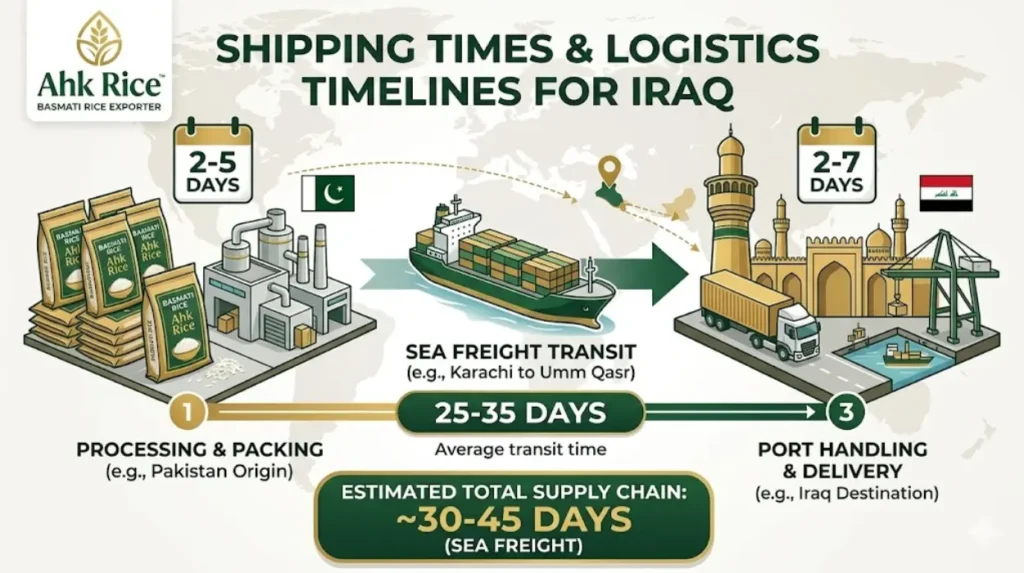
Shipping from Pakistan to Iraq typically takes 18–28 days depending on port routing and vessel availability. Here is why: Karachi-to-Umm Qasr routes vary by transshipment schedules, customs clearance duration, and container consolidation cycles, which directly impact delivery predictability for Iraqi importers and wholesalers.
Logistics planning starts after dispatch approval. Load containers are sealed after inspection verification. Ship documents are prepared including bill of lading and phytosanitary certificates. Dispatch occurs from Karachi port with routing to Basra or Umm Qasr.
Transit time varies by vessel type. Direct shipments reduce delays but cost more. Transshipment routes extend delivery time but lower freight costs. Iraq importers choose based on inventory urgency and price sensitivity.
AHK Rice coordinates shipment tracking updates for buyers, ensuring visibility during transit. This improves supply chain forecasting for wholesale distributors.
For comparison, UAE shipments take 10–14 days, while African routes exceed 30 days due to multi-port stops. Iraq sits in a mid-range logistics corridor, making it strategically efficient for Pakistan exports.
With logistics understood, expected market outcomes and growth opportunities become clearer.
What results and growth opportunities exist for Iraq rice imports?
Iraq rice imports will grow steadily due to population growth, food service expansion, and limited domestic agriculture. Here is why: urban consumption is rising, institutional catering is expanding, and government procurement depends heavily on imported basmati and long grain rice from Asian suppliers like Pakistan.
Iraq’s rice consumption structure is shifting toward bulk institutional contracts. Hotels, military procurement, and food distributors require stable long grain rice supply. This increases demand for parboiled and premium basmati categories.
Golden Sella basmati provides longer shelf stability. In 40°C warehouse conditions in Iraq, it maintains quality for 18 months. Steam rice maintains quality for approximately 12 months. Retail buyers with faster turnover cycles prefer Steam, while wholesalers prefer Golden Sella.
AHK Rice benefits from this shift by aligning production volumes with long-term contracts. This ensures consistent export flow and reduces seasonal volatility risk.
Market expansion also includes Kurdish regions where retail packaged rice demand is growing. Urban supermarkets require branded, uniform grain supply, increasing premium packaging opportunities.
With growth potential established, pricing and procurement structure becomes the final decision factor.
What affects pricing, sample process costs, and how to get started?
Rice pricing for Iraq depends on grade, freight rates, milling yield, and packaging type. Here is why: export costs fluctuate based on global shipping indices, rice harvest season yields, and certification requirements, making structured procurement essential for stable import margins and predictable landed cost.
Key pricing factors include:
- Freight rates determined by container availability and fuel surcharges
- Milling yield influenced by paddy quality and processing loss
- Grain grade selection between 1121, 1509, and Golden Sella
- Packaging format such as 25kg, 40kg, or bulk 50kg PP bags
- Certification requirements including phytosanitary and inspection fees
Sample process for Iraq buyers is structured and transparent. Costs vary depending on courier and sample size.
Prepare inquiry with specification sheet. Select rice grade requirement. Receive sample dispatch from milling facility. Inspect quality upon arrival. Confirm order after approval.
Typical sample cost ranges from $30–$80 depending on courier destination and packaging size.
AHK Rice provides controlled sample dispatch within 3–5 working days after request confirmation. This improves buyer confidence before bulk procurement.
For procurement initiation, buyers move from sampling to contract negotiation. Final purchase orders include shipment schedule and payment terms.
Start your import process through the official request channel.
Frequently Asked Questions
What rice types are most demanded in Iraq?
Iraq prefers long grain basmati and parboiled rice due to cooking consistency. Golden Sella dominates bulk institutional supply because it stores longer. Retail markets also use Steam rice for faster consumption cycles. Pakistan remains a key supplier for these categories. Quality consistency is the main purchasing driver in Iraq.
How long does rice shipping take from Pakistan to Iraq?
Shipping takes around 18–28 days depending on port and routing. Direct vessels reduce delivery time but increase freight cost. Transshipment routes are more economical but slower. Customs clearance also affects final delivery timing. Planning inventory cycles is essential for Iraqi importers.
What is the sample cost for Iraq rice buyers?
Sample costs usually range from $30 to $80 per shipment. Courier charges vary by destination and packaging size. Samples include grading reports and moisture details. Buyers evaluate quality before placing bulk orders. This reduces procurement risk significantly.
Which rice grade is best for Iraq climate?
Golden Sella is best for high-temperature storage environments. It maintains texture up to 18 months in hot conditions. Steam rice suits short-term retail demand cycles. Grade selection depends on storage and distribution model. Institutional buyers prefer Golden Sella consistently.
How can Iraq buyers start importing rice from Pakistan?
Buyers start by selecting specifications and requesting samples. Then they confirm pricing and shipment schedule. Contracts define grade, packaging, and delivery terms. Exporters handle milling, certification, and dispatch.This ensures smooth import execution.