Dubai Municipality Food Registration, Labelling and Customs Clearance for Rice Imports
Dubai rice imports require coordinated product registration, compliant labelling, food-safety documentation, and customs clearance. Importers must confirm the applicable Dubai Municipality procedures, register relevant products before market placement, and submit accurate shipment documents to avoid preventable inspection delays and additional logistics costs.
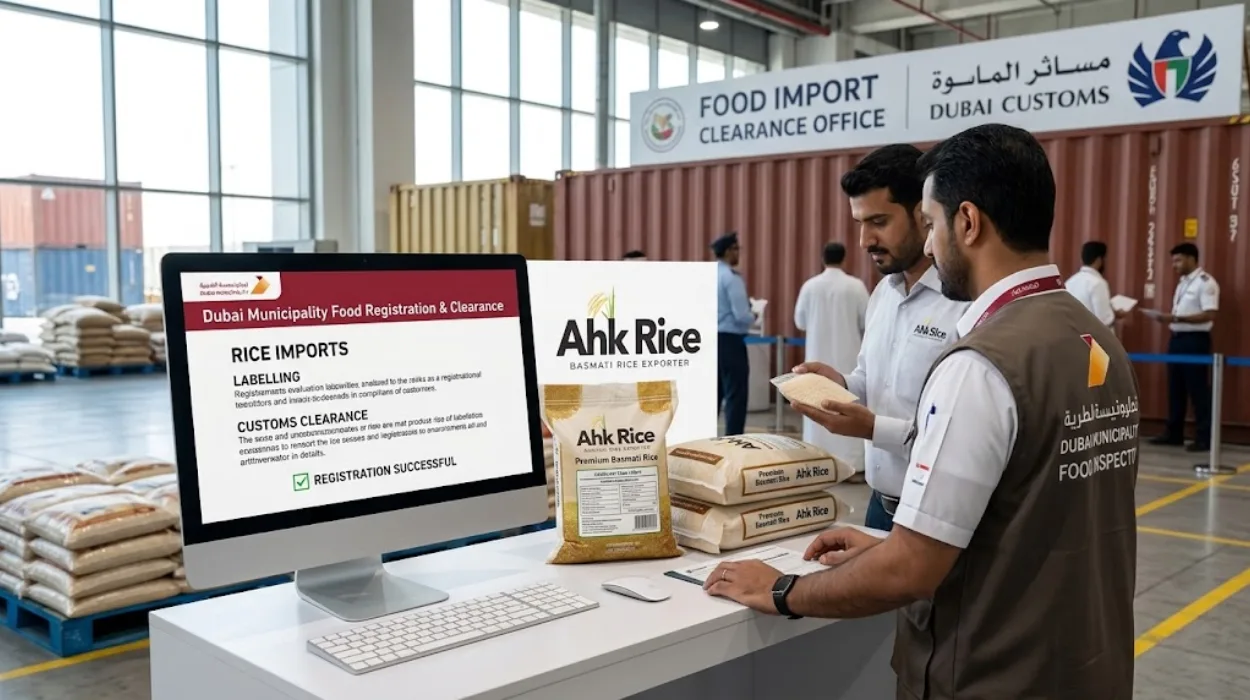
Dubai Municipality oversees food safety in Dubai, including the assessment of food labels, registration of food products, and release of imported food consignments for the local market. Dubai Customs handles customs declarations and clearance. These are separate processes, so customs clearance alone does not establish that rice has received the necessary food-safety approval. Dubai Municipality services describe the relevant registration, assessment, and release services.
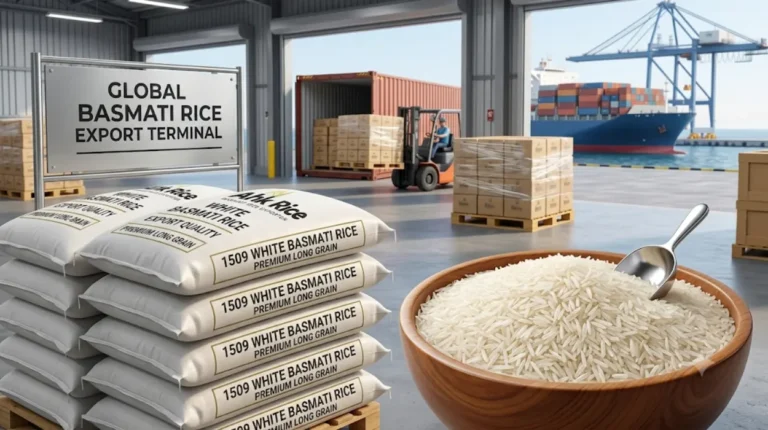
For an overview of Pakistani rice varieties, regional demand, and buyer requirements, read this educational guide to the UAE rice import market and Pakistani Basmati demand in Dubai. Understanding the target market before selecting a grade helps importers align product specifications, packaging, labelling, and documentation.
For buyers sourcing Pakistani Basmati rice from AHK Rice, the practical starting point is a shipment specification that identifies the variety, grade, broken percentage, moisture level, packaging format, destination, and agreed trade terms. A clear specification supports document preparation and reduces inconsistencies between the commercial invoice, packing list, product label, and shipment records.
What solutions are available for registering imported rice in Dubai?
Importers can use Dubai Municipality’s food registration and release services, the UAE’s ZAD food registration system where applicable, and qualified customs or regulatory support. The appropriate route depends on product status, the importing establishment, shipment purpose, and the current requirements of the competent authority.
Dubai’s food import framework connects product assessment with establishment registration, shipment inspection, and release. Importers should distinguish three activities: registering a food product, obtaining release approval for an imported consignment, and completing the customs declaration. Each addresses a different compliance requirement.
The UAE’s ZAD portal supports food business operators in registering establishments and food products. Federal guidance states that imported food and products with changes to their labels, ingredients, or composition require registration in the national system before being handled in UAE markets, subject to the applicable rules. The UAE government’s food registration guidance explains this framework.
Importers should verify the applicable registration route with Dubai Municipality because local food-control procedures and federal registration requirements can operate alongside each other. Existing registration for one product does not automatically approve every variation, label, package, or shipment.
Three practical approaches are available:
- Importer-managed compliance: The UAE importer coordinates product registration, label assessment, shipment release, and customs clearance through the relevant government systems.
- Customs broker support: A licensed or appropriately authorised broker prepares declarations and coordinates customs formalities while the importer remains responsible for the required food approvals.
- Exporter-supported documentation: The exporter prepares accurate commercial and product records, supplies certificates available from competent authorities, and aligns shipment information with the importer’s approved specifications.
These approaches can work together. A broker does not replace food registration, and an exporter cannot independently guarantee municipal approval.
How do the main rice import compliance methods compare?
The methods differ in responsibility, control, and cost rather than replacing one another. Importer-managed registration provides direct oversight, broker assistance reduces administrative workload, and exporter-supported documentation improves shipment consistency. Most commercial shipments benefit from clearly assigned responsibilities across all three.
| Comparison attribute | Importer-managed process | Customs broker support | Exporter-supported documentation |
|---|---|---|---|
| Main responsibility | Registration and regulatory coordination | Customs declarations and clearance formalities | Accurate product and shipping records |
| Product registration | Managed by importer | Usually coordinated with importer, if included in the service | Product information supplied for submission |
| Label assessment | Importer verifies the approved label | May coordinate document submission | Label artwork and product details supplied |
| Shipment documents | Importer checks completeness | Reviews documents needed for declarations | Prepares invoice, packing list, and agreed certificates |
| Cost structure | Internal staff time and government fees | Service charges plus applicable government fees | Included service or agreed documentation costs |
| Operational control | High direct control | Shared control between importer and broker | Strong control over source-document accuracy |
| Best application | Experienced importers with established systems | Importers needing customs expertise | Buyers needing reliable exporter coordination |
The comparison shows why responsibility mapping matters. Importers should identify who submits each application, who checks label compliance, who obtains certificates, who pays government charges, and who responds to inspection queries. Written allocation prevents missing documents from being discovered only after the cargo reaches port.
Which product specifications should buyers compare before shipment?
Rice importers should compare variety, grain length, broken percentage, moisture, processing type, packaging, and shelf-life evidence. These seven attributes define commercial suitability and support accurate product descriptions. They must match the approved product information and the actual cargo rather than relying on a generic rice specification.
| Specification attribute | 1121 Basmati | Super Kernel Basmati | 1509 Basmati |
|---|---|---|---|
| Main positioning | Premium long-grain retail and foodservice | Traditional aromatic Basmati | Yield-oriented and price-conscious trade |
| Typical raw grain length | Confirm contracted grade | Approximately 7.0–7.5 mm | Approximately 8.1–8.5 mm, depending on grade |
| Aroma profile | Characteristic Basmati aroma | Traditional aromatic profile | Basmati-type aroma, depending on lot |
| Broken percentage | Set in purchase contract | Often targeted at 2–3% for premium specifications | Set according to commercial grade |
| Moisture | Specify and test the agreed limit | Commercial targets often 12–13% maximum | Commercial target often up to 13% |
| Processing options | White, Steam, Sella, or other agreed form | White, Steam, Sella, or agreed form | White, Steam, or Sella options |
| Packaging | Retail or bulk formats | Retail or bulk formats | Retail or bulk formats |
These figures are commercial reference points, not automatic Dubai Municipality acceptance limits. The applicable food-safety rules, product standard, contract, and label determine the requirements for a particular consignment. Grain-length figures also depend on whether the specification measures raw grain, average length, or another defined parameter.
The importer should request a final specification sheet before confirming the order. The sheet should identify the variety, processing method, grain-length basis, broken percentage, moisture, foreign matter, packaging weight, batch identification, and relevant testing requirements. The commercial invoice, packing list, product label, and certificate data must describe the same product.
What labelling requirements apply to packaged rice imports?
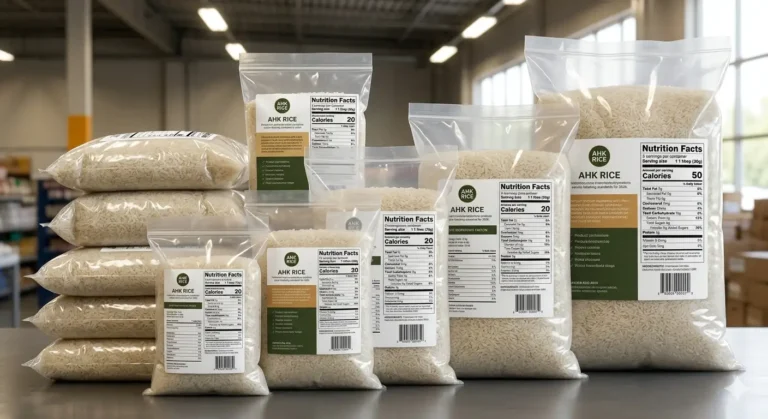
Packaged rice labels must meet the applicable UAE and Dubai food-labelling rules before the product enters the local market. Importers should arrange Arabic-language information, verify product identity and date markings, and submit artwork for the relevant assessment rather than assuming an English-only label will be accepted.
Dubai Municipality provides a service to register and assess food items, including label assessment against applicable local, GCC, and other relevant specifications. Its food-import guidance identifies Arabic labelling as an important requirement. Importers should confirm the current rules for their exact package and product before printing commercial quantities.
A prepacked rice label should be checked for the applicable declarations, including:
- Product name and accurate variety description.
- Country of origin.
- Net weight in the correct unit.
- Manufacturer, packer, or responsible business details as required.
- Batch or lot identification.
- Production and expiry or best-before date information, where applicable.
- Storage instructions and other mandatory declarations.
- Arabic text and consistency between Arabic and other language versions.
The exact declarations and permitted presentation depend on the applicable standard and product format. Do not treat this list as a substitute for formal label assessment. Shelf-life claims must be supported by the product’s actual characteristics and the relevant evidence.
For example, a 5 kg retail bag described as Pakistani 1121 Steam Basmati must not conflict with the invoice or supporting records that identify the product as 1509 White rice. Likewise, an amended brand name, pack size, or ingredient declaration can require a review of the registration and label status before market placement.
The importer should retain the approved artwork and registration details and compare them against production packaging before loading. This control prevents a correct shipment from arriving with packaging that does not match the submitted label.
Which documents are required for UAE rice customs clearance?
Rice shipments require accurate commercial and transport documents, together with the food certificates and approvals applicable to the product and origin. The importer and broker must confirm the current document checklist with the competent authorities before dispatch because certificate requirements depend on the consignment and regulatory controls.
A typical export file includes the commercial invoice, packing list, bill of lading or other transport document, country-of-origin evidence where required, and applicable health or phytosanitary documentation. The exact certificates depend on the product, the exporting country’s rules, and UAE import conditions. Rice is a plant-derived food, so the importer should verify whether a phytosanitary certificate or other agricultural documentation applies to the specific shipment.
Dubai Municipality’s food import guidance identifies health certificates issued by the competent authority in the exporting country and packing lists among the relevant import documents. Halal certificates apply to meat, poultry, or products containing animal-derived ingredients where required; they are not a universal certificate for plain rice.
Before loading, the exporter and importer should reconcile these details:
- Exporter and consignee names match the commercial and transport documents.
- Product descriptions, variety, package count, and net weight agree across records.
- Country of origin is stated accurately.
- Batch details and any applicable certificate references are traceable.
- The importer has checked product registration and label status.
- The customs broker has confirmed the HS classification, declaration requirements, and applicable duties and fees.
Dubai Customs provides an electronic customs declaration service for imports and other customs regimes. Its Al Munasiq platform also supports HS-code classification research. The broker should confirm the classification and applicable charges before submitting the declaration, rather than choosing a code based solely on a supplier’s previous shipment.
How do UAE market regions affect grade selection, price, and shelf life?
Grade selection depends on the buyer segment, cooking expectations, packaging format, and target price. Dubai’s retail and hospitality buyers often prioritise consistent grain appearance and cooking performance, while wholesale and re-export buyers evaluate specification compliance, landed cost, and reliable supply across repeat shipments.
For market planning, two buyer groups are especially useful to compare: Dubai’s premium retail and hospitality segment, and the price-sensitive wholesale and re-export segment. These are commercial segments rather than separate legal jurisdictions, so the same food registration and import rules still apply.
Dubai premium retail and hospitality: Buyers targeting premium supermarkets, restaurants, caterers, and branded Basmati ranges often evaluate 1121 for its long-grain presentation and cooked elongation. Super Kernel suits buyers seeking traditional aroma and a differentiated Pakistani Basmati offer. Consistent grading, suitable retail packaging, cooking-test results, and accurate label claims support this positioning.
Dubai wholesale and re-export: Buyers distributing through wholesale channels often compare 1509, Super Kernel, and 1121 according to the target customer, contracted quality, and price per metric tonne. The 1509 variety can suit cost-conscious programmes where the agreed cooking performance and grain specification meet the buyer’s needs. Sella processing can be relevant for particular foodservice applications, but the buyer must select the processing form according to its cooking requirements.
Prices should be compared on the same commercial basis. FOB prices cover the seller’s delivery obligations up to loading at the named port under the agreed Incoterms; CIF prices include cost, insurance, and freight to the named destination port, while other destination costs can remain payable by the buyer.
The following are illustrative planning ranges, not verified live quotations or market averages. Actual prices change with crop availability, grade, broken percentage, processing, packaging, order volume, and freight.
| Market segment | Indicative planning price | Shelf-life comparison | Main buying priority |
|---|---|---|---|
| Premium retail and hospitality | 1121: US$1,150–1,350/MT FOB; Super Kernel: US$1,100–1,250/MT FOB | Commonly 12–24 months when supported by the approved product specification and storage conditions | Grain presentation, aroma, cooking performance |
| Wholesale and re-export | 1509: US$950–1,150/MT FOB; Super Kernel: US$1,050–1,200/MT FOB | Commonly 12–24 months when supported by product evidence and appropriate storage | Landed cost, repeatability, volume, packaging |
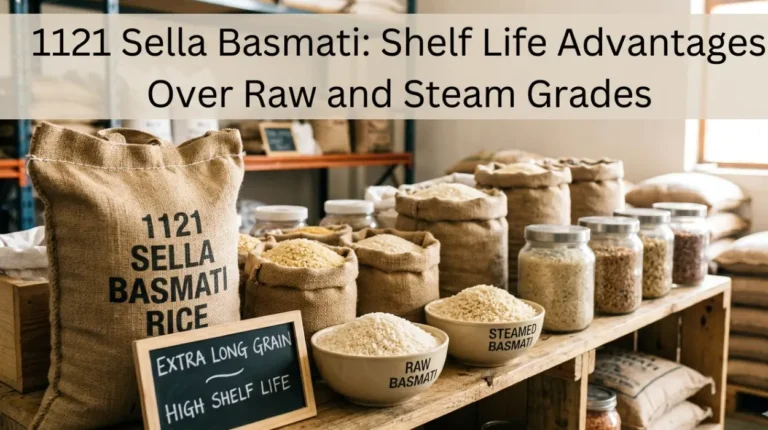
These ranges are indicative examples for commercial comparison, not guaranteed AHK Rice offers. Buyers should obtain a dated quotation and compare the same grade, package size, Incoterm, destination, and quality limits before selecting a supplier. Shelf life is not determined by variety alone. It depends on processing, packaging integrity, moisture, storage conditions, and the validated date marking for the product.
Dubai’s hot climate makes warehouse management important. Importers should keep rice in clean, dry, ventilated storage, away from moisture, pests, direct sunlight, and strong odours. Stock rotation using first-expiry-first-out practices helps protect quality and reduce losses.
What are the advantages and disadvantages of each compliance approach?
Importer-led compliance provides direct oversight but demands regulatory knowledge and staff time. Broker support reduces customs administration but does not transfer every food-safety obligation. Exporter coordination improves document consistency, yet the importer must still confirm local registration, label acceptance, and shipment release.
Importer-led approach: Its main advantage is direct control over registration status, label approval, and regulatory communication. An established distributor importing multiple rice brands can maintain a central compliance register and reuse approved workflows where permitted. The disadvantage is administrative workload and the risk of missing a rule change when the team does not monitor official guidance.
Broker-supported approach: A broker can coordinate declarations, HS-code questions, document submission, and customs formalities. This is useful for first-time importers or businesses with limited customs expertise. However, a broker cannot make an inaccurate product label compliant or guarantee food release if an approval or certificate is missing.
Exporter-supported approach: An experienced exporter can prepare consistent invoices, packing lists, product specifications, and applicable origin-country certificates. This helps when buyers need multiple varieties or customised packaging. The limitation is that the exporter does not control every UAE-side approval and cannot promise a fixed clearance time where inspection, sampling, or additional document checks apply.
The strongest operational arrangement combines these roles and records a named owner for each requirement before the purchase order is confirmed.
What five factors should guide a rice importer’s decision?
Choose the compliance workflow according to product status, label readiness, shipment complexity, internal expertise, and delivery priorities. These five factors reveal whether the importer can manage the process directly, needs broker assistance, or should strengthen exporter coordination before confirming the purchase order.
| Decision factor | Question to ask | Practical decision |
|---|---|---|
| Product registration | Is the exact product and label registration status confirmed? | Complete the required registration or assessment before market placement |
| Label readiness | Does the final artwork match the approved product details? | Correct discrepancies before printing or dispatch |
| Document completeness | Are all applicable certificates and transport documents available? | Reconcile the file before loading |
| Operational expertise | Can the importer handle customs declarations and regulatory follow-up? | Assign an experienced team or qualified broker |
| Commercial risk | Are the grade, Incoterm, shelf life, and delivery obligations documented? | Compare dated quotations and agree responsibilities in writing |
For a first shipment, a pre-dispatch compliance review is especially valuable. The importer should confirm the product’s registration status, final artwork, certificate requirements, HS classification, package count, net weight, and named responsibilities before the cargo leaves the exporting country.
How can importers reduce delays before rice reaches Dubai?
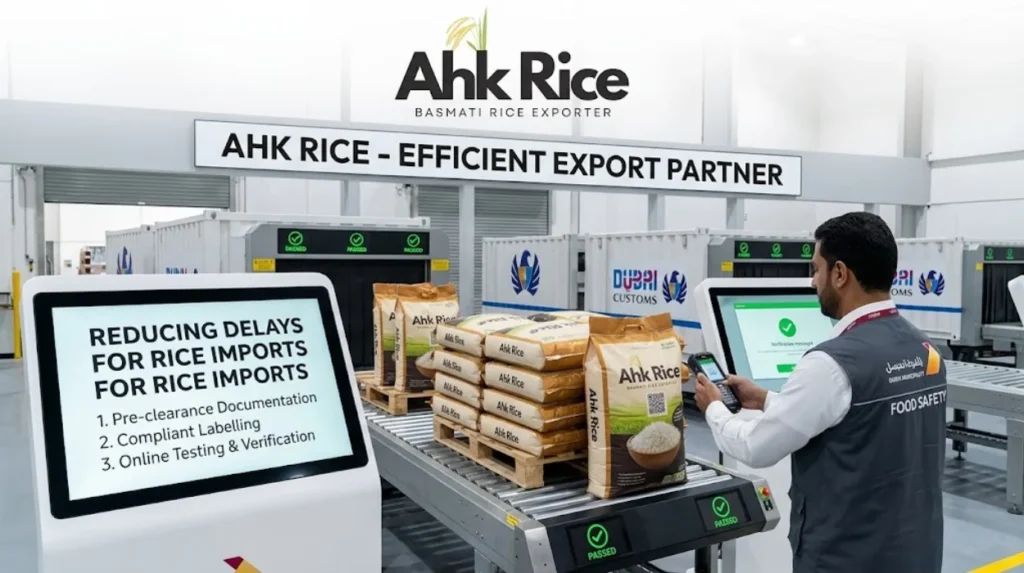
Importers reduce avoidable delays by confirming registration and label status early, preparing the correct documents, reconciling every product description, and coordinating with the customs broker before loading. They should also budget for inspection, testing, storage, and other charges if the authorities require additional checks.
The process begins with a purchase specification and a clear importer-of-record arrangement. The buyer confirms the product, packaging, and intended market. The exporter supplies final product details and drafts of the commercial documents. The importer verifies the relevant Dubai Municipality registration and label requirements and checks whether additional product-specific certificates apply.
Before loading, both parties reconcile the invoice, packing list, certificate information, and transport instructions. The broker confirms the customs declaration requirements and applicable fees. Once the shipment arrives, the importer follows the relevant food consignment release process and responds promptly to any request for documents, inspection, or sampling.
No exporter or broker should guarantee clearance by a fixed date without accounting for the official process. Complete paperwork reduces preventable errors, but the competent authority retains control over inspection and release.
For buyers comparing suppliers, the next step is to request a product specification sheet, a dated quotation, and a document checklist for the intended shipment. This turns a broad supplier comparison into a verifiable purchasing decision based on grade, compliance readiness, price, and delivery terms.
FAQs about Dubai rice import registration and clearance
Does every imported rice product need food registration?
Food registration requirements depend on the applicable federal and local framework. Importers should verify the product’s status in the relevant registration system and complete any required Dubai Municipality registration or assessment before placing the product on the market.
Is Arabic labelling required for packaged rice in Dubai?
Arabic labelling is a key requirement under Dubai’s food-labelling framework. Importers should submit the actual label for assessment and confirm the applicable declarations, date markings, and language requirements before printing packaging.
Does customs clearance mean the rice is approved for sale?
No. Customs clearance and food consignment release are distinct processes. Importers must satisfy the applicable customs formalities and food-safety requirements before distributing the rice in the local market.
Which documents should a Pakistani rice exporter prepare?
The shipment file commonly includes a commercial invoice, packing list, transport document, and applicable origin, health, or phytosanitary certificates. The exact checklist must be confirmed for the product, shipment, and current UAE requirements.
How long does rice clearance take in Dubai?
There is no universal clearance time for every rice shipment. Processing depends on document accuracy, registration status, customs procedures, inspections, sampling, and any additional information requested by the authorities. Importers should confirm expected timelines with their broker and the competent authority.
How should importers compare rice prices per metric tonne?
Compare the same variety, processing method, grade, broken percentage, moisture specification, packaging, quantity, and Incoterm. Include freight, insurance, port charges, customs costs, inspection, and local delivery when calculating landed cost.
What is the best way to protect rice shelf life in Dubai?
Use packaging suited to the product and distribution channel, maintain dry and hygienic storage, control pests, and avoid direct sunlight and moisture. Follow the approved date marking and storage instructions supported by the product’s shelf-life evidence.
Can a customs broker guarantee food release?
No. A broker can coordinate declarations and support documentation, but the relevant authorities determine food approval, inspection outcomes, and release. Importers remain responsible for ensuring that applicable product and food-safety requirements are met.