How Do Exporters Maintain Consistent Order Fulfillment Standards?
Exporters maintain consistent order fulfillment standards by converting every rice order into a controlled specification, production, inspection, documentation, packaging, and shipment workflow. The strongest approach combines standardized product specifications with batch-level quality control, production planning, documented approvals, and shipment milestone tracking.
For importers evaluating supplier reliability, fulfillment performance matters because a rice order is not complete when the cargo leaves the mill. The order must arrive with the agreed variety, grade, packing, quantity, documents, and quality characteristics. A useful foundation is the guide on:
Why order fulfillment performance is important in rice imports, which explains why fulfillment consistency affects inventory planning, customer service, and procurement risk.
In 2026, this control has become more important as rice markets remain sensitive to supply, pricing, and import requirements. USDA’s August 2026 outlook projects U.S. 2026/27 all-rice imports at a record 49.8 million hundredweight, while ending stocks are projected at 36.0 million hundredweight, 33% below the previous year. Pakistan’s USDA forecast places 2026/27 rice production at 9.8 million metric tons and exports at approximately 5.0 million metric tons.
What does consistent rice order fulfillment mean?
Consistent rice order fulfillment means delivering the same agreed product specification, quantity, packaging, quality level, documentation, and shipment performance across repeated orders without uncontrolled variation between production batches or shipping cycles.
Order fulfillment is the complete process from purchase-order confirmation to delivery readiness. A purchase order defines what the buyer expects. A production plan defines how that requirement will be achieved. Quality control verifies the physical product. Documentation proves compliance. Logistics controls the movement of the shipment.
For rice exporters, consistency therefore has several dimensions. The variety must remain correct. The grain profile must match the approved specification. Broken percentage, moisture, foreign matter, milling quality, color, aroma, and cooking characteristics must remain within agreed tolerances.
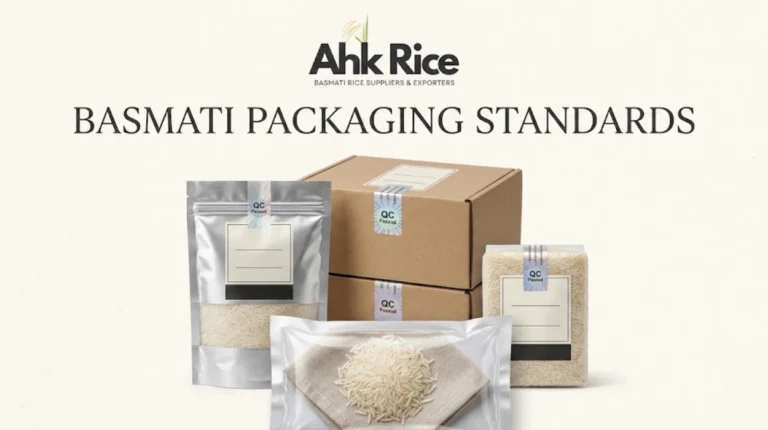
Packaging also forms part of fulfillment consistency. A buyer ordering 5 kg retail bags, 10 kg foodservice bags, or 25 kg wholesale bags needs the same approved packaging configuration on every shipment. Bag material, printing, labels, net weight, batch identification, and pallet or container loading requirements must follow the purchase order.
AHK Rice operates within this type of export structure by supplying Pakistani Basmati varieties including 1121, Super Kernel, and 1509, supported by processing, custom packaging, inspection, documentation, and export coordination.
What solutions are available for maintaining fulfillment standards?
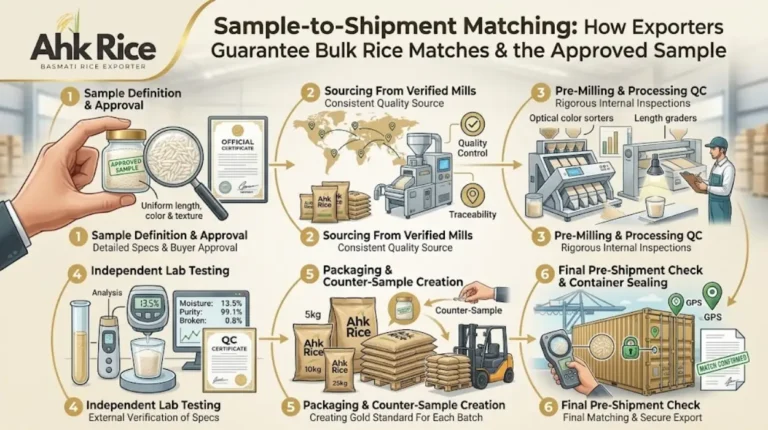
Exporters can maintain fulfillment standards through specification control, batch testing, supplier and inventory planning, production scheduling, pre-shipment inspection, packaging controls, document verification, and shipment milestone tracking, with stronger programs combining these controls rather than relying on one quality check.
The first solution is a standardized product specification. A specification sheet defines the measurable characteristics of the rice before production begins. It can include variety, grain length, broken percentage, moisture, foreign matter, milling degree, damaged grains, immature grains, color, packaging, quantity, and tolerances.
The second solution is batch-level quality control. A batch is a defined quantity of rice produced or processed under controlled conditions. Sampling allows the exporter to compare the batch against the approved specification before packing or loading.
The third solution is production and inventory planning. Exporters need sufficient paddy, processed rice, packaging materials, labor capacity, storage space, and container-loading capacity to fulfill confirmed orders without substituting grades or delaying production.
The fourth solution is pre-shipment inspection. Inspection verifies that the finished shipment meets contractual requirements before the container is released. Depending on the buyer’s program, inspection can involve internal quality personnel or independent inspection organizations.
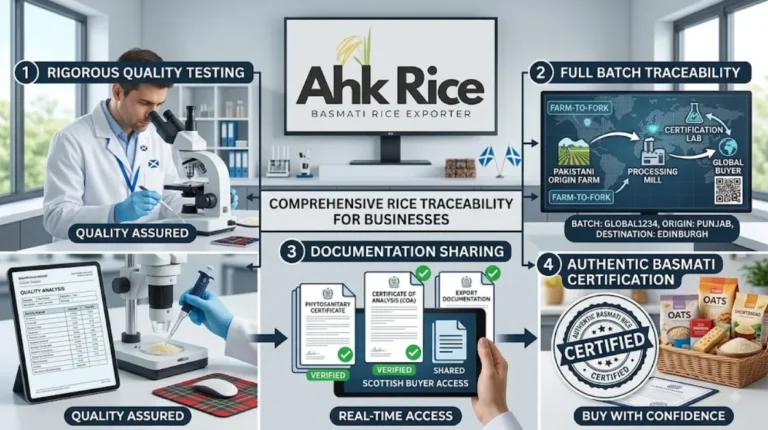
The fifth solution is document control. Commercial invoices, packing lists, certificates, inspection reports, certificates of origin, phytosanitary documentation where applicable, and shipping documents must correspond with the actual cargo.
The sixth solution is shipment milestone tracking. Exporters can track purchase-order confirmation, production completion, laboratory approval, packaging completion, inspection, container loading, vessel departure, document release, and destination delivery.
The strongest fulfillment system connects all six solutions into one controlled workflow.
How do different fulfillment approaches compare?
Standardized production offers the strongest repeatability, batch-level inspection provides measurable quality evidence, contract-based planning improves supply continuity, and shipment tracking improves visibility; the best system combines these approaches around one approved product specification and documented tolerance framework.
| Fulfillment Attribute | Standardized Production | Batch-Level Inspection | Contract-Based Supply | End-to-End Control |
|---|---|---|---|---|
| Product consistency | High | High | High | Very high |
| Quality verification | Process-based | Sample-based | Contract-based | Process + sample + contract |
| Supply planning | Moderate | Low | High | Very high |
| Documentation control | Moderate | High | High | Very high |
| Packaging consistency | High | High | High | Very high |
| Shipment visibility | Moderate | Moderate | High | Very high |
| Best use case | Repeat specifications | Quality-sensitive orders | Recurring imports | Multi-shipment programs |
Standardized production works well when an importer repeatedly purchases the same grade. The exporter can use an approved specification as the production reference.
Batch inspection is useful when the buyer needs measurable evidence for every shipment. It provides a quality checkpoint but does not by itself solve production capacity, packaging, or logistics problems.
Contract-based supply works better for recurring buyers. The agreement can establish annual or quarterly volumes, specifications, shipment windows, packaging requirements, tolerances, inspection procedures, payment terms, and documentation responsibilities.
End-to-end control is the most comprehensive approach because it connects production, inspection, packaging, documentation, and logistics. It requires more management discipline but provides stronger visibility across the entire order lifecycle.
Which rice specifications should exporters standardize?
Exporters should standardize variety, grain characteristics, broken percentage, moisture, foreign matter, milling quality, packaging, net weight, tolerances, and inspection requirements before production begins because these variables determine whether repeated shipments meet the buyer’s commercial specification.
For Pakistani Basmati, variety identification is the first control. A 1121 Basmati order should not be treated as interchangeable with Super Kernel or 1509 simply because all three are Basmati products.
Grain characteristics are another critical specification. Buyers may require extra-long grain, a defined average grain length, or a particular appearance after cooking. The specification should identify the required grade rather than relying on a general term such as “premium rice.”
Broken percentage is also commercially important. A buyer requiring a premium whole-grain product needs tighter broken-grain tolerances than a buyer purchasing a lower-priced foodservice grade.
Moisture affects storage stability and processing performance. Foreign matter and damaged grains are additional quality-control parameters. Packaging specifications determine how the finished product is protected and presented during international transportation.
Pakistan Customs’ January 2026 valuation framework also demonstrates why exporters need accurate product classification and commercial documentation. The 2026 valuation ruling lists reference values including $1,175 per metric ton for 1121 White/Sella, $1,225 for 1121 Steam, $1,100 for 1509 White/Sella, and $1,150 for 1509 Steam. These are customs valuation references, not universal market selling prices.
How do fulfillment requirements differ between the U.S. and Gulf markets?
U.S. buyers generally require stronger documentation, labeling, importer coordination, and shipment traceability, while Gulf buyers often emphasize specific Basmati grades, grain appearance, cooking performance, packaging, and dependable replenishment schedules; both markets require specification consistency.
U.S. market
For U.S. buyers, fulfillment standards extend beyond the physical rice. Importers need documentation and supplier information that supports U.S. food-import compliance. U.S. rice procurement also operates within a large import market. USDA’s August 2026 outlook forecasts record 2026/27 U.S. all-rice imports of 49.8 million hundredweight.
Kansas buyers sourcing Basmati may therefore evaluate specification control, packaging accuracy, shipment documentation, arrival scheduling, and inventory continuity together.
For a U.S.-focused procurement program, 1121 Steam and 1121 White can serve different commercial applications. Long-grain appearance and cooking performance make specification control important for restaurants, foodservice distributors, wholesalers, and retail programs.
Gulf and Middle East market
Gulf markets place strong commercial emphasis on Basmati varieties, long grain appearance, aroma, cooking performance, and presentation. 1121 Basmati, Super Kernel, and 1509 grades can serve different price and positioning requirements.
Importers supplying retail and foodservice channels need consistent bag weights and stable grade specifications. A shipment that differs materially from the previous shipment can create customer complaints even when the rice remains technically saleable.
| Market Region | Common Grade Preference | Indicative 2026 Price Reference | Shelf-Life Planning | Primary Fulfillment Priority |
| U.S. / Midwest | 1121 Steam, 1121 White, selected premium Basmati | Pakistan Customs references: $1,175–$1,225/MT for 1121 White/Sella and Steam | Plan against packaged product specification and importer requirements | Documentation, consistency, delivery scheduling |
| Gulf / Middle East | 1121, Super Kernel, 1509 Steam/Sella | Pakistan Customs references: $1,050–$1,225/MT across selected Basmati categories | Use approved packaging, storage, and date-control procedures | Grain appearance, cooking performance, packaging |
These figures should be treated as specification and valuation references rather than fixed commercial quotations. Actual FOB, CNF, or CIF pricing changes with grade, crop, packaging, order volume, freight, inspection, destination, and commercial terms. Pakistan Customs’ 2026 figures provide official valuation references, while market quotations can vary materially.
Shelf life should also be managed through the agreed product specification rather than a generic number. Exporters should establish packing dates, lot identification, storage requirements, and destination inventory rotation with the buyer. This is particularly important when shipments move through longer international supply chains.
What are the advantages and disadvantages of each fulfillment method?
Standardization improves repeatability, inspection improves evidence, contracts improve planning, and tracking improves visibility; however, each method has limitations when used alone, so exporters should match the control system to order frequency, product sensitivity, shipment volume, and buyer requirements.
Standardized specifications — Pros: They create one reference point for production and inspection. They reduce ambiguity between buyer and exporter. Cons: A specification that is too general does not control important quality variables.
Batch inspection — Pros: It provides measurable evidence before shipment. It can identify quality deviations before loading. Cons: Inspection cannot replace production planning. A failed batch can still create delays if no replacement inventory exists.
Contract-based procurement — Pros: It establishes volume, schedule, specifications, and responsibilities before repeated shipments begin. Cons: It requires accurate forecasting because both parties must plan production and inventory around agreed commitments.
End-to-end fulfillment control — Pros: It connects production, quality, packaging, documents, and logistics. It provides the clearest view of order status. Cons: It requires stronger internal systems, trained personnel, and disciplined record keeping.
For example, a buyer importing one container for a seasonal promotion may prioritize pre-shipment inspection and packaging accuracy. A distributor importing several containers every month needs production capacity, inventory planning, contract controls, and shipment tracking in addition to inspection.
Which method works best for different buyer cases?
Single shipments benefit from clear specifications and pre-shipment inspection, recurring wholesale programs require contract-based planning, retail programs require stronger packaging and document control, and high-volume distributors benefit most from integrated end-to-end fulfillment management.
A single-shipment buyer should focus on specification approval, sample confirmation, inspection, packaging, and document accuracy. The objective is to prevent an incorrect shipment.
A recurring importer needs a supply schedule. Monthly or quarterly demand should be translated into production requirements before inventory becomes critical.
A retail distributor requires additional packaging controls. Printed bags, barcodes, nutrition information where required, net weight, batch information, and country-of-origin details must correspond with the approved packaging artwork and destination requirements.
A foodservice distributor may prioritize cooking consistency, grain appearance, breakage tolerance, and repeat availability. Product substitution can create operational problems because restaurant customers expect consistent cooking results.
A high-volume importer needs integrated controls. The supplier should maintain enough production capacity to cover confirmed volumes while protecting against peak demand and production interruptions.
What factors should importers use when evaluating fulfillment standards?
Importers should evaluate product specification control, production capacity, quality evidence, packaging accuracy, documentation, shipment visibility, communication, and historical consistency because price alone does not measure whether an exporter can repeatedly complete international rice orders.
| Decision Factor | Key Question | Why It Matters |
| Specification control | Is every product attribute documented? | Prevents grade ambiguity |
| Production capacity | Can the exporter meet peak demand? | Reduces allocation and delay risk |
| Quality control | Is every shipment tested against defined tolerances? | Creates measurable consistency |
| Packaging | Is approved artwork and net weight controlled? | Prevents retail and compliance errors |
| Documentation | Are export and commercial documents verified before release? | Reduces clearance problems |
| Logistics | Are shipment milestones tracked? | Improves delivery planning |
| Communication | Are exceptions reported before they affect delivery? | Allows corrective action |
| Historical performance | Can previous orders demonstrate consistency? | Provides evidence beyond promises |
Capacity deserves particular attention. An exporter can have excellent rice but still fail fulfillment if production is overloaded. A buyer should compare planned peak shipment requirements with the supplier’s actual processing, grading, packing, inspection, and loading capability.
The same principle applies to documentation. A correct shipment with incorrect paperwork can still create delays. Fulfillment standards therefore need a document-verification checkpoint before vessel departure.
How should exporters build a repeatable order fulfillment workflow?
A repeatable workflow should move each order through specification approval, raw-material planning, production, testing, packaging, inspection, document verification, container loading, shipment tracking, and delivery confirmation using recorded checkpoints and responsible personnel.
The workflow starts with purchase-order validation. The exporter confirms variety, grade, quantity, packaging, destination, required documents, shipment window, and commercial terms.
The next step is production planning. Required raw materials and processing capacity are allocated against the confirmed order.
The third step is processing and grading. Rice passes through milling, cleaning, sorting, grading, and other required processing stages according to the approved specification.
The fourth step is quality verification. Samples are tested against the agreed parameters. Any non-conforming batch is isolated before packing or loading.
The fifth step is packaging control. Bags, labels, net weights, lot information, and packaging quantities are checked against the approved order.
The sixth step is pre-shipment inspection. The finished cargo is reviewed before container release when inspection is required.
The seventh step is document verification. Commercial and export documents are checked against the actual cargo and buyer requirements.
The eighth step is container loading and shipment tracking. Container numbers, seal information, loading dates, vessel information, and shipping documents are recorded.
The final step is delivery confirmation and performance review. The exporter records whether quantity, specification, documents, and delivery timing met the order requirements.
This workflow converts fulfillment from an informal promise into a measurable operating system.
For buyers evaluating a supplier for Kansas or other U.S. markets, the next consideration is how these controls operate within an actual export program. The decision-focused article:
AHK Rice Supports Kansas Buyers with Reliable Order Fulfillment is the appropriate next-stage resource because it connects fulfillment standards with a specific U.S. buyer market.
What is the best fulfillment strategy for a recurring rice import program?
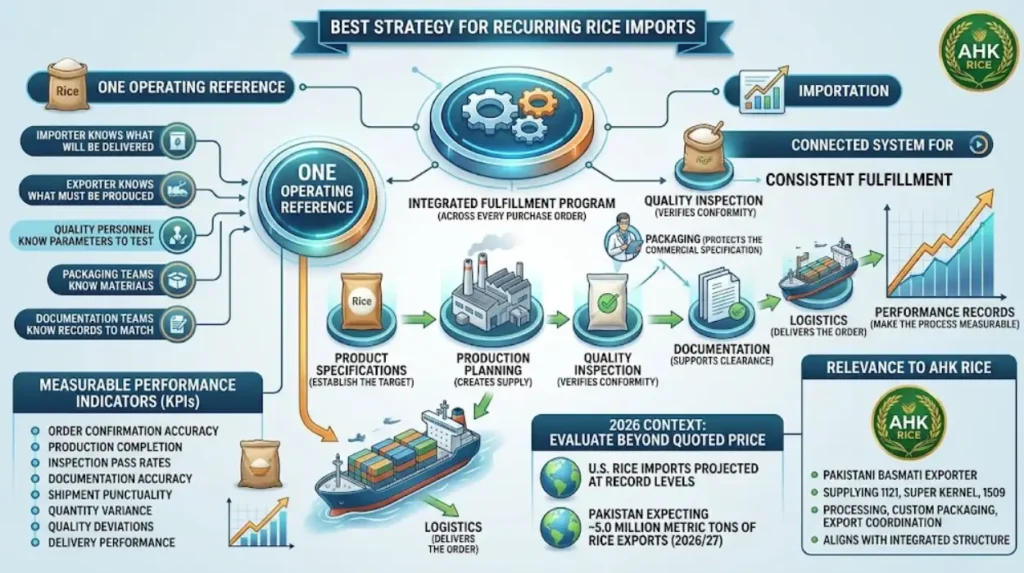
The best strategy for recurring rice imports is an integrated fulfillment program that combines fixed specifications, planned production capacity, batch testing, approved packaging, document control, shipment milestones, and post-delivery performance records across every purchase order.
This approach gives both parties one operating reference. The importer knows what will be delivered. The exporter knows what must be produced. Quality personnel know which parameters must be tested. Packaging teams know which materials to use. Documentation teams know which records must match the shipment.
The approach also creates measurable performance indicators. Buyers can track order confirmation accuracy, production completion, inspection pass rates, documentation accuracy, shipment punctuality, quantity variance, quality deviations, and delivery performance.
For AHK Rice, this type of integrated structure aligns with its role as a Pakistani Basmati rice exporter supplying 1121, Super Kernel, and 1509 varieties to international markets with processing, custom packaging, and export coordination.
The central lesson is that consistent fulfillment is not one quality-control activity. It is a connected system. Product specifications establish the target. Production planning creates supply. Quality inspection verifies conformity. Packaging protects the commercial specification. Documentation supports clearance. Logistics delivers the order. Performance records make the process measurable.
In 2026, with U.S. rice imports projected at record levels and Pakistan expecting approximately 5.0 million metric tons of rice exports in 2026/27, buyers need supplier evaluation methods that look beyond the quoted price and assess the complete fulfillment process.
Frequently Asked Questions
How do exporters maintain consistent rice order fulfillment standards?
Exporters maintain consistency by standardizing product specifications, controlling production batches, inspecting quality, verifying packaging and documents, and tracking shipments from order confirmation through delivery.
What is rice order fulfillment?
Rice order fulfillment is the complete process of receiving an order, confirming specifications, producing and processing the rice, packing it, completing inspections and documentation, loading the shipment, and coordinating delivery.
Why are product specifications important for rice order fulfillment?
Product specifications define the variety, grade, grain characteristics, broken percentage, moisture, packaging, quantity, and quality tolerances. They give the exporter and importer one measurable reference for every shipment.
How does batch testing improve rice quality consistency?
Batch testing compares a defined production quantity against the approved specification before shipment. It helps identify deviations in moisture, broken grains, foreign matter, milling quality, and other agreed parameters before the cargo is loaded.
What role does production planning play in order fulfillment?
Production planning ensures the exporter has sufficient paddy, processing capacity, packaging materials, labor, storage, and container-loading resources to meet confirmed shipment quantities and schedules.
How do exporters maintain consistent rice packaging?
Exporters use approved packaging specifications covering bag size, material, printed information, net weight, labeling, lot identification, and packaging quantities. Final checks confirm that packed goods match the buyer’s purchase order.
How does document control affect rice shipment fulfillment?
Document control ensures invoices, packing lists, certificates, inspection records, certificates of origin, and other required documents accurately correspond with the shipped rice. Correct documentation helps reduce customs and clearance delays.
Why is shipment tracking important for rice importers?
Shipment tracking provides visibility over production completion, inspection, container loading, vessel departure, document release, and delivery. Importers can use these milestones to plan inventory and customer fulfillment.
Which rice fulfillment method works best for recurring import orders?
An integrated fulfillment program works best for recurring orders because it combines fixed specifications, production planning, batch testing, packaging controls, documentation, shipment tracking, and post-delivery performance reviews.
How should U.S. rice buyers evaluate exporter fulfillment standards?
U.S. buyers should evaluate product consistency, production capacity, quality testing, packaging accuracy, documentation, shipment visibility, delivery performance, communication, and historical fulfillment results rather than comparing suppliers only by price.