AHK Rice Pakistan Sella Basmati Rice Supply for Indonesian Wholesale Buyers
AHK Rice provides Indonesian wholesale buyers with specification-led Sella Basmati supply, controlled processing, export documentation, and planned Pakistan-to-Indonesia shipping. Here is why: wholesale procurement requires consistent grade, measurable quality, predictable logistics, and a supplier capable of repeating the approved specification.
Indonesian buyers should first define the required Sella grade, grain profile, broken percentage, packing, quantity, destination port, and Incoterm. Buyers evaluating the market can first review why Pakistan Basmati Sella varieties suit Indonesian wholesale buyers before requesting a commercial specification.
What is the best solution for Indonesian wholesale buyers?
The best solution is an approved Sella specification matched with pre-shipment testing, controlled milling, suitable packaging, and a documented shipping schedule. This reduces specification disputes and helps wholesalers plan inventory.
Sella Basmati uses parboiling and drying during processing. The process produces firm kernels with strong cooking performance. The final specification still depends on variety, grade, processing controls, and sorting.
AHK Rice can supply Pakistani Basmati varieties including 1121 and other long-grain options. The correct selection depends on the buyer’s target price, retail positioning, cooking expectations, and required grain appearance.
Indonesian wholesale buyers should compare grain length, broken percentage, moisture, purity, processing type, packing, and crop specification before placing a container order. Compare Pakistan Sella rice grades and specifications for Indonesian wholesalers to establish the technical comparison before procurement.
A practical purchase specification should identify the variety and grade first. It should then define quality tolerances, packing format, quantity, destination, inspection requirements, and commercial terms.
The next decision is whether the supplier can execute this specification consistently.
Why choose AHK Rice for Sella Basmati supply?
AHK Rice combines milling, grading, sorting, testing, packaging, documentation, and shipment coordination into one export workflow. This gives wholesale buyers one controlled supply chain from approved specification to container dispatch.
AHK Rice provides the processing and export framework required for international rice procurement. The supplier workflow starts with the buyer’s specification and sample approval.
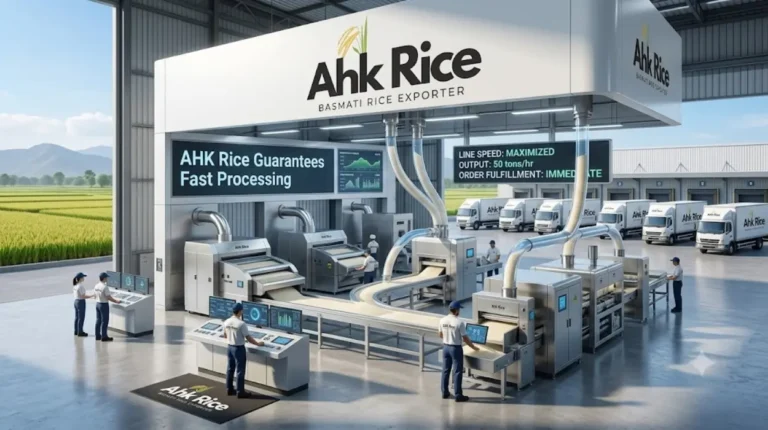
AHK Rice processes the selected paddy through controlled milling operations. The workflow includes cleaning, dehusking, polishing, grading, sorting, testing, inspection, packaging, and container loading.
Quality control focuses on measurable parameters. These can include moisture, broken percentage, grain appearance, purity, foreign matter, and agreed grade characteristics. Buyers should confirm the exact tolerance before production.
Packaging can also be aligned with the distribution channel. Wholesale buyers can select bulk export formats or customized packaging according to their commercial requirements. Packaging specifications should be confirmed before production.
Export documentation forms another important control. Typical documents can include the commercial invoice, packing list, Bill of Lading, Certificate of Origin, phytosanitary documentation, and other certificates required by the agreed shipment and destination procedures.
Indonesia also has specific import controls for rice. Current U.S. Commercial Service guidance identifies restrictions involving rice with certain broken-grain percentages, including Basmati. Buyers must therefore verify the applicable Indonesian import authorization and product specification before shipment.
This makes specification approval essential before the purchase order. The supplier should produce against the agreed technical requirements rather than a general product description.
What results can Indonesian buyers expect from the supply process?
Buyers can expect an approval-led workflow covering sampling, production, inspection, documentation, container loading, sea freight, and destination clearance coordination. The process creates checkpoints before the commercial shipment moves.
The sample stage should confirm the physical and cooking characteristics of the selected Sella grade. Buyers can assess grain length, aroma, appearance, cooked elongation, texture, and general cooking performance.
AHK Rice states that samples can be dispatched from its Punjab mills to Indonesia. Its Indonesia export page gives a sample delivery estimate of 7–10 days.
What does the sample process cost?
Sample cost depends on the sample quantity, courier route, packaging, and commercial order status. A buyer should request the exact sample quotation before dispatch rather than assume a fixed international courier charge.
A practical sample process follows these stages:
- Define the required Sella variety, grade, packing, and destination.
- Request the technical specification and sample quotation.
- Approve the physical sample after quality and cooking evaluation.
- Confirm the purchase specification and commercial terms.
- Mill the order against the approved grade.
- Test moisture, broken percentage, purity, and other agreed parameters.
- Inspect the finished cargo before packing or loading.
- Package the rice according to the approved format.
- Load the containers after documentation and inspection approval.
- Dispatch the shipment from Karachi toward Indonesia.
AHK Rice states that sample charges may be waived against confirmed orders on its Indonesia export information. Buyers should confirm the current commercial treatment when requesting the sample.
The sample therefore functions as a procurement control. The approved sample becomes the physical reference for production and helps reduce disagreement over appearance and cooking performance.
How many shipping days should Indonesian wholesalers plan for?
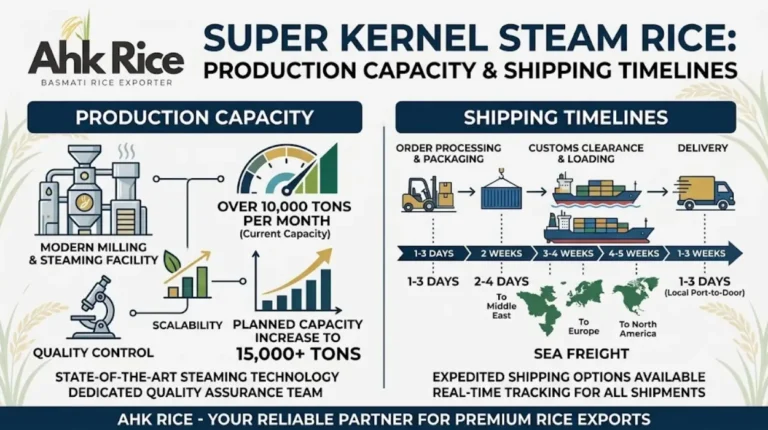
Indonesian wholesalers should plan around 4–6 weeks from purchase-order confirmation to delivery, with approximately 14–21 days allocated to sea transit on AHK Rice’s stated route. Actual delivery depends on vessel and clearance conditions.
AHK Rice’s published Indonesia logistics information gives 14–21 days for sea transit from Karachi to Indonesian ports. Its broader planning estimate is approximately 4–6 weeks from order confirmation through production, documentation, port handling, sea freight, and delivery.
| Stage | Planning time |
|---|---|
| Production | 7–10 days |
| Documentation and port clearance | About 7 days |
| Sea freight | 14–21 days |
| Total order window | About 4–6 weeks |
Jakarta and Surabaya are practical destination options for different wholesale distribution networks. Current AHK Rice route information also gives broader planning ranges of 18–28 days for Pakistan-to-Indonesia logistics, depending on the destination and route.
Vessel schedules can change the actual arrival date. Port congestion can also extend the schedule. Indonesian customs processing creates another variable after arrival.
Wholesalers should therefore connect their purchase order to the confirmed vessel booking. Retail promotions should use the confirmed estimated arrival date rather than the shortest theoretical sailing time.
With the logistics window established, cost becomes the next purchasing decision.
What factors affect the price of Sella Basmati rice?
Sella Basmati pricing depends on variety, grade, grain specifications, order volume, packing, inspection, Incoterm, freight, and destination costs. Buyers should compare complete landed economics rather than only the FOB price.
Grade affects the raw material and processing value. Extra-long grain specifications can command a different price from standard long-grain grades. Lower broken percentages can also change the commercial value.
Order quantity affects production and freight economics. A full-container order normally provides better logistics efficiency than a small consolidated shipment. The buyer should therefore compare price per metric ton against total shipment volume.
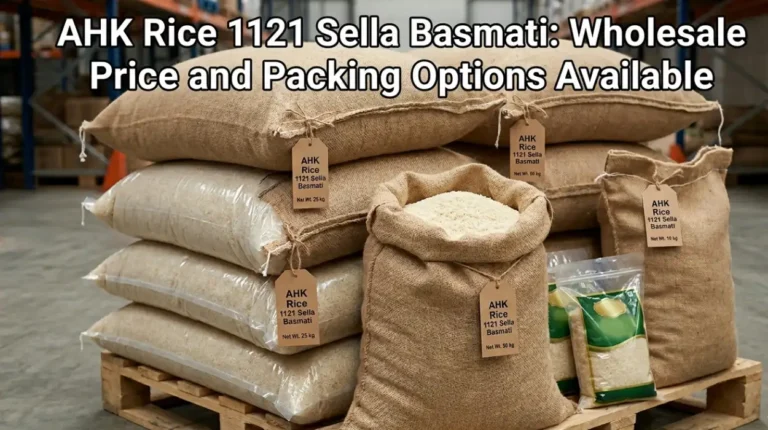
Packaging affects the quotation as well. Standard PP woven bags normally differ from customized retail packaging, printed bags, private-label packaging, or specialized formats.
Incoterms also change the apparent price. FOB Karachi excludes the ocean freight component paid by the buyer. CFR or CIF pricing incorporates additional logistics elements, subject to the agreed destination and insurance terms.
Freight rates remain variable. Current freight platforms show that Karachi-to-Jakarta ocean pricing depends on routing, service availability, cargo readiness, and shipment type.
A commercial comparison should therefore request the same basis from every supplier. Compare the same grade, quantity, packing, inspection requirement, Incoterm, destination port, and validity period.
What should Indonesian wholesalers check before placing an order?

Buyers should approve five controls before production: product specification, physical sample, commercial terms, inspection procedure, and shipping documentation. These controls turn supplier selection into a measurable procurement decision.
| Decision factor | Buyer action |
|---|---|
| Grade | Approve exact Sella variety and quality tolerance |
| Sample | Confirm appearance and cooking performance |
| Quality | Define testing and inspection requirements |
| Commercial | Confirm price, quantity, Incoterm, and payment |
| Logistics | Confirm destination port and vessel schedule |
The strongest supplier decision is not always the lowest quoted price. A cheaper specification can create higher costs through inconsistent quality, claims, delayed delivery, or unsuitable packaging.
A stronger decision compares the approved specification against the supplier’s ability to reproduce it. The supplier should also explain how quality is tested before the container leaves Pakistan.
AHK Rice’s published export workflow includes sample approval, production, quality checks, packaging, inland transport, sea freight, and destination support.
This approach gives the buyer a documented sequence rather than an informal purchasing promise. The final decision should be based on specification fit, total cost, shipment timing, and repeat-order capability.
How can Indonesian wholesale buyers get started?
Start with the exact Sella grade, quantity, destination port, packaging, Incoterm, and inspection requirements. A complete specification allows the export team to prepare a more useful commercial quotation.
The first step is to request the technical specification. The buyer should identify the preferred Sella variety and required quality parameters.
The second step is sample approval. The buyer should evaluate the rice before confirming the production specification.
The third step is commercial confirmation. The proforma invoice should state the variety, grade, quantity, packaging, price basis, payment terms, destination, and agreed specifications.
The fourth step is production and inspection. AHK Rice then processes the order according to the approved requirements and prepares the cargo for export.
The fifth step is shipment. Containers move from the mill toward Karachi, where documentation, loading, and vessel dispatch are coordinated.
The sixth step is destination handling. The Indonesian importer completes the required local procedures and receives the cargo according to the agreed delivery arrangement.
For a wholesale buyer, this workflow provides the clearest path from product evaluation to repeat supply. The right decision is to approve the specification first, validate the sample, compare complete landed cost, and then secure the shipment schedule.
For a specification-led quotation and shipment plan, Indonesian wholesale buyers can submit their requirements through AHK Rice’s request-a-quote process.
Frequently Asked Questions
What Sella Basmati grades can Indonesian wholesalers source from Pakistan?
Indonesian wholesalers can evaluate Sella grades such as 1121 Golden Sella and other approved Pakistani Basmati specifications.
The exact grade should match the buyer’s required grain length and quality parameters.
Sample approval should precede commercial production.
The purchase order should reproduce the approved specification.
Final availability and pricing should be confirmed with AHK Rice.
How long does Pakistan-to-Indonesia rice shipping take?
AHK Rice indicates approximately 14–21 days for sea transit and around 4–6 weeks for the complete order cycle.
Production can require 7–10 days.
Documentation and port handling can add about one week.
Vessel schedules and transshipment can change the arrival date.
Buyers should plan against the confirmed booking.
How much does a Sella Basmati rice sample cost?
Sample cost depends on quantity, courier route, packaging, and whether the sample charge is credited or waived against an order.
AHK Rice publishes sample delivery to Indonesia at about 7–10 days.
Sample charges should be confirmed with the quotation.
Confirmed orders may qualify for sample-charge treatment.
The physical sample should become the quality reference.
What documents are required for an Indonesian rice shipment?
Typical export documentation includes the commercial invoice, packing list, Bill of Lading, Certificate of Origin, and phytosanitary documentation.
Additional certificates depend on the agreed specification.
Indonesian import requirements must be verified before shipment.
The importer should confirm current local authorization requirements.
Documentation should match the final commercial and product specification.
What is the best way to compare suppliers?
Compare suppliers using the same grade, quality tolerances, quantity, packing, Incoterm, inspection method, and destination port.
A low FOB price does not establish the lowest landed cost.
Sample consistency should also be evaluated.
Shipping reliability affects inventory planning.
Repeat-order capability should form part of the final supplier decision.