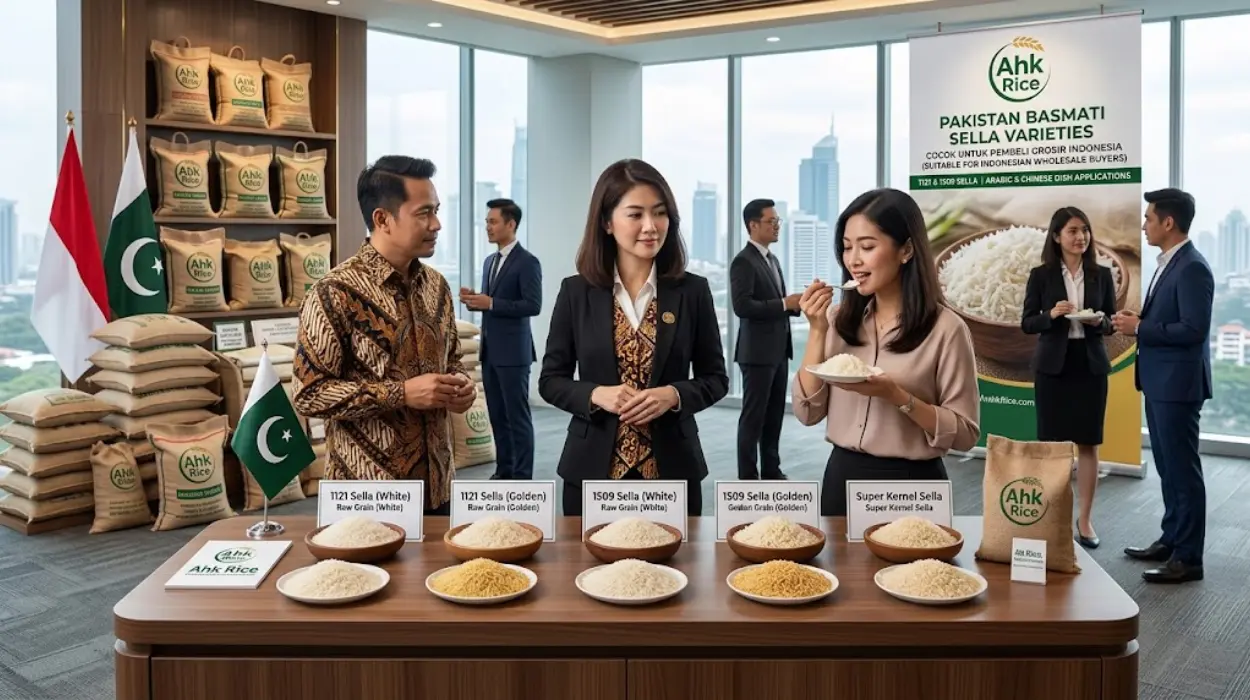
Why Are Pakistan Basmati Sella Varieties Suitable for Indonesian Wholesale Buyers?
Pakistan Basmati Sella varieties suit Indonesian wholesale buyers because parboiling strengthens the grain, supports separate cooked grains, improves handling, and creates grades for premium retail and foodservice use. Here is why: Pakistani Basmati combines long grain structure with controlled processing and export-oriented specifications.
What are Pakistan Basmati Sella varieties?
Pakistan Basmati Sella is parboiled Basmati rice produced from varieties such as 1121, Super Kernel, and 1509 Basmati rice, with firm grains and strong cooking performance. The Sella process treats paddy before final milling. This changes the grain structure and produces a firmer kernel.
Pakistan Basmati grows mainly across Punjab’s Basmati-growing areas. The region provides the agricultural base for varieties including 1121, Super Kernel, and 1509. AHK Rice operates from Punjab and supplies these varieties to international wholesale markets.
Sella describes a processing method, not one single rice variety. A buyer can therefore source 1121 Sella, Super Kernel Sella, or 1509 Sella. Each grade has a different grain length, aroma profile, cooking behavior, and commercial position.
Which Pakistani Basmati varieties are available as Sella?
1121 provides the longest grain profile, 1509 balances long grain with value, and Super Kernel provides a strong traditional Basmati aroma. These differences allow Indonesian wholesalers to match processing grades with retail, horeca, and specialty food channels.
| Variety | Typical raw grain length | Main positioning |
|---|---|---|
| 1121 Basmati | 8.30–8.50 mm | Premium |
| 1509 Basmati | 8.00–8.30 mm | Value-oriented |
| Super Kernel Basmati | 7.20–7.60 mm | Aromatic premium |
These specifications provide a starting point for procurement. Actual contract specifications should state the agreed grain length, broken percentage, moisture, foreign matter, crop year, and processing grade.
Indonesian wholesalers therefore evaluate Sella as a combination of variety + processing + specification, rather than as a single commodity category.
With the product defined, the next question is how Sella processing changes the grain.
How is Pakistan Basmati Sella rice processed?
Sella rice follows a controlled sequence of cleaning, soaking, parboiling, drying, dehusking, milling, grading, sorting, and packing before export. Each stage controls a specific physical or food-quality characteristic.
What happens during Sella processing?
Parboiling changes the kernel structure before milling, while drying stabilizes the grain for subsequent dehusking, polishing, grading, and sorting. The process creates firm grains that retain their shape during cooking.
- Clean the paddy to remove stones, dust, straw, and other field material.
- Soak the paddy to introduce controlled moisture into the grain.
- Parboil the paddy using controlled heat treatment to strengthen the kernel.
- Dry the paddy to reduce moisture to a stable milling level.
- De-husk the grain to remove the outer husk.
- Mill the rice to remove bran layers and produce the required appearance.
- Polish the rice according to the contracted finish and presentation.
- Grade the rice by length, broken percentage, and physical quality.
- Sort the rice using mechanical and optical systems to remove defective or contrasting grains.
- Pack the rice in the agreed retail or wholesale format.
Sella processing also produces different visual grades. Golden Sella has a deeper golden appearance, while Creamy Sella has a lighter cream-colored appearance.
What does parboiling change?
Parboiling increases grain firmness and supports separate cooked grains, making Sella suitable for high-volume cooking and repeated commercial handling. The treatment also changes the grain’s appearance compared with ordinary white-milled Basmati.
Sella rice is commonly selected for dishes requiring intact grains. Examples include biryani, pulao, rice platters, catering meals, and restaurant production.
The process therefore connects agricultural variety with commercial cooking performance. The next section explains the specifications Indonesian wholesalers evaluate.
What specifications matter for Indonesian wholesale buyers?
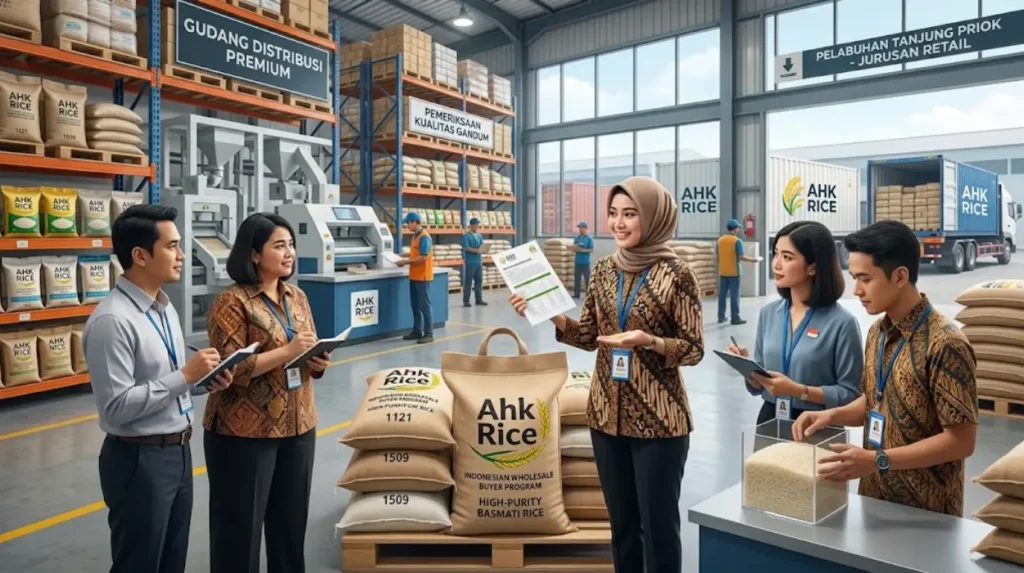
Indonesian wholesalers should evaluate grain length, broken percentage, moisture, aroma, cooking expansion, colour, foreign matter, and packaging before selecting a Sella grade. These specifications determine product consistency and commercial positioning.
Which specifications define a Sella shipment?
Grain length and broken percentage establish visual quality, while moisture and foreign matter control storage and physical cleanliness. Buyers should record each specification directly in the purchase contract.
| Specification | Why wholesalers evaluate it |
|---|---|
| Grain length | Controls visual positioning |
| Broken percentage | Influences whole-grain presentation |
| Moisture | Supports storage stability |
| Aroma | Defines Basmati identity |
| Cooking expansion | Determines plate appearance |
| Colour | Distinguishes Sella presentation |
| Foreign matter | Measures physical cleanliness |
A 1121 Sella specification normally targets a longer grain than Super Kernel Sella. A 1509 Sella specification sits between premium 1121 and shorter Super Kernel profiles.
Indonesian buyers can use these specifications to create separate product lines. Premium supermarkets can prioritize 1121. Value-focused distributors can select 1509. Specialty retailers can use Super Kernel for its aromatic profile.
Detailed comparison becomes important at procurement stage. Indonesian wholesalers evaluating grain length, processing grade, moisture, broken percentage, and commercial positioning can use the guide comparing Pakistan Sella rice grades and specifications for Indonesian wholesale procurement.
With the core specifications established, the next question is why Sella fits different Indonesian wholesale applications.
Why do Indonesian wholesalers use Sella rice?
Sella suits Indonesian wholesale distribution because firm grains support bulk cooking, long-distance handling, attractive presentation, and consistent portion preparation across retail and foodservice channels. These attributes connect directly with commercial rice usage.
Which wholesale uses suit Sella?
Premium retail uses 1121 Sella, foodservice uses firm-grain Sella for high-volume cooking, and value distribution uses 1509 Sella for balanced positioning. Super Kernel Sella serves buyers prioritizing traditional Basmati aroma.
Common applications include:
- Retail distribution: 5 kg, 10 kg, and larger consumer-oriented packs.
- Hotel kitchens: high-volume rice preparation requiring intact grains.
- Restaurant supply: biryani, pulao, and other long-grain dishes.
- Catering operations: repeated cooking in large batches.
- Specialty food distribution: aromatic Basmati positioned above standard rice.
Indonesian wholesale channels differ by customer and price point. One distributor can therefore stock more than one Sella variety.
AHK Rice supplies 1121, Super Kernel, and 1509 varieties from Punjab. Its processing model includes milling, grading, sorting, custom packaging, and export handling.
Which Sella grades are available from Pakistan?
The principal Sella options include 1121 Golden Sella, 1121 Creamy Sella, Super Kernel Sella, and 1509 Sella, with each grade serving a different specification and market position. Buyers select the variety first and processing finish second.
What is 1121 Golden Sella?
1121 Golden Sella combines an extra-long Basmati variety with golden parboiling, producing firm grains and strong visual appeal for premium commercial cooking. Its long grain profile supports premium retail and foodservice positioning.
What is 1121 Creamy Sella?
1121 Creamy Sella uses the same extra-long 1121 variety with a lighter creamy appearance, giving buyers a different visual specification within the Sella category. It suits buyers who prefer a less pronounced golden colour.
What is Super Kernel Sella?
Super Kernel Sella combines a slender aromatic grain with parboiling, creating a firm product for buyers who prioritize traditional Basmati fragrance and separate cooked grains. Its grain length remains below 1121 and 1509.
What is 1509 Sella?
1509 Sella provides a long-grain parboiled option positioned below 1121 in grain length, supporting value-focused wholesale programs that still require Basmati-style presentation. It fits distributors seeking a balance between appearance and procurement economics.
These grades demonstrate why Sella should not be treated as one uniform product. The next issue is understanding the certifications and documents relevant to Indonesian imports.
Which certifications and documents apply to Pakistan Basmati Sella exports?
Export shipments require documented product quality, food-safety controls, and destination-country compliance, with Indonesian requirements verified against current import rules and the specific shipment. Product standards and quarantine requirements form separate compliance areas.
Indonesia’s national standards system lists SNI 6128:2020 for rice as a valid rice standard. The Indonesian standards database also lists standards covering rice moisture and biometric grain characteristics.
Indonesia’s quarantine authority provides official systems for plant quarantine requirements, import requirements, phytosanitary processes, and quarantine applications.
Common export documentation includes:
- Certificate of Origin: identifies the exporting country and product origin.
- Phytosanitary certificate: supports plant-health compliance for regulated agricultural shipments.
- Certificate of Analysis: records agreed laboratory specifications.
- Fumigation certificate: documents treatment where required by the shipment.
- Commercial invoice: states product value and commercial terms.
- Packing list: records package counts, weights, and shipment details.
Certifications such as HACCP, ISO 22000, Halal, and other food-safety credentials can support supplier qualification. Their applicability depends on the buyer, product, facility, and Indonesian regulatory requirement.
With compliance requirements defined, the final issue is separating genuine Sella advantages from common misconceptions.
What are the common misconceptions about Pakistan Basmati Sella rice?
Sella is not a separate Basmati species, and Golden Sella is not automatically higher quality than Creamy Sella. Sella identifies parboiled processing, while variety and contracted specifications determine the actual product quality.
Does Sella mean every grain has the same specification?
No. Sella grades differ by variety, grain length, broken percentage, colour, moisture, and processing specification. A 1121 Sella contract therefore differs from a Super Kernel Sella contract.
Is Golden Sella always better than Creamy Sella?
No. Golden and Creamy Sella represent different colour and processing specifications rather than a universal quality ranking. The correct choice depends on the buyer’s product positioning and cooking requirements.
Does longer grain automatically mean better rice?
No. Grain length is one specification, while aroma, cooking expansion, broken percentage, moisture, cleanliness, and consistency also determine commercial suitability. A buyer should evaluate the complete specification.
Is Sella suitable only for Middle Eastern markets?
No. Sella is a processing category with applications in retail, catering, restaurants, and specialty food distribution across international markets. Indonesian wholesalers can select it based on their channel requirements.
Pakistan Basmati Sella therefore combines agricultural variety, controlled parboiling, milling, grading, sorting, and export documentation into a measurable wholesale product. The strongest procurement approach starts with the required variety and then defines every processing and quality specification.
Frequently Asked Questions
What is Pakistan Basmati Sella rice?
Pakistan Basmati Sella is parboiled Basmati rice processed from varieties such as 1121, 1509, and Super Kernel. Parboiling strengthens the grain before milling.
Which Pakistani Sella variety has the longest grain?
1121 Basmati has the longest typical raw grain profile among the three varieties discussed. Its specification commonly falls around 8.30–8.50 mm.
What is the difference between Golden Sella and Creamy Sella?
Golden Sella has a deeper golden appearance, while Creamy Sella has a lighter cream appearance. Both use parboiling as the core processing method.
Which Sella rice suits Indonesian wholesale buyers?
1121 Sella suits premium retail and hospitality. 1509 Sella suits value-focused distribution. Super Kernel Sella suits aromatic specialty channels.
What documents accompany Pakistani rice exports?
Typical documents include a commercial invoice, packing list, certificate of origin, phytosanitary certificate, certificate of analysis, and fumigation documentation where required.
What certifications apply to Indonesian rice imports?
Indonesia maintains rice standards through its national standards system, including SNI 6128:2020. Importers must also verify current plant-quarantine and destination requirements before shipment.