How Does Export Documentation Support Smooth Customs Clearance?
Export documentation supports smooth customs clearance by giving customs authorities a consistent record of the product, value, quantity, origin, shipment, and regulatory status. For Pakistani Basmati rice entering Colorado, the strongest approach connects commercial documents, food compliance records, shipping documents, and product specifications before cargo arrives.
Colorado importers should review documentation before ordering because errors often originate before the container reaches a U.S. port. A buyer that understands the document chain can compare suppliers on compliance control, not only rice price. For a practical explanation of the buyer-side review process, see:
Why Colorado importers review rice export documentation before ordering.
What export documentation is required for Pakistani Basmati rice entering the United States?
Export documentation creates the commercial and regulatory evidence customs authorities need to identify, value, classify, inspect, and release imported rice. Complete documents also connect the exporter, importer, carrier, food facility, product specification, and shipment into one traceable record.
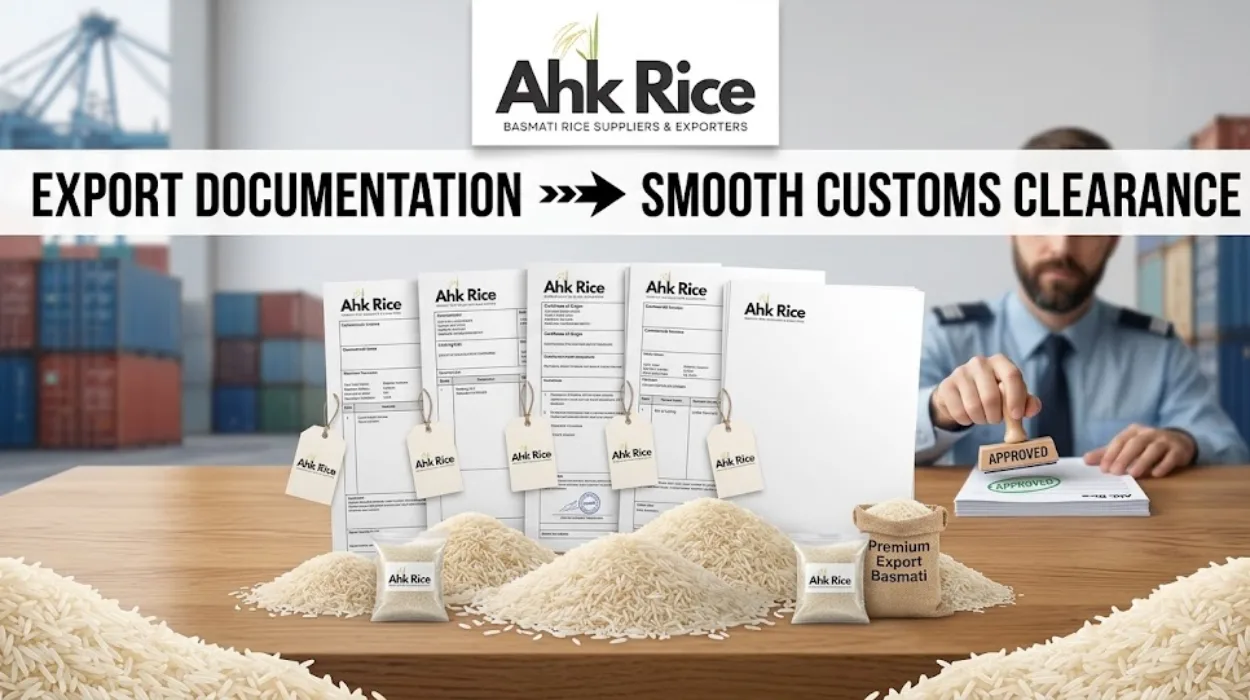
For Pakistani Basmati rice, the core document set normally includes a Commercial Invoice, Packing List, Certificate of Origin, Phytosanitary Certificate, Bill of Lading, Fumigation Certificate where applicable, quality or inspection records, and customs export documentation.
The Commercial Invoice identifies the seller, buyer, product description, quantity, value, and applicable classification information. U.S. Customs and Border Protection requires the invoice or acceptable substitute documentation with the entry and specifies information such as merchandise description, quantity, value, and the appropriate eight-digit HTSUS subheading.
The declared value also matters. CBP states that the invoice value should reflect the price paid by the U.S. buyer, with applicable additions included according to customs valuation rules. Foreign-currency amounts must be converted to U.S. dollars on invoices and other entry documents.
The Packing List connects the invoice to the physical cargo. It records bag count, package size, net weight, gross weight, container number, and packing configuration. A mismatch between the invoice and packing list creates an avoidable verification issue.
The Certificate of Origin establishes the country of origin. For Pakistani rice, this document supports the origin statement presented during import processing.
The Phytosanitary Certificate provides plant-health documentation for the shipment when required by the importing country’s rules. Pakistan’s export process also uses the Pakistan Single Window (PSW), where exporters or customs agents can submit export declarations and upload required documents electronically.
The Bill of Lading connects the commercial shipment to the transportation record. CBP describes it as a receipt, contract of carriage, and document of title containing information about the shipper, consignee, cargo, and route.
For U.S. food imports, documentation also interacts with FDA requirements. Imported food must meet U.S. requirements, and facilities producing, processing, packing, or holding food generally require FDA registration. Prior Notice must also be submitted before qualifying food shipments arrive.
This makes export documentation more than paperwork. It becomes the evidence structure that allows the customs broker, CBP, FDA, carrier, importer, and exporter to work from the same shipment information.
How do different export documentation approaches compare?
Three approaches dominate rice export documentation: fragmented paperwork, broker-led document collection, and exporter-managed documentation. The exporter-managed model provides the strongest control because product specifications, certificates, commercial records, packing data, and shipping information originate from one coordinated workflow.
A fragmented approach uses separate parties for production, certificates, freight, inspection, and document preparation. This can work for experienced importers with established systems. Its weakness is information duplication. Every handoff creates another opportunity for inconsistent weights, descriptions, dates, package counts, or consignee information.
A broker-led approach transfers more responsibility to the U.S. customs broker. The broker prepares or coordinates entry information from documents received from the exporter and importer. This reduces administrative pressure on the buyer, but the broker still depends on accurate source documents.
An exporter-managed approach starts documentation during order confirmation. The exporter fixes the product specification, quantity, packing format, origin, inspection requirements, and shipment terms before production. Documents are then checked against the physical shipment before dispatch.
| Attribute | Fragmented Documentation | Broker-Led Documentation | Exporter-Managed Documentation |
|---|---|---|---|
| Document ownership | Multiple parties | Importer and broker | Exporter with importer oversight |
| Product-document matching | Moderate | Moderate to high | High |
| Correction responsibility | Shared | Mainly broker/importer | Exporter coordinates source correction |
| Customs preparation | Reactive | Broker-centered | Planned before shipment |
| Traceability | Variable | Good when records are complete | Strong |
| Buyer workload | High | Medium | Lower |
| Best use case | Experienced multi-party programs | Standard recurring imports | High-volume or specification-sensitive imports |
The comparison shows why document control should be evaluated as part of supplier selection. A supplier that only sends scanned documents after loading provides less control than an exporter that verifies the document set against the production batch and container before departure.
AHK Rice operates within an export workflow covering processing, packaging, quality verification, documentation, and shipment coordination. Its published export documentation process includes commercial invoices, packing lists, certificates of origin, phytosanitary certificates, fumigation certificates where applicable, Bills of Lading, health certificates where applicable, insurance records, and quality inspection reports.
The objective is not to create more paperwork. The objective is to make every document describe the same shipment.
How do documentation requirements differ between North American and Middle Eastern rice markets?
North American buyers place greater emphasis on FDA, FSVP, traceability, labeling, and customs-entry evidence, while Gulf buyers emphasize certificates, origin, grade conformity, packaging, and destination food-control requirements. Both markets require accurate documents tied to the physical shipment.
For a Colorado importer, the relevant comparison is the North American market versus the Middle East/Gulf market. Colorado cargo normally enters the United States through an international port or inland customs process before moving into domestic distribution. The importer therefore manages U.S. federal customs and food requirements even when the final warehouse is in Colorado.
The Gulf market has a different compliance emphasis. Buyers in Saudi Arabia and the UAE commonly prioritize phytosanitary documentation, origin records, product conformity, labeling, packaging, and shipment certificates. The commercial document architecture remains similar, but the destination authority and supporting requirements differ.
| Market Region | Common Grade Preferences | Indicative 2026 FOB Price/MT | Typical Commercial Shelf-Life Planning | Documentation Priority |
| North America / USA | 1121 White, 1121 Steam, 1121 Sella, Super Kernel | $1,135–$1,205 | 12–24 months | FDA, FSVP, CBP, labeling, traceability |
| Middle East / Gulf | 1121 Sella, Golden Sella, 1121 Steam, Super Kernel | $1,135–$1,205 | 12–24 months | Phytosanitary, origin, conformity, labeling |
The July 2026 indicative FOB range of approximately $1,135–$1,205 per metric ton applies to comparable premium 1121 Basmati benchmarks. Actual contract prices vary with grade, broken percentage, processing, packaging, volume, crop, Incoterm, and shipment date.
The price overlap demonstrates an important procurement principle. Destination compliance can have greater financial importance than a small FOB price difference. A $30 per metric ton saving can disappear if incorrect documents create storage, inspection, correction, relabeling, or delayed-release costs.
Shelf life also requires specification control. Properly processed and packaged dry rice can support commercial storage periods of approximately 12–24 months, depending on packaging and storage conditions. Published AHK Rice guidance lists PP bags at up to 18 months and BOPP, vacuum, and retail laminated packaging at up to 24 months under suitable conditions.
For Colorado buyers, the declared product shelf life should therefore appear consistently across the specification, packaging information, and commercial records rather than being assumed from the rice variety alone.
Which documentation method works best for different import cases?
Exporter-managed documentation works best for high-volume, private-label, multi-container, and specification-sensitive programs. Broker-led coordination suits established importers with strong internal controls. Fragmented documentation works only when experienced parties maintain disciplined communication and document reconciliation.
A small importer placing an occasional shipment may rely on a customs broker to coordinate entry filing. The exporter still needs to provide accurate source documents. The broker cannot correct an incorrect product description or incorrect shipment quantity without reliable information from the seller.
A distributor importing several containers each month needs stronger document standardization. Repeated shipments create recurring data points such as importer name, consignee, product description, packaging, HTS classification, origin, and supplier information. A standardized master specification reduces repetitive corrections.
A private-label importer has an even stronger requirement. Packaging details, brand information, net weight, country-of-origin statements, product descriptions, and labeling records must align. A mismatch between the physical bag and the customs documents can create unnecessary examination or correction work.
For foodservice buyers, the product specification may be simpler, but quantity and packaging accuracy become critical. A 20-foot container with approximately 25 metric tons of rice needs the commercial invoice, packing list, Bill of Lading, and quality records to describe the same shipment.
For a Colorado importer evaluating an exporter at the decision stage, the relevant question is not whether the supplier can produce a PDF document. The question is whether the supplier can maintain document-to-cargo consistency from order confirmation through vessel departure and customs entry.
What are the pros and cons of each documentation strategy?
Fragmented documentation provides flexibility but increases coordination risk. Broker-led documentation reduces importer workload but depends on accurate exporter records. Exporter-managed documentation improves consistency and accountability, but it requires the exporter to maintain organized production, quality, customs, and shipping systems.
Fragmented documentation has one major advantage: flexibility. The buyer can choose specialized providers for inspection, freight, certification, customs brokerage, and logistics. The disadvantage is fragmented accountability. When two documents conflict, the buyer must determine which party owns the correction.
Broker-led documentation provides professional customs expertise. A customs broker understands entry procedures and communicates with CBP through established systems. The disadvantage is that the broker works downstream from the exporter’s documents. The broker cannot replace the need for accurate commercial and shipping records.
Exporter-managed documentation provides the strongest product-document connection. The exporter knows the grade, processing method, lot, packaging, container loading, and certificates. This creates a shorter information chain between the physical rice and its paperwork.
The disadvantage is that exporter-managed documentation requires operational maturity. The supplier must maintain controlled records, understand destination requirements, coordinate certificates, and verify shipment information before release.
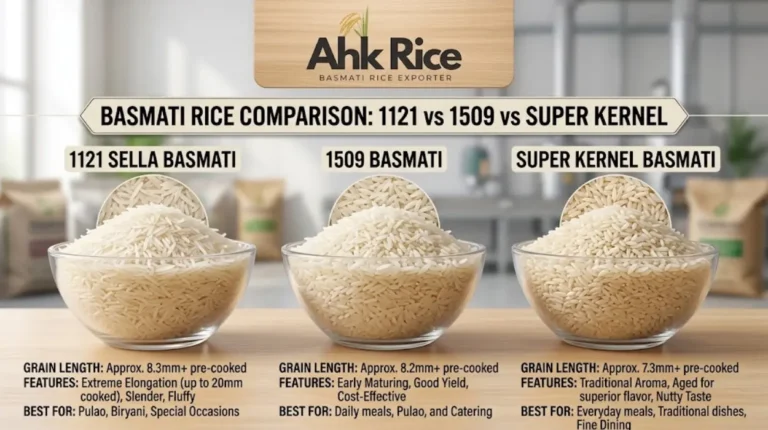
For a company such as AHK Rice, the value of an integrated workflow comes from connecting rice processing and export administration. AHK Rice supplies Pakistani Basmati varieties including 1121, Super Kernel, and 1509 and coordinates processing, custom packaging, quality documentation, and export shipment activities. Its USA export program identifies 1121, Super Kernel, and 1509 as available product categories for U.S. buyers.
What factors should Colorado importers use when choosing an export documentation strategy?
Colorado importers should evaluate documentation accuracy, regulatory coverage, product traceability, correction speed, and shipment consistency. These factors reveal whether a supplier can support customs clearance repeatedly rather than simply provide paperwork for one successful shipment.
| Decision Factor | What to Check | Why It Matters |
| Document accuracy | Invoice, packing list, origin, and Bill of Lading match | Prevents conflicting entry information |
| Regulatory coverage | FDA, CBP, Prior Notice, FSVP, and destination requirements | Reduces compliance gaps |
| Product traceability | Lot, grade, quantity, packaging, and quality records | Connects paperwork to physical cargo |
| Correction speed | Process for fixing errors before arrival | Limits delays and administrative costs |
| Shipment consistency | Same controls across repeated containers | Supports long-term inventory planning |
The first factor is document accuracy. The importer should compare the commercial invoice against the packing list and Bill of Lading before the shipment arrives. Product description, quantity, weight, consignee, origin, and container information should remain consistent.
The second factor is regulatory coverage. FDA states that food importers are responsible for ensuring imported food meets U.S. requirements, including applicable facility registration and Prior Notice obligations.
The third factor is traceability. A documented lot or batch structure helps connect quality results with the shipment. This becomes important when a customs authority, importer, retailer, or foodservice customer asks for supporting evidence.
The fourth factor is correction speed. Documentation should be reviewed before vessel departure rather than after arrival. Early correction gives the exporter, freight forwarder, customs broker, and importer more time to resolve discrepancies.
The fifth factor is repeatability. A supplier that handles one shipment correctly has not automatically demonstrated long-term documentation control. Buyers should evaluate whether the same document process can support 5, 10, or 20 containers without increasing error rates.
This is particularly important for Colorado distributors that serve wholesalers, restaurants, ethnic grocery stores, or retail networks. Their inventory schedule depends on customs release, inland transportation, warehouse receiving, and subsequent distribution. Documentation therefore affects the entire supply chain rather than only the customs transaction.
What is the most effective documentation workflow for Colorado rice importers?
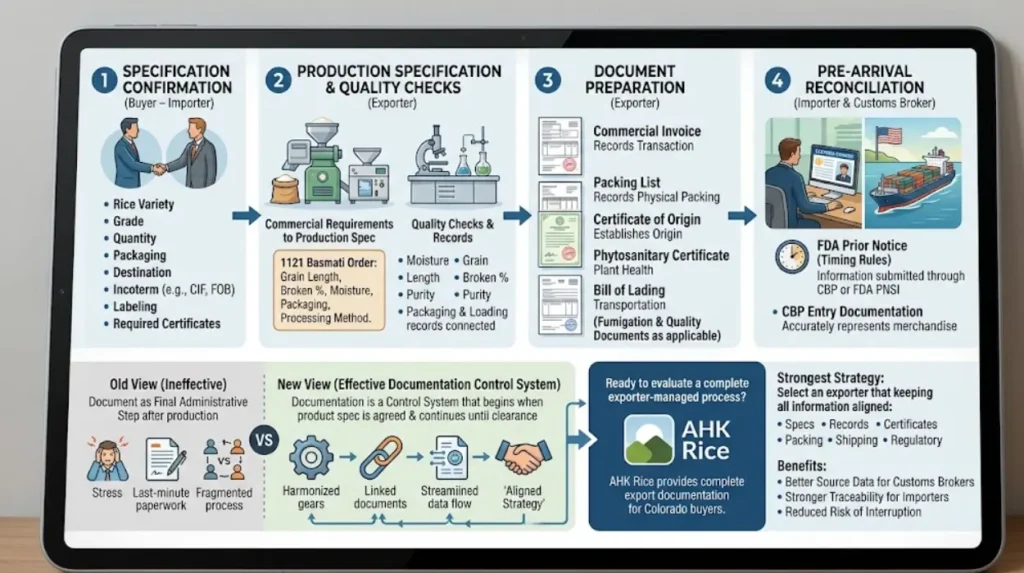
The most effective workflow begins with specification confirmation, continues through production and document preparation, and ends with pre-arrival reconciliation. The exporter, importer, customs broker, carrier, and regulatory parties should use matching shipment information throughout the process.
The process starts with the buyer confirming the rice variety, grade, quantity, packaging, destination, Incoterm, labeling requirements, and required certificates.
The exporter then converts those commercial requirements into a production specification. For example, a 1121 Basmati order can specify grain length, broken percentage, moisture, packaging, quantity, and processing method.
Quality checks follow production. Moisture, grain length, broken percentage, purity, packaging, and loading records can then be connected to the shipment documentation.
The document set is prepared before dispatch. The Commercial Invoice records the commercial transaction. The Packing List records the physical packing. The Certificate of Origin establishes origin. The Phytosanitary Certificate supports applicable plant-health requirements. The Bill of Lading records transportation. Fumigation and quality documents provide additional supporting evidence when applicable.
The importer and customs broker then reconcile the documents before the shipment reaches the U.S. port. FDA Prior Notice must be handled within the applicable timing rules, while CBP entry documentation must accurately represent the imported merchandise. FDA’s current guidance confirms that Prior Notice information can be submitted through CBP systems or the FDA Prior Notice System Interface depending on the transaction.
For buyers ready to evaluate a complete exporter-managed process, the decision-stage resource is:
AHK Rice provides complete export documentation for Colorado buyers.
The central comparison is clear. Documentation is not a final administrative step after production. It is a control system that begins when the product specification is agreed and continues until the shipment is cleared.
For Colorado importers, the strongest strategy is therefore to select an exporter that can keep product specifications, commercial records, certificates, packing details, shipping records, and regulatory information aligned throughout the transaction. That approach gives customs brokers better source data, gives importers stronger traceability, and reduces the risk that a documentation mismatch interrupts an otherwise compliant rice shipment.
Frequently Asked Questions
What export documents are required for Pakistani Basmati rice imports?
Common documents include the Commercial Invoice, Packing List, Certificate of Origin, Bill of Lading, Phytosanitary Certificate, and applicable fumigation, quality, and inspection certificates.
Why is export documentation important for customs clearance?
Export documentation gives customs authorities consistent information about the rice variety, quantity, value, origin, packaging, shipment, and regulatory status, helping reduce clearance delays.
What information should a rice Commercial Invoice contain?
A Commercial Invoice should identify the exporter, importer, product description, quantity, value, country of origin, and relevant shipment information required for customs entry.
How does a Packing List support rice customs clearance?
A Packing List connects the paperwork with the physical cargo by showing package count, net weight, gross weight, packaging format, container details, and shipment configuration.
Does Pakistani rice require a Certificate of Origin for U.S. imports?
A Certificate of Origin establishes that the rice was produced or exported from Pakistan and supports the origin information used in U.S. import documentation.
What is the role of a Phytosanitary Certificate in rice exports?
A Phytosanitary Certificate provides official plant-health documentation confirming that a qualifying agricultural shipment meets applicable plant-health requirements of the destination country.
How does FDA compliance affect Pakistani rice imports into the USA?
U.S. food imports must comply with FDA requirements. Depending on the shipment, requirements can include facility registration, Prior Notice, compliant labeling, and importer responsibilities under the Foreign Supplier Verification Program.
Who prepares customs documents for Pakistani Basmati rice?
The exporter prepares or supplies core commercial and export documents, while the U.S. importer and customs broker use those records to complete the applicable import-entry and regulatory processes.
How can documentation errors delay rice customs clearance?
Errors such as inconsistent weights, product descriptions, consignee information, package counts, country of origin, or container numbers can require clarification or correction before the shipment can proceed smoothly.
What is the best documentation strategy for high-volume rice importers?
Exporter-managed documentation generally provides stronger control for recurring or high-volume shipments because product specifications, quality records, certificates, packing information, and shipping documents can be reconciled through one coordinated workflow.