How Indonesian Buyers Source Rice from Pakistan for Wholesale Distribution
Indonesian buyers source rice from Pakistan through a structured supply chain that starts with cultivation and ends with wholesale distribution. The process includes farm production, milling, grading, quality testing, certification, export documentation, container loading, shipping, customs clearance, and local distribution. Here is why: Pakistan ranks among the world’s leading rice exporters and supplies multiple rice varieties that match Indonesian wholesale requirements.
Rice sourcing connects farmers, millers, exporters, shipping companies, customs authorities, importers, and distributors. Each participant performs a defined role. Indonesian wholesalers procure rice based on grain length, processing method, packaging specifications, certifications, and import compliance requirements.
Pakistan produces both Basmati and non-Basmati rice. Punjab remains the primary cultivation region for premium Basmati varieties. Sindh produces large volumes of IRRI and long-grain rice for bulk export markets.
Understanding how Indonesian buyers source rice requires examining the entire value chain from cultivation to retail distribution.
What Is Rice Sourcing from Pakistan for Indonesian Wholesale Distribution?
Rice sourcing means identifying suitable rice varieties, verifying quality standards, completing export procedures, and securing supply for commercial distribution in Indonesia.
Rice sourcing is a procurement process. Indonesian importers purchase rice from Pakistani exporters to supply supermarkets, wholesalers, food service operators, distributors, and food manufacturers.
Pakistan exports several rice categories. Each category serves different market requirements.
Which Rice Varieties Do Indonesian Buyers Source?
Indonesian importers commonly evaluate several rice varieties based on target customers and distribution channels.
1121 Basmati Rice
1121 Basmati rice features extra-long grains measuring 8.30 mm to 8.50 mm before cooking. The grain elongates significantly during cooking and delivers a distinct aroma.
Super Kernel Basmati Rice
Super Kernel Basmati rice measures 7.20 mm to 7.60 mm. The variety offers traditional aroma and remains popular across premium retail markets.
1509 Basmati Rice
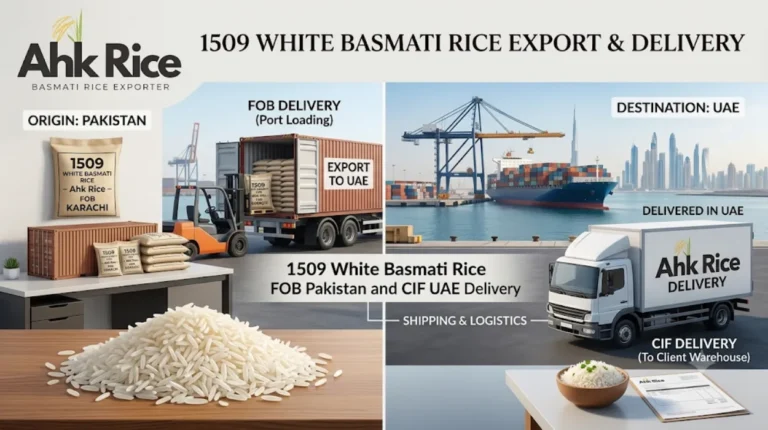
1509 Basmati rice provides long grain length and faster cultivation cycles. The variety supports competitive pricing while maintaining premium characteristics.
IRRI Rice
IRRI rice serves volume-focused markets. The variety supports food manufacturing, institutional catering, and large-scale distribution.
Rice variety selection influences pricing, packaging, storage requirements, and target market positioning. Understanding available varieties leads naturally to understanding how the sourcing process works.
With the available rice varieties defined, the next question is how Indonesian buyers move from product selection to procurement.
How Does the Rice Sourcing Process Work?
The sourcing process follows 9 stages: cultivation, harvesting, drying, milling, grading, testing, documentation, shipping, and distribution.
Rice sourcing begins long before export documentation. The process starts in agricultural fields where farmers cultivate rice according to seasonal production cycles.
How Is Rice Cultivated?
Farmers cultivate rice in irrigated agricultural land. Punjab contributes a significant share of Pakistan’s Basmati production due to fertile soil and established irrigation systems.
Cultivate the crop using certified seed varieties.
Irrigate fields according to crop growth stages.
Monitor pests through agricultural management programs.
Harvest mature rice at optimal moisture levels.
How Is Rice Processed?
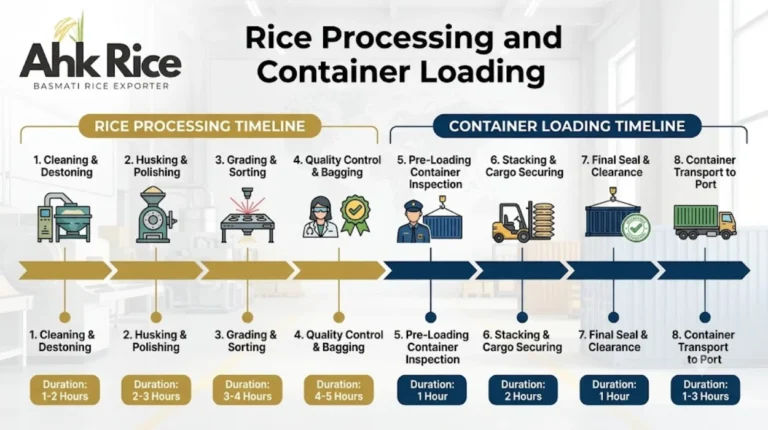
Rice processing transforms harvested paddy into export-ready rice.
Clean the harvested paddy.
De-husk the grain.
Separate immature kernels.
Polish the rice.
Grade by grain length.
Sort using color-sorting machines.
Inspect physical quality.
Test moisture levels.
Pack according to buyer specifications.
Processing accuracy determines export quality consistency. Consistent processing improves importer confidence and supports repeat procurement.
How Is Rice Exported?
Export procedures involve several operational stages.
Prepare commercial documents.
Verify laboratory reports.
Obtain phytosanitary certification.
Load containers.
Dispatch cargo to port facilities.
Clear export customs.
Ship containers to Indonesia.
Deliver cargo after import clearance.
Export execution depends on documentation accuracy. Documentation accuracy reduces delays and protects supply schedules.
With the sourcing workflow explained, the next question is which components make the system function effectively.
What Are the Key Components of Rice Sourcing?
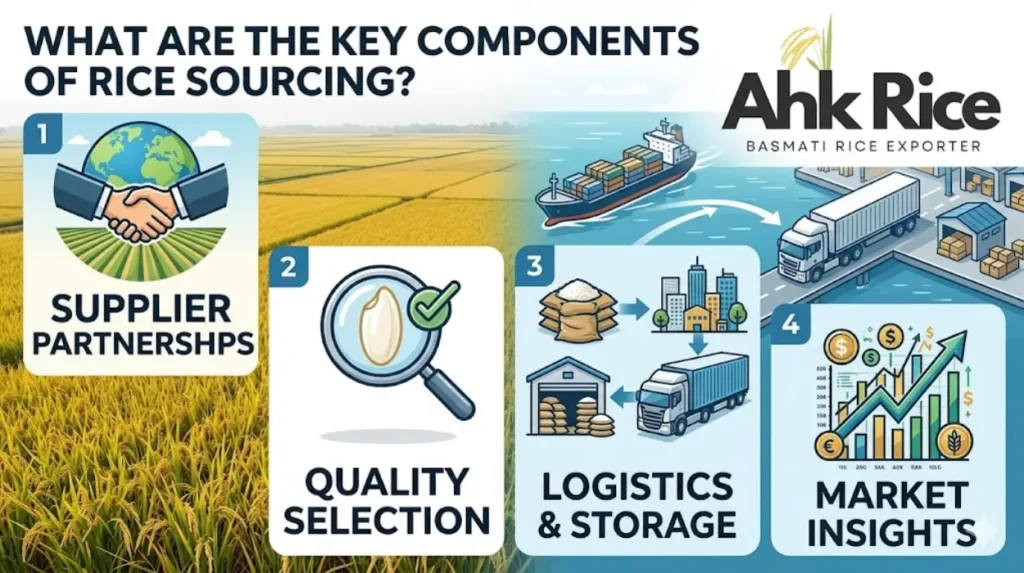
The key components include cultivation, milling infrastructure, quality control systems, certifications, logistics networks, and import compliance procedures.
Each component contributes to supply chain performance. Weakness in one area creates delays or quality issues throughout the distribution process.
Cultivation Systems
Cultivation systems determine grain quality. Seed selection, irrigation management, and harvesting timing influence final rice specifications.
Milling Infrastructure
Modern rice mills improve sorting accuracy. Automated systems remove damaged grains and foreign materials with higher precision.
Key milling functions include:
- Cleaning systems
- De-husking systems
- Polishing systems
- Length grading systems
- Color sorting systems
- Moisture control systems
Quality Assurance
Quality assurance protects product consistency.
Quality activities include:
- Moisture testing
- Purity verification
- Broken percentage analysis
- Grain length measurement
- Foreign matter inspection
- Laboratory certification
Logistics Networks
Logistics networks connect production facilities with destination markets.
Key logistics elements include:
- Container availability
- Inland transportation
- Port handling
- Shipping schedules
- Customs clearance
- Distribution planning
These components collectively support international rice trade and determine procurement reliability.
With the major sourcing components established, the next question is why Indonesian wholesalers choose Pakistan as a supply origin.
What Benefits Do Indonesian Buyers Gain from Sourcing Rice from Pakistan?
Pakistani rice sourcing provides variety selection, large export capacity, established processing infrastructure, certification availability, and international shipping connectivity.
Benefits depend on importer objectives. Retail distributors, food manufacturers, and catering suppliers often prioritize different attributes.
Access to Multiple Grades
Pakistan exports numerous rice grades.
Common grades include:
- White Rice
- Steam Rice
- Golden Sella Rice
- Creamy Sella Rice
- Brown Rice
- Extra Long Grain Rice
- Premium Sortex Rice
Grade diversity supports multiple pricing strategies.
Established Export Infrastructure
Pakistan operates extensive export networks. Rice exporters work with freight forwarders, inspection agencies, laboratories, and shipping companies.
Established infrastructure improves shipment coordination.
Large Production Volumes
Large production volumes support wholesale distribution requirements. Consistent supply remains essential for importers serving nationwide distribution networks.
For example, supermarket chains require predictable inventory replenishment schedules. Food manufacturers require stable raw material availability. Catering distributors require uninterrupted bulk supply.
Packaging Flexibility
Rice exporters commonly offer:
- 1 kg retail packs
- 5 kg retail packs
- 10 kg retail packs
- 25 kg bags
- 40 kg bags
- 50 kg bags
Packaging flexibility supports different distribution channels.
Large-scale sourcing benefits become clearer when viewed through practical market applications.
With the sourcing advantages explained, the next question is how Indonesian wholesalers actually use imported rice in their distribution systems.
What Are the Main Use Cases for Imported Pakistani Rice in Indonesia?
Imported Pakistani rice serves retail distribution, food service operations, institutional procurement, food manufacturing, and wholesale redistribution.
Rice distribution varies according to buyer type and target consumer segment.
Retail Distribution
Retail distributors package rice for supermarkets and grocery stores.
Premium Basmati varieties target consumers seeking aromatic long-grain rice.
Food Service Distribution
Food service distributors supply:
- Hotels
- Restaurants
- Catering companies
- Banquet operators
- Event service providers
Long-grain rice performs well in large-scale meal preparation because grains remain separate after cooking.
Food Manufacturing
Food manufacturers use rice as an ingredient in processed foods.
Examples include:
- Rice-based snacks
- Frozen meals
- Ready-to-eat products
Wholesale Redistribution
Wholesale distributors import container quantities and resell inventory through regional networks.
Wholesale redistribution expands market reach across multiple provinces.
Use cases explain demand patterns, but misconceptions often create confusion during procurement decisions.
What Common Problems and Misconceptions Affect Rice Sourcing?
The most common misconceptions involve rice grades, certifications, grain length standards, shipping timelines, and quality consistency.
Accurate information improves sourcing decisions and reduces procurement risk.
Misconception 1: All Pakistani Rice Is Basmati
Pakistan exports both Basmati and non-Basmati rice.
Basmati represents one category within a broader rice export portfolio.
IRRI rice, long-grain white rice, and parboiled rice serve different market requirements.
Misconception 2: Longer Grain Always Means Better Quality
Grain length represents one quality indicator.
Quality evaluation also includes:
- Moisture content
- Purity percentage
- Broken percentage
- Aroma profile
- Cooking performance
- Certification compliance
Misconception 3: Certifications Are Optional
Import compliance depends on documentation requirements.
Common certifications include:
- Phytosanitary Certificate
- Certificate of Origin
- Fumigation Certificate
- Health Certificate
- Laboratory Test Reports
- Quality Inspection Reports
Certification requirements vary according to import regulations and buyer specifications.
Misconception 4: All Processing Grades Perform the Same
Processing methods create different outcomes.
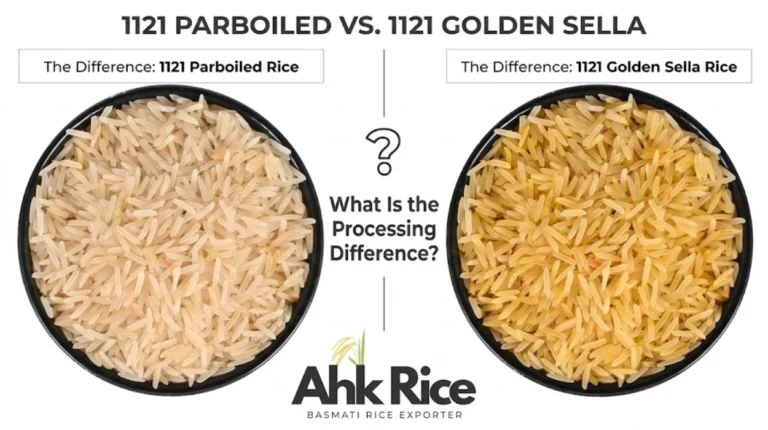
Golden Sella lasts longer than Steam rice. In hot storage environments, Golden Sella maintains structural integrity for extended periods. Steam rice provides a softer texture and targets different consumer preferences.
White rice differs from Brown rice. Brown rice retains bran layers. White rice undergoes additional polishing.
Misconception 5: Sourcing Ends After Shipment
Rice sourcing continues after vessel departure.
Importers monitor:
- Shipment tracking
- Customs clearance
- Warehouse receiving
- Distribution planning
- Inventory management
Post-arrival activities determine wholesale distribution success.
With sourcing misconceptions clarified, the complete rice procurement process becomes easier to understand and evaluate.
Indonesian buyers source rice from Pakistan through a structured chain that combines cultivation, processing, grading, certification, logistics, and distribution management.
Pakistan supplies multiple rice varieties including 1121 Basmati, Super Kernel Basmati, 1509 Basmati, and IRRI rice. Indonesian wholesalers evaluate grain specifications, processing grades, certifications, packaging options, and logistics requirements before procurement decisions.
Successful sourcing depends on understanding the complete value chain. Cultivation quality influences processing outcomes. Processing quality influences certifications. Certifications support export compliance. Export compliance enables smooth wholesale distribution in Indonesia.
Frequently Asked Questions
How long does rice shipping from Pakistan to Indonesia take?
Container shipments generally require approximately 10–20 days depending on departure port, destination port, vessel schedule, and customs procedures.
Which Pakistani rice variety is most popular for premium markets?
1121 Basmati rice is widely recognized for its extra-long grain length and aroma characteristics.
What certifications are commonly required for rice exports?
Common documents include Phytosanitary Certificate, Certificate of Origin, Fumigation Certificate, laboratory reports, and commercial export documents.
What is the difference between Steam Rice and Golden Sella Rice?
Golden Sella rice undergoes parboiling before milling. Steam rice undergoes steam treatment. Processing differences affect color, texture, and storage performance.
Why do Indonesian wholesalers import rice from Pakistan?
Importers source rice from Pakistan because of variety availability, export infrastructure, established processing capacity, and international shipping connectivity.