Rice Syrup Market Growth Creates New Opportunities for Rice Trade
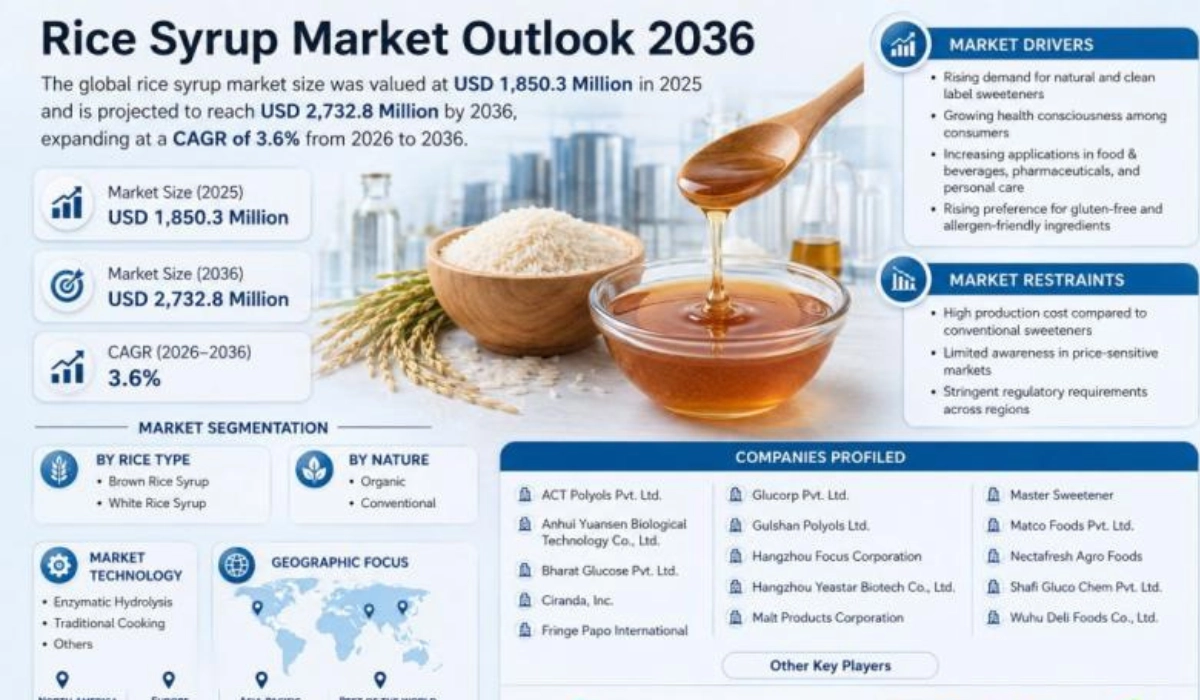
The global rice syrup market is entering a period of sustained growth, creating fresh opportunities for rice-producing nations and international food ingredient suppliers. According to recent market forecasts, the rice syrup industry is expected to expand from USD 1.85 billion in 2025 to approximately USD 2.73 billion by 2036, reflecting growing demand for natural, organic, and plant-based sweetening solutions.
For rice exporters, processors, food manufacturers, and global buyers, this trend highlights an important shift in how rice is being utilised beyond traditional food consumption. As demand for rice-derived ingredients increases, the development could influence rice prices, supply chains, trade flows, and value-added rice processing worldwide.
Why Is the Global Rice Syrup Market Growing Rapidly?
Rice syrup is produced by converting rice starch into sugars such as maltose and glucose through enzymatic processing. It has become increasingly popular as food manufacturers seek alternatives to high-fructose corn syrup and refined sugar.
Several factors are driving market growth:
- Rising demand for organic and non-GMO ingredients
- Growth of clean-label food products
- Expansion of vegan and plant-based foods
- Consumer preference for natural sweeteners
- Increased use in health-focused snacks and beverages
Food producers are increasingly reformulating products to meet changing consumer preferences. Rice syrup offers a mild sweetness profile while aligning with organic certification requirements and plant-based product trends.
As a result, rice syrup is becoming a key ingredient in bakery products, breakfast cereals, snack bars, dairy alternatives, infant nutrition products, and functional foods.
How Could Rising Rice Syrup Demand Affect the Global Rice Market?
The expansion of the rice syrup sector could have broader implications for the global rice market. While food-grade rice remains the primary use of rice worldwide, increasing industrial demand for rice-derived ingredients may create additional consumption channels.
As processing companies expand production of rice syrup, rice protein, rice flour, and other value-added products, demand for suitable rice varieties could increase. This may contribute to stronger competition for raw materials in major producing countries.
Over time, higher industrial utilisation could support rice prices, particularly for rice types commonly used in food ingredient manufacturing.
For rice exporters and rice importers, monitoring demand from the ingredient-processing sector will become increasingly important as purchasing patterns evolve.
What Does This Mean for Pakistan Rice Exports?
Pakistan remains one of the world’s leading rice suppliers, exporting premium Basmati rice and non-Basmati varieties to markets across Asia, Europe, the Middle East, Africa, and North America.
The growth of the rice syrup industry presents several opportunities for Pakistan rice exports:
Diversification Beyond Traditional Rice Sales
Global buyers are increasingly seeking rice-derived ingredients rather than only milled rice. This trend opens opportunities for investment in rice processing and value-added product manufacturing.
Increased Demand for Rice Raw Materials
As food ingredient manufacturers expand production capacity, demand for quality rice inputs may rise, potentially benefiting rice-producing countries such as Pakistan.
Expansion Into New Food Industry Segments
The growing plant-based food industry is creating demand for rice-based ingredients including rice syrup, rice protein, and rice flour. Pakistani suppliers could potentially benefit from these emerging categories.
Stronger Export Revenue Potential
Value-added rice products generally generate higher margins than commodity rice exports, offering long-term opportunities for industry growth.
Which Regions Are Driving Rice Syrup Consumption?
Asia-Pacific currently leads the global rice syrup market, accounting for more than 30% of worldwide revenue.
The region benefits from:
- Large-scale rice production
- Established rice-processing infrastructure
- Strong consumer familiarity with rice-based ingredients
- Rapid growth in packaged food consumption
Countries such as China, India, Japan, Thailand, and Vietnam play major roles in supplying raw materials and supporting processing operations.
Meanwhile, North America and Europe are experiencing growing demand for natural sweeteners due to increasing consumer interest in organic, clean-label, and non-GMO products.
For rice exporters, these regions represent important markets where demand for rice-derived ingredients could continue expanding throughout the next decade.
How Will Rice Syrup Growth Influence Supply Chains and Logistics?
The increasing use of rice in food ingredient manufacturing may introduce new dynamics into global agricultural supply chains.
Key logistics implications include:
Greater Demand for Consistent Raw Material Supply
Rice processors require reliable access to quality rice throughout the year. This may encourage longer-term sourcing agreements and strategic partnerships between suppliers and manufacturers.
Increased Investment in Processing Infrastructure
As demand rises, companies are expected to expand production facilities and invest in advanced processing technologies to improve efficiency and product quality.
Growth in International Ingredient Trade
Rice syrup and related products are increasingly traded globally, creating additional freight and logistics requirements beyond traditional rice exports.
Enhanced Traceability Requirements
Food manufacturers increasingly require transparent sourcing, sustainability standards, and certification compliance, particularly in North American and European markets.
These trends could encourage further modernisation across the global rice trade ecosystem.
What Innovations Are Shaping the Future of Rice-Based Ingredients?
Recent product launches demonstrate growing innovation in rice-derived food ingredients.
Food manufacturers are developing:
- Vegan ice cream made from rice ingredients
- Rice-based confectionery products
- Enhanced rice proteins for nutrition applications
- Dairy alternatives using rice-derived formulations
- Functional foods featuring natural rice sweeteners
Research and development investments are helping improve flavour profiles, texture, functionality, and application versatility.
As plant-based nutrition continues gaining popularity worldwide, rice-derived ingredients are expected to play an increasingly important role across multiple food categories.
What Challenges Could Affect Future Market Growth?
Despite positive growth projections, several factors could influence market performance:
- Competition from alternative sweeteners
- Volatility in global rice prices
- Changes in agricultural production levels
- Regulatory requirements for organic certifications
- Consumer concerns regarding sugar consumption
Nevertheless, industry analysts remain optimistic about long-term demand due to ongoing growth in natural and clean-label food products.
What Are the Long-Term Implications for International Rice Buyers?
For international rice buyers, wholesalers, distributors, and food manufacturers, the expanding rice syrup market signals a broader transformation in rice utilisation.
Demand is no longer driven solely by traditional food consumption. Increasing applications in natural sweeteners, plant-based foods, functional nutrition, and clean-label products are creating new growth avenues across the rice industry.
This evolution may strengthen demand fundamentals, support investment in processing capacity, and encourage greater innovation throughout the global rice trade.
As rice continues to move beyond its traditional role as a staple grain, suppliers capable of delivering consistent quality, reliable logistics, and value-added solutions will be best positioned to benefit from emerging opportunities.
For buyers seeking dependable sourcing of premium Pakistani rice, Basmati rice, and export-quality rice products, AHK Rice continues to support global partners with consistent quality, competitive pricing, and reliable supply chain solutions tailored to international market requirements.