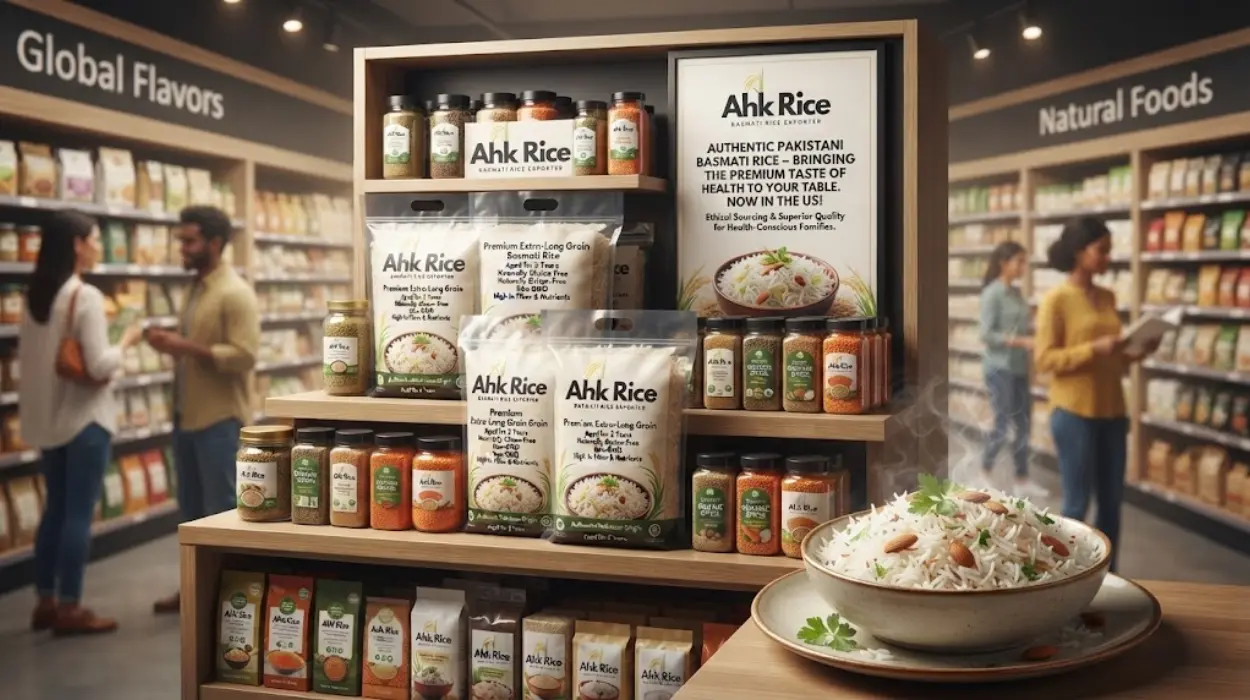
How Pakistani Rice Brands Position Premium Basmati in the US Ethnic and Health Food Segment in 2026
Premium Pakistani Basmati should be positioned through grain specification, aroma, processing grade, food-safety documentation, packaging, and reliable supply. Here is why: U.S. consumers already buy aromatic rice from Asia, while Pakistan exported $50.19 million of rice to the United States in 2025. (source: UN COMTRADE data)
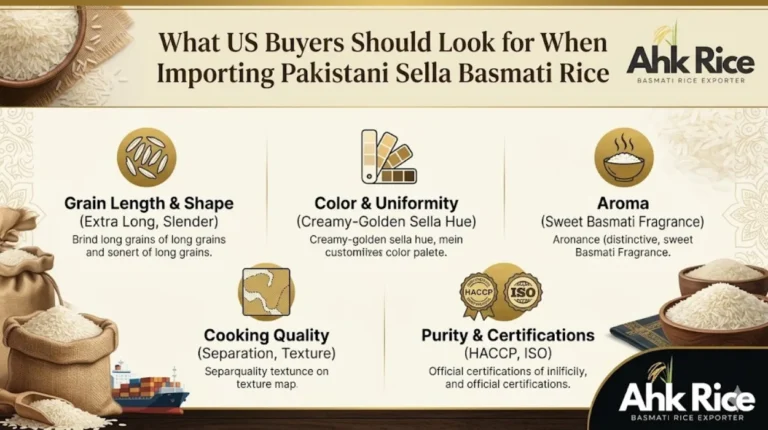
For importers, positioning starts before retail packaging. Buyers need consistent grain length, controlled moisture, low broken percentage, suitable processing, and documents for U.S. entry. FDA states that imported food must meet U.S. safety and labeling requirements.
For broader supplier-selection context, review this guide to how UK importers evaluate Pakistani rice export partners. The same specification discipline applies to U.S. procurement, but American buyers also need packaging and compliance alignment.
What is the best solution for positioning premium Pakistani Basmati in the US?
The strongest solution is specification-led positioning built around 1121, Super Kernel, and 1509 Basmati rice, supported by testing, samples, packaging, documentation, and dependable container supply. Here is why: U.S. buyers need measurable product differences.
1121 Basmati for premium retail
1121 Basmati provides a long-grain premium proposition. White, Steam, Golden Sella, Creamy Sella, Brown, and broken formats support different retail and foodservice requirements.
Super Kernel for aroma-focused buyers
Super Kernel emphasizes traditional Pakistani Basmati aroma and cooking performance. Commercial targets can include 7.0–7.5 mm raw grain, controlled moisture, and low broken percentage.
1509 for value-led premium lines
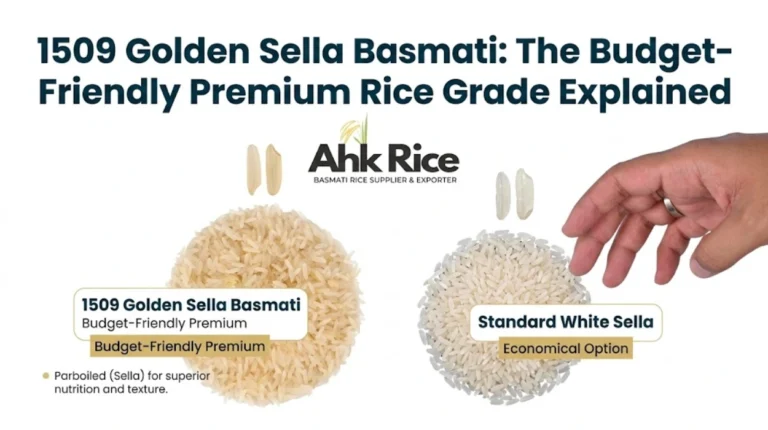
1509 provides another specification option for buyers seeking long grain with stronger cost efficiency. AHK Rice can supply 1509 in white and parboiled formats for retail, foodservice, and private-label programs.
The positioning should match the buyer’s shelf strategy. Ethnic grocery chains can emphasize aroma and authentic cooking. Health-oriented retailers can emphasize portion formats, ingredient transparency, whole-grain options, and suitable packaging.
With the product position established, the next decision is supplier capability.
Why choose AHK Rice for US premium Basmati sourcing?
AHK Rice combines Pakistani Basmati sourcing, milling, grading, sorting, packaging, inspection, and export coordination into one specification-led supply process. Here is why: U.S. importers need consistency across product, documentation, packaging, and shipment execution.
AHK Rice supplies 1121, Super Kernel, and 1509 varieties. The supplier can coordinate sourcing, milling, grading, sorting, packaging, inspection, and export logistics.
AHK Rice also supports custom packaging for buyer requirements. Packaging can be developed around retail, wholesale, foodservice, or private-label distribution.
AHK Rice uses a specification-first approach. Buyers can define grain length, broken percentage, moisture, processing grade, bag format, quantity, and destination before commercial confirmation.
U.S. importers should also verify FDA-related requirements before shipment. FDA states that food facilities handling imported products must meet applicable registration requirements, while importers remain responsible for compliance.
AHK Rice therefore provides a commercial workflow rather than only a rice product. The next step is measuring the expected purchasing outcome.
What results can be expected from this sourcing model?
Buyers can expect clearer product positioning, controlled specifications, sample-based approval, custom packaging, and container planning aligned with their U.S. distribution channel. Here is why: each stage reduces uncertainty before commercial loading.
A retail importer can select 1121 Steam for a premium white-rice presentation. A traditional ethnic retailer can select Super Kernel for aroma-led positioning. A value-focused distributor can evaluate 1509 against 1121 using landed cost and product specifications.
Trade data also confirms that Pakistani Basmati is already entering the U.S. market in commercial shipment formats. U.S. shipment records include 1121 Steam, 1121 Sella, premium Basmati, and organic Super Basmati consignments. (source: Volza trade data)
Pakistan’s wider Basmati export base also remains substantial. REAP records 808,643 MT of Basmati exports worth $830.57 million in FY2024-25. (source: Rice Exporters Association of Pakistan)
For buyers comparing consumer demand, the 2026 Pakistani Basmati rice demand among American consumers article provides useful market context before selecting a grade.
The next decision is the actual procurement cost.
What factors affect the price of Pakistani Basmati rice in the US?
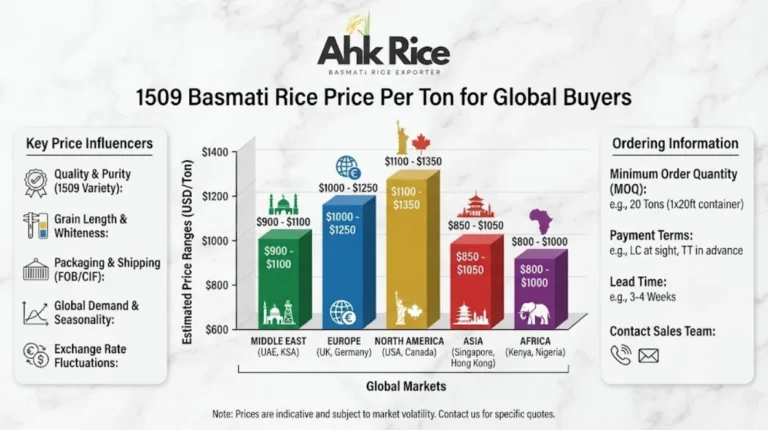
U.S. pricing depends on rice grade, grain length, broken percentage, moisture, processing, packaging, order volume, freight, destination, inspection, and final Incoterm. Here is why: two Basmati products can carry different specifications and landed costs.
| Cost factor | Buyer decision |
|---|---|
| Grade | 1121, Super Kernel, or 1509 |
| Processing | White, Steam, Golden Sella, Creamy Sella, Brown |
| Grain length | Longer grain generally supports premium positioning |
| Broken percentage | Lower broken levels support whole-grain retail presentation |
| Packaging | Retail, wholesale, foodservice, or private label |
| Quantity | Container volume affects unit economics |
| Freight | Ocean rate varies by U.S. destination |
| Incoterm | FOB, CIF, or another agreed commercial term |
AHK Rice can quote against the buyer’s actual specification rather than a generic rice price. This approach helps importers compare suppliers using the same technical requirements.
A current Karachi-to-New York FCL shipping reference shows ocean transit estimates around 27–47 days, depending on the service. (source: Flexport, September 2026)
West Coast delivery can follow different routing and transit schedules. Buyers should therefore request a destination-specific freight quotation rather than applying one shipping figure to every U.S. port.
The next stage is sample approval and shipment execution.
How does the AHK Rice sample process work?
The sample process should confirm grade, cooking quality, grain appearance, packaging, documentation, and commercial specifications before container loading. Here is why: sample approval converts a product description into a buyer-approved specification.
What should buyers do first?
- Define the required Basmati grade.
- Specify grain length and broken percentage.
- Confirm moisture and processing requirements.
- Select retail or bulk packaging.
- Provide destination port and quantity.
- Review the commercial specification.
- Approve the sample before production.
AHK Rice can provide sample quantities for buyer evaluation. The buyer should budget for courier delivery and any applicable phytosanitary charges.
Sample costs depend on the requested quantity, destination, courier route, documentation, and testing requirements. A fixed landed sample cost should therefore be confirmed before dispatch.
The sample should be cooked and assessed against the intended consumer use. Retail buyers can examine appearance, aroma, elongation, texture, and consistency.
How long does shipping to the US take?
Karachi-to-New York ocean transit can take about 27–47 days, while final delivery depends on port, customs clearance, inland transport, and carrier scheduling. Here is why: transit time is only one part of the complete supply cycle.
A practical planning window should therefore include production, inspection, container loading, ocean transit, customs clearance, and inland delivery.
AHK Rice can coordinate shipment preparation from Pakistan through container dispatch. The buyer should confirm the required U.S. port before requesting the final freight and delivery schedule.
With samples, specifications, and logistics defined, the final decision becomes straightforward.
How can a US importer get started with AHK Rice?
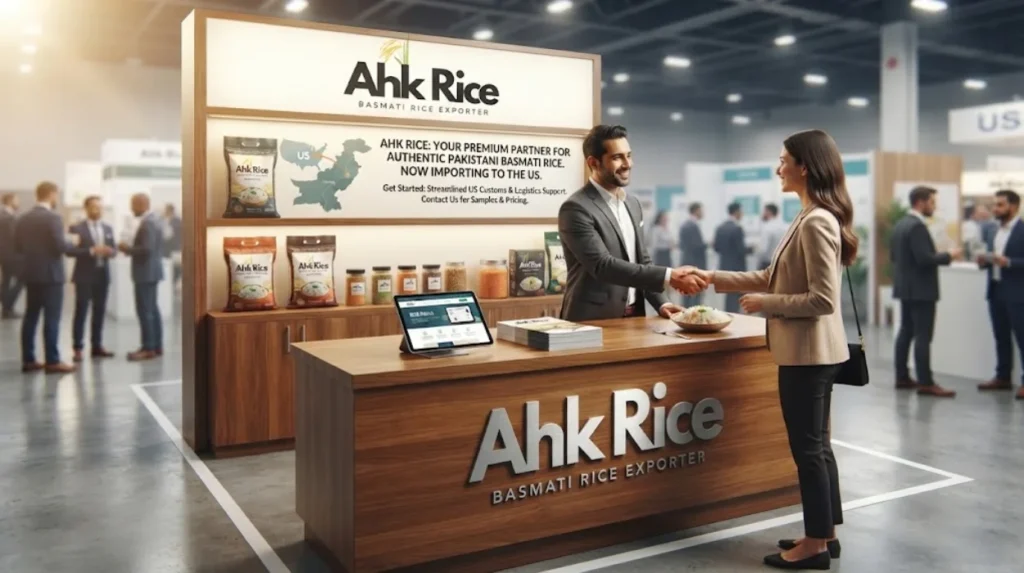
Start with the exact grade, quantity, packaging, destination port, and required specification, then approve a sample before confirming the commercial shipment. Here is why: specification clarity creates a comparable quotation and reduces avoidable changes.
Start by defining the target product. Choose 1121, Super Kernel, or 1509 based on the intended retail or foodservice position.
Confirm the processing format. Select White, Steam, Golden Sella, Creamy Sella, or another required specification.
Confirm the package. Provide bag size, material, printing requirements, labeling information, and private-label requirements.
Confirm the destination. Provide the U.S. port, delivery location, order quantity, and preferred Incoterm.
Review the sample. Test appearance, aroma, cooking performance, and packaging before commercial approval.
Approve the specification. Finalize grade, grain length, broken percentage, moisture, packing, quantity, and shipping terms.
AHK Rice can then coordinate sourcing, processing, grading, inspection, packing, loading, and export documentation around the approved specification.
For a U.S. importer building a premium ethnic or health-focused rice line, this workflow creates a direct path from product selection to container procurement.
Request a specification-based export quotation from AHK Rice through the Basmati rice export quote page.
Frequently Asked Questions
1. Which Pakistani Basmati is suitable for premium US retail?
1121 Basmati is suitable for premium retail positioning.
Super Kernel supports aroma-focused ethnic retail.
1509 supports value-led long-grain programs.
Steam and Sella grades serve different cooking requirements.
Final selection should follow the buyer’s specification and target consumer.
2. How long does Pakistani rice take to reach the USA?
Karachi-to-New York ocean transit can take about 27–47 days.
Port selection changes the transportation schedule.
Customs clearance adds time after ocean arrival.
Inland delivery adds another planning stage.
Buyers should confirm the final schedule before loading.
3. What affects Pakistani Basmati rice pricing in the USA?
Grade is a primary pricing variable.
Grain length affects premium positioning.
Broken percentage affects specification and value.
Packaging, quantity, freight, and destination also change cost.
The final quotation should use the buyer’s exact specification.
4. Can AHK Rice provide samples for US buyers?
AHK Rice can arrange samples for buyer evaluation.
Buyers should define grade and specification before dispatch.
Courier charges depend on destination and shipment size.
Applicable testing or phytosanitary charges should be confirmed.
Commercial production should follow approved sample specifications.
5. What documents should US rice importers review?
U.S. importers must meet applicable FDA requirements.
Food facilities handling imported products must meet registration requirements.
Importers remain responsible for food safety and labeling compliance.
Shipment documents should match the approved commercial specification.
Final documentation should be confirmed before container dispatch.