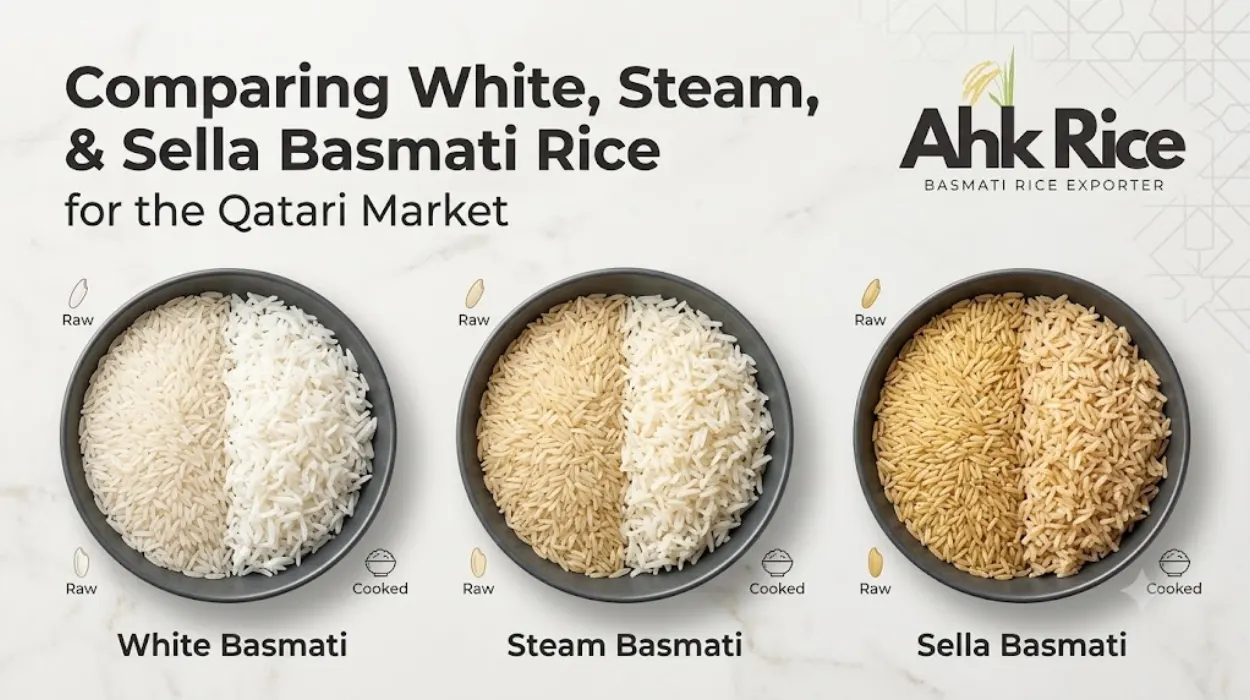
Comparing White, Steam, and Sella Basmati Rice for the Qatari Market
White, Steam, and Sella Basmati rice all serve different segments of the Qatari market, but 1121 Golden Sella remains the preferred choice for large-scale foodservice and wholesale distribution because it offers longer shelf life, stronger grain durability, and better cooking performance. Here is why: Qatar imports rice for retail, hospitality, catering, and restaurant sectors that require different specifications, price points, and storage characteristics.
Qatari buyers evaluate rice beyond grain length. Importers compare processing methods, breakage levels, cooking yield, packaging options, shelf stability, and regional consumer preferences. Businesses that understand these differences make better procurement decisions and reduce supply chain costs.
Buyers seeking a deeper understanding of Pakistani Basmati varieties can also explore our guide on Pakistani Sella Basmati rice grades, processing methods, and export specifications before evaluating individual processing categories.
AHK Rice supplies premium Pakistani Basmati through its rice export and processing solutions, offering 1121, Super Kernel, and 1509 varieties with customized processing, packaging, and export documentation for international buyers.
What are the available Basmati rice solutions for the Qatari market?
The three primary solutions are White Basmati, Steam Basmati, and Sella Basmati. Each uses a different processing method, delivers different cooking characteristics, and serves different buyer segments within Qatar’s retail, hospitality, catering, and wholesale sectors.
Basmati rice refers to a long-grain aromatic rice cultivated primarily in Punjab, Pakistan, and northern India. Export markets classify Basmati according to variety and processing method. The processing method changes grain color, strength, cooking behavior, and storage performance.
White Basmati Rice
White Basmati undergoes milling and polishing after harvesting. The process removes the husk and bran layers completely. The result is a bright white grain with a delicate texture and premium appearance.
White Basmati appeals to consumers seeking traditional presentation. Fine-dining restaurants frequently select White Basmati because the grain appears elegant on the plate. Premium retail brands also prefer White Basmati for household consumers.
Steam Basmati Rice
Steam Basmati undergoes controlled steaming before final milling. The steaming process strengthens the grain structure without changing its white appearance significantly.
Steam Basmati provides improved cooking consistency. Restaurants serving large daily volumes often select Steam Basmati because it reduces breakage during cooking while maintaining an attractive appearance.
Sella Basmati Rice
Sella Basmati undergoes parboiling before milling. Processors soak, steam, dry, mill, grade, and sort the grain through multiple controlled stages.
Sella Basmati develops a golden or cream-colored appearance depending on the processing specification. The parboiling process increases grain strength and shelf life. Large catering companies throughout the Gulf region commonly source Sella Basmati because it performs consistently during bulk cooking.
With the available solutions defined, the next question is how these processing methods compare in measurable specifications.
How do White, Steam, and Sella Basmati compare?
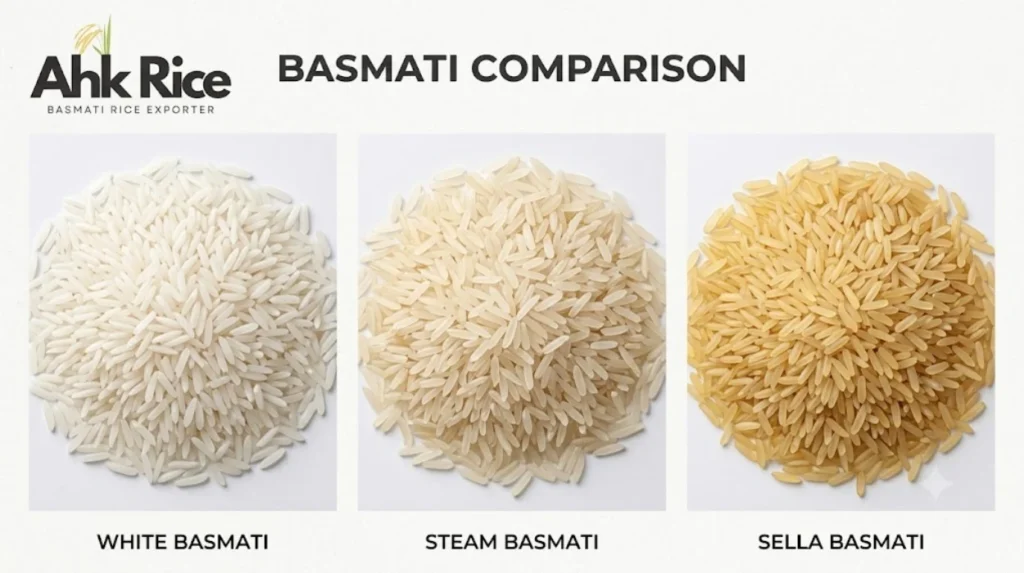
1121 Golden Sella offers the highest grain strength, longest storage capability, and strongest cooking yield, while White Basmati provides premium appearance and Steam Basmati balances presentation with operational efficiency.
Specification Comparison Table
| Attribute | White Basmati | Steam Basmati | Golden Sella Basmati |
|---|---|---|---|
| Processing Method | Milled & polished | Steamed then milled | Parboiled then milled |
| Grain Strength | Moderate | High | Very High |
| Grain Color | Bright white | White | Golden |
| Cooking Yield | Good | Better | Best |
| Breakage Resistance | Moderate | High | Very High |
| Shelf Life | 12–18 months | 18–24 months | 24–36 months |
| Catering Suitability | Medium | High | Very High |
White Basmati performs best in premium dining environments. The grain remains visually attractive and aromatic. Fine-dining establishments in Doha often prioritize appearance over long-term storage.
Steam Basmati balances aesthetics and operational efficiency. Restaurants gain improved grain stability while preserving a white appearance that consumers recognize.
Golden Sella Basmati delivers the highest durability. Large kitchens preparing hundreds of meals daily benefit from reduced breakage and higher cooking recovery rates. Gulf catering operators frequently select Golden Sella because it withstands transportation and storage challenges better than other processing grades.
Processing Differences
White Basmati follows a straightforward milling process.
- Harvest the paddy
- Clean the raw material
- Dehusk the grain
- Polish the rice
- Grade the kernels
- Sort by size
- Pack for export
Sella Basmati requires additional processing.
- Clean the paddy
- Soak the grain
- Steam the grain
- Dry the grain
- Dehusk the rice
- Mill the kernels
- Grade the rice
- Sort by length
- Pack for shipment
These additional stages strengthen the grain and explain why Sella commands different pricing and storage advantages.
With processing differences established, regional market preferences provide the next layer of decision-making.
Which Basmati grades do different market regions prefer?
Qatar’s foodservice sector primarily prefers 1121 Golden Sella, while premium retail buyers often select White or Steam Basmati. Other GCC markets show similar patterns but vary according to consumer behavior and distribution channels.
Qatar Market Preferences
Qatari catering companies prioritize consistency. Large-scale meal preparation requires grains that remain separate after cooking and resist breakage during transportation.
1121 Golden Sella dominates this segment because its parboiled structure improves operational performance. Hotel kitchens and labor camp caterers commonly select Golden Sella specifications.
Premium supermarkets in Doha often stock White Basmati and Steam Basmati because household consumers focus on appearance and aroma.
GCC Market Preferences
The UAE catering sector mirrors Qatar’s demand pattern. Golden Sella remains the preferred specification for institutional buyers and foodservice operators.
Saudi Arabia demonstrates strong demand for both Golden Sella and Steam Basmati. Retail channels often maintain broader product portfolios because consumer preferences vary across regions.
According to rice trade statistics, GCC countries remain among the largest importers of Pakistani Basmati rice globally (source: REAP Export Data, 2025).
Market preferences help buyers shortlist specifications, but procurement decisions also depend on pricing structures.
How do White, Steam, and Sella Basmati compare in price per metric ton?
White Basmati generally commands the highest premium retail pricing, Steam Basmati occupies the middle range, and Golden Sella delivers the strongest value for bulk commercial operations because of its cooking yield and storage advantages.
Indicative Export Price Comparison
| Grade | Typical Export Price Range (USD/MT) |
|---|---|
| White 1121 Basmati | $1,050–$1,250 |
| Steam 1121 Basmati | $950–$1,150 |
| Golden Sella 1121 | $900–$1,100 |
Price fluctuations occur because harvest volumes, exchange rates, freight costs, and regional demand influence export markets.
White Basmati commands premium pricing because additional polishing and consumer preference support higher retail positioning.
Steam Basmati occupies a balanced middle position. Buyers gain improved performance without paying the highest premium.
Golden Sella frequently delivers superior value. Lower cooking losses often reduce operational costs despite similar procurement prices.
A catering company preparing 10,000 meals weekly benefits from higher cooking recovery. The operational savings frequently exceed small differences in purchase price.
Price comparisons become more meaningful when evaluated alongside storage performance.
How does shelf life differ among White, Steam, and Sella Basmati?
Golden Sella offers the longest storage life at up to 36 months, Steam Basmati provides up to 24 months, and White Basmati performs best within 12–18 months under proper storage conditions.
Shelf life directly impacts inventory planning. Importers managing large stock volumes prioritize products that maintain quality during extended storage periods.
Golden Sella retains structural integrity because parboiling hardens the grain. A warehouse operating at Gulf temperatures benefits from this enhanced stability.
Steam Basmati provides strong shelf performance while preserving consumer-friendly appearance. Many distributors view Steam Basmati as a compromise between durability and presentation.
White Basmati requires more careful inventory rotation. Faster turnover protects aroma, texture, and visual quality.
A distributor storing inventory for seasonal demand often prefers Golden Sella. A premium retail brand with rapid sales velocity may choose White Basmati instead.
Storage performance naturally leads to evaluating strengths and weaknesses.
What are the pros and cons of each option?
White Basmati excels in appearance, Steam Basmati balances quality and efficiency, and Golden Sella dominates durability and catering performance. Each specification serves a different procurement objective.
White Basmati
Advantages
- Premium appearance
- Strong aroma
- High retail appeal
- Fine dining suitability
Limitations
- Lower shelf life
- Higher breakage risk
- Less suitable for long storage
Steam Basmati
Advantages
- Strong grain structure
- Attractive appearance
- Consistent cooking results
- Good restaurant suitability
Limitations
- Slightly higher cost than some Sella grades
- Lower storage performance than Golden Sella
Golden Sella Basmati
Advantages
- Long shelf life
- Excellent grain durability
- Higher cooking yield
- Strong catering suitability
Limitations
- Golden color differs from traditional white rice
- Premium retail consumers sometimes prefer white appearance
Understanding these advantages creates a foundation for selecting the correct grade.
Which option works best for different business cases?
The best choice depends on customer expectations, inventory strategy, cooking volume, and distribution channel. No single specification serves every business model equally well.
Decision Framework
| Business Type | Recommended Grade | Primary Reason |
|---|---|---|
| Premium Restaurant | White Basmati | Presentation quality |
| Hotel Chain | Steam Basmati | Balanced performance |
| Catering Company | Golden Sella | High cooking yield |
| Retail Brand | White or Steam | Consumer preference |
| Wholesale Distributor | Golden Sella | Storage efficiency |
Restaurants focusing on presentation often prioritize White Basmati. The grain creates a refined visual experience for diners.
Hotels frequently select Steam Basmati. The grade balances appearance and operational efficiency.
Large catering companies typically choose Golden Sella. The grain remains stable throughout bulk cooking operations.
Wholesale importers managing significant inventory volumes often favor Golden Sella because storage flexibility reduces operational risk.
Businesses evaluating procurement options may also benefit from reading our guide explaining how Qatari importers evaluate suppliers, specifications, and bulk sourcing requirements.
The correct specification depends on operational priorities, making supplier selection and quality verification the final consideration.
Frequently Asked Questions
Which Basmati rice is most popular in Qatar?
1121 Golden Sella remains the most widely used grade in Qatar’s catering and wholesale sectors. Its durability, cooking performance, and long shelf life support large-scale food operations. Premium retail channels continue to stock White and Steam Basmati for household consumers.
Why do catering companies prefer Golden Sella Basmati?
Golden Sella undergoes parboiling, which strengthens the grain structure. The rice experiences less breakage during cooking and transportation. Large kitchens also benefit from higher cooking yield and improved inventory stability.
Is Steam Basmati better than White Basmati?
Steam Basmati offers stronger grain integrity and improved cooking consistency. White Basmati delivers a more traditional appearance and premium presentation. The better option depends on operational priorities and customer expectations.
How long can imported Basmati rice be stored?
Storage life varies by processing method. White Basmati typically performs best within 12–18 months. Steam Basmati can remain stable for up to 24 months, while Golden Sella often reaches 24–36 months under proper storage conditions.
Which Basmati rice grade offers the best value?
Golden Sella frequently delivers the strongest commercial value because it combines competitive pricing, higher cooking yield, and longer storage life. Foodservice operators often achieve lower overall operating costs despite similar procurement prices.