Import Pakistan Basmati Rice with Verified Foreign Matter Analysis into the UAE
Verified foreign matter analysis is the safest way to import Pakistan Basmati rice into the UAE because it reduces quality risks, protects food safety, simplifies customs clearance, and ensures every shipment matches the buyer’s specification. Here is why: laboratory testing identifies unwanted materials before export, allowing exporters and importers to verify compliance before cargo reaches UAE ports.
Pakistan supplies premium Basmati rice to wholesalers, retailers, hotels, and food service companies across the Gulf region. UAE buyers demand consistent grain quality because imported rice passes through multiple inspection stages before reaching consumers. Foreign matter analysis has therefore become one of the most important quality verification procedures during export.
Understanding how foreign matter testing works helps buyers compare suppliers using measurable quality parameters instead of relying only on pricing. Buyers looking for a broader understanding of quality control should first read our complete guide explaining foreign matter inspection in Pakistani Basmati rice before evaluating supplier specifications.
AHK Rice provides end-to-end processing, custom packaging, export documentation, and verified quality inspection for1121 Basmati, Super Kernel Basmati, and1509 Basmati supplied to more than fifteen countries.
What is verified foreign matter analysis and why does it matter for UAE imports?
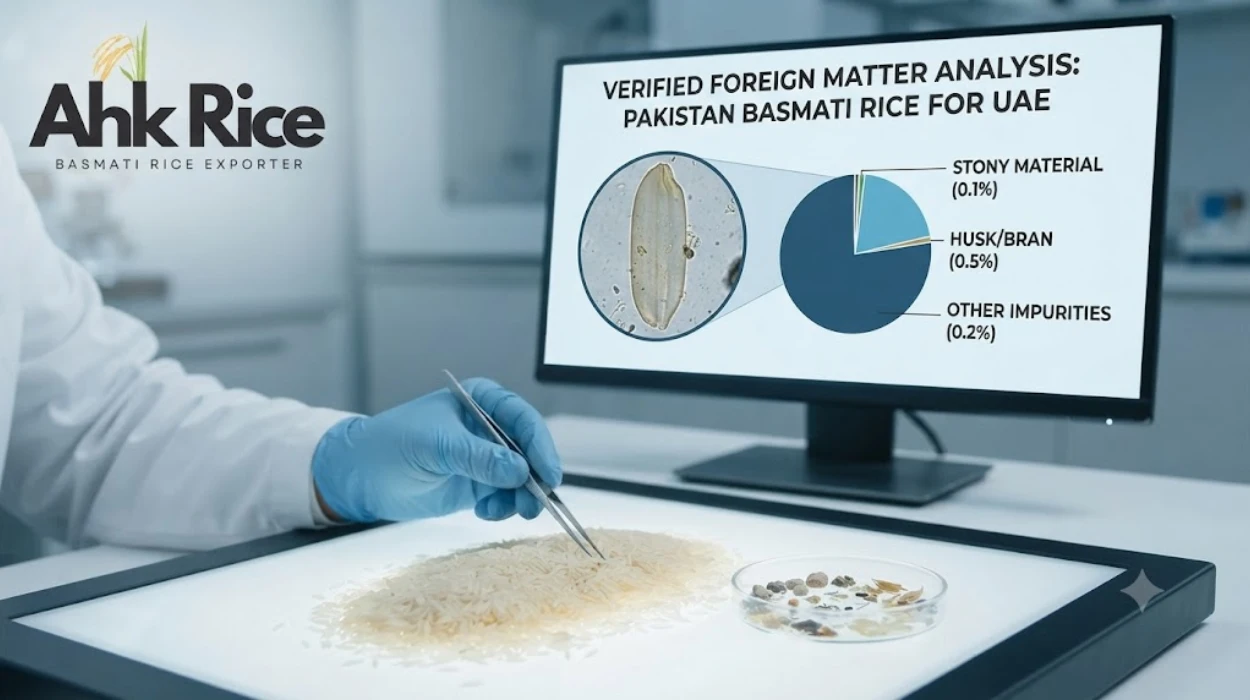
Foreign matter analysis identifies and measures every non-rice material inside a shipment. Values below buyer specifications improve food safety, maintain grain purity, reduce warehouse losses, and increase buyer confidence throughout the import process.
Foreign matter refers to any material that is not part of the intended rice product. Quality laboratories inspect representative samples collected from production batches before shipment. The analysis determines the percentage of unwanted particles using internationally accepted sampling methods.
Typical foreign matter includes:
- Stones
- Dust
- Paddy husk
- Straw
- Weed seeds
- Metal fragments
- Plastic particles
- Glass particles
- Soil
- Broken packaging residue
Each contaminant creates different commercial risks.
Stone contamination may damage milling equipment used by distributors.
Dust increases customer complaints because it affects appearance.
Metal contamination creates serious food safety concerns.
Plastic contamination can result in shipment rejection by buyers following strict food safety systems.
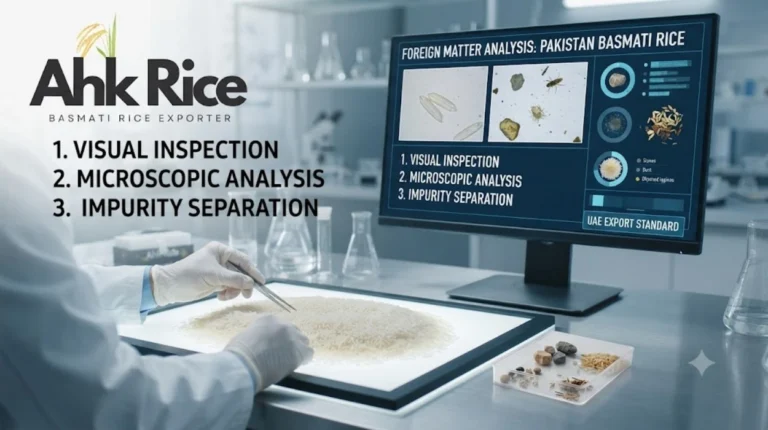
Quality laboratories inspect samples using calibrated sieves, magnets, visual examination, and precision weighing equipment. Every detected contaminant receives a measured percentage before certification.
The UAE applies strict food safety requirements because imported food products enter one of the world’s busiest re-export markets. Rice imported into Dubai frequently moves onward to Oman, Bahrain, Kuwait, Saudi Arabia, and East Africa. Consistent quality therefore protects multiple supply chains instead of one destination.
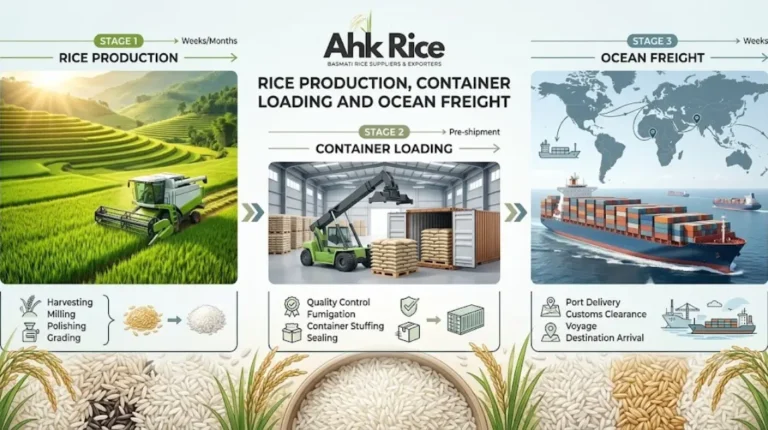
Pakistan’s modern rice exporters perform foreign matter inspection before loading containers because early verification prevents costly destination disputes. Third-party inspection agencies further strengthen buyer confidence through independent laboratory reports.
Foreign matter specification comparison
Specification Comparison Table
| Specification | Premium Export Grade | Standard Export Grade |
|---|---|---|
| Foreign Matter | ≤0.10% | ≤0.30% |
| Purity | 99.90%+ | 99.70%+ |
| Stone Content | Near Zero | Very Low |
| Dust Level | Minimal | Low |
| Cleaning Stages | 9 Processing Steps | 6 Processing Steps |
| Suitable Buyers | Premium Retail & Hospitality | Wholesale Distribution |
| Inspection Method | Third-party Verified | Internal QC |
Premium specifications generally reduce destination complaints because fewer contaminants remain after grading.
For UAE supermarket brands, lower foreign matter supports stronger consumer trust. For institutional catering companies, verified cleaning reduces operational interruptions during food preparation.
With foreign matter analysis defined, the next question becomes how different quality verification methods compare before export.
How do different foreign matter verification methods compare
Laboratory analysis provides the highest accuracy, machine inspection increases consistency, and manual inspection offers basic verification. Combining all three methods produces the most reliable export quality.
Rice exporters apply several inspection methods throughout processing. Each method identifies different contamination risks. Understanding these approaches helps buyers compare suppliers based on measurable quality systems instead of marketing claims.
Manual inspection
Manual inspection involves trained quality inspectors visually examining rice samples after milling and before packaging.
Advantages include:
- Low inspection cost
- Immediate observation
- Flexible sampling
- Quick process adjustments
Limitations include:
- Human error
- Inconsistent judgement
- Lower detection accuracy
- Limited scalability
Manual inspection remains useful during production but cannot replace laboratory verification.
Mechanical sorting
Modern rice mills use automated equipment throughout production.
Typical machines include:
- Destoners
- Magnetic separators
- Colour sorters
- Air classifiers
- Length graders
- Vibro separators
Each machine removes a specific category of contaminants.
Colour sorters identify discoloured kernels.
Magnetic separators remove metallic particles.
Destoners eliminate heavy mineral contamination.
Multiple cleaning stages significantly reduce foreign matter before packaging.
Laboratory testing
Independent laboratories perform the highest level of quality verification.
Laboratory testing includes:
- Representative sampling
- Precision weighing
- Moisture testing
- Foreign matter calculation
- Broken grain analysis
- Chalkiness evaluation
- Purity verification
Laboratory reports provide documented evidence that buyers can compare across multiple suppliers.
Comparison of inspection approaches
| Attribute | Manual Inspection | Machine Sorting | Laboratory Analysis |
|---|---|---|---|
| Accuracy | Moderate | High | Highest |
| Repeatability | Moderate | High | Excellent |
| Documentation | Limited | Moderate | Complete Reports |
| Export Acceptance | Limited | High | Highest |
| Food Safety Confidence | Moderate | High | Very High |
| Cost | Low | Medium | Medium |
| Best Use | Production Monitoring | Processing | Final Export Verification |
Laboratory certification complements mechanical cleaning because measured evidence validates processing performance.
What decision factors should UAE buyers evaluate before importing Pakistan Basmati rice?
The best purchasing decision combines verified foreign matter analysis, suitable rice grade, laboratory certification, processing capability, packaging options, and exporter reliability. Selecting suppliers using measurable quality indicators reduces commercial risk, protects brand reputation, and improves long-term procurement performance.
Choosing a Basmati rice supplier involves more than comparing prices. Buyers should evaluate the complete export process because every production stage affects the quality delivered to the UAE. A structured evaluation also reduces shipment disputes and supports consistent inventory planning.
Decision Framework for UAE Importers
| Buying Situation | Recommended Specification | Why It Works | Best Buyer Type | Priority |
|---|---|---|---|---|
| Premium supermarket brand | 1121 Steam Basmati with ≤0.10% foreign matter | Superior appearance and grain uniformity | Retail chains | Highest |
| Luxury hotels and restaurants | 1121 Golden Sella with third-party inspection | Long grains, excellent cooking performance, extended holding quality | Hospitality | High |
| Catering companies | Super Kernel or 1121 Sella | Consistent cooking with competitive pricing | Food service | High |
| Regional re-export business | Premium grade with laboratory certification | Simplifies customer acceptance across multiple markets | Trading companies | Highest |
| Price-sensitive wholesale market | Standard export specification | Balances quality and procurement cost | Wholesale distributors | Medium |
Key supplier evaluation factors
Every procurement team should evaluate the supplier using objective quality indicators rather than promotional claims.
Consider the following:
- Processing capability: Verify the number of cleaning, grading, polishing, and sorting stages.
- Quality verification: Request laboratory reports showing foreign matter, moisture, purity, and broken grain percentages.
- Certifications: Confirm that export documentation complies with UAE food import requirements and internationally recognized food safety standards.
- Packaging flexibility: Ensure the exporter offers custom retail and bulk packaging suitable for your distribution channel.
- Export experience: Review the supplier’s shipment history, destination markets, and ability to meet agreed delivery schedules.
- Traceability: Confirm that production batches can be traced from procurement through milling, inspection, packing, and shipment.
A supplier that demonstrates transparent quality control provides greater purchasing confidence than one competing only on price.
Why verified foreign matter analysis delivers long-term value
Verified foreign matter analysis reduces hidden costs throughout the supply chain.
Clean rice requires less additional sorting after import. Retail packaging operations become more efficient because fewer contaminants reach the packing line. Food service companies also experience fewer preparation delays and customer complaints.
Independent laboratory reports further strengthen buyer confidence because measurable specifications replace subjective quality assessments. This transparency supports stronger supplier relationships and simplifies future procurement decisions.
As quality expectations continue to rise across the UAE, verified inspection has become an important differentiator for premium Pakistan Basmati rice exporters.
Verified foreign matter analysis is one of the most important quality indicators when importing Pakistan Basmati rice into the UAE. It provides measurable evidence that the shipment meets agreed specifications before export, reducing commercial risk and supporting compliance with food safety requirements.
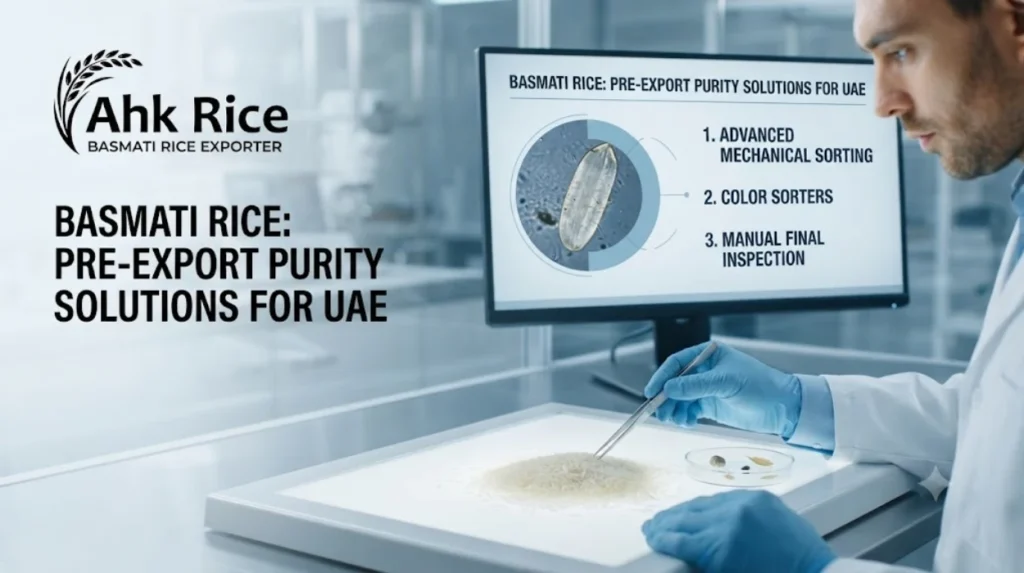
Modern exporters achieve premium quality by combining multi-stage cleaning, optical colour sorting, laboratory testing, and independent inspection. Each process removes a different category of contamination, creating a cleaner and more consistent product.
For UAE supermarkets, hospitality businesses, wholesalers, and re-export traders, selecting the correct specification depends on the intended market, storage conditions, packaging requirements, and expected quality level. Comparing suppliers through documented laboratory reports rather than pricing alone leads to better procurement decisions and more reliable long-term supply.
If you are comparing suppliers and finalizing purchase specifications, read our guide on why premium UAE rice brands prioritize low foreign matter levels in Pakistan Basmati rice to understand the commercial and quality factors behind premium buying decisions.
Frequently Asked Questions
What is foreign matter in Basmati rice?
Foreign matter includes any material that is not part of the rice itself, such as stones, dust, husks, straw, weed seeds, plastic fragments, or metal particles. Quality laboratories measure these materials as a percentage of the total sample before export.
Why do UAE buyers require verified foreign matter analysis?
UAE buyers use verified foreign matter analysis to ensure food safety, maintain consistent product quality, reduce customer complaints, and comply with import inspection requirements. Independent laboratory reports also provide documented proof of product quality.
Which Basmati rice grade is most popular in the UAE?
1121 Steam Basmati and 1121 Golden Sella Basmati are among the most preferred grades because they offer extra-long grains, attractive appearance, excellent cooking performance, and high consumer acceptance.
How is foreign matter removed during rice processing?
Foreign matter is removed through multiple processing stages, including pre-cleaning, destoning, air aspiration, magnetic separation, grading, colour sorting, polishing, and final laboratory inspection. Each stage targets a specific type of contaminant.
What foreign matter percentage is considered premium quality?
Premium export specifications commonly require 0.10% foreign matter or less, although exact tolerances vary according to buyer contracts and destination market requirements.