Is Basmati Rice Healthy? Glycemic Index and Nutrition Facts for US Consumers
Basmati rice is a long-grain rice known for its distinctive aroma, delicate texture, and naturally occurring carbohydrates. For US consumers, its nutritional value depends on the variety, serving size, processing method, and foods served alongside it. Brown basmati rice retains more fiber than white basmati rice, while both provide energy from carbohydrates.
Understanding basmati rice nutrition requires examining its glycemic index (GI), calories, fiber, protein, vitamins, and minerals. Cooking methods and portion sizes also influence how a rice-based meal affects blood glucose levels. These factors help consumers choose between white basmati, brown basmati, and other long-grain rice varieties.
What Is Basmati Rice?
Basmati rice is an aromatic, long-grain rice traditionally grown in parts of South Asia, especially Pakistan and India. Its slender grains, distinctive fragrance, and characteristic cooked texture distinguish it from jasmine rice, American long-grain rice, and other rice varieties.
The name basmati refers to a group of aromatic rice varieties valued for their fragrance and elongated grains. Pakistan’s Punjab region is an important growing area, with production concentrated in districts such as Hafizabad, Gujranwala, Sheikhupura, and Narowal.
Basmati rice contains starch, small amounts of protein, and very little fat. Its nutritional profile varies by grain variety and processing. Brown basmati retains the bran and germ, while white basmati undergoes milling that removes these outer layers.
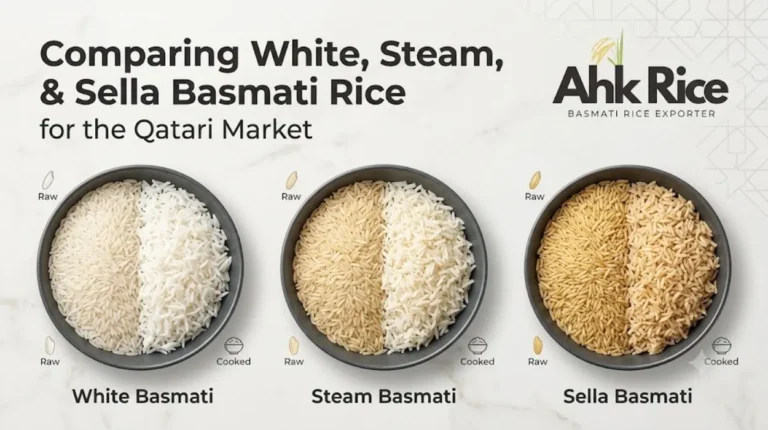
The main commercial varieties include 1121 Basmati, Super Kernel Basmati, and 1509 Basmati. These varieties differ in grain length, aroma, maturity period, and commercial applications. Consumers generally choose between white and brown rice based on texture, flavor, preparation needs, and nutritional preferences.
How Does Basmati Rice Affect Blood Sugar?
Basmati rice supplies carbohydrates that the digestive system breaks down into glucose. Its glycemic response depends on the rice variety, milling, cooking time, portion size, and accompanying foods. A lower glycemic index does not make unlimited portions suitable for blood sugar management.
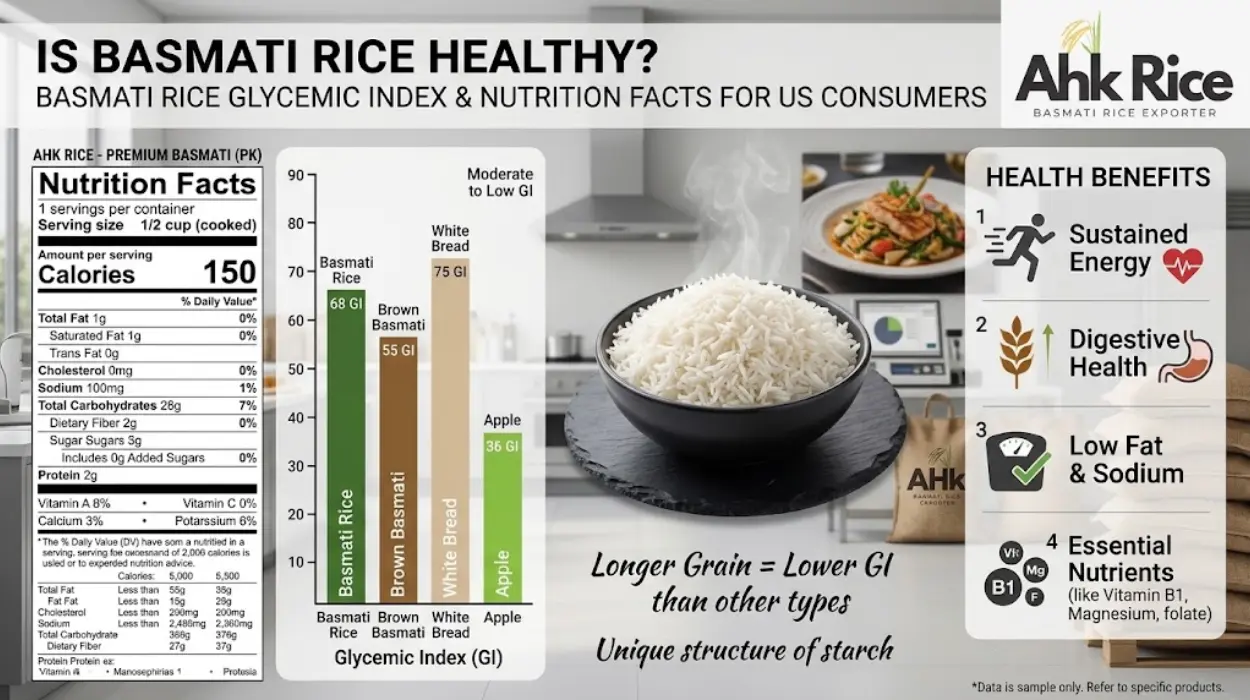
The glycemic index ranks carbohydrate-containing foods according to how quickly they raise blood glucose compared with a reference food. The scale typically runs from 0 to 100, with pure glucose assigned a value of 100.
Basmati rice often has a lower GI than some other white rice varieties. However, its GI is not a single fixed number. Studies report different results depending on the rice sample, preparation method, and testing conditions. A precise value for one product does not automatically apply to every basmati rice variety.
Three factors help explain the blood sugar response:
- Starch composition: The proportions of amylose and amylopectin affect how rice starch behaves during digestion.
- Cooking method: Cooking rice until it becomes very soft generally changes starch digestibility compared with firmer preparation.
- Meal composition: Protein, fat, fiber, and vegetables eaten with rice affect the overall digestive response.
Consumers managing diabetes should consider total carbohydrate intake rather than relying on GI alone. A measured serving of rice paired with beans, vegetables, and lean protein provides a more balanced meal than a large serving of rice eaten alone.
What Are the Nutrition Facts for Basmati Rice?
Cooked white basmati rice primarily provides carbohydrates, with smaller amounts of protein and very little fat. Brown basmati rice generally supplies more fiber because its bran remains intact. Exact nutrition values vary by product, serving size, and cooking method.
For a practical comparison, the following estimates describe approximately 1 cup of cooked rice, weighing around 160 grams. Values vary across varieties and preparation methods, so packaged product labels and verified food-composition databases provide the best figures for specific products.
| Nutrient | Cooked white basmati rice | Cooked brown basmati rice |
|---|---|---|
| Calories | Approximately 200–215 | Approximately 210–225 |
| Carbohydrates | Approximately 44–46 g | Approximately 44–47 g |
| Protein | Approximately 4–5 g | Approximately 4–5 g |
| Fat | Approximately 0–1 g | Approximately 1–2 g |
| Fiber | Approximately 0.5–1 g | Approximately 2–4 g |
These estimates are intended for general comparison, not as laboratory-verified values for every basmati product. Water absorption changes the weight and nutrient concentration per cup. Added butter, oil, sauces, and other ingredients increase the total calories of the finished meal.
Which Nutrients Does Basmati Rice Provide?
Carbohydrates are the main macronutrient in basmati rice. They supply glucose that the body uses for energy, including energy for the brain, muscles, and other tissues.
Rice also contains plant protein, although it does not provide the same protein concentration as foods such as eggs, fish, beans, or chicken. Pairing rice with these foods increases the protein content of the overall meal.
Brown basmati retains more of the grain’s bran, which contains fiber and several micronutrients. White rice loses some of these nutrients during milling. Enrichment adds selected nutrients to certain white rice products, but enrichment practices and label declarations vary by market and product.
What Are the Health Benefits of Basmati Rice?
Basmati rice provides energy, fits into balanced meals, and offers a naturally low-fat grain option. Brown basmati supplies more fiber than white basmati in typical comparisons. Its health value depends on portion size, preparation, and the overall dietary pattern.
Basmati rice can support several practical nutrition goals when included in a varied diet.
Energy for daily activity: Carbohydrates provide energy for walking, working, studying, exercise, and other everyday activities. People with higher energy requirements often include rice in meals because it is easy to portion and prepare.
A naturally low-fat food: Plain cooked basmati rice contains very little fat. Its final fat content increases when cooks add butter, ghee, oil, or creamy sauces.
A source of dietary fiber: Brown basmati contains the bran layer, which contributes fiber. Adequate dietary fiber supports digestive health and helps people meet their daily fiber needs.
A flexible meal component: Rice pairs with vegetables, lentils, beans, fish, poultry, tofu, and other foods. These combinations provide nutrients that plain rice does not supply in substantial amounts.
A useful alternative for meal planning: Consumers can select white or brown basmati based on taste, texture, fiber goals, and preparation time. Neither option replaces the need for vegetables, fruits, protein sources, and other whole grains in a varied diet.
Rice is not a complete source of nutrition by itself. Its benefits come from the role it plays within the entire meal.
Is Brown Basmati Rice Healthier Than White Basmati Rice?
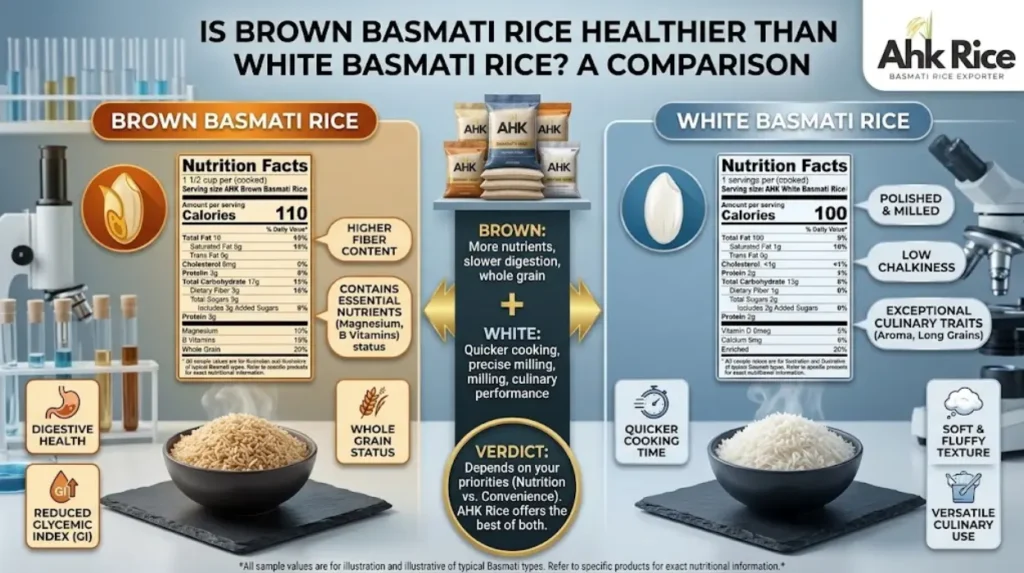
Brown basmati rice generally contains more fiber than white basmati because milling removes the bran and germ. White basmati cooks into a lighter texture and often takes less time to prepare. The better choice depends on individual nutrition goals and meal preferences.
Brown and white basmati come from rice grains processed differently. Brown rice retains its bran and germ, while white rice undergoes additional milling to remove these layers.
The main differences are:
| Feature | White basmati rice | Brown basmati rice |
|---|---|---|
| Bran and germ | Removed | Retained |
| Dietary fiber | Lower | Higher |
| Texture after cooking | Light and tender | Firmer and chewier |
| Cooking time | Usually shorter | Usually longer |
| Flavor | Mild and aromatic | More pronounced, nutty flavor |
| Storage | Generally longer under suitable conditions | Natural oils in the bran require careful storage |
| Best suited to | Quick meals, pilaf, biryani | Whole-grain meals, fiber-focused diets |
Brown basmati is a useful choice for people seeking more whole grains and dietary fiber. White basmati suits consumers who prefer a softer texture or need a rice variety that cooks faster.
Neither type automatically produces better blood glucose control in every person. Portion size, cooking method, physical activity, medications, and the rest of the meal influence the individual response.
What Are the Main Types and Grades of Basmati Rice?
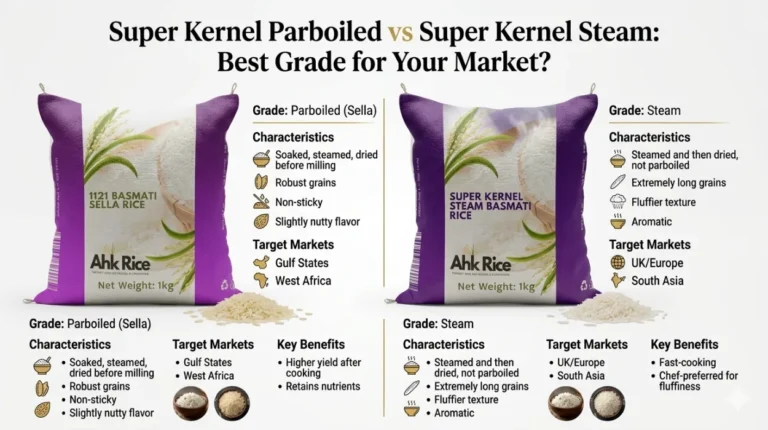
Basmati rice is sold in different varieties, processing styles, and commercial grades. Common Pakistani varieties include 1121, Super Kernel, and 1509. Products also differ by grain length, broken percentage, moisture, milling quality, and whether the rice is raw, steamed, or parboiled.
Understanding these distinctions helps consumers select rice for home cooking, restaurants, catering, and retail products.
1121 Basmati Rice
1121 Basmati is known for its exceptionally long, slender grains and pronounced elongation during cooking. It is commonly sold as white, steamed, or parboiled rice, including Golden Sella and Creamy Sella styles.
Its elongated cooked grains suit biryani, pulao, wedding meals, and restaurant dishes where grain separation and presentation matter.
Super Kernel Basmati Rice
Super Kernel is a traditional Pakistani Basmati variety associated with Punjab. It offers a recognizable aroma and elongated cooked grains. Consumers use it for everyday rice dishes, pulao, biryani, and meals that benefit from a distinct Basmati fragrance.
1509 Basmati Rice
1509 is an early-maturing Basmati variety grown in Punjab. Its relatively short growing period and high yield make it commercially important. Buyers select it for retail distribution, bulk foodservice, and markets that prioritize grain length and price competitiveness.
What Do Commercial Rice Grades Mean?
Commercial grades describe measurable product characteristics rather than guaranteeing a particular health outcome.
- Head rice: Whole or substantially intact milled grains.
- Broken rice: Grains that break during milling or handling.
- Sortex-cleaned rice: Rice passed through optical sorting equipment to remove detectable discolored grains and selected foreign material.
- Moisture specification: The percentage of water in the rice, which affects storage stability.
- Grain-length specification: The measured length of raw or milled grains, depending on the stated testing method.
These specifications matter to importers, retailers, and foodservice operators because they influence appearance, cooking consistency, packaging, and commercial value.
How Is Basmati Rice Grown and Processed?
Basmati rice production begins with cultivation and harvesting, followed by drying, milling, grading, and quality checks. Export-ready rice undergoes additional cleaning, sorting, testing, and packaging. Each stage affects grain integrity, food safety, storage stability, and the consistency of the finished product.
The journey from paddy field to packaged rice involves several stages.
1. Cultivation: Farmers grow suitable Basmati varieties in appropriate agricultural regions. Soil conditions, water availability, weather, seed selection, and crop management influence yield and grain characteristics.
2. Harvesting: Farmers harvest mature paddy and transport it for drying and processing. Harvest timing affects grain quality and milling performance.
3. Drying and storage: Paddy is dried to a suitable moisture level before storage or milling. Proper moisture management helps reduce spoilage and quality deterioration.
4. Dehusking: Milling equipment removes the outer husk to produce brown rice.
5. Whitening and polishing: Further milling removes the bran layers to produce white rice. The extent of milling affects appearance and nutrient retention.
6. Steam treatment or parboiling: Depending on the product, processors use steam or parboiling methods. Parboiling involves soaking, heat treatment, and drying before milling. It changes the grain’s physical properties and cooking behavior.
7. Grading and sorting: Screens separate grains by size, while optical sorters remove selected defects and foreign material. Processors measure broken percentage and other contractual specifications.
8. Testing and packaging: Quality teams assess agreed parameters, including moisture, grain length, broken percentage, and relevant food-safety criteria. Packaging protects the rice during storage and transport.
For international shipments, exporters also coordinate the documentation and inspections required by the destination market. These steps support traceability and help importers verify that the delivered product matches the agreed specification.
How Can US Consumers Use Basmati Rice in Balanced Meals?
US consumers can use basmati rice in home-cooked dinners, meal preparation, rice bowls, curries, and restaurant-style dishes. Pairing measured rice portions with vegetables and protein creates more balanced meals and improves dietary variety without requiring consumers to eliminate rice.
Basmati rice works across different cuisines and meal formats.
- Rice bowls: Combine rice with vegetables, beans, grilled chicken, tofu, or fish.
- Curries and stews: Serve rice alongside lentils, chickpeas, vegetable curries, or lean meat.
- Meal preparation: Portion cooked rice into containers with vegetables and a protein source for planned lunches.
- Family meals: Serve rice with mixed vegetables and a protein-rich main dish.
- Special occasions: Use long-grain 1121 Basmati for biryani, pilaf, and dishes that emphasize elongated grains.
For portion awareness, the US Dietary Guidelines provide general dietary guidance based on age, sex, activity, and energy needs. A half-cup serving of cooked rice is a useful reference portion, but individual requirements differ.
Consumers who monitor blood glucose should measure portions consistently and follow their clinician’s advice. People with specific dietary requirements should also check product labels for ingredients, enrichment details, and possible cross-contact information when relevant.
What Are Common Misconceptions About Basmati Rice?
Basmati rice is not carbohydrate-free, and its glycemic index does not guarantee a specific blood glucose response. Brown rice is not automatically the best choice for every person. Nutrition depends on portion size, preparation, product characteristics, and the complete meal.
Several common misunderstandings can lead to poor dietary decisions.
Misconception 1: Basmati rice contains very few carbohydrates. Basmati is primarily a carbohydrate food. A cup of cooked rice typically provides around 44–47 grams of carbohydrates, although the exact amount varies.
Misconception 2: All basmati rice has the same glycemic index. Variety, processing, cooking, and testing conditions produce different results. A GI figure from one product should not be applied to every variety.
Misconception 3: Brown rice always causes a lower blood glucose response. Brown basmati generally contains more fiber, but the actual response also depends on preparation, serving size, and individual physiology.
Misconception 4: Cooling rice removes its carbohydrates. Cooling cooked rice can increase the amount of resistant starch under certain conditions, but it does not eliminate its carbohydrate content. Reheating also does not make rice carbohydrate-free.
Misconception 5: Rice is unhealthy because it contains starch. Starch is a source of dietary energy. The appropriate amount depends on a person’s energy needs, health circumstances, and overall eating pattern.
Misconception 6: Long grains guarantee better nutrition. Grain length is a physical characteristic, not a direct measure of nutritional quality. Fiber content, processing, serving size, and the rest of the diet provide more relevant nutrition information.
How Should Cooked Rice Be Stored Safely?
Cooked rice requires prompt refrigeration because Bacillus cereus spores can survive cooking and grow under unsuitable storage conditions. The US Department of Agriculture recommends refrigerating perishable foods within two hours, or within one hour when temperatures exceed 90°F (32°C).
Store cooked rice in shallow containers in a refrigerator at 40°F (4°C) or below. Use refrigerated leftovers within three to four days and reheat them to 165°F (74°C). Discard rice left at room temperature beyond the recommended safe window.
Which Factors Should Consumers Check Before Buying Basmati Rice?
Consumers should compare rice variety, processing method, ingredient declarations, nutrition information, package integrity, and cooking instructions. Buyers who prioritize fiber should compare brown basmati with white basmati, while those monitoring carbohydrates should examine serving sizes and total carbohydrates on product labels.
For US shoppers, a practical buying checklist includes:
- Rice type: Identify whether the product is white, brown, steamed, or parboiled basmati.
- Nutrition label: Compare calories, total carbohydrates, fiber, and serving size.
- Ingredient list: Check for added ingredients, seasoning, or oils.
- Packaging: Select intact packaging with clear product identification and storage guidance.
- Cooking instructions: Follow the stated water ratio and cooking time for consistent results.
- Food-safety information: Review relevant quality and safety claims without assuming that a marketing term guarantees a particular nutritional benefit.
Consumers comparing aromatic rice varieties can also explore how grain characteristics, cooking behavior, nutrition, and market positioning differ. This provides useful context when choosing among basmati, jasmine, and American long-grain rice.
Basmati rice can fit into a balanced diet because it supplies energy, contains little fat when served plain, and pairs well with a wide range of nutritious foods. Brown basmati generally provides more fiber than white basmati, while white basmati offers a softer texture and shorter cooking time.
Its glycemic index varies with the variety, processing, cooking method, and testing conditions. Consumers managing blood glucose should focus on total carbohydrates, measured portions, and balanced meals rather than relying on a single GI value.
Understanding the differences between rice varieties helps US consumers make informed choices based on nutrition, taste, preparation, and dietary needs.
Frequently Asked Questions
Is basmati rice healthy?
Yes. Basmati rice provides carbohydrates for energy and contains very little fat when served plain. Brown basmati also provides dietary fiber. Its nutritional value depends on serving size, preparation, and the foods served alongside it.
What is the glycemic index of basmati rice?
Basmati rice has a variable glycemic index depending on the variety, processing method, and cooking conditions. Some basmati varieties have a lower GI than other white rice varieties, but a single GI value does not apply to every product.
Is basmati rice good for people with diabetes?
People with diabetes can include basmati rice in an individualized meal plan. Portion size, total carbohydrate intake, meal composition, and personal blood glucose responses matter. Follow guidance from a qualified healthcare professional.
How many calories are in one cup of cooked basmati rice?
One cup of cooked white basmati rice typically contains approximately 200–215 calories. The exact amount varies with the rice product and water absorption during cooking. Added oils, butter, and sauces increase the total calories.
Is brown basmati rice healthier than white basmati rice?
Brown basmati generally contains more fiber because it retains the bran and germ. White basmati has a softer texture and usually cooks faster. Both can fit into a balanced diet.