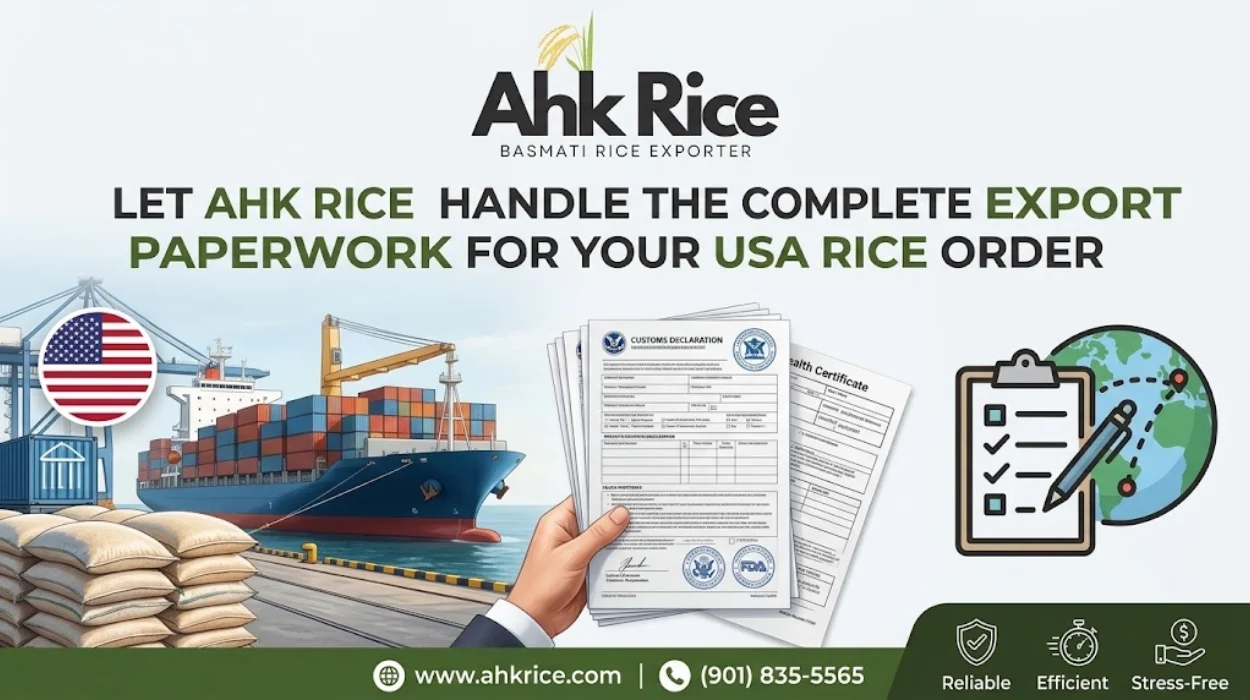
Let AHK Rice Handle the Complete Export Paperwork for Your USA Rice Order
Exporting Pakistani Basmati rice to the United States requires accurate commercial documents, appropriate food safety compliance, and coordination between the exporter, importer, customs broker, and shipping company. Missing information can delay customs clearance, increase storage costs, and disrupt delivery schedules. Importers need an exporter who coordinates documentation with the shipment specifications and destination requirements.
AHK Rice supports international buyers sourcing Pakistani Basmati rice by coordinating export documentation, product specifications, packaging, and shipment preparation. Buyers can review what documents are needed to export Basmati rice from Pakistan to the USA before confirming their order and establishing the documentation requirements. The objective is to prepare a consistent export file before dispatch, reducing avoidable discrepancies between the commercial invoice, packing list, certificate details, and transport documents.
What Is the Best Solution for Complete Rice Export Paperwork?
The best solution is to coordinate export documentation with product specifications, payment terms, shipment arrangements, and US import requirements before loading. This approach helps buyers identify missing documents early, assign responsibilities, and prepare the shipment for customs entry and applicable food safety checks.
A USA-bound rice shipment involves several parties. The Pakistani exporter prepares commercial and export documents, while the US importer remains responsible for applicable import obligations. A customs broker manages entry procedures when authorized, and the carrier issues transport documentation according to the booking and shipping arrangements.
AHK Rice helps buyers coordinate the export side of this process. Documentation should match the agreed rice variety, grade, quantity, packaging, country of origin, and Incoterm. A discrepancy between the invoice and packing list can trigger questions during clearance. An incorrect consignee name or inconsistent shipment quantity can also require amendments.
The standard documentation file may include:
- Commercial invoice: Records the seller, buyer, product description, quantity, unit price, total value, currency, and agreed trade terms.
- Packing list: Specifies package counts, net and gross weights, and packaging details.
- Bill of lading: Records the sea-carriage arrangement and serves as a transport document under the applicable shipping terms.
- Certificate of origin: Supports the declaration of Pakistani origin when required by the buyer, destination procedures, or relevant authorities.
- Phytosanitary certificate: Provides official plant-health certification when required for the product and import conditions.
- Export customs documentation: Supports the applicable export declaration and clearance procedures in Pakistan.
- Food safety and supporting records: May include laboratory reports, treatment records, or other evidence requested by the importer or relevant authorities.
Not every shipment requires every document in the same form. Requirements depend on the product, applicable regulations, shipment route, and buyer’s contractual obligations. The importer should confirm current requirements with the appropriate US authorities and customs broker before shipment.
Why Choose AHK Rice for Your USA Rice Export Order?
AHK Rice provides a coordinated sourcing and export process for buyers who need Pakistani Basmati rice prepared according to agreed commercial specifications. Buyers can discuss variety selection, quality requirements, packaging, documentation responsibilities, and shipping arrangements before approving a purchase.
Working with an exporter that understands the complete shipment workflow helps buyers connect product selection with the paperwork needed to move the cargo. AHK Rice supplies Pakistani Basmati varieties, including 1121, Super Kernel, and 1509 Basmati rice, subject to availability and agreed specifications.
Through the AHK Rice export and supply service, importers can discuss the required grade, grain characteristics, broken percentage, moisture limits, packaging format, and shipment quantity. These details should be confirmed before the commercial invoice and packing list are finalized.
For example, a US distributor ordering 1121 Steam Basmati rice in 25 kg bags needs the product description, package count, net weight, gross weight, and agreed price to remain consistent throughout the relevant documents. If the purchase order specifies one grade but the invoice names another, the parties may need to correct the paperwork before dispatch.
AHK Rice can coordinate the exporter-side preparation process around the confirmed order. Buyers should establish in writing which documents the exporter will provide, which certificates require official issuance, and which import-side filings remain the responsibility of the US buyer.
This division of responsibility matters because an exporter cannot replace the importer of record, customs broker, or US regulatory authorities. Instead, effective coordination helps each party understand its obligations and prepare the necessary information before the shipment reaches the destination port.
Which Documents Must Be Ready Before Shipping Rice to the USA?
The core commercial and transport documents should be checked against the purchase order before the cargo is dispatched. Importers must also confirm applicable FDA, customs, and plant-health requirements because documentation needs vary according to the product and the shipment circumstances.
The commercial invoice and packing list form the foundation of the shipment file. Both should identify the goods consistently and use the correct quantities and weights. The bill of lading should reflect the agreed shipping instructions, consignee arrangements, and cargo details.
The certificate of origin should accurately identify the country of origin. Where a phytosanitary certificate is required, it must be issued by the competent authority according to the applicable plant-health requirements. Buyers should not assume that every rice product or shipment automatically requires the same certificate.
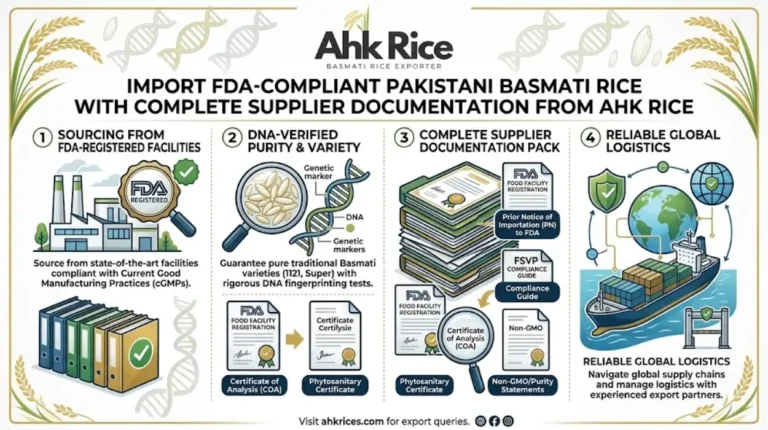
US food imports also require attention to Food and Drug Administration requirements. Depending on the circumstances, the importer and other responsible parties may need to address food facility registration, prior notice, and Foreign Supplier Verification Program obligations. These are separate compliance matters and should not be treated as automatically satisfied by receiving an export document package.
Importers can also review the differences between the phytosanitary certificate, certificate of origin, bill of lading, and commercial invoice to understand each document’s purpose and the information that needs to match.
Before shipment, the buyer should ask the exporter and customs broker to verify the final document checklist against the specific rice product, entry arrangements, and current US requirements. This review helps identify missing information while corrections are still manageable.
What Shipping Time Should USA Importers Expect?
Shipping time depends on the Pakistani loading port, vessel schedule, destination port, transshipment arrangements, and customs clearance. Buyers should distinguish ocean transit from the complete order timeline, which also includes production, inspection, document preparation, port handling, and final delivery.
For planning purposes, importers can use the following indicative ranges as preliminary estimates rather than guaranteed transit commitments.
| Shipment stage | Indicative planning range |
|---|---|
| Order confirmation and specification approval | 2–7 business days |
| Production, processing, and packing | 7–21 days, depending on stock and volume |
| Export document preparation and verification | 3–7 business days, potentially overlapping other stages |
| Ocean transit from Pakistan to the US East Coast | Approximately 25–40 days |
| Ocean transit from Pakistan to the US West Coast | Approximately 30–45 days |
| Customs clearance and inland delivery | Several days to two weeks or longer, depending on circumstances |
These ranges are not carrier schedules. Actual transit may be shorter or longer because of vessel availability, transshipment, port congestion, inspections, and routing changes. West Coast shipments do not always take longer than East Coast shipments because the selected service and transshipment pattern affect the journey.
AHK Rice buyers should confirm the proposed vessel schedule, port of loading, destination port, expected departure date, and estimated arrival date before finalizing their purchasing plans. Retailers and distributors should also allow time for customs entry and any regulatory examination before promising stock availability to their customers.
What Results Can Buyers Expect from a Coordinated Export Process?
A coordinated export process gives buyers clearer responsibilities, more consistent documentation, and earlier visibility into shipment readiness. It reduces avoidable paperwork errors but cannot guarantee customs release, prevent every inspection, or eliminate delays caused by authorities, carriers, or unforeseen circumstances.
The main benefit is improved control over the order. When specifications and shipping instructions are confirmed before documents are issued, buyers have a clearer basis for checking quantities, weights, product descriptions, and consignee details.
Consider a US wholesaler purchasing one container of Pakistani 1121 Basmati rice. The buyer approves the grade, packaging, quantity, and price before the exporter prepares the commercial documents. The packing list records the actual package count and weights, while the shipping instructions establish the correct consignee and notify-party information where applicable.
If the parties identify a discrepancy during the pre-shipment review, they can investigate it before dispatch rather than waiting for a question from the carrier, broker, or customs authorities. The final documentation should reflect the actual goods shipped and the transaction agreed by both parties.
AHK Rice can help buyers coordinate these export-side steps and establish a clearer communication process. The importer should retain responsibility for confirming US admissibility, entry requirements, broker instructions, and any additional documentation needed for its particular transaction.
How Much Does Export Paperwork Cost for a USA Rice Order?
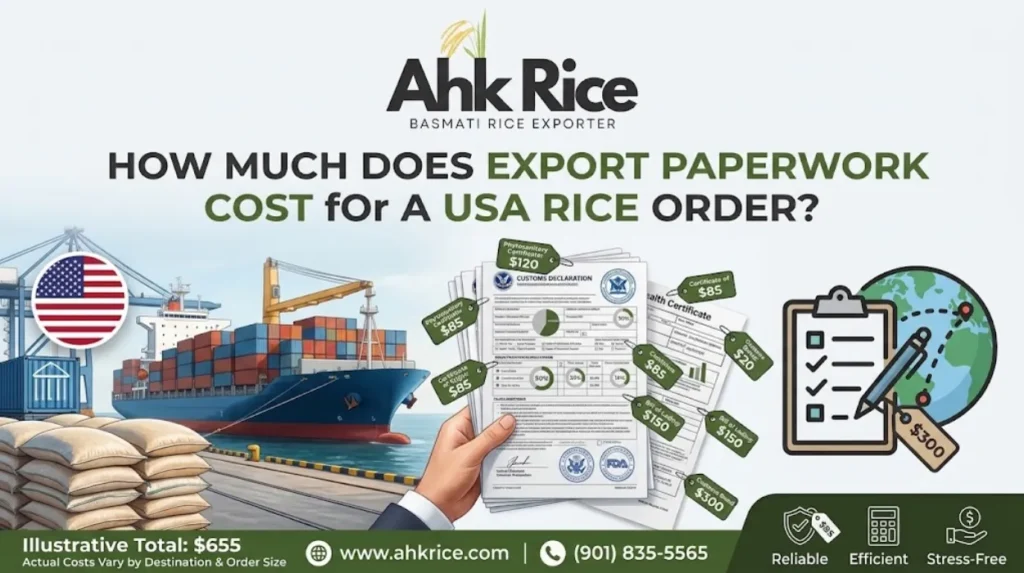
Export documentation costs depend on the certificates required, shipment size, inspection arrangements, courier needs, and shipping terms. Buyers should request an itemized quotation because some charges may be included in the product price while others are billed separately by authorities, inspection agencies, carriers, or service providers.
The principal cost factors include:
- Official certificates: Government-issued documents may carry application, inspection, or certification fees.
- Laboratory testing: Testing costs depend on the requested parameters, laboratory, sampling requirements, and applicable food safety specifications.
- Third-party inspection: Independent inspection is an additional cost when required by the buyer, contract, bank, or destination arrangements.
- Document amendments: Changes after issuance may create additional charges from the relevant issuing party or carrier.
- Courier and document handling: Original documents, where required, may incur courier or administrative costs.
- Freight and port charges: Ocean freight, terminal handling, and related charges depend on the route, carrier, booking, and agreed Incoterm.
There is no single reliable paperwork price for every US-bound rice shipment. For example, a buyer ordering available stock with straightforward documentation may face a different cost structure from a buyer requiring independent laboratory testing, special inspection, and additional certificates.
Sample shipments also require separate cost planning. AHK Rice can discuss sample availability and the proposed arrangements with prospective buyers. Before dispatch, the parties should confirm the sample quantity, product grade, packaging, courier service, freight charges, and any applicable inspection or certification costs.
The recipient should also confirm whether the proposed sample shipment can legally enter the United States under the applicable requirements. Small quantities are not automatically exempt from food import rules. Any customs duties, taxes, brokerage charges, or other destination costs should be confirmed with the courier or customs broker rather than assumed to be included in the sample price.
How Does the AHK Rice Sample Process Work?
A sample order allows a buyer to evaluate rice quality before committing to a commercial shipment. The process should establish the requested variety, sample quantity, delivery destination, shipping method, and total sample-related charges before dispatch.
The process generally follows these steps.
Step 1: Specify the rice. The buyer identifies the preferred variety, such as 1121, Super Kernel, or 1509, together with the desired processing type and quality requirements.
Step 2: Confirm sample availability. AHK Rice checks whether the requested product and sample quantity are available. The parties agree on the sample format and any relevant specifications.
Step 3: Confirm costs. Before dispatch, the buyer receives confirmation of the sample price, courier charge, and any applicable testing, certification, or handling expenses. If the parties agree to a free product sample, they should clarify which shipping and compliance costs remain payable by the buyer.
Step 4: Verify shipping requirements. The buyer and exporter confirm the recipient’s details, courier route, required declarations, and any documents needed for lawful entry into the United States.
Step 5: Dispatch and tracking. Once the arrangements are approved and payment responsibilities are settled, the sample is prepared for shipment. The buyer receives the available tracking information and relevant supporting documentation.
Step 6: Evaluate and approve. The buyer assesses grain appearance, aroma, cooking performance, elongation, and consistency against the intended market requirements. If the sample is approved, the parties finalize the commercial specification and order terms.
Courier delivery time and cost depend on the destination ZIP code, parcel weight, service level, and route. A confirmed quotation is therefore more reliable than a general shipping estimate.
How Can You Start a USA Rice Order with AHK Rice?
Start by sharing your required rice variety, quantity, specifications, packaging, destination, and preferred shipping terms. A documented purchase discussion allows AHK Rice and the buyer to identify product requirements, clarify responsibilities, and prepare a shipment plan before the order is confirmed.
US importers should provide their company details, delivery destination, intended use, preferred packaging, and any special quality or inspection requirements. Buyers should also identify their customs broker and ask which documents or regulatory confirmations are needed before dispatch.
AHK Rice can then discuss product availability, pricing, processing requirements, sample arrangements, and the expected shipping schedule. Before payment or production begins, both parties should confirm the final product specification, quantity, packing format, Incoterm, payment terms, document responsibilities, and expected shipment milestones.
The decision should be based on more than the rice price alone. Importers should consider specification consistency, packaging suitability, communication, document coordination, freight arrangements, and the ability to meet the intended delivery window. These factors help buyers compare offers on a like-for-like basis.
For importers seeking a structured purchasing process, AHK Rice provides a starting point for discussing Pakistani Basmati rice supply and export coordination. The final agreement should clearly state which documents will be supplied, which charges are included, and which US import responsibilities remain with the buyer.
To discuss your product specifications, sample requirements, documentation checklist, and shipment quotation, request a quote from AHK Rice.
Frequently Asked Questions
Can AHK Rice handle all export paperwork for a USA rice order?
AHK Rice can coordinate exporter-side documentation according to the agreed order and applicable requirements. Official certificates must come from the authorized issuing bodies, while the US importer remains responsible for its applicable import filings and compliance obligations.
Is a phytosanitary certificate always required for Pakistani Basmati rice entering the USA?
Not necessarily. Requirements depend on the product and applicable US plant-health rules. Importers should confirm the current requirements with the relevant US authorities and their customs broker before the shipment is dispatched.
How long does it take to ship Basmati rice from Pakistan to the USA?
Ocean transit may take approximately 25–45 days, depending on the destination coast, vessel schedule, and routing. Production, document preparation, port handling, customs clearance, and inland delivery can extend the overall timeline.
What affects the cost of export documentation?
Costs depend on official certificates, laboratory testing, inspection, document amendments, courier services, and shipping arrangements. Buyers should request an itemized quotation that distinguishes included services from charges payable to third parties.
Can US buyers request a rice sample before placing a bulk order?
Yes, subject to sample availability and applicable shipping requirements. Buyers should confirm the sample quantity, variety, courier cost, any applicable certification or handling charges, and US entry requirements before authorizing dispatch.