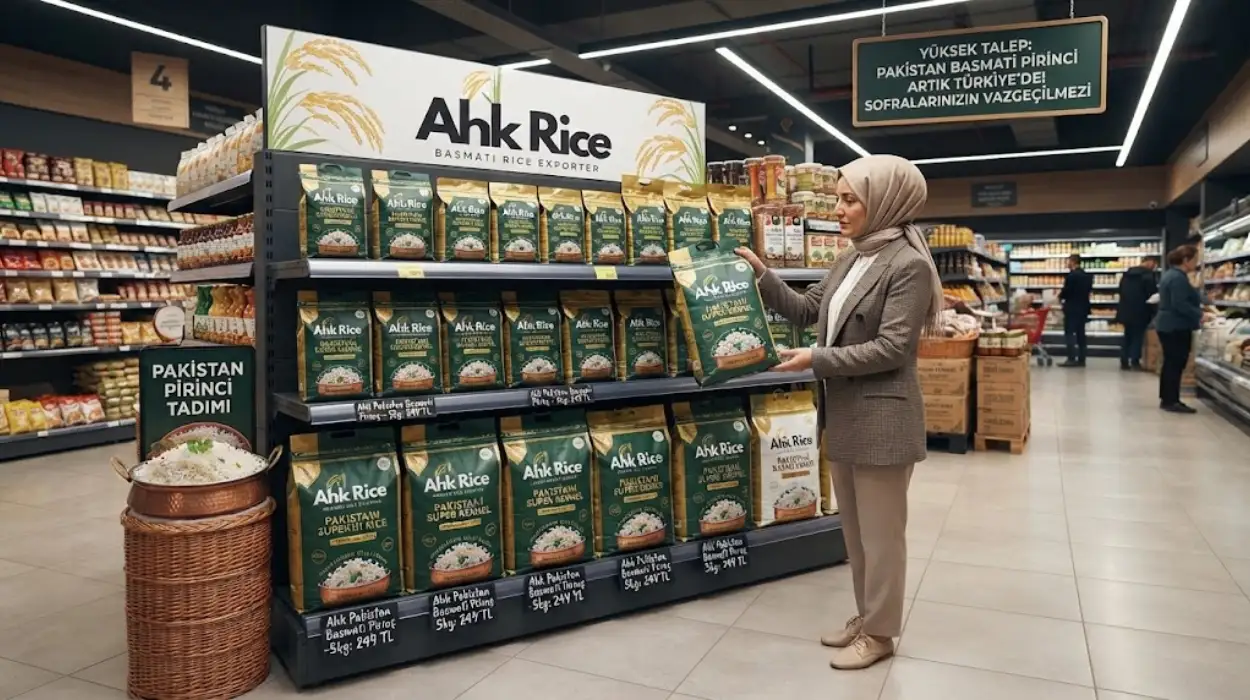
Pakistani Basmati Rice Demand and Consumer Trends in Turkey 2026
Pakistani Basmati rice demand in Turkey is centered on long-grain rice, imported Basmati varieties, retail packs, wholesale supply, and foodservice use. Here is why: Turkey imported 356,753 metric tons of rice worth US$280.92 million in 2024, while Pakistan supplied rice worth US$4.88 million in 2025.
Pakistani Basmati rice comes from aromatic long-grain rice cultivated mainly in Punjab. Pakistani exporters supply varieties such as 1121, Super Kernel, and 1509 Basmati rice. Processing converts harvested paddy into white, Steam, Sella, Golden Sella, and other commercial forms.
Turkey represents a mixed rice market. Domestic rice production serves traditional consumption. Imported rice serves additional retail, wholesale, foodservice, and ethnic-food demand. Shipment records show Pakistani Basmati and Sella rice entering Turkey in commercial quantities. One recorded shipment contained 24,440 kg of long-grain Basmati Sella rice from Pakistan to Turkey.
What is Pakistani Basmati rice demand in Turkey in 2026?
Pakistani Basmati demand in Turkey combines imported long-grain rice consumption with retail, wholesale, hospitality, and South Asian food demand. Here is why: Turkey imports substantial rice volumes, while Pakistani-origin Basmati shipments already serve Turkish commercial buyers.
Pakistani Basmati rice refers to aromatic long-grain rice cultivated and processed in Pakistan. The main commercial varieties include 1121 Basmati, Super Kernel Basmati, and 1509 Basmati.
Turkey’s rice market contains several grain types. Turkish consumers traditionally use locally produced varieties alongside imported rice. Imported long-grain Basmati serves different culinary and commercial requirements.
Turkey imported rice from several major origins in 2024. China supplied 126.76 million kg, India supplied 57.51 million kg, Argentina supplied 29.94 million kg, and Bulgaria supplied 33.11 million kg.
Pakistan’s 2025 rice exports to Turkey reached US$3.59 million, according to UN Comtrade data reported for bilateral trade. Turkish import data reports the corresponding Turkish import value at US$4.88 million. Different reporting bases can produce different bilateral figures.
Pakistan and Turkey also discussed expanding rice trade in January 2026. Pakistan proposed higher rice volumes, greater use of the existing 18,000-tonne tariff-rate quota, and improved market access for Basmati rice.
With Turkey’s market structure defined, the next question is how Pakistani Basmati reaches consumers.
How does Pakistani Basmati rice reach Turkish consumers?
Pakistani Basmati moves through cultivation, milling, grading, packing, export, import clearance, wholesale distribution, retail, and foodservice channels. Each stage establishes a measurable quality or commercial requirement.
How is Pakistani Basmati cultivated?
Pakistani Basmati is cultivated mainly across Punjab’s rice-growing areas. Farmers irrigate fields, establish rice crops, manage nutrients, control weeds, and harvest mature paddy.
Harvested paddy contains the husk and requires controlled post-harvest handling. Moisture management starts before milling because excessive moisture affects storage and processing performance.
How is Pakistani Basmati processed?
- Clean the paddy to remove stones, dust, straw, and foreign material.
- De-husk the grain to remove the outer husk.
- Mill the rice to remove remaining bran layers.
- Polish the kernels to create the required surface appearance.
- Sort by length to separate whole and broken kernels.
- Grade the rice according to contracted specifications.
- Remove discolored grains through colour sorting.
- Test moisture against the agreed quality specification.
- Inspect the finished rice for foreign matter and quality consistency.
- Pack the rice into retail or commercial export packaging.
Processing determines the final commercial form. White rice uses conventional milling. Steam rice receives controlled steaming. Sella rice uses parboiling before drying and milling.
How is Pakistani rice shipped to Turkey?
Exporters load approved rice into containers after processing, inspection, documentation, and packaging. Shipments then move from Pakistani ports toward Turkish entry points.
Turkey’s import process includes document control, identification control, physical control, sampling, and laboratory analysis for applicable plant-origin food products. Turkish authorities state that import controls operate according to risk and Turkish Food Codex requirements.
This supply chain connects production and processing with the consumer trends shaping Turkish demand.
What are the key components of Turkish Pakistani Basmati demand?
The main demand components are grain length, aroma, processing type, cooking performance, packaging, price, foodservice use, and regulatory compliance. These factors determine how buyers position imported Basmati.
Grain length
Long grain remains a defining characteristic of Pakistani Basmati. Commercial buyers compare raw grain dimensions, broken percentage, and cooked appearance.
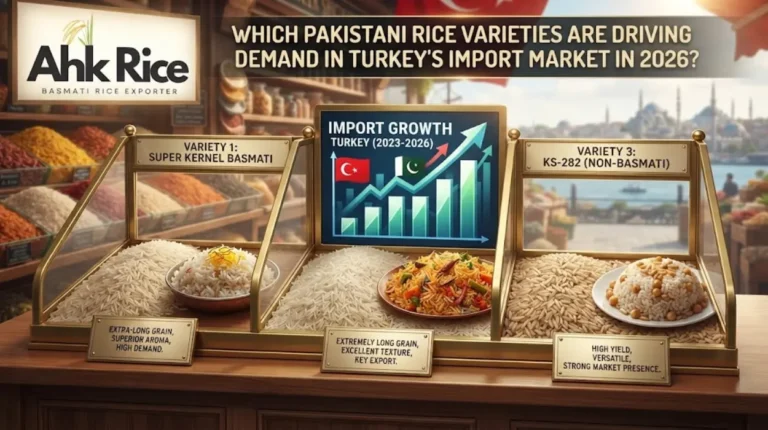
1121 Basmati focuses on long grain and premium visual presentation. Super Kernel combines traditional Basmati aroma with commercial long-grain characteristics. 1509 provides long-grain performance with strong commercial applications.
Processing type
Processing changes appearance, texture, cooking behaviour, and buyer application.
White Basmati provides a clean, bright appearance. Steam rice provides firmer cooked grains. Sella rice receives parboiling before drying. Golden Sella has the characteristic golden colour associated with its processing method.
Packaging
Retail buyers require consumer-sized packaging. Wholesale buyers require larger commercial bags. Private-label distributors require packaging designed around their own brand specifications.
Cooking performance
Turkish retail and foodservice buyers evaluate cooking consistency alongside grain appearance. Basmati’s aromatic profile also differentiates it from many conventional rice products.
Price
Price remains important because Turkey sources rice from multiple international origins. Pakistan therefore competes with suppliers from China, India, Argentina, Bulgaria, and other countries.
Pakistan’s government specifically identified price competitiveness as an important issue in expanding rice exports to Turkey in 2026.
These components explain why demand depends on more than the word Basmati on a package.
What benefits does Pakistani Basmati offer Turkish consumers and buyers?
Pakistani Basmati provides long-grain appearance, aromatic characteristics, multiple processing formats, and applications across retail, restaurants, catering, and wholesale distribution. These attributes support different consumer requirements.
Retail applications
Retail consumers purchase Basmati in packaged formats for household meals. White Basmati supports everyday cooking. Steam and Sella grades support consumers seeking firmer cooked grains.
Examples include supermarket rice packs, ethnic-food stores, specialty grocery products, and private-label retail lines.
Restaurant applications
Restaurants use Basmati for rice-based dishes requiring long, separated grains. Biryani, pulao, steamed rice, and mixed rice dishes represent common applications.
Foodservice buyers focus on consistent cooking performance because commercial kitchens prepare larger quantities than household consumers.
Catering applications
Catering businesses require repeatable results across large cooking batches. Steam and Sella processing can provide different cooking characteristics for bulk food preparation.
Wholesale applications
Wholesalers purchase rice for redistribution to retailers, restaurants, foodservice operators, and specialty stores. Wholesale specifications normally define variety, processing, grain length, broken percentage, moisture, packaging, and quantity.
These applications show how consumer requirements translate into commercial rice specifications.
Which Pakistani Basmati grades fit Turkish market demand?
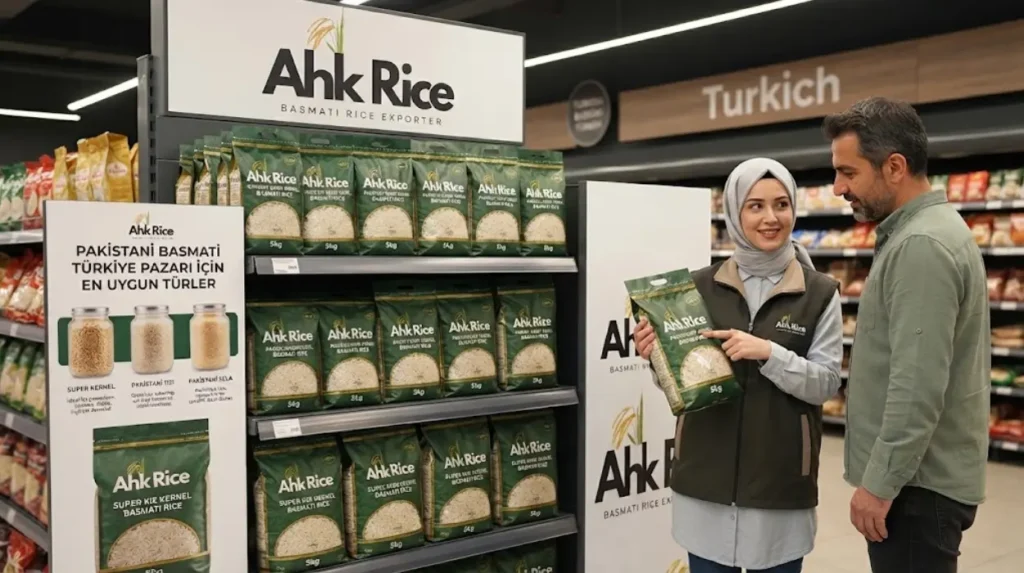
Pakistan supplies White, Steam, Sella, Golden Sella, and Broken processing forms across varieties such as 1121, Super Kernel, and 1509. The correct grade depends on cooking use, retail positioning, packaging, and buyer specification.
1121 Basmati
1121 Basmati is a long-grain Pakistani Basmati variety associated with premium grain length and strong visual presentation.
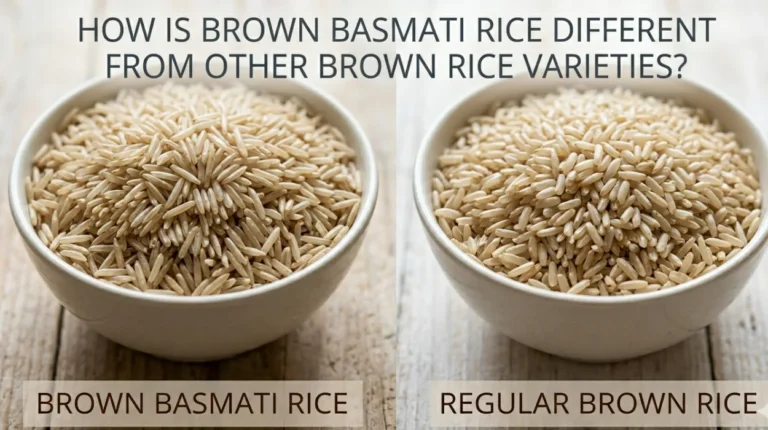
Common forms include White, Steam, Sella, Golden Sella, Creamy Sella, Brown, and Broken rice. Each form uses different processing and serves different applications.
Super Kernel Basmati
Super Kernel is a traditional Pakistani Basmati variety known for aromatic characteristics. Commercial buyers use it for retail, foodservice, restaurants, and South Asian cuisine.
The variety is positioned around aroma and traditional Basmati characteristics rather than grain length alone.
1509 Basmati
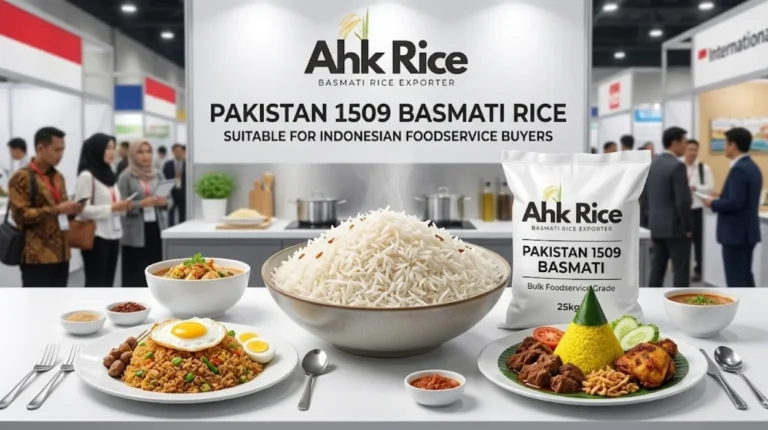
1509 is a Pakistani long-grain variety with strong commercial applications. AHK Rice’s documented specification uses an average raw grain length of 8.20–8.40 mm and maximum moisture of 13%.
1509 is processed as White, Steam, and Golden Sella grades. These forms serve retail, restaurants, catering, and wholesale distribution.
Turkish buyers can therefore evaluate Pakistani Basmati by both variety and processing grade. A variety name alone does not define the finished product.
Which markets and channels import Pakistani rice?
Pakistani rice reaches Turkey through importers, wholesalers, retailers, foodservice operators, and industrial buyers. Basmati demand forms one segment within Turkey’s broader imported and domestic rice market.
Turkey’s total rice imports reached 356,753 metric tons in 2024, demonstrating a substantial import channel alongside domestic production.
Shipment records provide direct evidence of Pakistani-origin rice entering Turkey. Recorded transactions include Basmati, long-grain Basmati Sella, and white rice packed in 50 kg PP bags.
The commercial channels include:
- Retail supermarkets, which sell packaged rice to households.
- Wholesale distributors, which supply multiple downstream businesses.
- Ethnic-food retailers, which serve consumers seeking South Asian products.
- Restaurants, which use long-grain rice in prepared dishes.
- Catering companies, which require bulk cooking performance.
- Food manufacturers, which purchase rice for processed food applications.
Pakistan’s government is also discussing opportunities for value-added rice products, including parboiled rice, as part of stronger Pakistan-Turkey agricultural trade.
For buyers studying individual Pakistani grades, the next logical step is to compare which grades fit Turkish retail and wholesale requirements.
What certifications and quality controls apply to Pakistani Basmati rice entering Turkey?
Turkish import controls focus on documentation, product identity, physical inspection, sampling, laboratory analysis, and compliance with the Turkish Food Codex. Importers must prepare the required documentation before official controls.
Turkey’s Ministry of Agriculture and Forestry states that plant-origin food imports require importer registration and applicable exporter and producer information in the GGBS system. The import procedure also requests health-certificate information and shipment details.
The official control process includes:
- Document control, which checks compliance with Turkish Food Codex requirements.
- Identity control, which checks the product against submitted documents.
- Physical control, which includes organoleptic examination, packaging checks, sampling, and laboratory analysis.
Export documentation should match the actual shipment specification. Common commercial documents include invoices, packing lists, certificates of origin, transport documents, and applicable health or phytosanitary documentation.
Laboratory testing can address parameters such as pesticide residues, mycotoxins, moisture, foreign matter, and microbiological requirements where applicable.
European rules also illustrate why residue and mycotoxin testing matters for Pakistani rice supply chains. EU regulations have included special controls for certain Pakistani rice consignments involving aflatoxins, ochratoxin A, and pesticide residues. These EU rules are not Turkey’s rules, but they demonstrate the compliance issues international Pakistani rice exporters monitor.
Certification therefore works alongside testing and official controls. Buyers should confirm the current Turkish requirement for their exact HS code, processing form, packaging, and shipment.
What are the common problems and misconceptions about Pakistani Basmati demand in Turkey?
The main misconceptions involve treating all Basmati as one product, equating variety with grade, and assuming Turkish demand follows one consumer preference. Actual procurement requires product-level specifications.
Basmati is not one specification
1121, Super Kernel, and 1509 differ in grain characteristics, processing options, and commercial positioning.
A buyer requesting only “Basmati rice” leaves important variables undefined. The purchase specification should identify variety, processing, grain length, broken percentage, moisture, packaging, quantity, and destination.
Imported rice does not represent one consumer segment
Turkey’s rice market contains domestic and imported products. Imported rice serves different retail, foodservice, and wholesale requirements.
The existence of Pakistani Basmati shipments does not mean every Turkish consumer prefers Basmati. Demand data must distinguish total rice imports from Pakistani Basmati demand.
Price alone does not define market fit
Pakistan competes against several origins in Turkey. China, India, Argentina, and Bulgaria were major rice suppliers in 2024.
A commercial comparison should therefore evaluate price with grain specification, processing, packaging, compliance, and delivery requirements.
Regulatory compliance is part of product quality
A rice shipment requires more than attractive grain appearance. Documentation, sampling, laboratory analysis, and official controls form part of the import process.
With these misconceptions clarified, Turkish demand can be understood through measurable product and trade variables rather than generic consumer assumptions.
What should buyers monitor in Pakistani Basmati demand in Turkey during 2026?
Buyers should monitor import volumes, Pakistani shipment values, tariff-rate quota utilization, price competitiveness, processing preferences, retail packaging, and Turkish food-control requirements. These indicators connect market demand with procurement decisions.
Pakistan and Turkey are actively discussing stronger rice trade in 2026. Pakistan has proposed better use of the 18,000-tonne PTA tariff-rate quota and higher Basmati import volumes.
Turkey’s total rice import base also remains significant. The 2024 import figure of 356,753 metric tons provides the broader market context for evaluating Pakistani rice penetration.
For Turkish buyers, the most useful trend indicators are therefore shipment data, origin-level import values, grade-level transactions, tariff conditions, retail positioning, and regulatory requirements.
With the 2026 demand structure established, grade selection becomes the next level of market analysis.
Frequently Asked Questions
What is the demand for Pakistani Basmati rice in Turkey in 2026?
Pakistani Basmati demand is a specialized segment within Turkey’s larger rice import market. Pakistan supplied rice to Turkey in 2025, while shipment records show Pakistani Basmati and Sella transactions.
Which Pakistani Basmati varieties are relevant to Turkish buyers?
1121, Super Kernel, and 1509 are key Pakistani Basmati varieties available for international commercial sourcing. Each variety has different grain characteristics, processing forms, and applications.
Does Turkey import Basmati rice from Pakistan?
Yes. Turkey imports Pakistani Basmati rice. Recorded shipments include Pakistani Basmati and long-grain Basmati Sella rice entering Turkey in commercial quantities.
What are the main Pakistani Basmati processing grades?
White, Steam, Sella, Golden Sella, Creamy Sella, Brown, and Broken are common processing or commercial forms across Pakistani Basmati supply. Exact availability depends on the variety and supplier specification.
What documents are important for Pakistani rice imports into Turkey?
Import documentation includes product, exporter, shipment, health, and customs information required under Turkish procedures. Turkish authorities conduct document, identity, and physical controls, including sampling and laboratory analysis.
Why does grain length matter in Turkish Basmati demand?
Grain length affects visual presentation and cooked-rice appearance. Buyers therefore specify raw grain length alongside broken percentage, moisture, processing type, and cooking performance.
What is the main consumer trend for imported Basmati rice?
Imported Basmati serves differentiated retail, restaurant, catering, ethnic-food, and wholesale applications rather than one uniform consumer segment. Pakistani shipment records confirm commercial demand across specific Basmati forms.