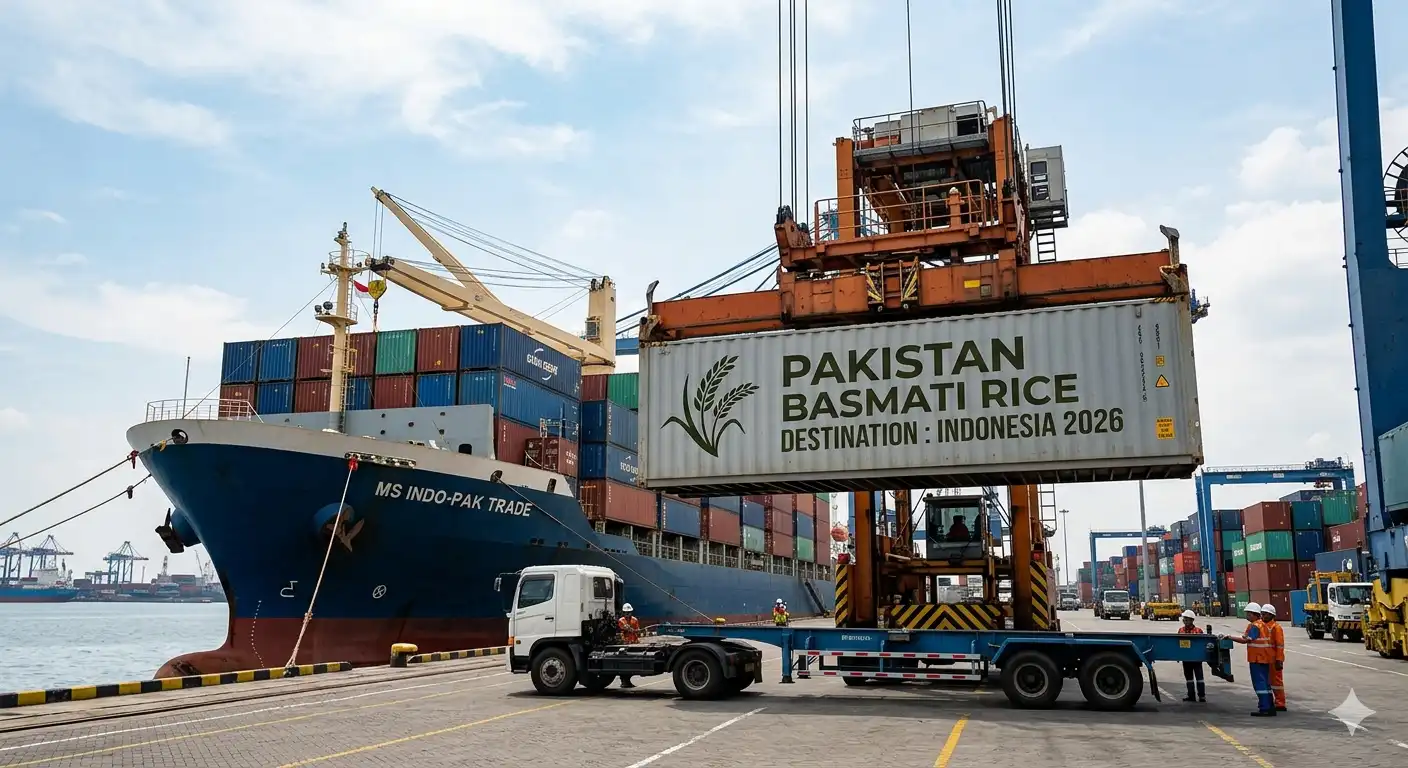
Rice Shipping Pakistan Indonesia 2026: Duration, Route, and Delivery Timeline
Rice shipping from Pakistan to Indonesia in 2026 refers to the structured export process of transporting milled Basmati or non-Basmati rice via sea freight from Pakistani ports to Indonesian ports under defined transit timelines, customs regulations, and logistics coordination frameworks.
Rice shipping is a multi-stage international trade operation. It starts from paddy procurement in Punjab, followed by milling, grading, packaging, and containerization. The cargo then moves through Karachi ports and sails toward Indonesia, typically arriving at Tanjung Priok Port in Jakarta.
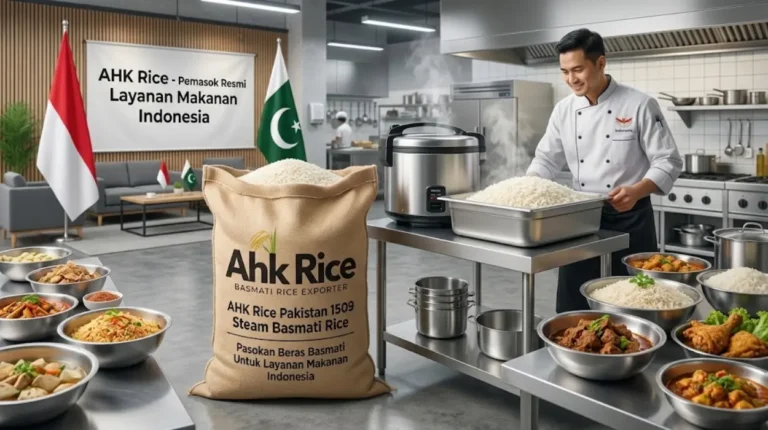
This route is one of the most active rice corridors in Asia. Pakistan exports premium long-grain rice varieties such as 1121, Super Kernel, and 1509 to Indonesia. Indonesia imports rice to stabilize domestic supply and meet consumption demand across urban regions such as Jakarta, Surabaya, and Bandung.
The term “rice shipping duration” defines the total time from factory dispatch in Pakistan to final delivery in Indonesia. It includes inland transport, port handling, vessel transit, and destination clearance.
How does the rice shipping process from Pakistan to Indonesia work?
Rice shipping operates through a sequential supply chain: procurement, milling, quality inspection, export documentation, container loading, sea freight movement, port discharge, customs clearance, and inland delivery to Indonesian buyers.
Procurement and Processing
Rice originates from Punjab’s agricultural belt. Paddy undergoes drying, husking, polishing, and grading. Each stage determines quality classification. For example, 1121 Basmati is known for extra-long grain length exceeding 8.3 mm.
Quality Inspection and Certifications
Before export, rice batches undergo laboratory testing. Parameters include moisture content (12–14%), broken percentage, chalkiness, and purity level. Certification bodies validate compliance with Indonesian import standards.
Packaging and Containerization
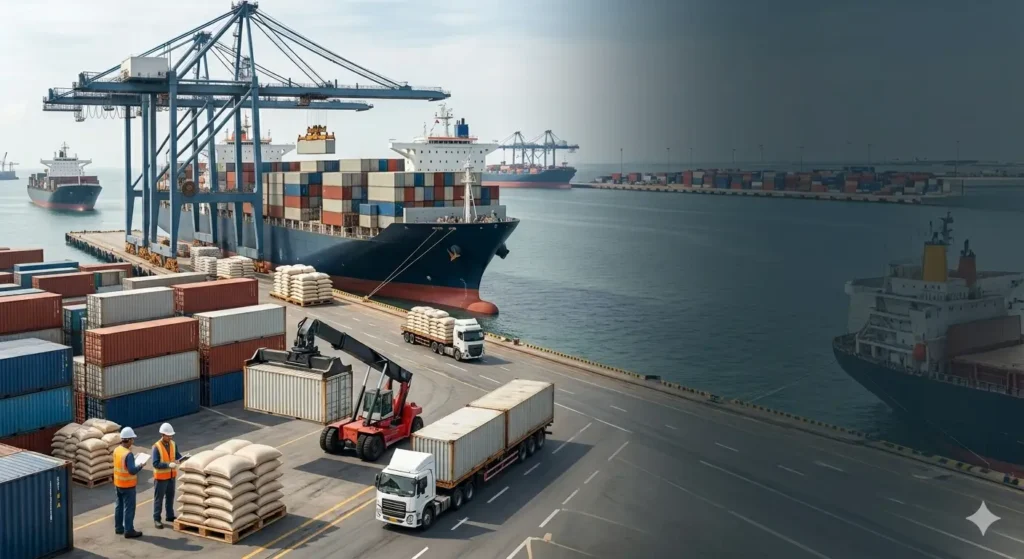
Rice is packed in 5 kg, 10 kg, 25 kg, or 50 kg bags. Packaging materials include PP woven bags, BOPP laminated bags, and jute sacks. Each container holds approximately 25–27 metric tons depending on packaging type.
Port Handling in Pakistan
Containers move to Karachi Port or Port Qasim. Documentation includes commercial invoice, packing list, bill of lading, phytosanitary certificate, and certificate of origin.
Sea Freight Transit
The cargo travels via sea freight Pakistan Indonesia routes. Shipping lines follow established maritime corridors across the Arabian Sea, Indian Ocean, and Java Sea.
Arrival and Clearance in Indonesia
The shipment reaches Tanjung Priok port rice terminals. Indonesian authorities inspect cargo and verify compliance with rice import regulations Indonesia 2026. After clearance, goods are transported inland for distribution.

What is the average rice shipping duration from Pakistan to Indonesia?
The average rice shipping duration from Pakistan to Indonesia in 2026 ranges between 18 to 28 days, depending on vessel schedule, transshipment requirements, port congestion, and customs clearance efficiency.
Shipping duration includes multiple time segments:
- Inland transport in Pakistan: 2–4 days
- Port handling and loading: 3–5 days
- Sea transit: 14–20 days
- Indonesian port clearance: 3–7 days
Direct vessel routes reduce transit time to approximately 18–22 days. Transshipment routes extend delivery to 25–28 days.
For example, a direct shipment from Karachi to Jakarta typically arrives within 20 days under stable conditions. A shipment routed via Singapore or Port Klang takes longer due to container transfer operations.
Seasonal factors influence duration. Monsoon conditions in the Arabian Sea and port congestion during peak trade months extend timelines by 3–5 days.
What are the key components affecting shipping duration?
Shipping duration depends on vessel routing, port efficiency, documentation accuracy, container availability, and regulatory clearance speed at both origin and destination ports.
Vessel Routing
Direct routes minimize delays. Transshipment routes involve intermediate ports, increasing handling time.
Port Efficiency
Port congestion increases waiting time. Karachi and Tanjung Priok handle high cargo volumes, affecting turnaround speed.
Documentation Accuracy
Errors in documentation delay customs clearance. Incorrect HS codes or missing certificates result in inspection holds.
Container Availability
Container shortages impact booking schedules. Peak export seasons reduce availability, delaying shipment dispatch.
Regulatory Compliance
Strict adherence to rice import regulations Indonesia 2026 ensures faster clearance. Non-compliance results in inspection delays or cargo rejection.
What are the benefits of structured rice shipping logistics?
Structured rice shipping ensures predictable delivery timelines, consistent product quality, regulatory compliance, and efficient cost management across international supply chains.
Reliable logistics improve trade continuity. Buyers in Indonesia depend on consistent delivery schedules to maintain inventory levels.
Standardized packaging protects grain integrity during transit. Proper fumigation prevents pest contamination.
Efficient documentation reduces clearance time. Faster clearance lowers demurrage costs at ports.
Predictable shipping timelines enable importers to plan distribution networks. For example, rice delivery Jakarta depends on synchronized port clearance and inland transport.
What are the main rice varieties shipped from Pakistan to Indonesia?
Pakistan exports multiple rice varieties including 1121 Basmati, Super Kernel Basmati, and 1509 Basmati, each classified by grain length, aroma, and cooking characteristics.
1121 Basmati
Extra-long grain with elongation ratio exceeding 2.5 times after cooking. Preferred for premium markets.
Super Kernel Basmati
Traditional long-grain variety with strong aroma and consistent texture.
1509 Basmati
Early-maturing variety with shorter cultivation cycle. Offers cost efficiency and high yield.
Each variety is available in multiple grades. Examples include:
- Steam rice
- Sella (parboiled) rice
- White rice
Grading depends on broken percentage. For example, 5% broken rice contains 95% whole grains, while 25% broken includes a higher proportion of fragments.
How does the Pakistan rice Indonesia route operate?
The Pakistan rice Indonesia route follows a maritime path from Karachi ports through the Arabian Sea, across the Indian Ocean, and into the Java Sea, terminating at Indonesian ports such as Tanjung Priok.
Shipping lines use established trade corridors. The route includes:
- Departure from Karachi Port or Port Qasim
- Transit across the Arabian Sea
- Passage through the Indian Ocean
- Entry into Southeast Asian waters
- Arrival at Indonesian ports
Transshipment hubs include Singapore and Port Klang. These hubs serve as container redistribution centers.
Route selection depends on shipping line schedules, cost considerations, and cargo urgency.
What are the use cases of rice shipping between Pakistan and Indonesia?
Rice shipping supports food security programs, wholesale distribution, retail supply chains, and industrial food processing sectors in Indonesia.
Government Procurement
Indonesia imports rice to stabilize national reserves. Bulk shipments support public distribution systems.
Wholesale Trade
Importers distribute rice to regional markets. Examples include Jakarta, Surabaya, and Medan.
Retail Supply
Packaged rice enters supermarkets and local stores. Branded packaging targets urban consumers.
Food Processing Industry
Rice is used in processed foods. Examples include rice flour, snacks, and ready-to-eat meals.
Each use case requires specific packaging and quality standards. Bulk shipments differ from retail-ready packaging in labeling and presentation.
What are common problems in rice shipping and misconceptions?
Common problems include delays due to port congestion, documentation errors, and quality inconsistencies, while misconceptions often relate to unrealistic delivery timelines and uniform quality expectations across all grades.
Port Delays
Congestion increases waiting time for unloading. This affects delivery schedules.
Documentation Errors
Incorrect paperwork leads to customs holds. This extends clearance time.
Quality Variability
Different grades have distinct characteristics. Buyers often assume uniform quality across all shipments.
Misconception: Fixed Delivery Time
Shipping duration is not constant. It varies based on route and operational factors.
Misconception: All Rice is Identical
Each variety and grade differs in grain length, aroma, and cooking performance.
Understanding these factors improves trade planning and reduces operational risks.
How do rice import regulations Indonesia 2026 impact shipping?
Rice import regulations Indonesia 2026 define strict compliance requirements including quality standards, import permits, phytosanitary certification, and labeling rules that directly influence shipping timelines and clearance procedures.
Indonesia regulates rice imports through government agencies. Importers must obtain permits before shipment arrival.
Quality standards specify maximum moisture levels, broken percentage, and contamination limits.
Phytosanitary certificates confirm pest-free status. Without this document, shipments face rejection.
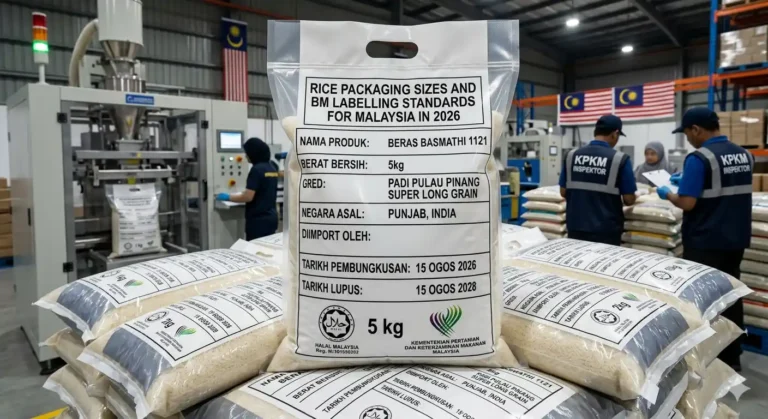
Labeling requirements include origin, weight, and product description. Incorrect labeling results in penalties.
Regulatory compliance ensures smooth clearance at Tanjung Priok port rice terminals. Non-compliance leads to inspection delays or cargo rejection.