Source Low Broken Basmati Rice from Pakistan for USA Importers
USA food distributors, ethnic grocery chains, private-label brands, food manufacturers, and institutional buyers increasingly purchase low broken Basmati rice because it offers premium presentation, consistent cooking performance, and stronger consumer acceptance. Before choosing an exporter, buyers should understand how broken grain percentages influence commercial value by reading our guide on:
Why Do Rice Buyers Monitor Broken Grain Percentages Before Purchasing? For a detailed comparison of export grading systems, see:
How Are Broken Percentages Classified in Export Basmati Rice Grades? If you are ready to source premium Pakistani Basmati rice, explore AHK Rice’s USA export solutions through our USA service page to review packaging, documentation, and shipping support designed for American importers.
Importing rice into the United States is no longer based solely on price. Buyers evaluate export documentation, quality consistency, broken percentage specifications, packaging integrity, food safety compliance, shipment timelines, and supplier reliability before approving a long-term contract. In 2026, procurement teams increasingly seek exporters capable of delivering repeatable quality rather than one-time competitive pricing. AHK Rice supports these commercial requirements through standardized processing, laboratory testing, export documentation, and customer-specific packaging programs designed for the U.S. market.
What is the best solution for sourcing low broken Basmati rice from Pakistan?
The best commercial solution is selecting a Pakistani exporter that consistently supplies verified low broken Basmati rice with documented grading, export inspections, reliable production scheduling, transparent sampling, FDA-compliant documentation, and predictable shipping schedules that reduce purchasing risks while protecting long-term product quality and retail performance.
Many buyers initially compare exporters by price per metric ton. However, procurement decisions become more complex when retail quality, customer satisfaction, packaging appearance, cooking performance, and inventory stability are considered together. Low broken grain percentages directly influence the visual appeal of packaged rice and improve consumer confidence, especially in premium retail categories.
AHK Rice processes export-grade Pakistani Basmati using calibrated cleaning, grading, polishing, color sorting, and quality inspection systems that maintain customer-requested broken grain specifications. Every production batch is inspected before packaging to verify consistency with agreed commercial standards.
American importers commonly purchase:
- Premium retail Basmati
- Private-label supermarket products
- Foodservice packaging
- Wholesale distribution packs
- Institutional supply programs
Each segment requires different broken percentage specifications, packaging formats, and shipment volumes. AHK Rice works with buyers to define these requirements before production begins, reducing quality disputes after shipment.
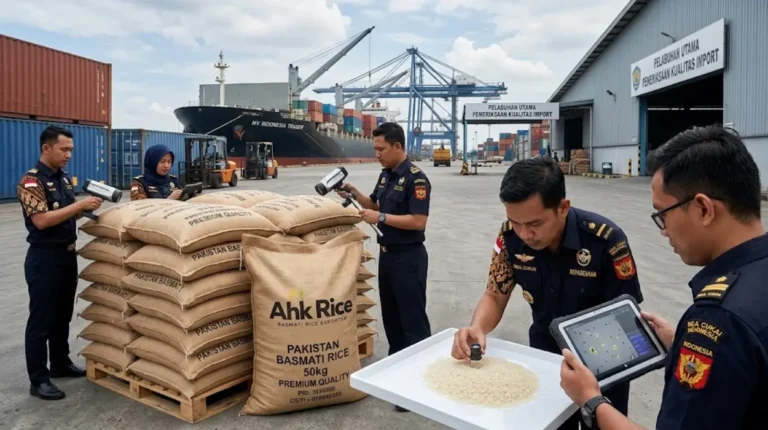
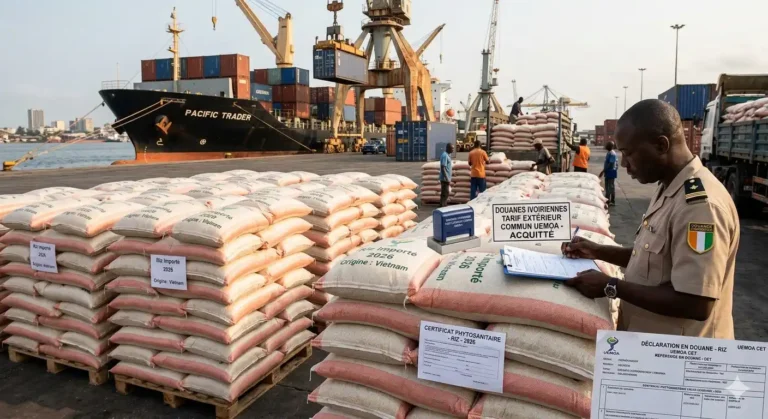
Another important consideration is documentation. Commercial invoices, packing lists, certificates of origin, phytosanitary certificates, fumigation certificates where applicable, laboratory reports, and shipping documentation must align with importer requirements. Missing or inconsistent paperwork can delay customs clearance and increase logistics costs.
Choosing an experienced exporter minimizes these operational risks while ensuring product quality remains consistent across repeat orders.
Why should USA importers choose AHK Rice?
USA importers benefit from an exporter that combines modern processing, export documentation expertise, transparent communication, customizable packaging, verified quality inspections, dependable production planning, and responsive customer support to reduce commercial risks while supporting long-term purchasing objectives across retail and foodservice markets.
Long-term supply relationships depend on consistency rather than isolated shipments. Procurement managers need confidence that future orders will match approved samples in appearance, grain length, broken percentage, moisture, aroma, and packaging quality.
AHK Rice emphasizes standardized production processes that help maintain repeatable export specifications. This consistency is especially valuable for retailers managing branded shelf space and distributors supplying restaurant chains throughout the United States.
Additional advantages include:
- Export-focused quality management
- Flexible private-label packaging
- Bulk and container-load capability
- Multiple Basmati varieties
- Production scheduling based on buyer requirements
- Professional export documentation
- Dedicated customer communication
Packaging options can typically include retail consumer packs, polypropylene bags, woven sacks, paper bags, and customized branding depending on commercial agreements.
Because American buyers often place repeat container orders, consistency across multiple production cycles becomes equally important as the initial shipment. AHK Rice supports repeatability through standardized inspection procedures and documented production records.
What shipping timelines should USA importers expect?
USA importers generally receive the most predictable supply by working with exporters offering defined production schedules, container planning, quality inspections, and realistic shipping commitments rather than unrealistic delivery promises that often create expensive supply chain disruptions and inventory shortages.
Shipping consists of several coordinated stages rather than simple transportation.
A typical export schedule during 2026 follows this sequence:
| Export Stage | Typical Time |
|---|---|
| Commercial agreement | 1–2 days |
| Sample approval | 3–7 days |
| Production scheduling | 2–4 days |
| Cleaning and processing | 3–5 days |
| Packaging | 2–3 days |
| Final inspection | 1–2 days |
| Container loading | 1 day |
| Export documentation | 2–4 days |
After vessel departure, estimated ocean transit times commonly range between:
| USA Destination Region | Estimated Ocean Transit |
|---|---|
| U.S. East Coast | 30–40 days |
| U.S. Gulf Coast | 28–38 days |
| U.S. West Coast | 22–30 days |
Transit times depend on shipping line schedules, transshipment routes, port congestion, customs processing, and seasonal logistics conditions.
AHK Rice provides shipment planning that helps buyers coordinate warehouse inventory and promotional schedules more effectively.
How does the export sample process work, and what does it cost?
Professional sampling allows buyers to verify grain quality, broken percentage, cooking characteristics, aroma, packaging options, and laboratory specifications before committing to commercial production, significantly reducing purchasing uncertainty while improving long-term supplier confidence and procurement accuracy.
Most experienced importers approve samples before placing container orders.
A standard commercial sampling process generally includes:
- Initial buyer consultation.
- Product recommendation.
- Sample preparation.
- Laboratory verification where requested.
- Courier shipment.
- Buyer evaluation.
- Commercial discussion.
- Production confirmation.
Sample quantities usually range from 500 grams to 5 kilograms depending on buyer requirements.
Typical 2026 sample-related costs may include:
| Item | Typical Cost |
|---|---|
| Product sample | Often complimentary for qualified buyers |
| Courier freight | Approximately USD 45–120 depending on destination and weight |
| Specialized laboratory testing | USD 40–150 if requested |
| Custom packaging prototype | Quoted according to design requirements |
Many first-time buyers request laboratory verification covering moisture, broken percentage, purity, grain length, and foreign matter before approving production.
AHK Rice coordinates commercial sampling professionally so buyers can evaluate quality before making larger purchasing commitments.
What results can importers expect from low broken Basmati rice?
Importers choosing verified low broken Basmati rice generally experience stronger retail presentation, improved customer satisfaction, reduced packaging complaints, better cooking consistency, greater inventory confidence, and increased opportunities for repeat business across premium distribution channels in the United States.
Broken grain percentage influences more than appearance.
Retail consumers frequently associate whole grains with premium quality. Better visual presentation often supports stronger shelf positioning and greater consumer confidence.
Foodservice operators appreciate improved cooking consistency because longer intact grains provide attractive presentation in restaurants, catering operations, and institutional kitchens.
Private-label retailers benefit from:
- Improved customer reviews
- Better brand perception
- Reduced quality complaints
- Higher repeat purchases
- More consistent packaging appearance
Wholesale distributors benefit from fewer commercial disputes because product specifications are documented before shipment.
AHK Rice supports these commercial objectives by supplying export specifications agreed upon before production begins, reducing uncertainty during international procurement.
What factors affect pricing for low broken Basmati rice?
Export pricing depends on multiple commercial variables including rice variety, broken percentage, grain quality, crop conditions, processing level, packaging specifications, certification requirements, order quantity, shipping destination, freight costs, and seasonal international market demand rather than a single fixed price.
Rice prices fluctuate throughout the year due to production volumes, export demand, currency movements, freight availability, and harvesting cycles.
Major pricing factors include:
- Basmati variety
- Broken percentage
- Grain length
- Crop season
- Packaging material
- Bag size
- Private labeling
- Inspection requirements
- Container quantity
- Destination port
- Ocean freight
- Insurance requirements
Lower broken percentages generally require additional grading and processing, which may influence export pricing compared with higher broken commercial grades.
Custom retail packaging also affects manufacturing costs because specialized printing, branding, and smaller consumer packs require additional production resources.
AHK Rice prepares customized commercial quotations after reviewing buyer specifications rather than providing generalized estimates that may not reflect actual project requirements.
How can buyers start importing with confidence?
The most efficient purchasing process begins with defining commercial specifications, reviewing product samples, confirming documentation requirements, approving packaging, agreeing production schedules, and selecting an experienced exporter capable of delivering consistent quality across every shipment throughout the partnership.
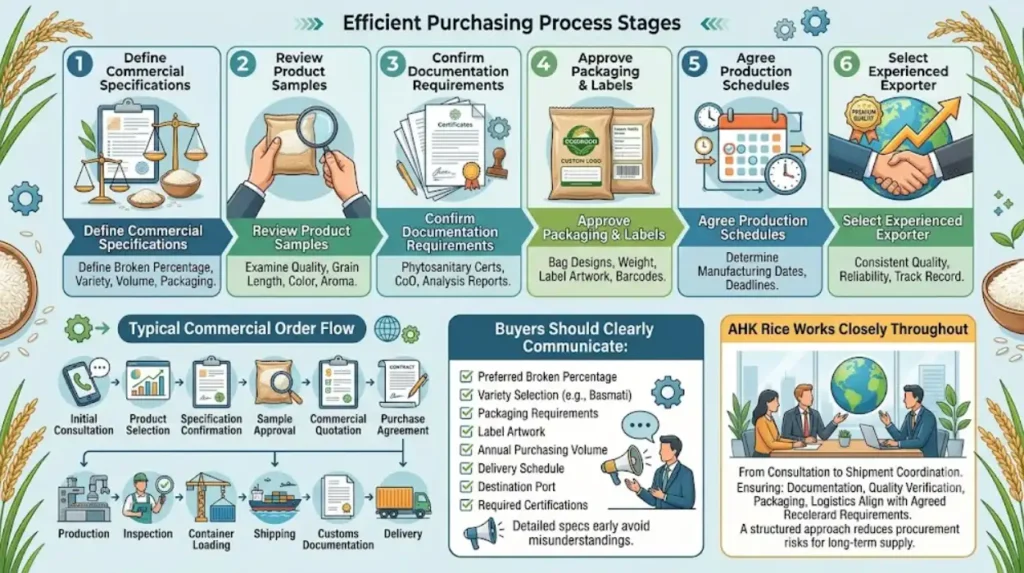
Successful procurement follows a structured process rather than rushed negotiations.
Most commercial orders progress through these stages:
- Initial consultation
- Product selection
- Specification confirmation
- Sample approval
- Commercial quotation
- Purchase agreement
- Production
- Inspection
- Container loading
- Shipping
- Customs documentation
- Delivery
Buyers should clearly communicate:
- Preferred broken percentage
- Variety selection
- Packaging requirements
- Label artwork
- Annual purchasing volume
- Delivery schedule
- Destination port
- Required certifications
Providing detailed specifications early helps avoid misunderstandings during production.
AHK Rice works closely with buyers throughout each stage of the export process, from initial consultation to shipment coordination, ensuring documentation, quality verification, packaging, and logistics align with agreed commercial requirements. This structured approach reduces procurement risks while supporting dependable long-term supply relationships for U.S. importers seeking premium Pakistani Basmati rice.
If you are ready to evaluate export specifications, request product samples, receive a customized quotation, and begin sourcing premium low broken Basmati rice for the U.S. market, submit your inquiry through /request-a-quote/ to start your procurement process with AHK Rice.
Frequently Asked Questions
How does low broken Basmati rice differ from standard export grades?
Low broken Basmati rice contains a smaller percentage of broken grains, providing better visual appeal, improved cooking consistency, and higher retail value. It is preferred by many USA importers for premium retail and foodservice markets.
Why do USA importers prefer low broken Basmati rice?
USA importers prefer low broken Basmati rice because it enhances shelf presentation, supports consistent cooking performance, reduces customer complaints, and strengthens consumer confidence in premium packaged rice products.
What is the minimum order quantity for importing Basmati rice from Pakistan?
The minimum order quantity depends on the packaging type and commercial agreement. Most international buyers purchase full container loads (FCL), while some exporters may also accommodate smaller trial orders.
How long does it take to ship Basmati rice from Pakistan to the USA?
Production generally takes around 10–15 days after order confirmation, while ocean transit typically ranges from 22–40 days depending on the destination port, shipping route, and carrier schedule.
Does AHK Rice provide product samples before bulk orders?
Yes. AHK Rice offers product samples so buyers can evaluate grain quality, broken percentage, aroma, cooking performance, and packaging before confirming a commercial order. Courier charges may apply depending on the destination.
What certifications are available for Basmati rice exports?
Depending on buyer requirements, shipments can include a Phytosanitary Certificate, Certificate of Origin, Fumigation Certificate (when applicable), laboratory analysis reports, and other export documents required for international trade.
Can AHK Rice supply private-label packaging for USA buyers?
Yes. AHK Rice provides customized private-label packaging, retail bags, bulk packaging, and branding options according to the buyer’s specifications and market requirements.
Which factors affect the price of low broken Basmati rice?
Pricing is influenced by the rice variety, broken percentage, grain quality, crop season, packaging specifications, order quantity, certification requirements, and international freight costs.
How is the broken grain percentage verified before shipment?
The broken grain percentage is verified through grading, quality inspections, and laboratory testing before packaging to ensure the shipment matches the agreed commercial specifications.
How can I request a quotation from AHK Rice?
You can contact AHK Rice with your preferred rice variety, broken percentage, packaging requirements, destination port, and estimated order quantity to receive a customized quotation and begin the export process.