Pakistan Indonesia Rice Trade Growth and Volume Data in 2026
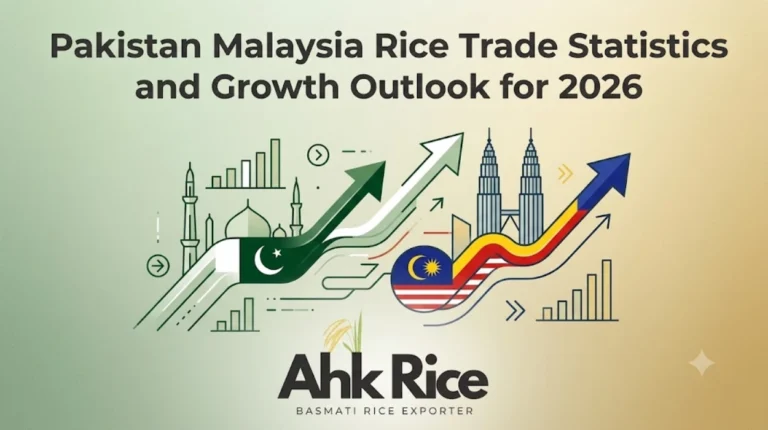
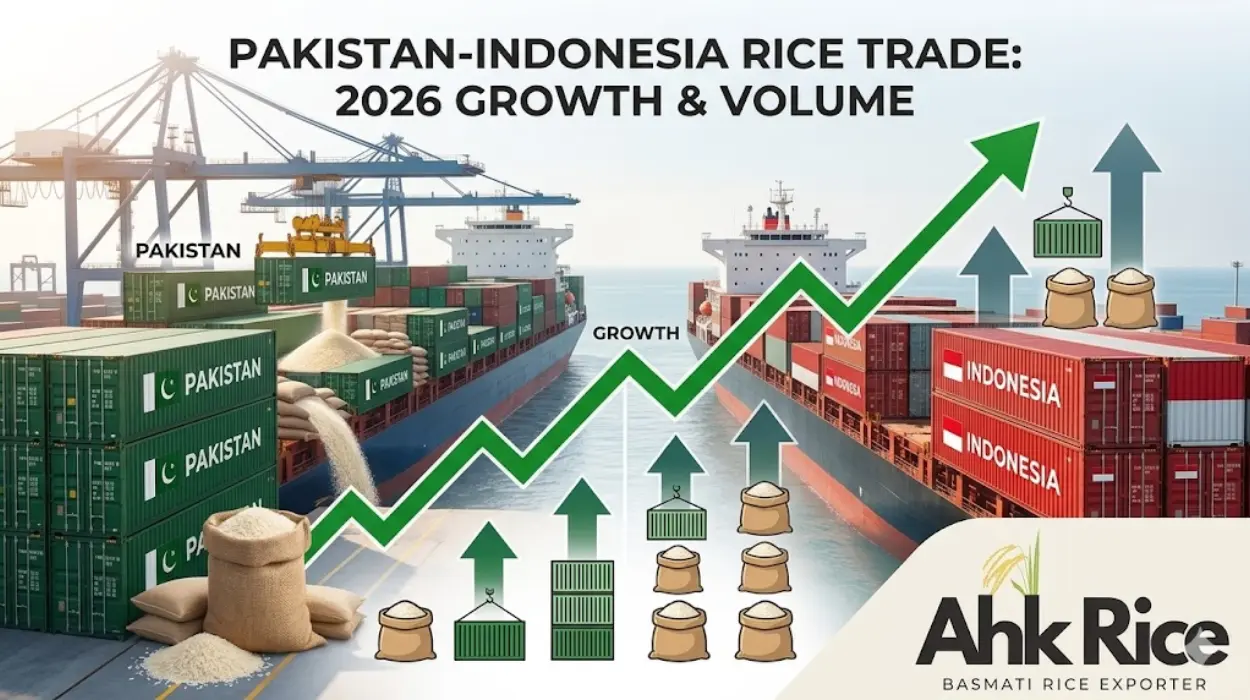
Pakistan-Indonesia rice trade is growing rapidly in 2026 because Indonesian import demand remains strong and Pakistani exporters continue supplying competitive rice specifications. Here is why: rising import volumes, stable supply chains, and favorable pricing create procurement opportunities for Indonesian wholesalers and distributors.
Indonesia remains one of the most important rice-importing markets in Asia. Pakistani exporters continue increasing shipments to Indonesian buyers seeking reliable quality, stable supply, and competitive pricing. Buyers evaluating sourcing options should first understand the trade growth drivers, import volumes, logistics requirements, and supplier selection criteria.
Importers researching sourcing opportunities often begin by understanding the complete procurement process. Buyers can learn more through this guide sourcing Pakistani rice for Indonesian wholesale distribution before comparing suppliers and specifications.
What is driving Pakistan-Indonesia rice trade growth in 2026?
Strong Indonesian demand, competitive Pakistani pricing, reliable harvest volumes, and improved export logistics are driving trade expansion in 2026. Indonesian importers continue increasing purchases because Pakistani suppliers offer scalable volumes and multiple rice specifications suitable for wholesale distribution.
Indonesia periodically imports rice to maintain food security and stabilize domestic supply. Pakistan remains a preferred sourcing origin because exporters can supply both basmati and non-basmati varieties at competitive rates.
Pakistani rice producers cultivate large volumes across Punjab and Sindh. Modern mills dehusk, polish, grade, sort, inspect, and certify rice before export. These processing capabilities support large commercial contracts.
According to Pakistan export statistics, rice exports continue contributing significantly to national agricultural exports . Indonesian buyers increasingly evaluate Pakistan alongside Vietnam, Thailand, and India when building diversified procurement portfolios.
Trade Advantages for Indonesian Buyers
| Trade Factor | Pakistan Advantage |
|---|---|
| Supply Availability | Large exportable surplus |
| Processing Capacity | Modern rice mills |
| Product Range | Basmati and non-basmati |
| Quality Control | Multiple inspection stages |
| Container Availability | Consistent export movement |
| Price Competitiveness | Attractive wholesale pricing |
| Documentation | Established export procedures |
AHK Rice Export Specifications
AHK Rice supports Indonesian importers through:
- Quality inspection
- Moisture testing
- Grain grading
- Colour sorting
- Export documentation
- Container loading
- Shipment coordination
AHK Rice supplies multiple rice varieties suitable for Indonesian wholesalers seeking long-term procurement relationships.
With trade growth drivers established, the next question is how buyers can select the most effective sourcing solution.
What is the best solution for Indonesian rice importers in 2026?
Direct procurement from an experienced Pakistani exporter provides better pricing control, specification consistency, and supply security than relying on multiple intermediaries. Importers gain stronger negotiation leverage and clearer quality accountability.
Many Indonesian wholesalers face three common challenges:
- Inconsistent grain specifications
- Unpredictable delivery schedules
- Limited visibility into processing quality
Direct sourcing solves these issues through transparent communication and specification-based purchasing.
Sample Procurement Workflow
- Submit target specification.
- Request product samples.
- Review laboratory reports.
- Approve commercial offer.
- Confirm packaging requirements.
- Finalize contract terms.
- Approve production batch.
- Dispatch shipment.
Typical Sample Process and Costs
| Sample Stage | Typical Cost Range |
|---|---|
| Sample Preparation | Free |
| Courier Charges | $40–$120 |
| Laboratory Testing | $50–$150 |
| Additional Samples | Courier cost only |
| Commercial Sample Set | Usually free |
AHK Rice typically prepares representative samples matching export specifications. Courier expenses depend on destination city and shipment weight.
Common Rice Specifications Requested
| Specification | Typical Requirement |
|---|---|
| Moisture | 12–14% |
| Broken Ratio | Contract dependent |
| Grain Length | Variety dependent |
| Purity | Export grade |
| Foreign Matter | Minimal |
| Packaging | 5kg–50kg |
| Origin | Pakistan |
Buyers comparing procurement models can review this detailed guide on bulk rice purchasing strategies from Pakistan in 2026 before making supplier decisions.
With sourcing solutions defined, the next question becomes why supplier selection influences commercial outcomes.
Why choose AHK Rice for Indonesian rice imports?
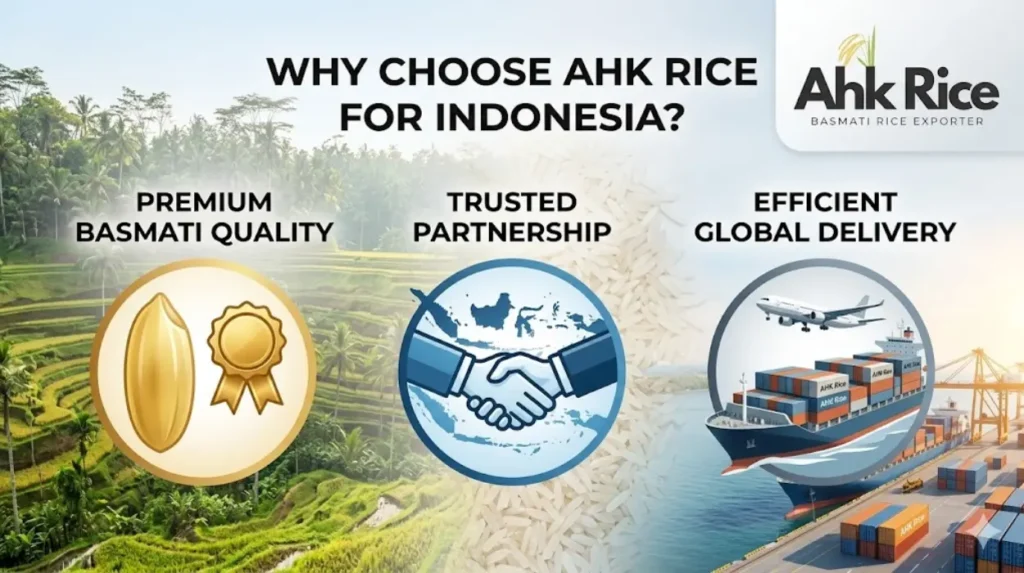
AHK Rice offers specification-driven exports, structured quality control, shipment coordination, and responsive commercial support for Indonesian wholesale buyers. These capabilities reduce procurement risk and improve supply consistency across repeated orders.
Indonesian importers often prioritize consistency over one-time pricing advantages. AHK Rice focuses on repeatable specifications and documented quality verification.
The first step is selecting a reliable export partner such as AHK Rice, which supplies Pakistani rice varieties to international buyers through structured processing and export procedures.
Processing Steps Used by AHK Rice
- Clean the harvested paddy.
- Dehusk the grain.
- Dry the rice.
- Polish the kernels.
- Sort by length.
- Separate impurities.
- Colour-sort the grains.
- Test moisture levels.
- Load export containers.
Export Documentation Support
- Commercial Invoice
- Packing List
- Certificate of Origin
- Phytosanitary Certificate
- Fumigation Certificate
- Bill of Lading
- Quality Certificate
AHK Rice supports buyers throughout procurement, documentation, shipment scheduling, and post-dispatch coordination.
Quality Verification Methods
- Moisture testing
- Grain length verification
- Broken percentage inspection
- Foreign matter analysis
- Packaging inspection
- Container verification
AHK Rice emphasizes traceability and quality verification because wholesale buyers depend on predictable product performance after arrival.
With supplier selection covered, buyers should next evaluate expected commercial results.
What results can be expected from Pakistan-Indonesia rice trade opportunities?
Importers can expect competitive procurement costs, reliable shipment schedules, diversified rice options, and scalable supply volumes when sourcing from qualified Pakistani exporters. Long-term buyers often achieve stronger inventory planning and margin stability.
Commercial success depends on aligning product specifications with market demand.
Example Wholesale Scenario
An Indonesian distributor imports containerized rice for regional wholesalers. The distributor selects specifications matching local demand and secures scheduled shipments across multiple purchase cycles.
The result is improved inventory predictability and reduced stock shortages.
Shipping Days from Pakistan to Indonesia
| Destination Region | Estimated Shipping Time |
|---|---|
| Jakarta | 15–22 Days |
| Surabaya | 18–25 Days |
| Medan | 18–28 Days |
| Semarang | 18–25 Days |
| Makassar | 22–30 Days |
Transit times vary based on vessel schedules, transshipment requirements, and port congestion.
Supply Outcomes for Buyers
- Stable procurement planning
- Reduced sourcing uncertainty
- Better inventory forecasting
- Consistent product specifications
- Improved supplier accountability
AHK Rice works with buyers seeking recurring shipments rather than one-time transactions, supporting long-term procurement stability.
With expected outcomes understood, buyers should evaluate the pricing variables that influence landed costs.
What factors affect rice pricing between Pakistan and Indonesia?
Rice pricing depends on variety, grade, packaging, processing method, freight costs, container availability, and order volume. Buyers achieve better commercial outcomes when specifications and logistics requirements are defined before quotation requests.
Rice prices fluctuate according to supply conditions and global market demand.
Major Pricing Variables
| Cost Factor | Impact on Price |
|---|---|
| Rice Variety | High |
| Processing Grade | High |
| Packaging Type | Medium |
| Freight Rates | High |
| Container Availability | Medium |
| Order Quantity | High |
| Seasonal Demand | Medium |
Product Categories Commonly Exported
1121 Basmati Rice
1121 Basmati offers extra-long grain characteristics and premium positioning. Indonesian specialty distributors often target hospitality and premium retail segments.
Super Kernel Basmati Rice
Super Kernel Basmati delivers traditional aroma and consistent cooking performance. Importers serving ethnic food markets frequently select this variety.
1509 Basmati Rice
1509 Basmati provides shorter cultivation cycles and competitive export pricing. Buyers seeking value-oriented premium products often consider this option.
Non-Basmati Rice
Non-basmati varieties support volume-focused procurement programs. Large-scale distributors often source these grades for broad consumer markets.
Cost Optimization Strategies
- Consolidate container volumes.
- Standardize packaging formats.
- Schedule procurement early.
- Confirm specifications precisely.
- Finalize logistics requirements upfront.
AHK Rice assists buyers in aligning specifications with budget objectives while maintaining export-grade quality requirements.
With pricing factors clarified, the final decision concerns how buyers can begin procurement efficiently.
How can Indonesian buyers get started with Pakistan rice imports?
The most effective approach is defining specifications, reviewing samples, confirming pricing, approving documentation, and scheduling shipment production. Structured procurement reduces delays and creates clearer commercial expectations for both parties.
Importers should begin with detailed product requirements. Clear specifications accelerate quotation accuracy and production planning.
Procurement Checklist
- Define rice variety.
- Specify grain requirements.
- Confirm packaging format.
- Review product samples.
- Approve quotation.
- Verify documentation.
- Confirm production schedule.
- Approve shipment booking.
Information Required for Quotation
- Rice variety
- Quantity required
- Destination port
- Packaging format
- Target specifications
- Delivery timeline
- Import requirements
AHK Rice supports Indonesian wholesalers throughout sampling, contracting, production, inspection, loading, and shipment coordination.
The combination of growing bilateral trade, strong export capabilities, and structured procurement processes makes 2026 an attractive period for Indonesian rice buyers to establish reliable sourcing partnerships. Contact AHK Rice today and submit your requirements through the quotation request form.
Frequently Asked Questions
Is Pakistan a reliable rice supplier for Indonesia in 2026?
Pakistan remains a reliable rice supplier because it has substantial export capacity and established logistics networks. Modern mills process large export volumes each season. Many Indonesian buyers source both basmati and non-basmati rice from Pakistan. Export documentation procedures are standardized. Long-term procurement programs are common between exporters and importers.
How long does rice shipping take from Pakistan to Indonesia?
Shipping times generally range from 15 to 30 days depending on the destination port. Vessel schedules influence transit durations. Port congestion may affect delivery timing. Direct and transshipment routes create different schedules. Buyers should confirm estimated transit times before contract finalization.
What documents are required for rice imports?
Commercial invoices, packing lists, certificates of origin, phytosanitary certificates, and bills of lading are commonly required. Import regulations may vary. Buyers should verify destination requirements before shipment. Exporters prepare documentation during processing. Proper documentation supports customs clearance efficiency.
How much does rice sample testing cost?
Sample preparation is often provided without charge. Courier costs typically range between $40 and $120. Laboratory testing generally costs between $50 and $150. Additional samples usually require courier expenses only. Actual costs depend on destination and testing requirements.
Why do Indonesian wholesalers choose AHK Rice?
AHK Rice offers structured quality control, export documentation support, and shipment coordination. Buyers receive specification-focused procurement assistance. The company supports sample evaluation before orders. Multiple rice varieties are available for wholesale programs. Long-term supply consistency remains a primary objective.