Why Is Pakistan 1121 Brown Basmati Rice Relevant to Indonesia’s Health Market?
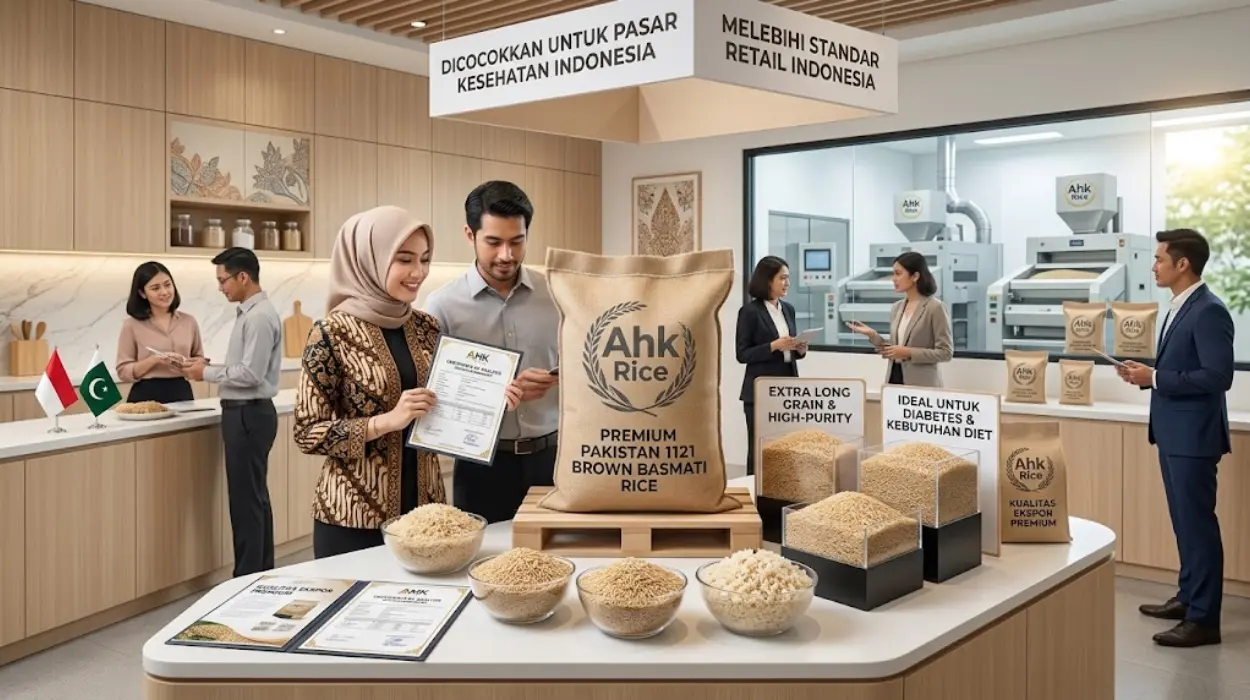
Pakistan 1121 Brown Basmati Rice is relevant to Indonesia’s health market because it retains bran and germ while offering long aromatic grains. Here is why: whole-grain structure supports higher fibre intake, while Indonesian research links brown rice consumption with improved metabolic markers.
What Is Pakistan 1121 Brown Basmati Rice?
Pakistan 1121 Brown Basmati Rice is a long-grain Basmati rice that retains its bran layer and germ after milling, producing a whole-grain product with distinctive aroma, texture, and nutritional characteristics. Its relevance starts with its structure and origin.
1121 refers to a recognized Basmati rice type associated with exceptionally long grains. Brown rice retains the outer bran and germ rather than removing them through complete polishing. Harvard Health identifies brown rice as whole-grain rice and notes its higher fibre, B vitamins, magnesium, potassium, and iron content compared with white rice.
Pakistan cultivates Basmati rice mainly across Punjab’s rice-growing areas. The crop requires suitable soil, irrigation, temperature, and seasonal conditions. Farmers harvest mature paddy before milling separates the rice grain from its husk.
Brown 1121 therefore differs from 1121 White Basmati at the processing stage. White rice removes the bran and germ, while brown rice retains those layers. This distinction creates different cooking characteristics, nutritional profiles, storage requirements, and consumer applications.
Indonesia has a specific regulatory category for rice imports. Indonesian authorities distinguish ordinary consumption rice from special rice, including Basmati. Basmati imports therefore operate within a different policy context from standard domestic rice.
With the product defined, its processing stages explain how the brown structure reaches the finished grain.
How Is Pakistan 1121 Brown Basmati Rice Processed?
Pakistan 1121 Brown Basmati Rice follows a controlled sequence covering paddy cleaning, drying, dehusking, grading, sorting, inspection, and packing while preserving the bran and germ. Each stage affects grain integrity, cleanliness, moisture, appearance, and final cooking performance.
What Are the Main Processing Steps?
- Clean the paddy to remove stones, straw, dust, and other foreign material.
- Dry the paddy to control moisture before mechanical processing.
- De-husk the grain to remove the outer husk without removing the bran layer.
- Separate the brown rice from remaining husk and immature grains.
- Grade the grain according to length, appearance, and commercial specification.
- Sort the grain through mechanical and optical systems to remove defective kernels.
- Inspect the rice for moisture, broken grains, foreign matter, colour, and physical defects.
- Pack the rice in food-grade packaging suited to the destination market.
Brown rice requires controlled handling because its retained bran layer contains natural oils. Excessive heat, moisture, or poor storage conditions can reduce quality during distribution.
The final product therefore differs from polished white rice. Its bran remains visible as a brown outer layer. Its texture also becomes firmer after cooking, creating a distinct consumer experience.
Processing also establishes the difference between brown rice and other 1121 grades. The next section maps those grades and their purposes.
Which 1121 Basmati Grades Are Available?
Pakistan 1121 Basmati is available in White, Steam, Golden Sella, Creamy Sella, and Brown forms, with each grade using a different processing method and serving different culinary or commercial requirements. Brown represents the least-polished form among these finished grades.
What Is 1121 White Basmati?
1121 White Basmati is fully milled and polished rice with the bran and germ removed. It produces a lighter appearance, softer texture, and familiar aromatic Basmati cooking profile.
What Is 1121 Steam Basmati?
1121 Steam Basmati receives steam treatment before milling. The process changes grain structure and improves cooking firmness. Steam rice suits foodservice and wholesale applications requiring separate cooked grains.
What Is 1121 Golden Sella?
1121 Golden Sella is parboiled rice processed through soaking, steaming, drying, dehusking, and grading. Its golden colour and firm cooked texture suit catering, restaurants, and institutional kitchens.
What Is 1121 Creamy Sella?
1121 Creamy Sella is another parboiled 1121 grade with a lighter creamy appearance. It retains the firm cooking characteristics associated with parboiled Basmati while presenting a different visual specification.
What Is 1121 Brown Basmati?
1121 Brown Basmati retains the bran and germ after dehusking. This creates a whole-grain product with greater fibre content than polished white rice. Brown rice therefore aligns more directly with whole-grain dietary positioning.
These grades demonstrate that 1121 is not one finished specification. Processing determines the final grade, appearance, texture, and market application.
Why Does Brown Basmati Fit Indonesia’s Health Market?
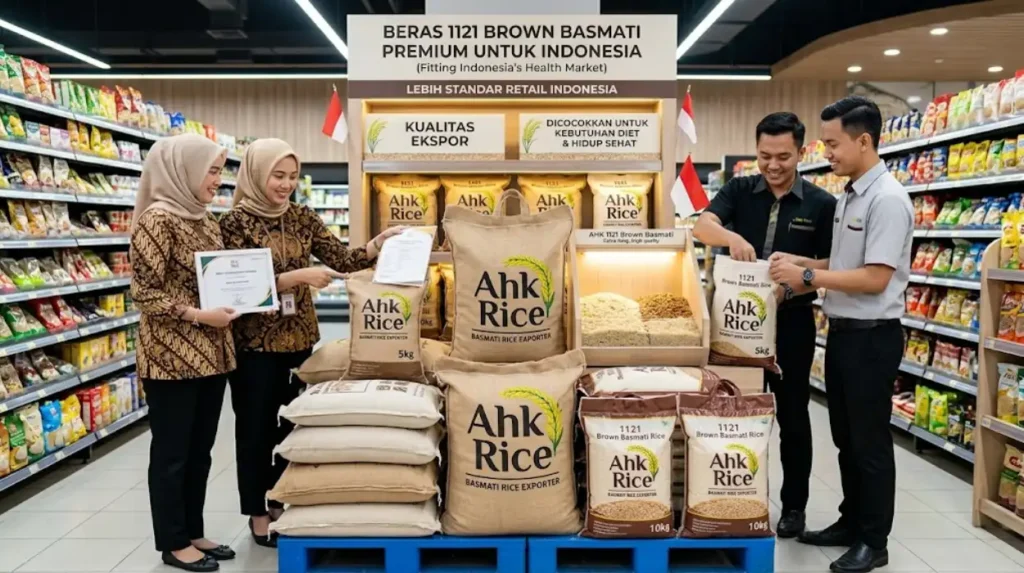
Brown Basmati fits Indonesia’s health market through its whole-grain structure, higher fibre content, long-grain format, and suitability for health-focused meals, while Indonesian research supports brown rice’s relevance to metabolic nutrition. The product fits dietary positioning rather than replacing medical treatment.
Brown rice retains bran and germ, which increases its fibre and micronutrient content compared with polished rice. Harvard Health reports higher levels of fibre, B vitamins, magnesium, potassium, and iron in brown rice.
Indonesia also has direct research involving brown rice and metabolic health. A pilot study involving Indonesian brown rice reported reductions in body weight, BMI, body fat percentage, abdominal circumference, fasting blood glucose, post-meal glucose, and HbA1c after a 12-week dietary intervention.
These findings do not make brown Basmati a medical product. They explain why whole-grain rice has relevance within nutrition-focused diets.
Brown Basmati also provides culinary differentiation. Its long aromatic grain separates it from many conventional brown rice products. This creates applications in premium meal preparation, health-oriented restaurants, meal-preparation services, and specialty retail.
Indonesian consumers also have established familiarity with brown rice. Local Indonesian brown rice already appears in nutritional research. Imported brown Basmati adds a long-grain aromatic alternative to that existing category.
The health-market relationship therefore depends on three linked attributes: whole-grain structure, nutritional composition, and premium culinary identity.
Where Can Pakistan 1121 Brown Basmati Rice Be Used?
Pakistan 1121 Brown Basmati Rice fits health-oriented retail, restaurants, meal-preparation businesses, specialty food stores, wellness menus, and household cooking where whole-grain rice and aromatic long grains are valued. Each use requires appropriate packaging and quality specifications.
Which Retail Uses Fit Brown Basmati?
Retail packs can position brown Basmati as a whole-grain rice option. Packaging should clearly communicate the rice type, net weight, origin, cooking instructions, and required regulatory information.
Which Foodservice Uses Fit Brown Basmati?
Restaurants can use brown Basmati for grain bowls, curries, rice salads, protein meals, and vegetarian dishes. Its aromatic profile provides differentiation from ordinary brown rice.
Which Health-Focused Uses Fit Brown Basmati?
Meal-preparation companies can incorporate brown Basmati into portion-controlled meals. Nutrition-focused menus can pair it with vegetables, legumes, lean proteins, and other whole foods.
Which Household Uses Fit Brown Basmati?
Households can cook brown Basmati as a staple grain. Its firmer texture suits pilafs, rice bowls, biryani-style dishes, and mixed-grain meals.
The same product therefore serves several channels. The commercial format changes according to pack size, labelling, quality specification, and distribution model.
Which Certifications and Documents Matter for Indonesia?
Indonesia-focused rice shipments require documented compliance covering import permissions, quality, labelling, plant health, and packaging controls, while halal requirements apply to relevant product-contact materials and handling processes. Certification requirements depend on the shipment format and Indonesian regulations.
Pakistan’s Trade Information Portal identifies a phytosanitary certificate as a requirement for exporting regulated plant products. The requirement applies to rice and reflects importing-country plant-health rules.
Indonesia also regulates rice imports through agricultural import policy. Permendag No. 18 of 2025 covers rice among regulated agricultural commodities and entered into force on August 29, 2025.
Indonesian food authorities regulate quality and labelling through National Food Agency Regulation No. 2 of 2023. The regulation establishes rice quality and labelling requirements.
Halal compliance also requires attention to packaging and handling. Indonesia’s halal authority states that rice itself is a natural product excluded from mandatory product halal certification. Direct-contact packaging, transportation, and storage still require protection against cross-contamination.
For retail-packed processed foods, Indonesian BPOM guidance establishes registration requirements for imported processed food sold in retail packaging. The same guidance distinguishes rice as a fresh food category.
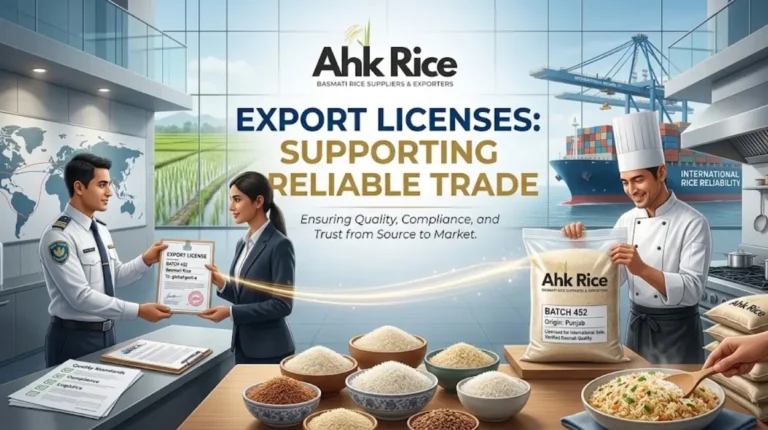
Export documentation commonly includes a commercial invoice, packing list, certificate of origin, phytosanitary certificate, fumigation documentation, and applicable inspection certificates. Exact requirements depend on the Indonesian import route and product classification.
With compliance established, the final issue is understanding the problems that often distort consumer expectations.
What Problems and Misconceptions Surround Brown Basmati?
Brown Basmati is not automatically healthier in every meal, and its whole-grain structure does not make it a medical treatment. Correct positioning requires accurate nutrition information, controlled processing, proper storage, and compliance with Indonesian food regulations.
Is Brown Basmati the Same as White Basmati?
Brown and white Basmati share the rice type but differ in milling. Brown rice retains bran and germ, while white rice undergoes additional polishing that removes those layers.
Does Brown Rice Automatically Prevent Diabetes?
Brown rice does not prevent diabetes. Research connects whole-grain consumption with dietary benefits, while individual health outcomes depend on total diet, portion size, activity, and medical factors.
Does Brown Basmati Require Different Cooking?
Brown Basmati generally requires longer cooking than polished white Basmati. Consumers should follow the supplier’s cooking instructions because grain structure and processing specifications determine the required water ratio and cooking time.
Does Brown Rice Have Unlimited Shelf Life?
Brown rice requires careful storage because retained bran contains natural oils. Heat, oxygen, moisture, pests, and poor packaging accelerate quality deterioration. Dry, clean, sealed storage supports product stability.
Is Basmati Automatically Approved for Indonesian Retail?
Basmati is not automatically approved for every Indonesian retail channel. Import classification, permissions, labelling, food controls, packaging, and applicable registrations must match the shipment and intended use.
Pakistan 1121 Brown Basmati Rice therefore has a clear place within Indonesia’s health-oriented food landscape. Its strongest relevance comes from whole-grain structure, long aromatic grains, and established brown-rice nutrition research.SEO Element.
Frequently Asked Questions
Is 1121 Brown Basmati Rice a whole grain?
Yes. Brown 1121 retains the bran and germ after dehusking, making it a whole-grain rice product.
Why is brown Basmati relevant to Indonesia?
Brown Basmati fits health-oriented diets through its whole-grain structure, fibre content, aromatic long grain, and suitability for nutritious meal formats.
What is the difference between 1121 Brown and 1121 White?
1121 Brown retains bran and germ. 1121 White undergoes additional milling and polishing that removes those outer layers.
Does Indonesia import Basmati rice?
Indonesia recognizes Basmati as a special rice category, separate from ordinary consumption rice. Import conditions depend on current Indonesian regulations and the shipment purpose.
Does brown rice have more fibre than white rice?
Yes. Brown rice retains the bran layer, which provides more dietary fibre than fully polished white rice.
Which certifications matter for Pakistan rice exports?
Phytosanitary certification is relevant to Pakistan’s export of regulated plant products. Indonesian requirements also cover rice quality, labelling, import controls, and applicable packaging and halal requirements.
Suggested MOFU Internal Link Placement
Insert the MOFU link in the fourth paragraph under “Why Does Brown Basmati Fit Indonesia’s Health Market?”, immediately after explaining Indonesia’s existing brown-rice research.
Use this contextual anchor:
Indonesian retail buyers evaluating Pakistan 1121 Brown Rice
Link it to: How Do Indonesian Buyers Evaluate Pakistan 1121 Brown Rice for Retail?
This placement moves the reader naturally from health-market relevance to retail evaluation criteria without forcing a commercial transition.