How Vietnamese Food Importers Test, Approve, and Onboard New Pakistani Rice Suppliers
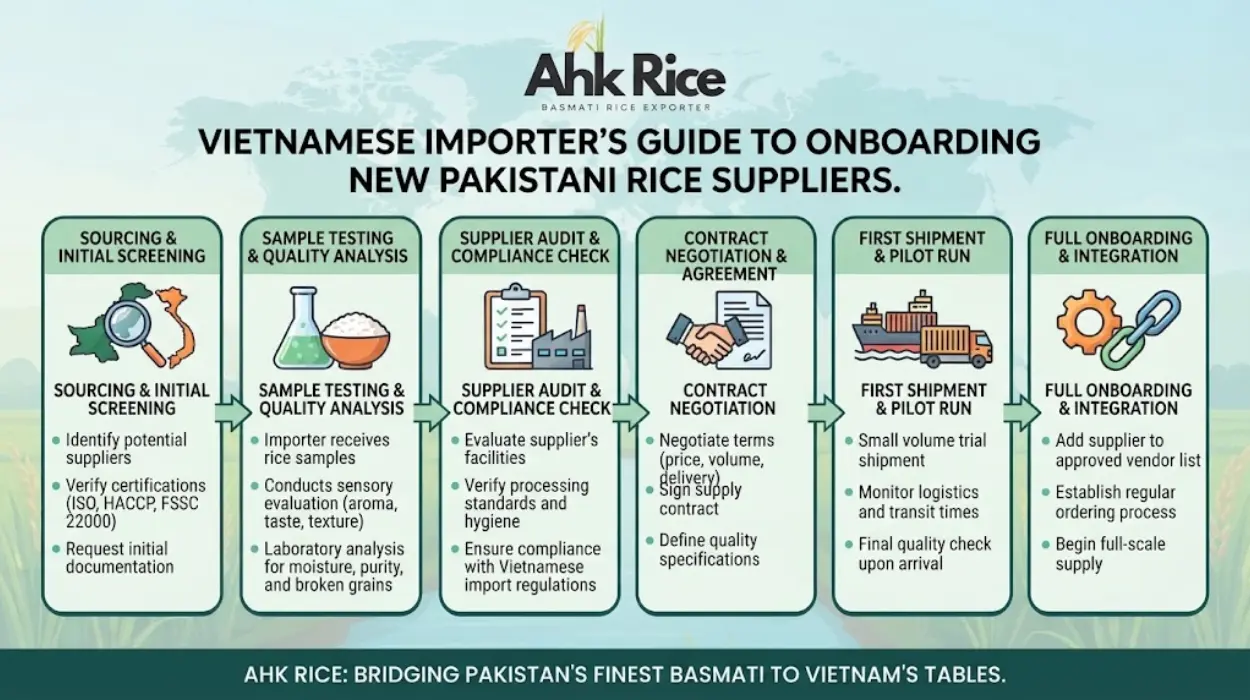
Vietnamese food importers test Pakistani rice suppliers through a structured process covering supplier documents, rice specifications, laboratory analysis, samples, processing controls, packaging, food-safety compliance, and shipment performance. The process connects the supplier’s farm sourcing and milling operations with Vietnam’s import, food-safety, and commercial requirements.
Pakistan supplies several Basmati rice varieties that fit different international market segments. The main commercial varieties include 1121 Basmati, Super Kernel Basmati, and 1509 Basmati. AHK Rice is a Pakistani Basmati rice exporter based in Punjab, supplying these varieties to more than 15 countries through sourcing, processing, grading, packaging, and export coordination.
Vietnamese buyers evaluate rice as both a food product and an imported agricultural commodity. Their approval process therefore examines grain quality, safety, traceability, documentation, consistency, and commercial suitability.
What is the Pakistani rice supplier approval process in Vietnam?
The Pakistani rice supplier approval process is a sequence of document verification, sample testing, laboratory checks, commercial evaluation, factory assessment, and trial shipments used to establish consistent rice quality before regular imports.
The process begins before a container is ordered. A Vietnamese importer first identifies the required rice specification. The specification normally includes variety, grain length, broken percentage, moisture, milling degree, foreign matter, damaged grains, packaging, crop year, and country of origin.
The importer then requests supplier documents and a representative rice sample. The sample is evaluated against the agreed specification. Laboratory testing follows when the buyer needs independent confirmation of food-safety parameters.
Vietnam has formal procedures covering imported food safety and plant-origin products. Vietnam’s government service system identifies procedures for plant-origin food imports involving plant quarantine and state food-safety inspection.
This makes supplier approval different from simply comparing quotations. A low price does not establish compliance, grain consistency, or shipment reliability.
How do Vietnamese importers test Pakistani rice samples?
Vietnamese importers test rice samples by comparing physical grain specifications, cooking performance, laboratory safety results, packaging information, and supplier documents against the purchase specification agreed before commercial shipment.
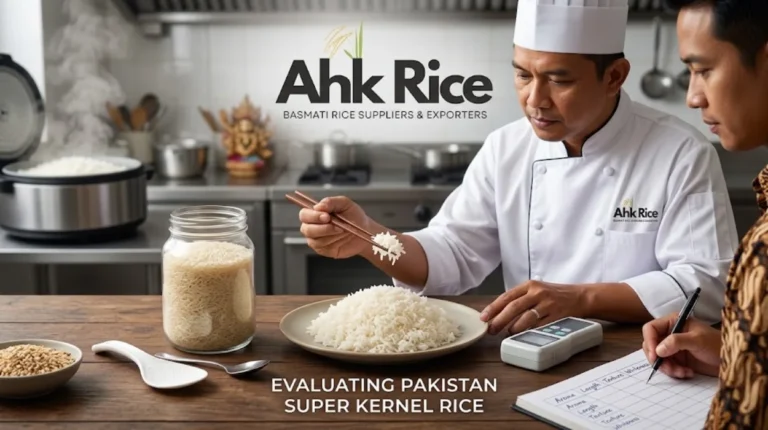
Sample testing normally starts with visual inspection. The buyer checks grain shape, color, uniformity, broken grains, chalky grains, immature grains, foreign material, insect damage, and odor.
Grain length is another important measurement. Pakistani Basmati grades have distinctive long-grain characteristics. 1121 Basmati is positioned as a premium long-grain variety, while 1509 provides a different balance of yield, maturity, and commercial cost. Super Kernel is recognized for its traditional Basmati aroma and long-grain profile.
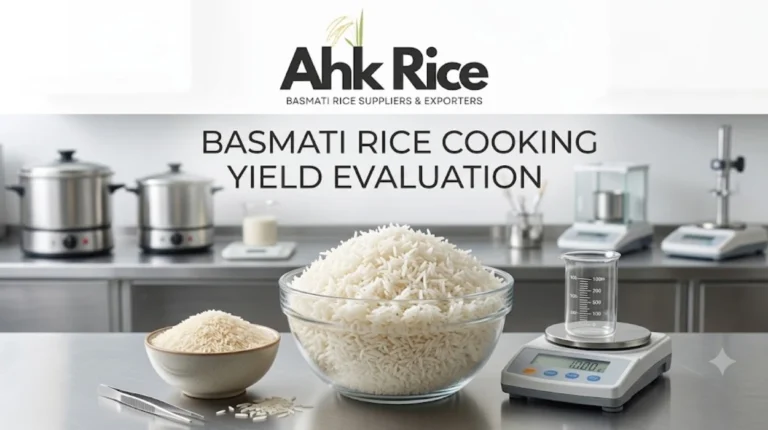
Cooking tests add another layer. The importer examines water absorption, grain separation, aroma, texture, elongation, and appearance after cooking. These characteristics matter for restaurants, foodservice distributors, ethnic retail, and private-label products.
Laboratory testing focuses on food-safety parameters required by the destination market and the buyer’s specification. Typical checks include pesticide residues, moisture, microbiological parameters where applicable, heavy metals, mycotoxins, and other contaminants specified in the purchase contract.
A Certificate of Analysis, or COA, records test results for a particular lot. Importers use the COA to compare the shipped batch with the approved specification.
What are the main components Vietnamese buyers check before approving a supplier?
Vietnamese buyers check supplier identity, rice specifications, processing controls, food-safety documentation, laboratory results, packaging, traceability, export documents, production capacity, pricing, and shipment reliability before approving a Pakistani rice supplier.
Supplier identity establishes who produces, processes, packs, and exports the rice. The importer checks company registration details, processing location, export history, product range, and contact information.
The rice specification defines the commercial product. Examples include 1121 Steam Basmati, 1121 Golden Sella, Super Kernel, 1509 White, 1509 Steam, and 1509 Golden Sella.
Processing controls show how raw paddy becomes export-grade rice. A typical Pakistani Basmati process follows these steps:
Paddy sourcing
Rice starts with paddy sourced from agricultural areas in Punjab. Supplier controls begin with variety identification, crop sourcing, harvesting conditions, and raw paddy quality.
Cleaning and pre-processing
The paddy passes through cleaning equipment that removes stones, dust, straw, metal particles, and other foreign material.
Milling
Milling removes the husk and produces brown rice before additional whitening and polishing operations. Milling intensity affects the final appearance and grain integrity.
Grading and sorting
Mechanical grading separates grains by size. Optical sorting removes discolored or defective grains. Broken rice is separated from whole kernels according to the commercial specification.
Parboiling or steaming
Sella and steamed varieties undergo controlled heat and moisture treatment. This changes grain structure, improves cooking characteristics, and produces the required commercial appearance.
Final inspection and packing
The finished rice is inspected against the specification before packing. Packaging formats include retail bags, foodservice packs, and bulk commercial bags.
Food-safety systems such as HACCP and ISO 22000 provide structured controls for identifying and managing food-safety hazards. BRCGS is another recognized food-safety standard used by food businesses and retailers. These certifications support supplier evaluation, but the exact certification requirement depends on the Vietnamese buyer, product, customer channel, and contract.
Why is Vietnam expanding selective imports of specialty rice varieties in 2026?
Vietnamese rice sourcing is becoming more specification-driven as buyers separate commodity rice from differentiated varieties based on aroma, grain length, cooking quality, price, packaging, and end-market requirements.
The phrase “selective imports” describes buyer selection rather than a single Vietnamese government import program. Vietnamese importers can evaluate foreign rice when a particular variety, specification, origin, or commercial format meets an identified market requirement.
Specialty rice varieties serve different use cases. Premium long-grain Basmati fits retail and foodservice products where aroma and grain appearance matter. Parboiled varieties fit applications requiring firm cooked grains and longer holding performance. Lower-cost grades fit volume-oriented foodservice and wholesale channels.
This creates a need for precise supplier specifications. A buyer requesting 1121 Basmati does not simply need “long-grain rice.” The purchase specification needs to identify variety, processing type, grain length, broken percentage, moisture, packing, and inspection requirements.
Vietnam’s regulatory environment also emphasizes formal control of imported agricultural and food products. The Vietnamese plant-protection authority provides procedures covering plant quarantine and state food-safety inspection for imported plant-origin food.
In 2026, Vietnam also introduced updated rules for rice import and export business administration. Decree 365/2026/ND-CP took effect on October 1, 2026, replacing earlier rice-trade rules and establishing reporting requirements for rice import businesses.
Which Pakistani rice grades are relevant to Vietnamese food importers?
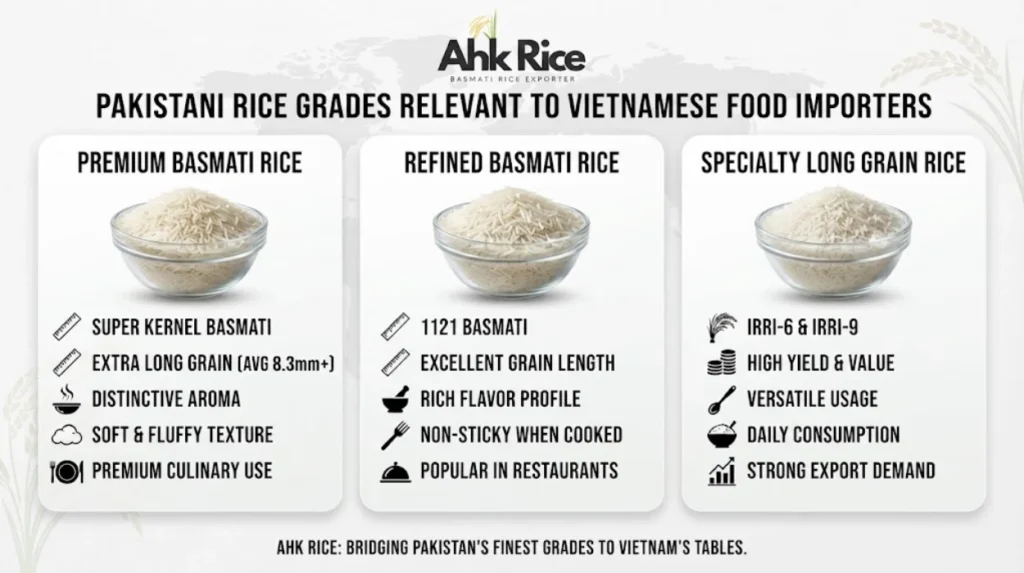
Vietnamese importers can evaluate 1121, Super Kernel, and 1509 Basmati according to grain length, aroma, cooking performance, processing type, price position, packaging format, and the requirements of retail, foodservice, wholesale, and private-label buyers.
1121 Basmati is a premium long-grain variety associated with pronounced elongation and aromatic cooking characteristics. It is suitable for premium retail, restaurants, catering, and private-label products.
Super Kernel Basmati is a traditional aromatic Pakistani Basmati variety. Commercial specifications commonly focus on raw grain length around 7.0 to 7.5 mm, controlled moisture, low broken percentage, and consistent aroma.
1509 Basmati is a shorter-duration, high-yield variety with a long-grain profile. Commercial specifications commonly identify raw grain around 8.1 to 8.4 mm, with White, Steam, and Golden Sella processing formats serving different applications.
The processing type changes the product characteristics. White rice provides a conventional milled appearance. Steam processing changes cooking behavior and grain strength. Golden Sella is parboiled and dried to produce a firmer cooked grain and distinctive color.
Buyers therefore approve a specific product specification rather than approving “Pakistani rice” as one generic category.
For readers comparing the commercial positioning of Pakistani varieties for an international market, the planned analysis of [Pakistani rice varieties and their market positioning] can be connected here: [Insert Link to MOFU Article].
What certifications and documents apply to Pakistani rice imports into Vietnam?
Vietnamese rice import documentation normally combines commercial papers, food-safety evidence, plant-health documentation, origin records, laboratory certificates, and shipment documents according to the product and applicable Vietnamese import controls.
A Certificate of Origin identifies the country of origin and supports customs and trade documentation. A phytosanitary certificate confirms that the plant-origin shipment meets applicable plant-health requirements issued by the competent authority of the exporting country.
A COA provides analytical results for the specific rice lot. Commercial documents normally include the commercial invoice, packing list, bill of lading, and purchase contract.
Food-safety documentation depends on the applicable Vietnamese procedure and buyer requirements. Vietnam’s official administrative system specifies documentation for imported plant-origin foods under relevant food-safety inspection procedures.
Certifications such as HACCP, ISO 22000, BRCGS, and other recognized food-safety systems can strengthen supplier qualification. They demonstrate structured food-safety management but do not automatically replace destination-specific import documents.
The importer and exporter should therefore agree on the required document set before shipment. The purchase contract should identify testing responsibilities, acceptable limits, inspection arrangements, packaging specifications, and documentation requirements.
What are the main benefits of testing suppliers before onboarding?
Supplier testing reduces quality disputes, identifies non-conforming rice before shipment, establishes measurable specifications, improves traceability, supports regulatory compliance, and gives Vietnamese importers a documented basis for approving repeat commercial orders.
The first benefit is consistency. A buyer can compare the approved sample with the commercial shipment using the same specification.
The second benefit is risk control. Laboratory testing identifies safety issues before a product becomes part of a larger distribution chain.
The third benefit is traceability. Batch numbers, processing records, COAs, packing lists, and shipment documents connect the finished rice with its production and export records.
The fourth benefit is commercial predictability. When grain length, broken percentage, moisture, packing weight, and processing type are fixed, buyers can calculate costs and selling prices more accurately.
The fifth benefit is supplier continuity. Once a supplier consistently meets the approved specification, repeat purchasing becomes easier because the buyer has an established product benchmark.
What problems commonly delay Pakistani rice supplier approval in Vietnam?
Common approval problems include inconsistent samples, unclear specifications, incomplete documents, laboratory failures, incorrect packaging information, inadequate traceability, inconsistent processing, and differences between the approved sample and the shipped commercial lot.
One common misconception is that a supplier quotation is enough for approval. It is not. Price is only one part of supplier evaluation.
Another problem is using vague specifications. Terms such as “premium quality” do not define grain length, broken percentage, moisture, processing type, or allowable defects.
A third problem is sending a non-representative sample. The approval sample should reflect the actual commercial product. A sample from one grade followed by shipment of another grade creates a direct quality dispute.
Packaging also creates problems. The label should match the agreed product description, net weight, origin information, lot identification, and other required details.
The final problem is document inconsistency. The product name, quantity, lot information, packing list, invoice, COA, and shipping documents should describe the same shipment.
A successful onboarding process therefore connects the product specification, processing system, laboratory evidence, regulatory documents, and physical shipment into one traceable workflow.
Frequently Asked Questions
How do Vietnamese importers test Pakistani rice suppliers?
Vietnamese importers typically review supplier documents, inspect rice samples, verify physical specifications, conduct laboratory testing, assess food-safety documentation, and evaluate trial shipments before approving regular orders.
Which Pakistani rice varieties do Vietnamese buyers evaluate?
The main varieties include 1121 Basmati, Super Kernel Basmati, and 1509 Basmati. Buyers select between them according to grain characteristics, aroma, processing type, price, cooking performance, and end-market requirements.
What documents are important when exporting Pakistani rice to Vietnam?
Important documents include the commercial invoice, packing list, bill of lading, Certificate of Origin, phytosanitary certificate, COA, purchase contract, and food-safety documentation required under the applicable Vietnamese import procedure.
Is HACCP mandatory for every Pakistani rice shipment to Vietnam?
HACCP is a food-safety management system and is not automatically a universal substitute for Vietnam’s shipment-specific import requirements. The exact documentation and certification requirements depend on the applicable product, importer, customer, and regulatory procedure.
What does a rice COA show?
A Certificate of Analysis records laboratory results for a specific rice lot. Depending on the agreed specification, it can cover moisture, broken grains, pesticide residues, microbiological parameters, heavy metals, mycotoxins, and other quality or safety characteristics.