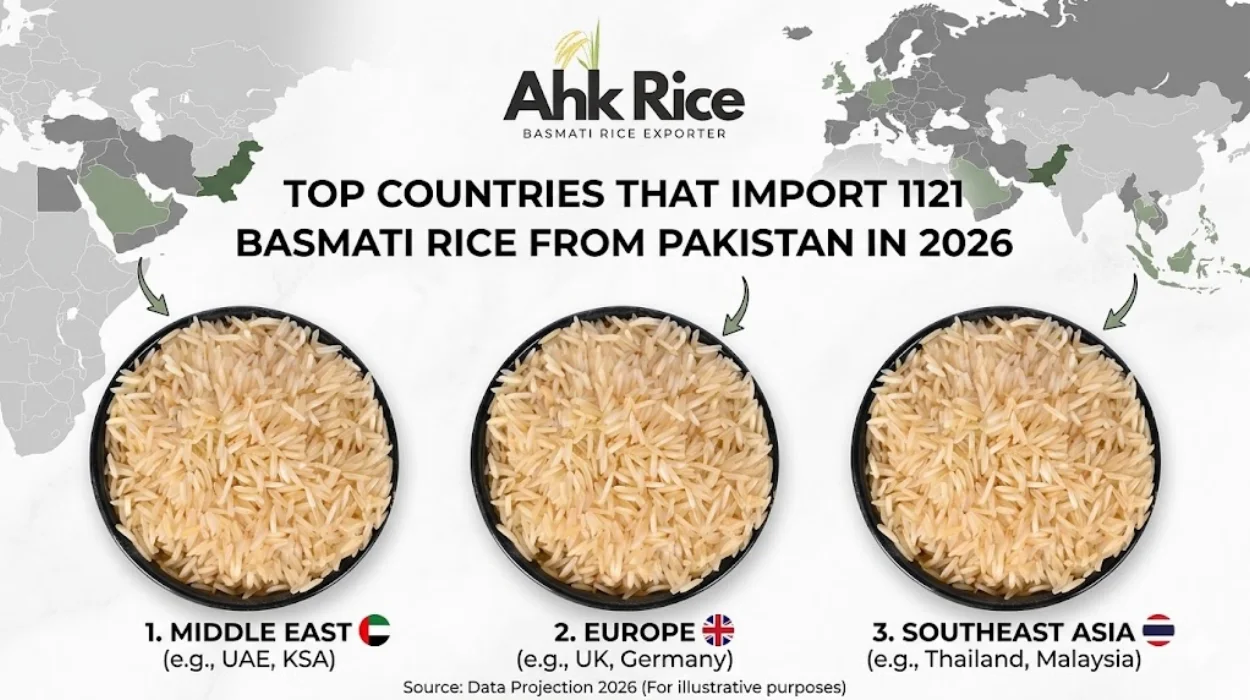
Top Countries That Import 1121 Basmati Rice from Pakistan in 2026
The top countries importing 1121 Basmati rice from Pakistan in 2026 are the UAE, Saudi Arabia, Iraq, Iran, Yemen, the UK, and East African nations. Here is why: these markets demand long-grain, high-aroma rice with consistent supply and verified export quality (source: REAP export data, December 2025).
1121 Basmati rice leads Pakistan’s export portfolio because it delivers 8.20–8.40 mm grain length, strong elongation ratio, and stable cooking performance. These specifications match the consumption patterns of Gulf, Middle Eastern, and diaspora markets. Pakistan exports over 4.5 million metric tons of rice annually, with 1121 varieties forming a dominant share (source: Pakistan Bureau of Statistics, FY2024-25).
Rice exporters prioritize these countries because they purchase in bulk volumes, maintain consistent import cycles, and demand defined processing grades such as Steam, Sella, and Golden Sella.
What are the top countries importing 1121 Basmati rice from Pakistan in 2026?
The highest-volume importers are UAE, Saudi Arabia, Iraq, Iran, Yemen, UK, and East Africa because they require long-grain rice for daily consumption, catering, and re-export trade.
UAE (United Arab Emirates)
UAE imports large volumes due to its role as a regional redistribution hub. Dubai traders re-export rice to Africa and Europe. Buyers prefer 1121 Steam and Golden Sella grades for retail and catering.
Saudi Arabia
Saudi Arabia imports consistent shipments for large-scale consumption. The market prefers Creamy Sella and Golden Sella because these grades maintain texture during bulk cooking.
Iraq
Iraq remains one of the largest bulk buyers. Government tenders specify 1121 Parboiled (Sella) rice because it withstands long storage and high-temperature conditions.
Iran
Iran imports premium aromatic rice. Buyers demand Steam and White 1121 Basmati with strict grain uniformity and aroma retention.
Yemen
Yemen imports cost-effective Sella rice for staple consumption. Buyers prioritize durability over aroma intensity due to storage conditions.
United Kingdom
The UK imports for diaspora consumption. Retailers require branded 1121 Steam and White rice with strict food safety certifications.
East Africa (Kenya, Somalia, Tanzania)
East African markets import for both consumption and trade. Buyers prefer Golden Sella due to its long shelf life and resistance to breakage.
Each country aligns its import preference with cooking style, storage conditions, and purchasing power. With the import markets defined, the next question is what exactly 1121 Basmati rice is.
What is 1121 Basmati rice and why is it exported globally?
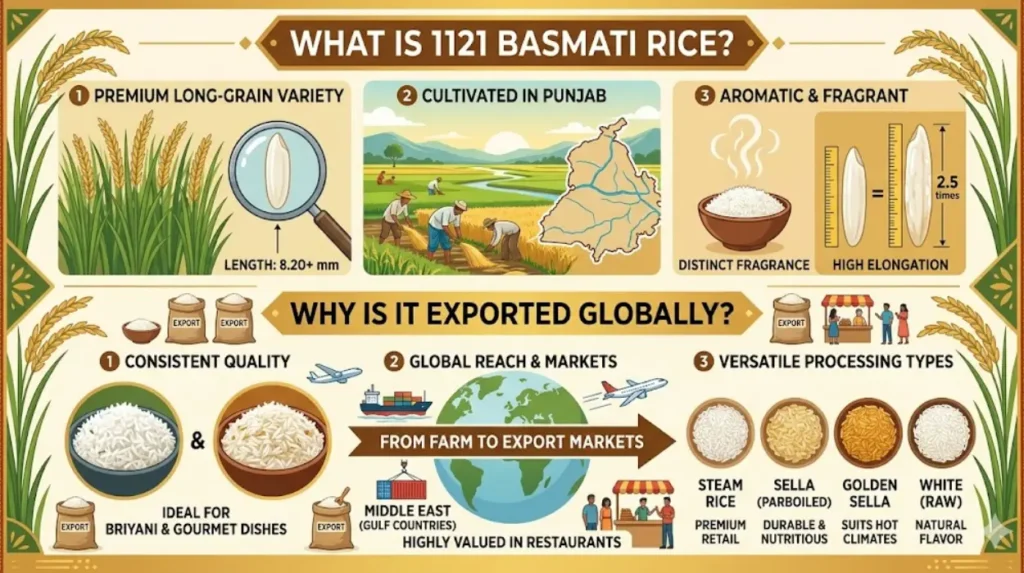
1121 Basmati rice is a long-grain aromatic variety cultivated in Punjab, Pakistan, known for its 8.20+ mm grain length, high elongation, and distinct fragrance, which makes it suitable for premium and bulk export markets.
1121 Basmati rice grows in the fertile plains of Punjab. Farmers cultivate it using controlled irrigation systems. The crop matures over 135–145 days, producing slender grains with uniform structure.
1121 rice dominates exports because it delivers consistent results after cooking. The grain elongates up to 2.5 times its original length, which appeals to markets that value visual presentation, such as Gulf countries and restaurants.
Exporters classify 1121 rice into multiple processing types:
- Steam
- Sella (Parboiled)
- Golden Sella
- White (Raw)
Each type meets a specific market requirement. For example, Golden Sella suits hot climates, while Steam suits premium retail.
With the definition established, the next question is how this rice moves from farm to export markets.
How does the export process of 1121 Basmati rice work?
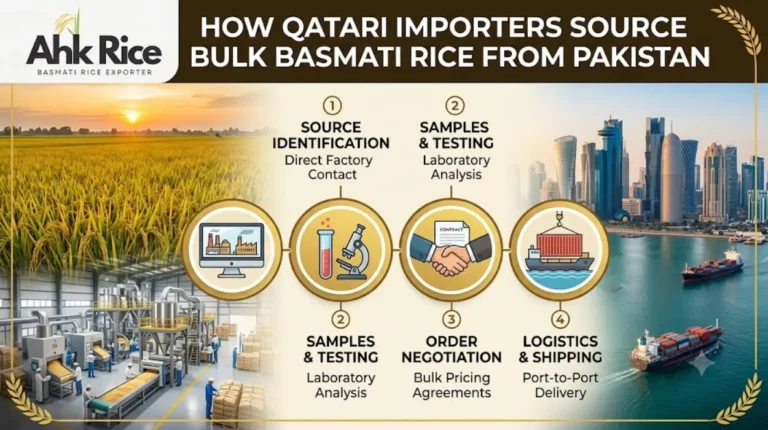
The export process follows 9 defined steps: harvesting, drying, milling, dehusking, polishing, grading, sorting, packing, and shipping, ensuring consistency and compliance with international standards.
Step-by-step process
- Harvest the paddy at full maturity
- Dry the paddy to 12–14% moisture
- Clean the paddy to remove impurities
- Dehusk the grain to remove outer husk
- Polish the rice to improve appearance
- Grade the rice by length and thickness
- Sort the rice using color sorters
- Pack the rice in PP or BOPP bags
- Load and ship via containers
Each step ensures quality control. Color sorting removes defective grains. Grading ensures uniformity required by importers.
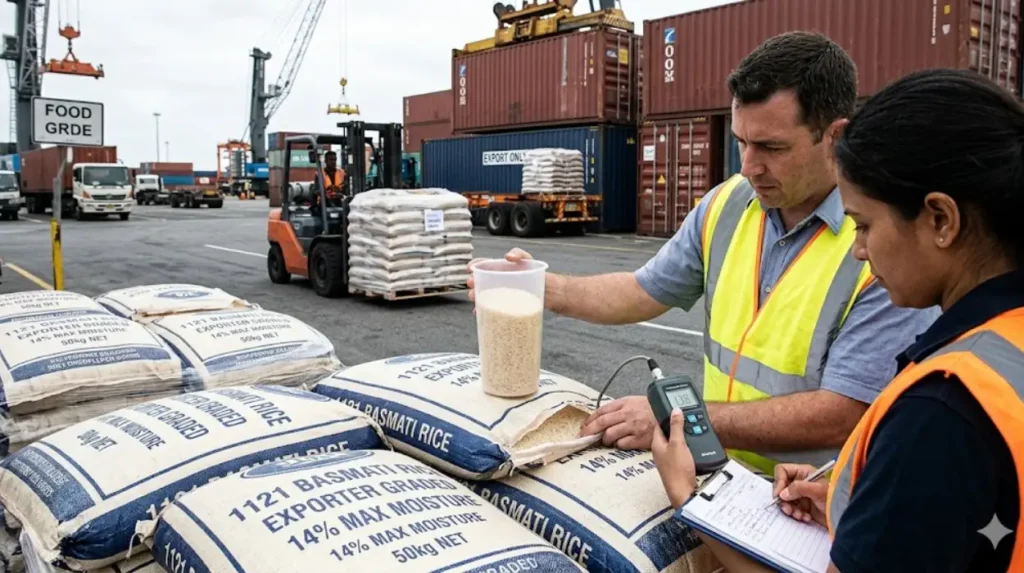
Exporters also inspect and certify shipments before dispatch. Certification bodies verify compliance with food safety and quality standards.
With the process defined, the next question is what components determine export success.
What are the key components of Pakistan’s 1121 Basmati export system?
The export system relies on cultivation zones, processing infrastructure, quality testing, logistics networks, and trade agreements, which together ensure reliable supply to global markets.
Cultivation zones
Punjab produces the majority of 1121 rice. The region offers optimal soil and climate conditions.
Processing infrastructure
Modern rice mills handle polishing, grading, and sorting using automated systems.
Quality testing
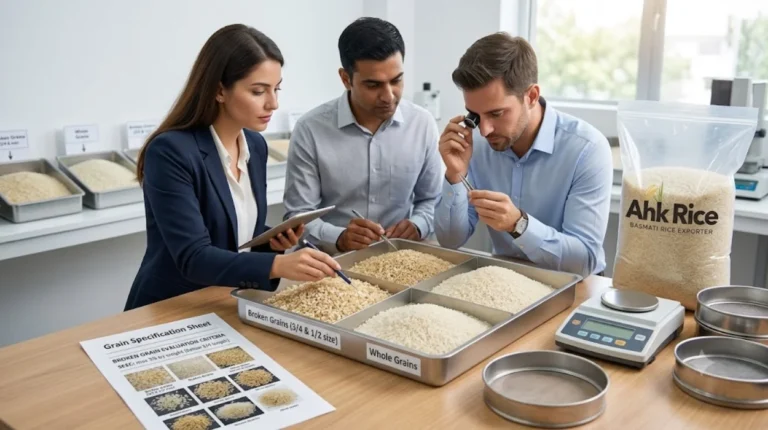
Exporters test for:
- Moisture level
- Broken percentage
- Grain length
- Purity
Logistics network
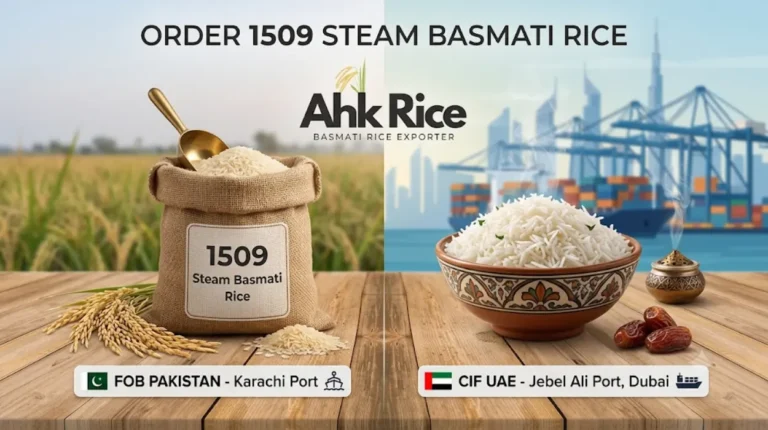
Exporters load rice into 20 ft and 40 ft containers. Shipping routes connect Karachi ports to Gulf, Europe, and Africa.
Trade compliance
Exporters follow import regulations of each country, including labeling and packaging requirements.
These components create a stable supply chain. With the system defined, the next question is why importers prefer 1121 rice.
What benefits do importing countries gain from 1121 Basmati rice?
Importing countries benefit from long grain length, high yield after cooking, extended shelf life, and adaptability to different cuisines, making 1121 Basmati a versatile staple.
1121 rice provides higher plate coverage because grains elongate significantly. This reduces consumption per serving in catering operations.
Golden Sella offers extended shelf life. In 40°C warehouse conditions, it maintains quality for 18–24 months, while Steam rice lasts 12–18 months. This suits Gulf markets with high storage temperatures.
The rice adapts to multiple cuisines. Examples include:
- Kabsa in Saudi Arabia
- Biryani in the UAE
- Pilaf in Iraq
Consistency drives repeat imports. Buyers rely on stable specifications for large-scale distribution.
With benefits explained, the next question is how these markets actually use the rice.
What are the main use cases of 1121 Basmati rice in importing countries?
1121 Basmati rice is used in household consumption, restaurant catering, government food programs, and re-export trade, depending on the importing country’s demand structure.
Household consumption
Retail packs of 5 kg and 10 kg dominate in the UK and UAE.
Catering and hospitality
Hotels and restaurants use bulk packaging such as 25 kg and 40 kg bags.
Government procurement
Countries like Iraq import rice through tenders for public distribution.
Re-export trade
UAE traders repackage and export rice to Africa and Europe.
Each use case influences grade selection. Catering prefers Sella for durability. Retail prefers Steam for aroma.
To understand these preferences in detail, review how Gulf markets select specific grades through this analysis of regional buying patterns.
With use cases covered, the next question is what problems buyers face.
What are common problems and misconceptions in 1121 Basmati rice imports?
The most common issues include confusion between grades, incorrect moisture levels, inconsistent grain length, and misunderstanding shelf life differences, which lead to supply and quality problems.
Misconception: All 1121 rice is the same
Buyers often assume uniform quality. In reality, Steam, Sella, and Golden Sella differ in processing and performance.
Problem: High moisture content
Rice above 14% moisture risks spoilage during shipping. Proper drying prevents this issue.
Problem: Inconsistent grading
Mixed grain lengths reduce market value. Proper grading ensures uniformity.
Misconception: White rice lasts longer
Golden Sella actually offers longer shelf life due to parboiling, especially in hot climates.
Problem: Poor packaging
Weak packaging leads to breakage during transit. Export-grade bags prevent damage.
Understanding these issues helps importers make informed decisions. With challenges clarified, the final step is connecting market demand with export strategy.
Frequently Asked Questions
Which country imports the most 1121 Basmati rice from Pakistan in 2026?
The UAE imports the highest volume due to its role as a global rice trading and re-export hub.
What is the average grain length of 1121 Basmati rice?
1121 Basmati rice has an average grain length of 8.20–8.40 mm, making it one of the longest rice varieties.
Which grade of 1121 rice is best for hot climates?
Golden Sella is best because it offers 18–24 months shelf life and resists spoilage in high temperatures.
Why do Middle Eastern countries prefer Sella rice?
Sella rice maintains structure during bulk cooking, which suits dishes like Kabsa and large-scale catering.
How is 1121 Basmati rice shipped internationally?
Exporters pack rice in 20 ft or 40 ft containers and ship via sea freight with certified documentation.