What Is 1509 Basmati Rice? The Cost-Effective Export Grade Fully Explained
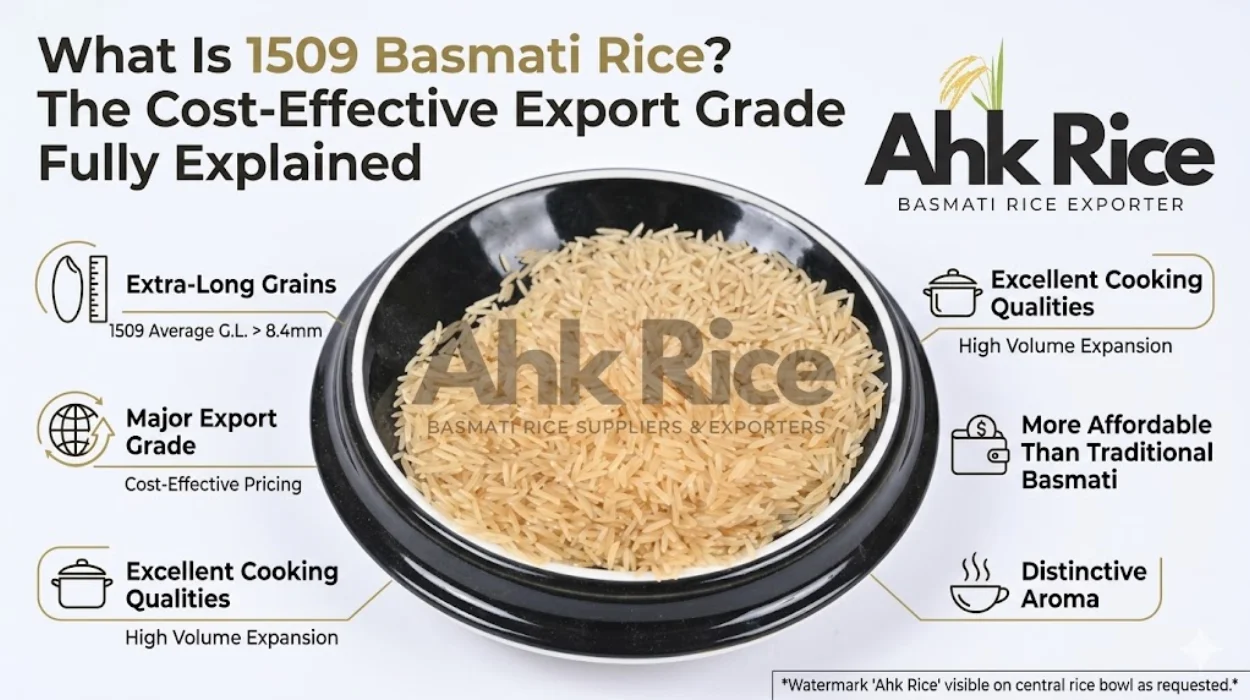
1509 Basmati rice is a short-maturity, high-yield Basmati variety with grain length of 8.10–8.40 mm and cooked elongation up to 2.5×, designed for cost-effective export markets. It delivers Basmati aroma and elongation at a lower price per metric ton than premium varieties.
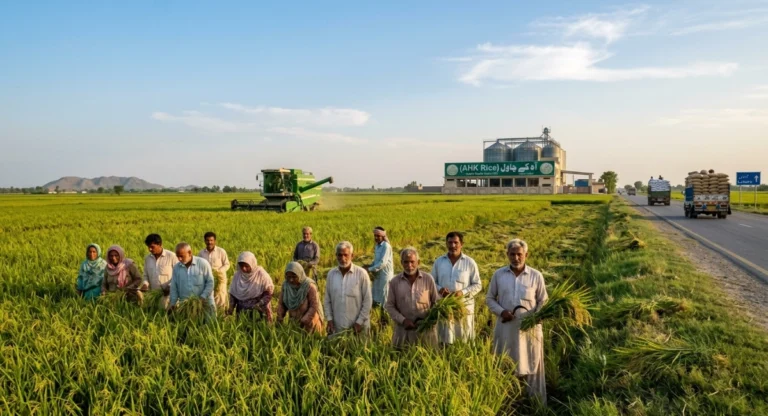
1509 Basmati rice is a hybrid-derived Basmati cultivar developed for commercial scalability. Farmers cultivate this variety in Punjab using controlled irrigation and shorter crop cycles. The crop matures in 95–105 days, compared to 135–145 days for traditional Basmati types.
1509 rice maintains the core Basmati characteristics. The grain remains slender and aromatic. The cooked rice elongates without excessive breakage. Buyers choose this grade when they require Basmati identity at reduced procurement cost.
1509 Basmati rice supports high-volume exports. Exporters supply it in bulk shipments to Africa, the Middle East, and price-sensitive Asian markets. This positioning explains its classification as a cost-effective basmati export option.
With the definition established, the next question is how this variety moves from paddy to export-ready rice.
How does 1509 Basmati rice processing work?
1509 Basmati rice processing includes 9 defined steps: cleaning, dehusking, paddy separation, polishing, grading, length sorting, color sorting, moisture control, and packing. Each step ensures uniform grain quality and export compliance.
Processing begins immediately after harvest. Delays increase moisture variability and grain discoloration.
Step-by-step processing flow
- Clean the paddy to remove dust, stones, and husk residues
- Dehusk the grain using rubber roll shellers
- Separate paddy from brown rice through gravity tables
- Polish the rice to remove bran layers
- Grade the rice based on thickness and uniformity
- Sort by length using indented cylinders
- Sort by color using optical color sorters
- Control moisture to maintain 12–13% for export stability
- Pack the rice into PP or BOPP bags for shipment
Each step defines export readiness. Length sorting ensures uniform cooking performance. Color sorting removes yellow or damaged grains. Moisture control prevents fungal growth during shipping.
Parboiling is optional. Processors convert 1509 into Steam or Sella grades based on buyer requirements. Steam rice retains softness. Golden Sella improves shelf life in hot climates.
With processing clarified, the next step is to understand the physical and technical components that define 1509 rice quality.
What are the key components of 1509 rice profile?
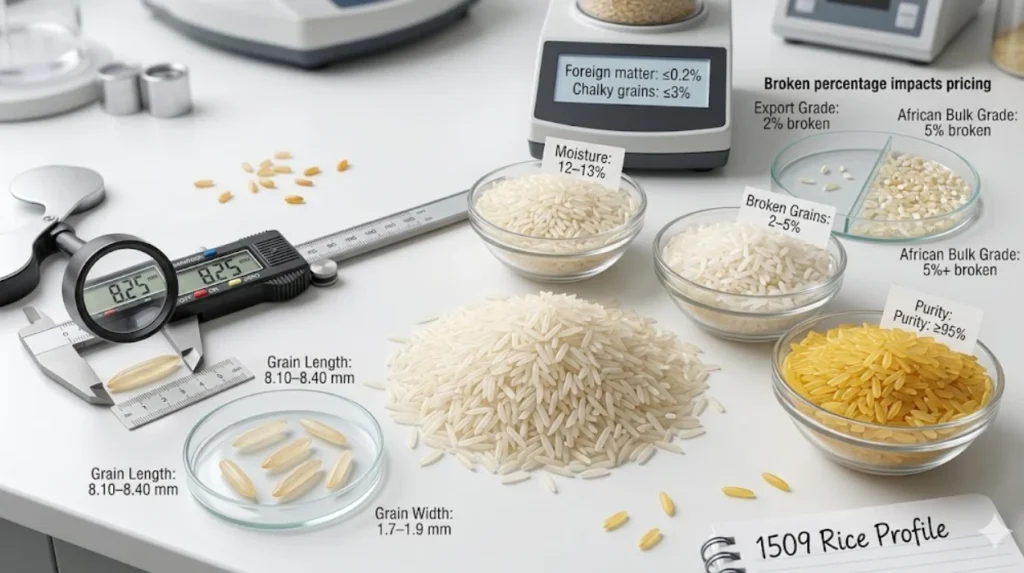
1509 rice profile includes grain length of 8.10–8.40 mm, moisture level of 12–13%, purity above 95%, and broken ratio between 2–5%. These values determine export grade classification.
1509 rice profile defines commercial acceptance. Buyers evaluate measurable attributes before procurement.
Core specification attributes
- Grain length: 8.10–8.40 mm
- Grain width: 1.7–1.9 mm
- Moisture: 12–13%
- Broken grains: 2–5%
- Foreign matter: ≤0.2%
- Chalky grains: ≤3%
- Purity: ≥95%
Grain length determines visual appeal. Long grains signal premium quality in Gulf markets. Moisture level affects storage stability. Lower moisture ensures longer shelf life during sea transit.
Broken percentage impacts pricing. Lower breakage increases export value. Bulk buyers in Africa accept higher broken ratios for cost savings.
Available processing grades
1509 Basmati rice is available in three commercial grades:
- Raw White Rice
- Steam Rice
- Golden Sella Rice
Raw rice offers a softer texture. Steam rice balances softness and shelf life. Golden Sella provides maximum durability during long storage.
With specifications defined, the next section explains why buyers prefer this variety over higher-priced alternatives.
What are the benefits of 1509 Basmati rice?
1509 Basmati rice delivers 20–30% lower cost per metric ton than premium 1121 varieties while maintaining long grain and aroma characteristics. This combination makes it the preferred budget Basmati option.
Cost efficiency drives demand. Importers reduce procurement cost without shifting to non-Basmati rice.
Key benefits
- Lower procurement cost
- Faster crop cycle
- Stable supply volume
- Acceptable grain length
- Good cooking elongation
Lower cost results from higher yield per acre. Farmers harvest more paddy per hectare, which reduces per-unit production cost.
Faster crop cycle improves supply consistency. Exporters fulfill bulk contracts without seasonal shortages.
Stable quality ensures repeat orders. Buyers maintain brand consistency in retail markets using 1509 rice.
Practical example
African importers purchase 1509 Steam rice for retail packs. The grain delivers acceptable elongation and aroma at a competitive price point.
Middle Eastern catering buyers use 1509 Golden Sella. The rice withstands high-temperature storage conditions without spoilage.
With benefits explained, the next logical step is identifying where this rice is actually used across global markets.
Where is 1509 Basmati rice used?
1509 Basmati rice is exported to Africa, the Middle East, and parts of Asia where buyers require affordable long-grain aromatic rice for retail and catering use. These markets prioritize price-performance balance.
1509 rice serves multiple commercial segments. Each segment applies different quality thresholds.
Major importing regions
- West Africa: Senegal, Benin, Ivory Coast
- East Africa: Kenya, Tanzania
- Middle East: UAE, Saudi Arabia, Yemen
- Asia: Bangladesh, Afghanistan
West African markets import bulk volumes. Retailers pack rice into 25 kg and 50 kg bags for distribution.
Middle Eastern buyers prefer Sella grades. High ambient temperatures demand rice with longer shelf stability.
Asian markets import 1509 for blending. Processors mix it with premium varieties to balance cost and quality.
Application segments
- Retail packaging (examples: 5 kg, 10 kg bags)
- Catering supply (examples: restaurants, hotels)
- Institutional procurement (examples: government tenders, NGOs)
Each use case defines grade selection. Catering buyers choose Sella. Retail buyers choose Steam or Raw based on consumer preference.
To understand how 1509 compares with premium grades in real procurement decisions, review this detailed comparison of buyer preferences and specifications: [1509 vs 1121 basmati rice wholesale importers].
With use cases clarified, the final step is addressing common misunderstandings that affect buying decisions.
What are common problems or misconceptions about 1509 Basmati rice?
1509 Basmati rice is often misunderstood as low quality, but it maintains standard Basmati characteristics with slightly lower elongation and aroma intensity compared to premium varieties. The difference is economic, not structural.
Misconceptions arise from price positioning. Lower cost creates an assumption of inferior quality.
Common misconceptions
- “1509 is not real Basmati”
- “1509 has no aroma”
- “1509 breaks easily during cooking”
1509 rice remains a certified Basmati variety. It passes standard export inspections and quality tests.
Aroma exists but is less intense than 1121. This difference becomes noticeable in premium retail markets.
Cooking performance depends on processing quality. Proper milling and moisture control prevent breakage.
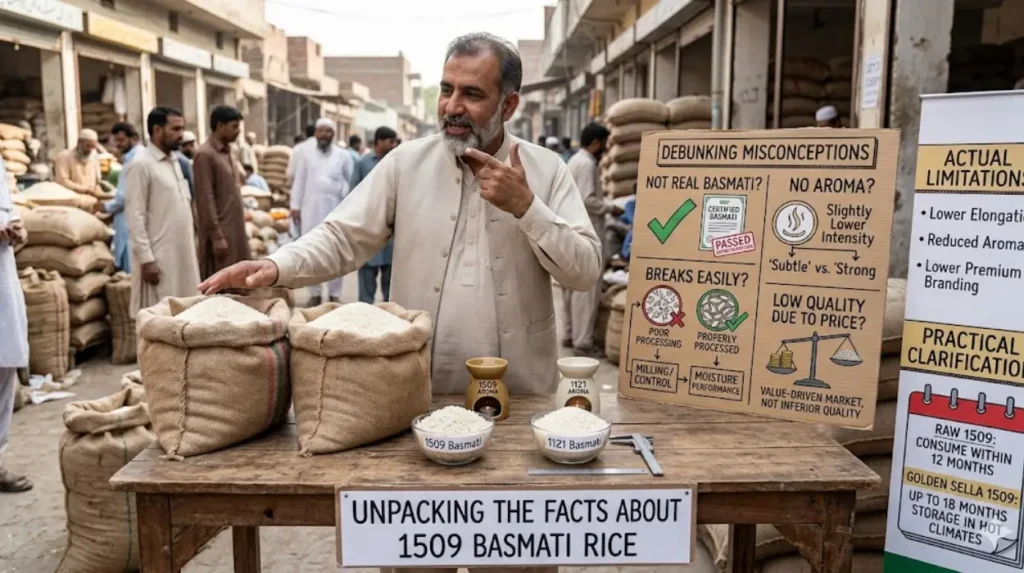
Actual limitations
- Slightly lower elongation than 1121
- Reduced aroma intensity
- Lower premium branding potential
These limitations define positioning. 1509 fits value-driven markets, not luxury retail segments.
Practical clarification
Golden Sella 1509 lasts up to 18 months in hot climates. Raw 1509 requires consumption within 12 months. Storage conditions define performance outcomes.
With misconceptions resolved, the full product understanding is complete.
Frequently Asked Questions
What is the average export price of 1509 Basmati rice?
1509 Basmati rice export price ranges between $700–$950 per metric ton, depending on grade, broken percentage, and destination market. Golden Sella commands higher prices than Raw rice due to longer shelf life and stronger grain structure.
What is the grain length of 1509 Basmati rice after cooking?
1509 Basmati rice achieves 2.3× to 2.5× elongation after cooking, with raw grain length of 8.10–8.40 mm. Cooked grains remain separate and slender, which meets standard expectations in bulk retail and catering markets.
Which grade of 1509 rice is best for hot climate countries?
Golden Sella 1509 is the best choice for hot climates because it maintains quality for 18–24 months in temperatures above 35°C. Parboiling strengthens the grain, which prevents breakage and spoilage during long storage periods.
How does 1509 Basmati rice compare to non-Basmati long grain rice?
1509 Basmati rice offers natural aroma, longer grain length, and better elongation than non-Basmati rice such as IRRI-6 or IRRI-9. Non-Basmati varieties provide lower cost but lack fragrance and premium visual appeal.
What certifications apply to 1509 Basmati rice exports?
1509 Basmati rice exports require phytosanitary certificate, fumigation certificate, certificate of origin, and quality inspection reports. Many shipments also include ISO, HACCP, or SGS testing documents based on importer requirements and destination regulations.