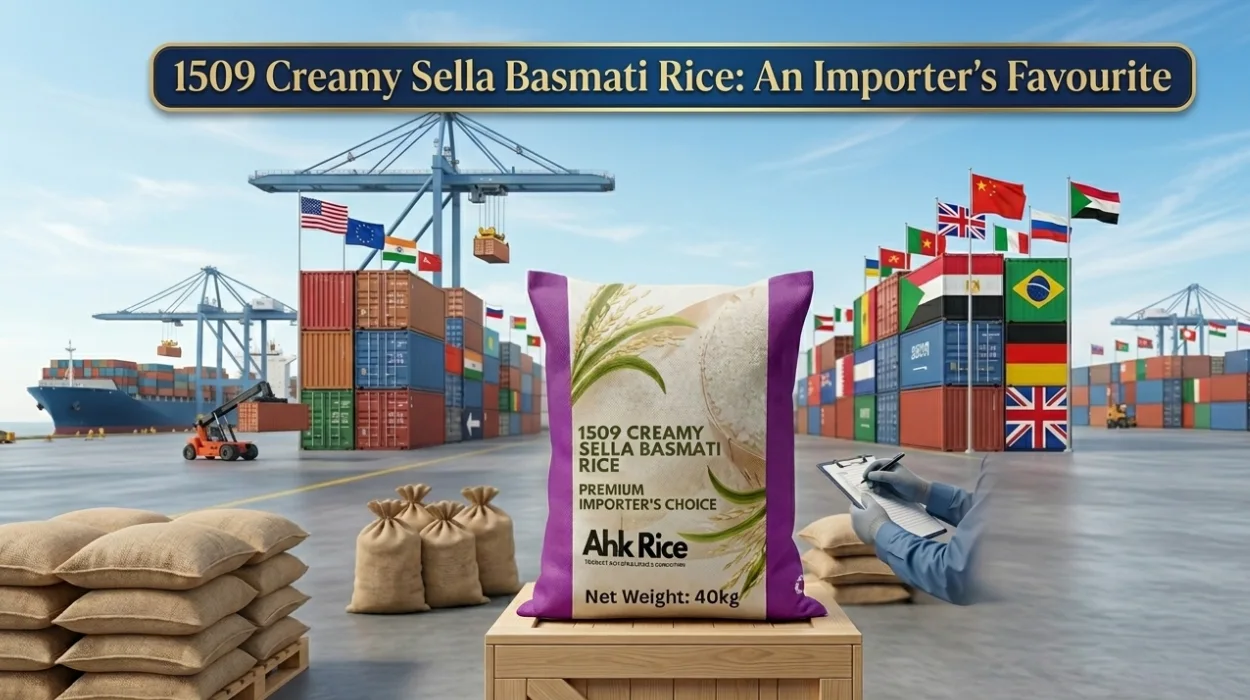
1509 Creamy Sella Basmati Rice: What Makes It an Importer Favourite?
1509 creamy sella basmati rice is a lightly parboiled, long‑grain white basmati variety grown in Pakistan’s Punjab region, prized by importers for its creamy texture, strong aroma, and consistent performance in export‑oriented markets. This article explains what 1509 creamy sella basmati is, how it is produced, which grades exist, and why it has become a preferred choice for buyers in Africa, the Middle East, and parts of Europe.
What is 1509 creamy sella basmati rice?
1509 creamy sella basmati rice is a lightly parboiled version of 1509 paddy that retains extra‑long grain length, a soft‑creamy texture when cooked, and a mild aromatic‑note. It is sold as a white‑sella or “sawn” rice, where the grain is partially cooked in husk before milling, which changes its structure and flavour profile compared to ordinary white basmati.
Within the basmati category, 1509 creamy sella is defined by:
- Grain length above 7.5 mm after milling and drying.
- Low broken‑grain‑ratio, usually kept below 2–5% in premium‑grades.
- Moisture content stabilised around 12–14% for long‑term‑stability and transit‑safety.
Compared with 1509 golden sella, creamy sella is processed with lighter steaming and shorter soaking, which keeps the grain colour whiter and the texture softer. This positioning makes it attractive for importers who want a creamy‑textured, slightly milder‑aromatic‑rice without the darker‑golden‑hue of fully‑sella‑processed grains.
How is 1509 creamy sella basmati rice produced?
1509 creamy sella basmati rice is produced by planting 1509 paddy, harvesting, sun‑drying, then applying a light‑parboiling‑cycle before milling and polishing to create a creamy‑white‑texture. This process starts in the fertile plains of Punjab, Pakistan, where canal‑irrigation, high‑diurnal‑temperature‑variation, and loamy‑soils help build aroma and starch‑structure in the grain.
Cultivation and harvesting
1509 paddy is sown in the Kharif season and grown under controlled‑irrigation‑cycles. Farmers harvest the crop after 110–140 days, when the grain reaches 18–22% moisture. At that stage, the paddy is bundled, sun‑dried, or mechanically‑dried to 12–13% moisture, which prepares it for parboiling.
Light‑parboiling (creamy‑sella) stage
Before milling, 1509 paddy enters the creamy‑sella line, where it undergoes:
- Soaking in warm‑water for a shorter duration than golden‑sella.
- Mild‑steaming that partially gelatinises the starch but keeps the grain‑colour relatively white.
- A second‑drying phase that reduces moisture and stabilises the parboiled‑structure.
This lightly‑parboiled‑process moves some nutrients from the bran into the endosperm and reduces the risk of grain‑breakage, which supports higher milling‑yield and better‑cooking‑performance.
How is 1509 creamy sella basmati rice processed step by step?
1509 creamy sella basmati rice is processed by cleaning paddy, lightly parboiling, de‑hulling, whitening, colour‑sorting, and then packaging in export‑grade conditions. Each step is calibrated to maintain grain‑length, whiteness, and low‑broken‑ratio while locking in the creamy‑texture.
The typical creamy‑sella processing flow includes:
- Paddy cleaning and pre‑soak (creamy‑sella line)
Raw 1509 paddy passes through vibratory‑sievers, destoners, and air‑separators to remove dust, stones, and immature grains. It then undergoes a gentle‑warm‑water‑soak, shorter than that used for golden‑sella, tailored to preserve lighter‑colour. - Steaming and drying (sella‑stage)
The soaked paddy is steamed at low‑pressure for a brief period, which partially cooks the grain in husk but keeps the outer‑layer mostly white. It is then re‑dried to roughly 18–20% moisture before de‑hulling. - De‑hulling and whitening
The sella‑paddy goes to hullers that remove the husk, yielding partially‑cooked brown‑sella‑grains. These are then milled with white‑polishing rollers to remove the bran and germ, producing a creamy‑white‑sella‑finish. - Length‑grading and colour‑sorting
Electro‑optical‑sorters separate 1509 creamy sella into grades based on length, whiteness, and foreign‑matter‑content. They reject discoloured, broken, and off‑colour‑grains, ensuring a uniform‑creamy‑batch. - Weighing, bagging, and labelling
Finally, the rice is packed in 5–25 kg export‑sacks, 50 kg trade‑bags, or jumbo‑bags, each with moisture‑and‑batch‑labels. The packed rice is stored in dry, ventilated warehouses before shipment.
What are the key components of 1509 creamy sella basmati rice?
The key components of 1509 creamy sella basmati rice are its long slender grains, lightly‑parboiled‑starch‑structure, controlled‑moisture‑profile, and balanced‑aroma‑intensity that support creamy‑texture and good shelf‑life. These components define why importers in specific markets treat it as a preferred‑segment within the 1509 pyramid.
- Grain length and structure
1509 creamy sella grains are typically 7.5–8.2 mm long, with a high‑straight‑grain‑ratio. The light‑parboiling makes the starch slightly softer, which enhances creaminess without losing much length. - Starch and aroma profile
The creamy‑sella process reduces grain‑hardness and increases gelatinisation, which produces a softer, more cohesive‑texture in cooked‑rice. Aroma‑remains present but slightly milder than raw 1509 white, which suits markets that prefer subtler‑fragrance. - Moisture and cleanliness standards
Export‑quality 1509 creamy sella usually keeps moisture at 12–14%. Broken‑rice is kept below 2–5% in A‑grades, and foreign‑matters such as stones, paddy‑grains, or husk are minimised by sorting‑equipment.
These components make 1509 creamy sella distinct from both ordinary white 1509 and 1509 golden‑sella, both of which use different parboiling‑intensity and drying‑regimes.
What are the available grades of 1509 creamy sella basmati rice?
1509 golden sella basmati rice is available in at least three grades: A‑grade (100% whole), 95% whole grain, and broken‑creamy‑sella‑categories defined by broken‑ratio, colour‑uniformity, and packaging‑type. Each grade targets a different segment of the import‑market.
- 100% whole‑grain (premium) grade
In this grade, 1509 creamy sella contains 0–1% broken grains, excellent‑straightness, and bright‑white‑colour. It is often used by premium supermarkets, hotel‑chains, and branded‑retailers in the Middle East, Africa, and Europe. - 95% whole‑grain (standard export) grade
This grade tolerates 3–5% broken grains and minor‑variations in colour. Importers use it for mid‑range‑retail, catering, and food‑service where appearance is important but not critical. - Broken 1509 creamy sella
This grade ranges from 10–30% broken content and is used in industrial‑processing, ready‑meals, and bakery‑applications where visual‑length matters less than yield and cost.
Grades are verified by internal‑lab‑reports and third‑party‑inspections (e.g., SGS, Intertek) that measure moisture, broken‑ratio, chalkiness, and aflatoxin‑levels before export. These certificates help importers comply with food‑safety‑standards in destination‑markets.
What are the main benefits of 1509 creamy sella basmati for importers?1509 creamy sella basmati rice offers importers a soft‑creamy‑texture, strong aroma, high‑yield, and good shelf‑life, which support margin‑efficiency and consumer‑satisfaction in fast‑growing import‑markets. These benefits are why creamy sella 1509 appears in creamy sella 1509, lightly parboiled 1509, and white sella basmati‑style‑import‑portfolios.
- Creamy‑texture and aroma
The light‑parboiling stabilises the grain, which produces a thicker, softer‑mouthfeel when cooked, ideal for family‑meals, biryani‑style‑dishes, and plain‑steamed‑rice. The aroma is present but not overpowering, which suits consumers who prefer “soft‑but‑fragrant”‑basmati. - Yield and processing efficiency
1509 creamy sella often has higher milling‑yield than some whole‑white‑basmati variants, which means more finished‑rice per paddy‑tonne. This supports tighter cost‑control for importers who sell in 5–25 kg retail packs. - Stability and traceability
When stored at 12–14% moisture, creamy sella rice is less prone to cracking and discolouration, which matters for long‑sea‑transits and warm‑warehouse‑environments. Many 1509 creamy sella lines also carry basic food‑safety‑documents that facilitate customs and retail‑compliance in multiple markets. - Market positioning fit
Importers can position 1509 creamy sella between ordinary parboiled‑rice and high‑aesthetic‑sella‑grades, using white sella basmati as a clear‑label‑differentiator in retail‑and‑online‑channels.
What are the main use cases for 1509 creamy sella basmati rice?
1509 creamy sella basmati rice is used in home‑cooking, restaurants, catering, and industrial‑production of packaged‑rice and ready‑meals, particularly where creamy‑texture and mild‑aroma are preferred. Each use‑case demands a slightly different grade and packaging format.
- Home‑cooking and retail
Many households in import‑markets buy 1509 creamy sella in 1–5 kg retail bags for daily‑cooking. The grain’s soft‑texture, slight‑aroma, and easy‑plating behaviour align with preference for “restaurant‑style”‑parboiled‑rice. - Food‑service and restaurants
Restaurants and catering companies use 1509 creamy sella for biryani‑style‑dishes, pilaf, and mixed‑rice‑plates. The light‑sella‑texture holds sauces better and produces a more cohesive‑plate than very‑hard‑raw‑basmati. - Industrial and ready‑meal production
Food‑processors use 1509 creamy sella in pre‑cooked‑rice, cup‑meals, and frozen‑ready‑meals where the grain must retain softness and cohesion after reheating. Slightly‑broken‑creamy‑sella may be used here, where length matters less than cost‑efficiency.
What are common problems and misconceptions about 1509 creamy sella?
Common problems and misconceptions about 1509 creamy sella basmati include confusing it with 1509 golden sella, overestimating moisture‑tolerance, or assuming all creamy‑sella‑1509 is the same quality. These misunderstandings can lead to wrong‑grade‑choices, storage‑mistakes, and unrealistic‑aroma‑expectations.
- Confusion with 1509 golden sella
1509 golden sella undergoes stronger‑parboiling, giving it a darker‑golden‑hue and firmer‑texture. 1509 creamy sella uses lighter‑steaming, so it stays whiter and softer. Importers must compare lab‑reports, not just colour. - Storage and moisture over‑relaxation
Many buyers assume all parboiled 1509 sella is stable at high‑humidity, but 1509 creamy sella still needs 12–14% moisture and controlled storage. High‑humidity can cause stickiness, cracking, or discolouration. - Assuming creamy‑sella equals lower‑cost cereal
Some importers think creamy sella is a “cheap‑version” of white basmati, when it is a deliberate‑textural‑segment with higher‑yield and softer‑performance. The value lies in texture‑and‑yield, not just price‑per‑kg. - Mistaking sella for aroma‑only
Creamy‑sella is not defined by aroma alone. It is defined by partial‑parboiling, which affects starch‑structure, length‑retention, and cooking‑time. Markets that prioritise creamy‑mouthfeel will respond differently to 1509 creamy‑sella than markets that demand maximum‑length.
Readers who want a deeper technical‑comparison between 1509 creamy sella and 1509 golden sella, including parboiling‑intensity, colour, and market‑margins, can explore 1509 Creamy Sella vs 1509 Golden Sella: Which Has Better Market Margins? for a structured breakdown.