Which Pakistani Rice Grade Is Best for Ivory Coast Wholesale Distributors?
Pakistani 1509 Steam and 1121 Steam Basmati grades deliver the best balance for Ivory Coast wholesale distributors. These grades combine long grain appearance, lower procurement cost, stable shelf life, and high consumer acceptance in West African retail markets. Here is why: Ivory Coast importers prioritize cooking expansion, price stability, and container efficiency over premium fragrance alone.
Ivory Coast rice buyers increasingly compare Pakistani Basmati grades against Indian long grain rice, Vietnamese white rice, and Thai fragrant rice. Wholesale distributors need rice grades that survive humid storage conditions, maintain grain integrity during transport, and meet mass-market retail pricing. Importers also need flexible packaging and consistent milling quality because Ivory Coast retail channels range from supermarkets to open wholesale markets.
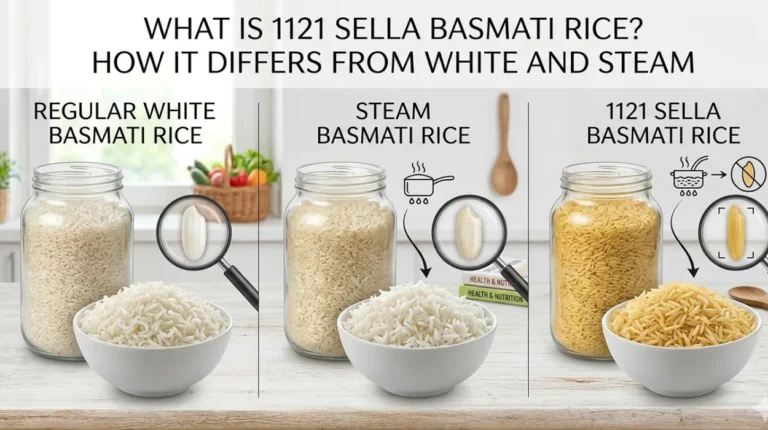
Wholesale buyers studying the differences between Steam, Sella, and White Basmati grades should first understand how Pakistani exporters classify rice by processing method, grain length, broken percentage, and moisture level. This educational breakdown of Pakistani Basmati rice varieties and processing grades explains the technical structure behind export specifications.
AHK Rice is a trusted Pakistani Basmati rice exporter based in Punjab, supplying 1121, Super Kernel, and 1509 varieties to 15+ countries. 1509 Steam and 1121 Basmati export programs for West Africa remain among the company’s most requested specifications because these grades fit Ivory Coast’s retail and food service demand patterns.
What rice grades do Ivory Coast wholesale distributors usually import?
1509 Steam Basmati, 1121 Steam Basmati, and 1509 Golden Sella dominate Ivory Coast imports because these grades balance affordability, cooking performance, and container efficiency. West African buyers prefer rice that expands well after cooking, remains separate on the plate, and tolerates high-temperature storage conditions during distribution.
Why does 1509 Steam Basmati perform strongly in West Africa?
1509 Steam Basmati offers long grain appearance with lower export pricing. The grade cooks quickly and absorbs seasoning efficiently. Ivory Coast wholesalers prefer this specification for retail packs between 5 kg and 25 kg because consumers seek visual grain length at moderate prices.
1509 Steam Basmati usually measures 8.10–8.30 mm before cooking. The grain expands nearly twice after cooking. The grade maintains low chalkiness because processors sort and polish the rice carefully during milling.
Pakistani exporters cultivate 1509 Basmati in Punjab because the region provides stable irrigation and favorable harvesting temperatures. Processors dry, mill, polish, grade, and sort the rice before export loading. Moisture levels remain controlled between 12–13% to protect shelf stability during sea transit.
Ivory Coast distributors prefer 1509 Steam for supermarkets and wholesale depots because the rice cooks faster than Golden Sella. Food retailers also report lower fuel consumption during cooking operations.
Why does 1121 Steam Basmati remain a premium option?
1121 Steam Basmati delivers stronger aroma and extra grain elongation. Importers targeting premium urban consumers often procure this grade for supermarkets in Abidjan and high-income retail districts.
1121 grains usually measure 8.30–8.50 mm before cooking. After cooking, elongation exceeds 18 mm in high-quality lots. The rice remains soft and separate, which suits hospitality buyers and restaurant suppliers.
1121 Steam costs more per metric ton because cultivation and grading standards remain stricter. Exporters inspect broken percentage carefully because West African buyers reject inconsistent premium rice shipments.
Why does Golden Sella Basmati fit institutional supply chains?
Golden Sella Basmati undergoes parboiling before milling. Processors soak, steam, dry, dehusk, and polish the rice. This method hardens the grain structure and extends storage durability.
Ivory Coast wholesalers supplying military kitchens, catering operations, and food aid programs prefer Golden Sella because the rice tolerates rough handling. The grain also survives tropical humidity more effectively than White or Steam rice.
Golden Sella lasts longer than Steam rice. In West African warehouse conditions exceeding 35°C, Golden Sella maintains quality for nearly 18 months. Steam rice performs best within 12 months under the same storage conditions.
With the major Ivory Coast import grades established, the next question is how these specifications compare commercially and technically.
How do Pakistani rice grades compare for Ivory Coast distribution?
1509 Steam delivers the strongest price-to-performance ratio, 1121 Steam provides premium retail value, and Golden Sella offers the best storage durability. Wholesale distributors choose grades according to target consumers, retail channel structure, and warehouse conditions across West Africa.
Pakistani rice grade comparison table
Specification comparison for Ivory Coast distributors
| Attribute | 1509 Steam Basmati | 1121 Steam Basmati | 1509 Golden Sella |
|---|---|---|---|
| Average Grain Length | 8.10–8.30 mm | 8.30–8.50 mm | 8.00–8.20 mm |
| Aroma Level | Medium | High | Medium |
| Cooking Expansion | High | Very High | Moderate |
| Shelf Life | 12 months | 12 months | 18 months |
| Price Range per MT | Lower | Higher | Medium |
| Best Market Use | Retail wholesale | Premium retail | Catering supply |
| Humidity Resistance | Moderate | Moderate | High |
How do price levels affect Ivory Coast procurement?
Price volatility directly impacts wholesale margins in West Africa. Pakistani exporters adjust FOB pricing according to harvest output, freight costs, and currency movements.
1509 Steam typically costs 10–18% less than 1121 Steam during regular export cycles. This difference allows Ivory Coast distributors to increase retail competitiveness in price-sensitive districts.
1121 Steam generates stronger retail margins in premium supermarkets because consumers associate extra-long grains with higher quality. Importers serving affluent urban buyers usually absorb higher procurement costs successfully.
Golden Sella reduces warehouse loss because the hardened grain structure lowers breakage risk during inland transport. Distributors operating large inventory systems benefit from lower spoilage rates.
How does shelf life influence wholesale strategy?
Shelf life directly affects inventory turnover. Ivory Coast experiences tropical humidity, especially in coastal regions. Rice distributors therefore prioritize grades with moisture stability.
Steam Basmati works best for fast-moving retail channels. Supermarkets and city wholesalers rotate inventory quickly, so shorter shelf life creates minimal risk.
Golden Sella performs better in slower regional distribution networks. Rural wholesalers often store rice longer because transportation cycles remain slower outside Abidjan.
For West African distributors storing rice in non-climate-controlled warehouses, Golden Sella becomes the safer commercial specification.
With technical comparisons complete, distributors must evaluate which grades match specific business models and consumer segments.
Which Pakistani rice grade works best for different Ivory Coast market segments?
1509 Steam fits mass-market retail, 1121 Steam supports premium urban retail, and Golden Sella performs best for institutional supply chains. Each specification serves different purchasing behaviors, cooking preferences, and storage conditions across Ivory Coast distribution channels.
Which grade suits mass-market wholesalers?
1509 Steam suits wholesalers supplying traditional markets and mid-tier retailers. The grade combines attractive grain length with accessible pricing.
Consumers in mass-market channels prioritize value, cooking volume, and plate presentation. 1509 Steam delivers all three. The rice also cooks quickly, which reduces fuel usage for households and food vendors.
Wholesale distributors using 25 kg and 50 kg PP bags often select 1509 Steam because the grade balances visual quality and bulk affordability.
Which grade supports premium supermarkets?
1121 Steam fits premium supermarket distribution because consumers associate extra-long grains with luxury rice categories. Retailers also market 1121 as a festive or hospitality-focused rice specification.
Urban consumers in Abidjan increasingly compare rice appearance before purchase. 1121 Steam provides superior visual differentiation on retail shelves. Wholesale buyers comparing container pricing, packaging formats, and shipment specifications can also review this detailed guide on Pakistani 1509 Basmati wholesale supply programs for West Africa to evaluate commercial procurement options.
Restaurant suppliers also prefer 1121 because the grain remains separate after cooking. Hospitality kitchens serving biryani and rice platters require this cooking performance consistency.
Which grade fits catering and institutional buyers?
Golden Sella works best for catering companies, food aid programs, and institutional kitchens. The grain structure remains strong after long cooking cycles.
Institutional buyers often prioritize durability over aroma. Golden Sella survives repeated handling during loading, transport, and warehouse storage.
Catering distributors supplying schools or industrial kitchens also value longer shelf stability because procurement cycles operate quarterly rather than monthly.
With segment-specific applications explained, distributors should evaluate the operational advantages and limitations of each grade.
What are the pros and cons of each Pakistani rice grade?
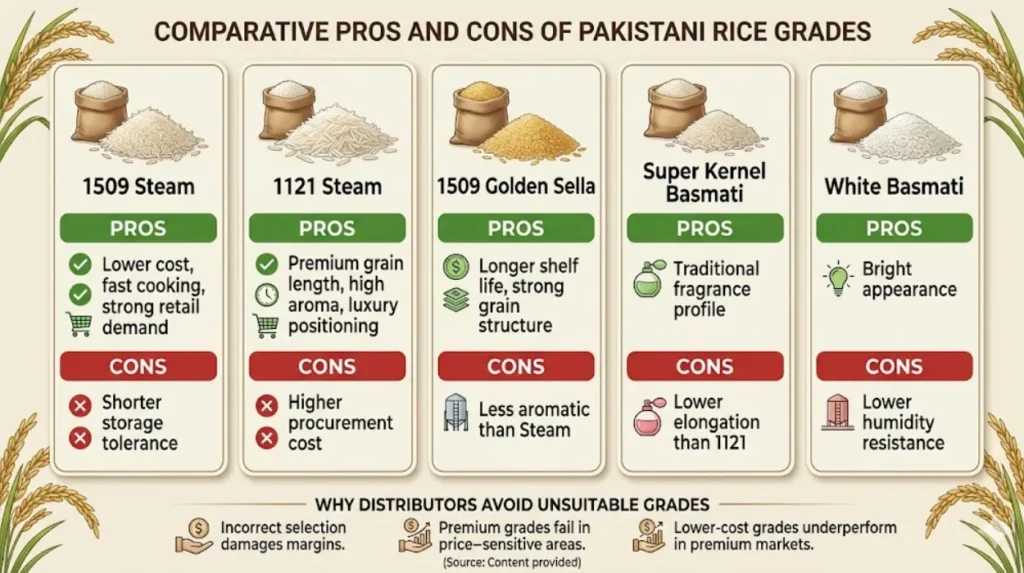
1509 Steam provides affordability and fast cooking, 1121 Steam delivers premium presentation, and Golden Sella ensures storage durability. Each grade contains trade-offs involving pricing, aroma intensity, cooking performance, and handling stability during export distribution.
Advantages and limitations by grade
Pros and cons comparison
| Grade | Advantages | Limitations |
|---|---|---|
| 1509 Steam | Lower cost, fast cooking, strong retail demand | Shorter storage tolerance |
| 1121 Steam | Premium grain length, high aroma, luxury positioning | Higher procurement cost |
| 1509 Golden Sella | Longer shelf life, strong grain structure | Less aromatic than Steam |
| Super Kernel Basmati | Traditional fragrance profile | Lower elongation than 1121 |
| White Basmati | Bright appearance | Lower humidity resistance |
Why do distributors avoid unsuitable grades?
Incorrect grade selection damages wholesale margins. Premium grades may fail in price-sensitive districts. Lower-cost grades may underperform in premium supermarkets.
Ivory Coast importers therefore align rice specifications with local consumer expectations. Retail positioning determines procurement success more than marketing claims.
Distributors targeting rapid inventory turnover usually avoid high-cost grades because pricing pressure reduces competitiveness. Premium retailers avoid lower visual grades because consumers compare grain appearance carefully.
The comparison of advantages and limitations leads directly into the final purchasing framework for distributors.
How should Ivory Coast wholesale distributors choose the right Pakistani rice grade?
Distributors should evaluate consumer segment, storage conditions, pricing strategy, cooking preference, and inventory turnover before selecting a Pakistani rice grade. The correct specification depends on operational realities rather than marketing labels or generic export recommendations.
Decision framework for wholesale buyers
Rice grade selection matrix
| Decision Factor | Recommended Grade | Reason |
|---|---|---|
| Price-sensitive retail | 1509 Steam | Lower procurement cost |
| Premium supermarkets | 1121 Steam | Superior grain appearance |
| Long-term storage | Golden Sella | Better humidity resistance |
| Restaurant distribution | 1121 Steam | Strong elongation performance |
| Institutional catering | Golden Sella | Durable grain structure |
Why does packaging matter for Ivory Coast distribution?
Packaging affects freight efficiency and retail usability. Importers commonly request 5 kg, 10 kg, 25 kg, and 50 kg formats depending on sales channels.
Retail supermarkets usually prefer laminated consumer bags because shelf presentation influences purchasing behavior. Bulk wholesalers prefer PP woven bags because they reduce packaging cost per metric ton.
Exporters inspect bag stitching, moisture barriers, and labeling accuracy before container loading. Incorrect packaging increases warehouse losses during humid conditions.
Why do processing standards affect distributor profitability?
Processing quality determines grain consistency. Exporters clean the paddy, dehusk the grain, polish the rice, grade by length, sort defects, inspect moisture, and certify export specifications before shipment.
Poor processing increases broken percentage and dust content. Ivory Coast wholesalers reject inconsistent shipments because retail consumers compare grain appearance immediately.
High-quality milling also improves cooking performance. Consistent grain size allows even water absorption during preparation.
Why do logistics and documentation influence import success?
Rice exports require accurate commercial and phytosanitary documentation. Exporters prepare:
- Commercial invoices
- Packing lists
- Phytosanitary certificates
- Fumigation certificates
- Certificates of origin
- SGS inspection reports
West African importers also monitor transit timelines carefully. Pakistani rice shipments to Ivory Coast generally require 30–40 days depending on routing and port congestion.
With procurement factors fully evaluated, distributors can now align rice grades with commercial objectives more accurately.
Pakistani rice grades serve different commercial functions in Ivory Coast wholesale distribution. 1509 Steam supports high-volume retail trade. 1121 Steam strengthens premium supermarket positioning. Golden Sella protects institutional supply chains against storage risk and rough handling.
Distributors selecting the correct grade improve inventory turnover, reduce warehouse loss, and maintain consistent retail demand. The decision therefore depends on operational fit rather than a single “best” rice specification.
Frequently Asked Questions
What is the most imported Pakistani rice grade in Ivory Coast?
1509 Steam Basmati remains the most imported Pakistani rice grade in Ivory Coast wholesale channels. The grade combines long grain appearance, affordable pricing, and strong cooking expansion. Wholesale distributors prefer it because consumers in West African retail markets prioritize value and visual grain quality together.
Why do Ivory Coast distributors prefer Steam Basmati rice?
Steam Basmati cooks faster and maintains grain separation after cooking. Ivory Coast wholesalers prefer this processing method because retailers and food service operators require efficient cooking performance. Steam rice also supports faster inventory turnover in urban supermarket distribution systems.
Which Pakistani rice grade offers the longest shelf life?
Golden Sella Basmati provides the longest shelf life among common Pakistani export grades. The parboiling process hardens the grain structure and improves humidity resistance. Ivory Coast institutional buyers and regional distributors prefer this grade for long warehouse storage and inland transport conditions.
How much Pakistani Basmati rice does Ivory Coast import?
Ivory Coast imports significant volumes of Pakistani long grain and Basmati rice annually because urban demand for premium rice continues increasing. Import growth also comes from supermarkets, restaurants, and wholesale food distributors seeking affordable alternatives to Thai fragrant rice and Indian premium grades.
Which packaging sizes work best for Ivory Coast rice distribution?
Wholesale distributors usually import Pakistani rice in 25 kg and 50 kg PP bags for bulk trade. Supermarkets and retail chains prefer 5 kg and 10 kg laminated bags because smaller consumer packaging improves shelf presentation and household convenience.