Pakistan Basmati Rice in China: How to Navigate Phytosanitary Requirements
Pakistan basmati rice China phytosanitary requirements define the SPS-controlled import framework that regulates how basmati rice from Pakistan enters China through inspection, certification, and quarantine verification. Here is why: China enforces strict SPS rules under its national quarantine law, requiring Pakistan exporters to comply with documented phytosanitary certification, residue testing, and approved mill registration before shipment clearance.
Pakistan basmati rice originates in Punjab where farmers cultivate aromatic long grain varieties such as 1121, 1509, and Super Kernel. These grains are harvested, milled, dehusked, polished, and graded before export preparation.
Phytosanitary requirements in China define the biological safety threshold for imported agricultural commodities. China inspects rice shipments for pests, fungi, and chemical residues before clearance.
Pakistan exporters must obtain phytosanitary certificates issued by official plant protection departments. These certificates verify that the rice is free from quarantine pests.
China SPS compliance includes laboratory residue testing for pesticide limits. The testing ensures imported basmati rice meets food safety thresholds defined under Chinese import law.
Exporters also register milling units under approved inspection lists. Registered mills undergo inspection, verification, and periodic audit before shipment approval.
With phytosanitary foundations defined, the next step explains how compliance systems operate across the export chain.
How does SPS compliance China work for basmati rice imports?
SPS compliance in China works through a multi-stage system involving inspection, documentation, laboratory testing, and port quarantine verification before basmati rice clearance. Here is why: China integrates customs inspection with AQSIQ standards to verify that every rice consignment meets pest-free, residue-safe, and origin-certified import conditions.
SPS compliance begins at the cultivation stage in Pakistan. Farmers cultivate basmati under monitored irrigation systems in Punjab plains.
Harvesting follows maturity testing of grain moisture levels. Optimal harvesting ensures uniform grain integrity for export grading.
Millers clean paddy, de-husk grains, polish kernels, and sort rice by length and broken ratio. Each stage produces measurable quality outputs.
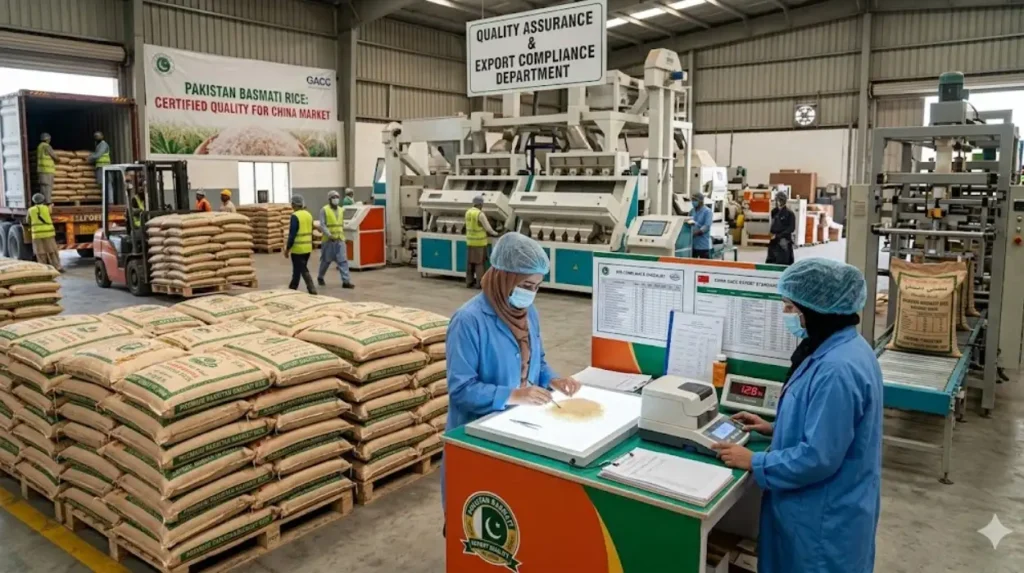
Certification authorities inspect milling units before issuing phytosanitary clearance. Inspection verifies sanitation conditions and pest control measures.
Laboratory testing verifies pesticide residue compliance under Chinese MRL limits. Testing ensures chemical safety before shipment approval.
Customs authorities in China inspect documentation at port entry. Inspection includes phytosanitary certificate validation and cargo identity matching.
With SPS compliance structure clarified, the next section explains the internal system components in detail.
What are key components of China rice phytosanitary system?
China rice phytosanitary system includes inspection protocols, quarantine certification, residue testing, import licensing, and port clearance controls. Here is why: each component ensures agricultural safety, traceability, and compliance with China’s national food import security framework under SPS law.
Phytosanitary certification confirms pest-free agricultural origin. Certification is issued by Pakistan Plant Protection Department after inspection.
Inspection protocols evaluate milling hygiene, storage conditions, and contamination risks. Inspectors verify cleanliness at production facilities.
Residue testing checks pesticide levels in laboratory environments. Tests ensure compliance with Chinese maximum residue limits.
Import licensing defines approved exporter lists. Only registered mills can dispatch basmati rice to China.
Quarantine controls examine shipments at entry ports. Officers inspect physical cargo and verify documentation consistency.
Traceability systems track rice from farm to shipment. Each batch receives identification codes during milling and packaging.
With system components defined, the next section explains trade benefits for exporters.
What benefits does compliance provide for Pakistan basmati exporters?
SPS compliance provides market access, shipment approval stability, price premium realization, and reduced rejection risk for Pakistan basmati exporters in China. Here is why: compliance aligns exporters with China’s import security framework, ensuring smooth customs clearance and consistent demand from institutional buyers.
Market access expands through approved export registration. Registered mills ship rice directly to Chinese importers without regulatory delays.
Shipment approval stability reduces cargo rejection at ports. Verified documentation ensures uninterrupted clearance.
Price premium realization occurs for compliant basmati grades. Certified rice commands higher value in institutional procurement channels.
Risk reduction improves supply chain predictability. Exporters avoid detention or re-export costs caused by non-compliance.
Quality perception improves among Chinese buyers. Certified basmati is associated with safety, consistency, and aroma preservation.
Exporters using compliant systems maintain long-term contracts with distributors. Contracts depend on stable SPS approval history.
With benefits defined, the next section explores real market applications.
What are use cases of certified basmati rice in China market?
Certified basmati rice in China is used in food service chains, premium retail packaging, hospitality catering, and institutional procurement. Here is why: Chinese buyers prioritize certified long grain rice for aroma retention, cooking consistency, and verified food safety compliance.
Food service chains use basmati rice in ready-to-eat meal production. Consistent grain elongation ensures uniform cooking results.
Retail supermarkets package basmati rice for premium consumer segments. Packaging highlights origin, certification, and grain type.
Hospitality catering uses bulk shipments for hotel dining services. Large-scale kitchens require uniform grain performance.
Institutional procurement includes schools and corporate cafeterias. These buyers demand SPS-certified safe rice supply.
Exporters supply multiple grades such as 1121 and 1509 for differentiated market positioning.
The MOFU comparison of 1509 white vs 1121 white basmati Chinese market explains these segmentation differences in detail.
With use cases established, the next section addresses common misconceptions.
What common problems or misconceptions exist in China rice phytosanitary trade?
Common misconceptions include assuming all basmati rice qualifies automatically, ignoring SPS documentation requirements, underestimating residue testing strictness, and misaligning grade specifications with China import preferences. Here is why: China enforces strict verification that rejects incomplete or non-compliant shipments.
Assuming automatic eligibility creates shipment rejection risks. Only registered exporters qualify for China imports.
Ignoring documentation leads to customs delays. Missing certificates trigger port quarantine holds.
Underestimating residue rules causes laboratory rejection. Pesticide thresholds follow strict Chinese MRL standards.
Misaligning grade selection reduces market acceptance. China prefers specific long grain lengths for retail segmentation.
Overlooking milling hygiene results in inspection failures. Facilities must maintain certified cleanliness and pest control systems.
Misunderstanding SPS timelines disrupts logistics planning. Clearance requires coordinated documentation and inspection scheduling.
With misconceptions clarified, the full compliance pathway becomes structurally clear.
FAQs
What documents are required to export basmati rice to China?
Export to China requires phytosanitary certificate, commercial invoice, packing list, and inspection clearance. Here is why: China customs verifies document consistency before approving SPS-compliant rice shipments.
Phytosanitary certificates confirm pest-free origin from Pakistan. Commercial invoices define product grade and quantity. Packing lists detail shipment composition. Inspection clearance validates milling hygiene and export eligibility before dispatch.
What is SPS compliance in China rice imports?
SPS compliance in China ensures rice imports meet safety, pest control, and residue limits. Here is why: China applies strict quarantine rules to protect food safety and agricultural ecosystems.
SPS systems include laboratory testing, border inspection, and certification validation. Each shipment is tested for pesticide residues and pests before release. Non-compliance results in shipment rejection or quarantine detention.
Which basmati rice grades are accepted in China market?
China accepts 1121 basmati, 1509 basmati, and Super Kernel basmati grades. Here is why: these varieties meet long grain, aroma, and cooking consistency standards required by Chinese buyers.
1121 is preferred for premium retail packaging. 1509 is used for cost-efficient institutional supply. Super Kernel is used in blended rice applications. Each grade is sorted and polished before export approval.
Why do shipments get rejected in China phytosanitary inspection?
Shipments get rejected due to pesticide residue violation, missing certificates, or pest contamination. Here is why: China enforces zero tolerance for SPS non-compliance at entry ports.
Common issues include incorrect documentation, unregistered mills, and poor storage hygiene. Residue testing failures are the most frequent rejection cause in bulk rice imports.
How long does China phytosanitary clearance take for rice imports?
Clearance takes 5 to 15 days depending on document accuracy and inspection workload. Here is why: China customs performs multi-layer verification before final release.
Delays occur when certificates mismatch shipment data or when laboratory testing is required. Pre-approved exporters with complete documentation experience faster clearance cycles.