North Africa Basmati Rice Trade: Morocco’s Demand and Import Trends 2026
North Africa’s basmati rice trade is expanding, and Morocco remains one of the region’s most active import destinations. Morocco imports rice to meet food service, retail, and hospitality demand because local rice production remains limited. Growing urban consumption, tourism growth, and demand for premium long-grain rice continue shaping Morocco rice import 2026 patterns.
What Is Driving Morocco’s Basmati Rice Imports in 2026?
Morocco depends on imported rice for a significant share of domestic consumption, while premium long-grain varieties continue gaining market share in retail and food service channels.
Morocco is a North African country located on the Atlantic Ocean and Mediterranean Sea. Rice is not a dominant staple compared to wheat, but rice consumption continues increasing in urban areas. Restaurants, hotels, catering companies, and modern retail chains drive this growth.
North Africa basmati trade includes imports from Pakistan, India, Thailand, and Vietnam. Basmati occupies the premium segment because consumers value aroma, grain length, and cooking performance.
Morocco rice import 2026 demand reflects changing food habits. International cuisine, tourism, and higher disposable incomes increase demand for premium rice products. Casablanca remains the country’s primary commercial gateway for rice imports because it handles a large share of Morocco’s containerized cargo traffic.
Pakistan remains an important supplier because Pakistani basmati varieties provide competitive pricing and long grain specifications suitable for retail packaging and hospitality use (source: REAP export data, December 2025).
Morocco’s growing demand explains why understanding the product itself becomes the next important question.
What Is Basmati Rice in the North Africa Trade Market?
Basmati rice is a long-grain aromatic rice variety known for grain lengths exceeding 6.6 mm before cooking and significant elongation after cooking.
Basmati rice originates from the Indo-Gangetic region. Pakistan and India produce most internationally traded basmati rice.
Basmati differs from ordinary long-grain rice because it develops a distinctive aroma through naturally occurring aromatic compounds. Consumers recognize basmati through its fragrance, fluffy texture, and elongated cooked grains.
North African importers purchase basmati for several applications. Examples include hotel buffets, wedding catering, restaurant chains, premium supermarkets, and ethnic food retailers.
Pakistani basmati exports generally include several major varieties:
1121 Basmati Rice
1121 Basmati produces some of the longest grains available in international trade. Grain length commonly exceeds 8.3 mm before cooking.
Super Kernel Basmati Rice
Super Kernel Basmati offers traditional aroma and premium cooking quality. Many importers prefer this variety for established retail markets.
1509 Basmati Rice
1509 Basmati provides a combination of long grain appearance and competitive pricing. Importers often use this variety for value-focused premium segments.
Each variety enters Morocco through different supply channels, which leads directly to understanding how the trade system functions.
How Does the North Africa Basmati Rice Trade Work?
The trade process follows a structured chain consisting of cultivation, harvesting, milling, grading, certification, shipping, customs clearance, and distribution.
Basmati trade begins in agricultural regions. Punjab remains one of the most important cultivation areas because fertile soil and irrigation systems support rice production.
The production process follows defined stages:
- Cultivate the rice crop.
- Harvest mature paddy.
- Clean the harvested paddy.
- De-husk the grain.
- Dry the rice.
- Parboil selected grades.
- Polish the kernels.
- Grade by size and quality.
- Sort using optical systems.
- Inspect finished rice.
- Test laboratory samples.
- Load export containers.
- Ship cargo to destination ports.
Quality control remains essential throughout the chain. Exporters inspect moisture, purity, broken percentage, and grain dimensions before shipment.
Rice trade Casablanca operations generally begin when containers arrive at Moroccan ports. Importers clear customs, transfer cargo to warehouses, and distribute products through wholesalers and retailers.
Understanding this process helps explain the specific grades imported into Morocco.
What Basmati Rice Grades Enter Morocco?
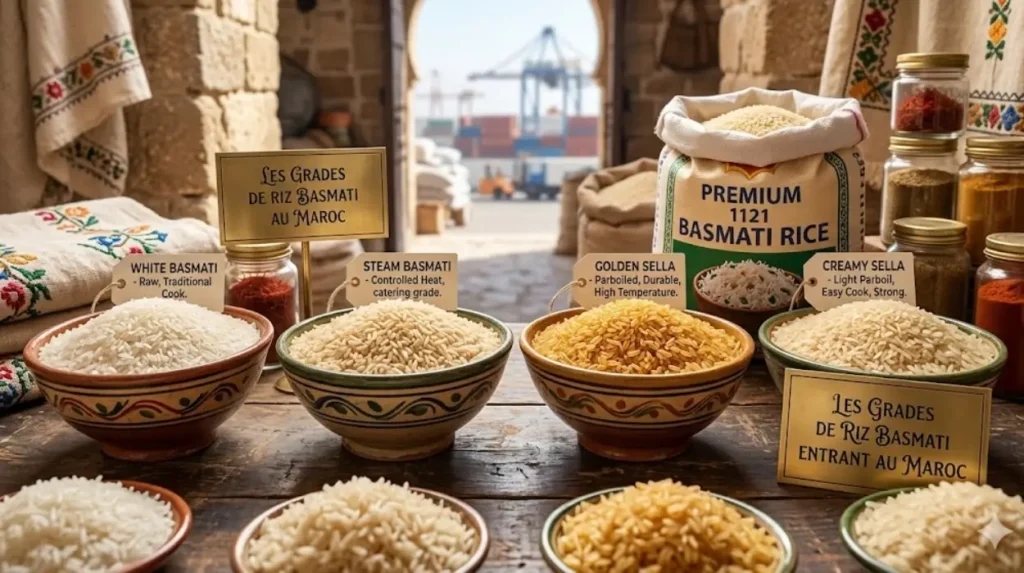
Moroccan buyers import white rice, steam rice, golden sella rice, and premium specialty grades depending on retail and food service requirements.
Processing grade determines appearance, shelf life, cooking behavior, and target market.
White Basmati Rice
White basmati undergoes milling and polishing without parboiling. Consumers prefer this grade for traditional cooking applications.
White rice provides a softer texture than parboiled grades. In restaurant kitchens serving fresh daily meals, white basmati delivers the preferred eating experience.
Steam Basmati Rice
Steam basmati receives controlled heat treatment before final milling.
Steam rice offers improved grain strength compared with white rice. In large catering operations, steam rice reduces grain breakage during cooking.
Golden Sella Basmati Rice
Golden Sella undergoes parboiling before milling. The process creates a golden color and stronger grain structure.
Golden Sella lasts longer than Steam rice. In a warehouse operating at 40°C, Golden Sella maintains commercial quality for approximately 18 months. Steam rice typically performs best within 12 months. For importers storing inventory across extended periods, Golden Sella becomes the preferred specification.
Creamy Sella Basmati Rice
Creamy Sella follows a different parboiling profile. The result is a lighter appearance while retaining strong grain integrity.
With the main grades established, the next question concerns the factors driving demand in Morocco.
Why Is Morocco Increasing Basmati Rice Imports?
Population growth, tourism expansion, premium food consumption, and diversified culinary preferences are increasing basmati rice demand.
Urbanization changes food purchasing behavior. Consumers increasingly purchase packaged rice products through supermarkets and modern retail chains.
Tourism strengthens rice demand because hotels and restaurants require consistent supplies of premium grains. International visitors expect menu options featuring long-grain aromatic rice.
Food service operators value basmati because cooked grains remain separate and visually attractive. Wedding caterers, hotel kitchens, and banquet operators frequently select premium long-grain varieties.
Morocco’s strategic position also supports regional trade activity. Casablanca serves as a major logistics hub connecting North Africa with Europe, West Africa, and international suppliers.
Demand growth creates opportunities, but importers must also address common market challenges.
What Challenges Affect Morocco Rice Import Trends in 2026?
Freight costs, exchange rate fluctuations, quality inconsistencies, and supply chain disruptions remain the primary challenges for importers.
Freight expenses influence landed costs. Shipping rates affect final retail pricing because imported rice travels thousands of kilometers before reaching consumers.
Currency movements influence purchasing decisions. Importers monitor exchange rates closely because rice contracts are generally denominated in international currencies.
Quality inconsistency creates commercial risk. Buyers require standardized specifications covering grain length, moisture levels, purity, and broken percentages.
Documentation requirements also affect trade efficiency. Export and import transactions commonly require:
- Commercial Invoice
- Packing List
- Certificate of Origin
- Phytosanitary Certificate
- Bill of Lading
- Quality Inspection Report
- Fumigation Certificate
Importers reduce risk through supplier audits, laboratory testing, and specification-based purchasing contracts.
These challenges often lead to misconceptions about basmati rice quality and sourcing.
What Common Misconceptions Exist About North Africa Basmati Trade?
Many buyers assume all basmati rice grades are identical, but significant differences exist in grain length, processing method, cooking behavior, and shelf life.
One misconception assumes all long-grain rice qualifies as basmati. True basmati varieties meet recognized characteristics involving aroma, grain dimensions, and cooking performance.
Another misconception assumes higher price always means higher quality. Market suitability matters more than price alone. A catering company serving large events may prefer one grade, while a premium retail brand may select another.
Some buyers assume Golden Sella and White Basmati perform identically. Processing differences create different cooking results and storage characteristics.
A comparison of Moroccan market preferences demonstrates this clearly. Buyers evaluating premium catering specifications often compare 1509 and 1121 Golden Sella grades. Readers seeking deeper understanding can review a detailed analysis of how Moroccan importers evaluate grain length, cooking performance, and pricing between these two specifications.
Clarifying misconceptions helps explain the future direction of the market.
What Are the Future Trends for North Africa Basmati Rice Trade?
Premiumization, branded packaging, food service expansion, and supply chain standardization will shape Morocco’s rice imports through 2026 and beyond.
Premium packaged rice continues gaining shelf space in modern retail channels. Consumers increasingly evaluate origin, quality certification, and grain specifications before purchase.
Food service demand continues expanding. Hotels, restaurants, and institutional kitchens require reliable access to consistent rice grades.
Certification requirements are becoming more important. Importers increasingly request documented compliance standards.
Common certifications include:
- ISO 22000
- HACCP
- BRCGS
- Halal Certification
- Phytosanitary Compliance
Standardized quality specifications support long-term supplier relationships. Buyers increasingly purchase according to measurable attributes rather than general product descriptions.
North Africa basmati rice trade remains closely connected to Morocco’s evolving food sector. Rising demand for premium rice, stronger retail distribution, and growing hospitality consumption continue reinforcing Morocco’s role as one of the region’s key import destinations.
Frequently Asked Questions
Why does Morocco import basmati rice instead of producing it locally?
Morocco imports basmati rice because domestic rice production remains limited and does not meet total market demand. Imported basmati rice supplies supermarkets, restaurants, hotels, and catering businesses across the country.
Which basmati rice varieties are most popular in Morocco?
1121 Basmati, Super Kernel Basmati, and 1509 Basmati are among the most imported varieties. Moroccan buyers select different varieties based on grain length, cooking performance, price range, and target market segment.
What is the main entry point for rice imports in Morocco?
Casablanca is the primary commercial gateway for rice imports. The port handles a large volume of containerized cargo and supports distribution to wholesalers, retailers, and food service operators throughout Morocco.
What certifications are commonly required for basmati rice imports?
Importers commonly request ISO 22000, HACCP, BRCGS, Halal Certification, and Phytosanitary Certificates. These certifications help verify food safety, quality management, and regulatory compliance.
Why is Golden Sella Basmati popular in the Moroccan market?
Golden Sella Basmati offers strong grain structure, long shelf life, and excellent cooking performance. Hotels, caterers, and bulk food service operators prefer this grade because the grains remain separate after cooking and withstand extended storage periods.