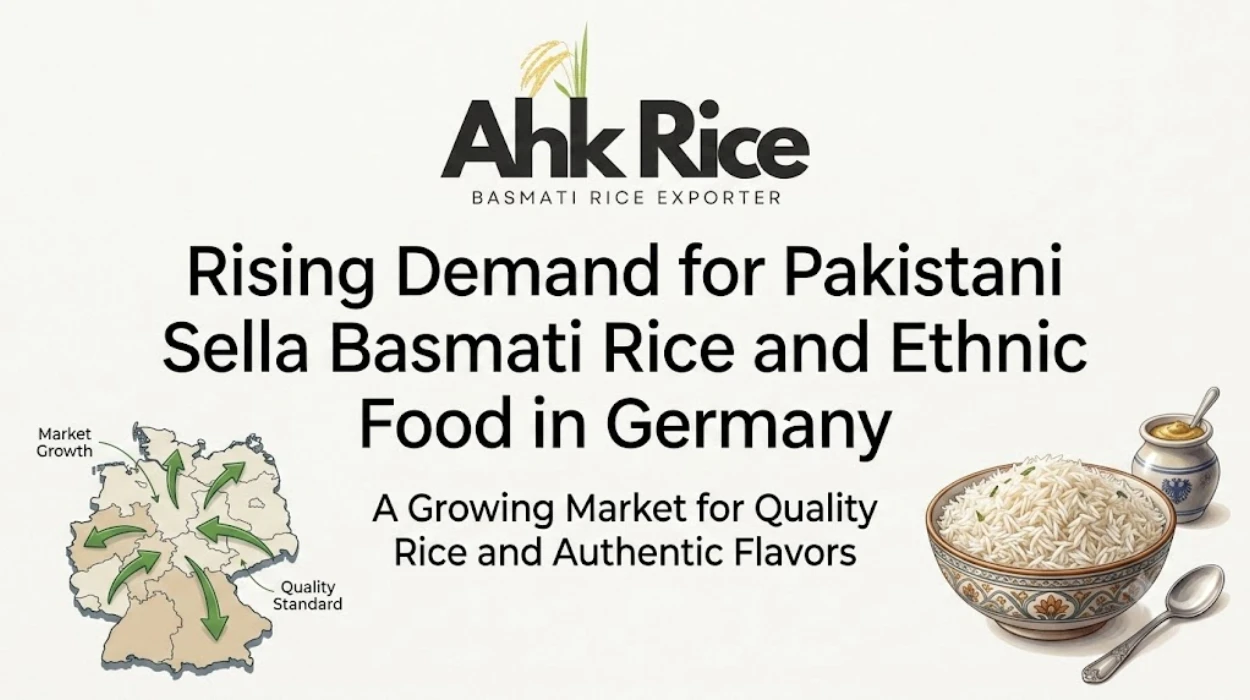
German Demand for Pakistani Sella Basmati Rice and Ethnic Food Growth
German demand for Pakistani Sella Basmati Rice is increasing because ethnic food consumption is expanding, multicultural populations are growing, and consumers are seeking premium long-grain rice with consistent cooking performance and aroma.
Pakistani Sella Basmati Rice is a parboiled form of Basmati rice produced primarily in Punjab, Pakistan. The term “Sella” refers to a hydrothermal treatment process that strengthens the grain before milling. This process improves grain stability, reduces breakage, and enhances cooking performance.
Germany has one of the largest ethnic food markets in Europe. Consumers regularly purchase international food products through supermarkets, specialty retailers, wholesalers, restaurants, and food service distributors.
The demand comes from multiple consumer groups. Examples include South Asian communities, Middle Eastern consumers, Turkish households, African communities, and German consumers interested in international cuisine.
Pakistani Basmati rice exporters supply several varieties to Germany. Examples include 1121 Sella Basmati Rice, Super Kernel Sella Basmati Rice, and 1509 Sella Basmati Rice.
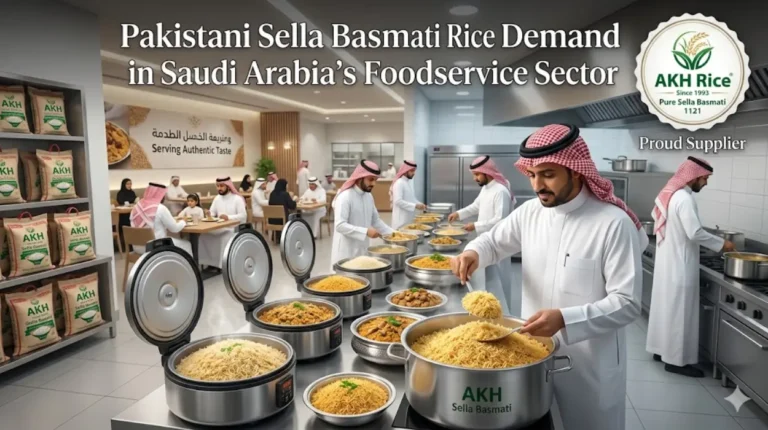
The growth of ethnic restaurants also supports demand. Examples include Indian restaurants, Pakistani restaurants, Afghan restaurants, Turkish restaurants, and Middle Eastern dining establishments.
What Is Pakistani Sella Basmati Rice?
Pakistani Sella Basmati Rice is a long-grain aromatic rice that undergoes parboiling before milling, creating stronger grains, lower breakage rates, longer cooked length, and improved storage characteristics.
Basmati rice is a specialty rice category known for its distinctive aroma, slender grains, and elongation during cooking.
Pakistan is one of the world’s leading Basmati rice-producing countries. The majority of production occurs in Punjab because the region offers fertile soil, irrigation infrastructure, and climatic conditions suitable for Basmati cultivation.
Sella rice differs from white rice because it undergoes parboiling before milling. During this process, nutrients from the outer layers move into the grain. The grain structure becomes harder and more durable.
Pakistani exporters classify Sella rice according to variety, grain length, purity level, and percentage of broken grains.
The most common export varieties include:
1121 Sella Basmati Rice
1121 is known for extra-long grain length. It often reaches more than twice its original size after cooking.
Super Kernel Sella Basmati Rice
Super Kernel is recognized for traditional Basmati aroma and premium quality characteristics.
1509 Sella Basmati Rice
1509 is valued for high yield, long grains, and competitive pricing.
How Is Pakistani Sella Basmati Rice Produced?
Pakistani Sella Basmati Rice production follows a structured process that includes cultivation, harvesting, drying, parboiling, milling, grading, quality testing, packaging, and export preparation.
The production cycle begins with seed selection. Farmers choose certified Basmati seed varieties suitable for regional conditions.
Cultivation Stage
Rice cultivation starts during the planting season. Fields are prepared using irrigation systems and nutrient management practices.
Farmers monitor crop growth throughout the season. Water management and pest control help maintain grain quality.
Harvesting Stage
Rice is harvested after reaching maturity. Proper harvesting timing helps preserve grain integrity and reduce losses.
Drying Stage
Freshly harvested paddy contains moisture levels that require reduction before processing.
Drying stabilizes the grain and prepares it for storage and further treatment.
Parboiling Stage
The defining characteristic of Sella rice is parboiling.
The process includes:
- Cleaning the paddy
- Soaking in water
- Steaming
- Drying
- Conditioning
This treatment strengthens the grain structure and improves milling performance.
Milling Stage
The outer husk is removed during milling.
Additional polishing improves appearance while maintaining grain quality standards required by importers.
Grading Stage
Rice is sorted according to:
- Grain length
- Purity
- Broken percentage
- Color consistency
- Foreign matter content
Packaging Stage
Exporters package rice in different formats.
Examples include:
- 1 kg bags
- 2 kg bags
- 5 kg bags
- 10 kg bags
- 20 kg bags
- 25 kg bags
- 50 kg bags
How Does the German Ethnic Food Market Support Rice Imports?
Germany’s ethnic food market creates consistent demand for imported rice because consumers regularly prepare traditional dishes requiring authentic long-grain aromatic rice varieties.
Ethnic food consumption has become a permanent segment of the German food industry.
Consumers seek ingredients associated with traditional recipes.
Examples include:
- Biryani
- Pulao
- Kabsa
- Mandi
- Pilaf
- Rice platters
Retailers respond by increasing shelf space dedicated to international food products.
Importers purchase rice in bulk quantities and distribute it through multiple channels.
Examples include:
- Supermarkets
- Cash-and-carry wholesalers
- Ethnic grocery stores
- Restaurant suppliers
- Food service distributors
The expansion of international cuisine contributes directly to higher rice imports.
What Are the Key Components German Buyers Evaluate?
German buyers evaluate grain length, aroma, purity, moisture levels, broken percentage, food safety compliance, and consistency before selecting Pakistani Sella Basmati Rice suppliers.
Importers focus on measurable specifications.
Quality assessments commonly include laboratory testing and physical inspections.
Grain Length
Longer grains generally command greater market interest.
1121 Sella Basmati Rice is particularly valued for grain length performance.
Purity Levels
Importers examine varietal purity and consistency across shipments.
Moisture Content
Controlled moisture levels help maintain storage stability and shelf life.
Broken Percentage
Lower broken percentages are associated with premium grades.
Food Safety Standards
Importers verify compliance with European food regulations.
Readers interested in buyer evaluation methods can explore a detailed explanation of how European rice purchasers review quality specifications in How German buyers evaluate Pakistani rice quality before importing large shipments.
What Certifications Apply to Pakistani Sella Basmati Rice Exports?
Pakistani Sella Basmati Rice exports commonly require food safety, quality management, traceability, and regulatory certifications to meet international market requirements.
Certifications provide documented evidence of compliance.
Requirements vary depending on the importer and distribution channel.
Common certifications include:
HACCP
Hazard Analysis and Critical Control Points establishes preventive food safety controls.
ISO 22000
ISO 22000 focuses on food safety management systems.
GMP
Good Manufacturing Practices establish operational and hygiene standards.
Phytosanitary Certification
This certification confirms compliance with plant health regulations.
Fumigation Certification
Certain import programs require documented fumigation procedures.
Laboratory Testing Reports
Independent testing verifies product specifications and food safety compliance.
These certifications help facilitate trade with European markets, including Germany.
What Benefits Make Pakistani Sella Basmati Rice Attractive?
Pakistani Sella Basmati Rice offers long grain length, cooking stability, aroma retention, lower breakage, efficient storage characteristics, and compatibility with numerous international cuisines.
The rice performs consistently during commercial food preparation.
Restaurants often require products that maintain quality under high-volume cooking conditions.
Long grain elongation creates visual appeal.
The parboiling process improves grain strength.
Storage performance supports distribution across long supply chains.
The rice is also versatile.
Examples of applications include:
- Restaurant meals
- Catering operations
- Household cooking
- Ready meal production
- Food manufacturing
These characteristics support demand across multiple consumer segments.
What Are the Main Use Cases for Pakistani Sella Basmati Rice in Germany?
Pakistani Sella Basmati Rice is used in restaurants, catering businesses, retail grocery channels, food manufacturing operations, and multicultural households throughout Germany.
Food service operators represent a significant user group.
Restaurants require reliable cooking performance and consistent quality.
Catering companies use Basmati rice in large-scale meal preparation.
Retail consumers purchase packaged rice for home cooking.
Food manufacturers incorporate rice into prepared meal products.
Examples include:
- Frozen meals
- Meal kits
- Ready-to-eat products
- Packaged rice dishes
The versatility of Sella rice allows it to serve multiple market segments simultaneously.
What Common Misconceptions Exist About Pakistani Sella Basmati Rice?
Many misconceptions arise from confusion between rice varieties, processing methods, and quality grades rather than actual product characteristics.
One misconception is that all Basmati rice grades are identical.
Different varieties possess different grain lengths, aroma profiles, and market positioning.
Another misconception is that parboiled rice lacks quality.
Sella processing is specifically designed to improve grain strength and cooking performance.
Some buyers assume all rice exporters provide identical specifications.
In reality, grading standards, processing technology, quality control systems, and packaging capabilities vary significantly among suppliers.
A third misconception is that aroma alone determines quality.
Professional importers evaluate multiple factors simultaneously.
Examples include grain length, purity, moisture content, broken percentage, certification status, and shipment consistency.
How Is German Demand Expected to Influence Future Imports?
Growing ethnic food consumption, international cuisine adoption, and demand for premium rice products continue supporting German imports of Pakistani Sella Basmati Rice.
Germany remains an important European destination for imported rice.
The expansion of multicultural food consumption strengthens long-term demand.
Consumers increasingly seek authentic ingredients used in traditional recipes.
Importers continue sourcing products that satisfy retail and food service requirements.
Pakistani exporters supply multiple grades and varieties to meet these needs.
As ethnic food categories expand across retail and restaurant channels, Pakistani Sella Basmati Rice remains a significant product within Germany’s international food sector.
Frequently Asked Questions
Why is Pakistani Sella Basmati Rice popular in Germany?
Pakistani Sella Basmati Rice is popular because it offers long grains, strong cooking performance, and authentic aroma. Germany’s growing ethnic food market creates demand for traditional ingredients used in South Asian and Middle Eastern cuisine. The rice is widely used by restaurants, retailers, and households. Its consistency supports both commercial and domestic cooking. These factors contribute to increasing imports.
What is the difference between Sella Rice and White Basmati Rice?
Sella Rice undergoes a parboiling process before milling, while White Basmati Rice does not. This treatment strengthens the grain structure and reduces breakage. Sella rice generally has a firmer texture after cooking. It also performs well during bulk food preparation. Both products belong to the Basmati rice category but serve different market preferences.
Which Pakistani Basmati varieties are exported to Germany?
The most common varieties include 1121 Sella Basmati Rice, Super Kernel Sella Basmati Rice, and 1509 Sella Basmati Rice. Each variety offers different grain characteristics. Importers select products according to customer demand and price positioning. These varieties are widely available through exporters and international distributors. They serve both retail and food service sectors.
What certifications are important for rice exports to Germany?
Food safety and quality certifications play an important role. Common requirements include HACCP, ISO 22000, GMP documentation, phytosanitary certificates, and laboratory testing reports. These documents help verify compliance with international standards. Importers use them during supplier evaluation. Certification supports smoother trade and regulatory compliance.
How does ethnic food growth affect rice imports in Germany?
Ethnic food growth increases demand for authentic ingredients. More consumers prepare international dishes at home and dine in multicultural restaurants. Retailers respond by expanding ethnic food sections. Importers purchase larger quantities of specialty products to meet market demand. This trend directly supports imports of Pakistani Sella Basmati Rice.