How Qatari Importers Compare Pakistani Sella Basmati Rice Suppliers
Qatari importers achieve better procurement outcomes when they compare Pakistani Sella Basmati rice suppliers using measurable factors such as grain specifications, processing consistency, certifications, logistics performance, packaging options, and long-term supply reliability. Here is why: supplier selection directly affects product quality, import costs, inventory turnover, customer satisfaction, and market competitiveness in Qatar.
Qatar remains one of the strongest Gulf markets for premium Basmati rice consumption. Retail chains, wholesalers, foodservice distributors, catering companies, and hospitality groups source Pakistani Sella Basmati because of its long grain length, cooking performance, and price-to-quality ratio. Importers seeking a deeper understanding of rice grades and processing methods can first explore this guide on understanding Pakistani Sella Basmati rice quality and specifications before evaluating suppliers.
Pakistani Sella Basmati rice refers to parboiled Basmati rice processed through soaking, steaming, drying, milling, grading, sorting, and packaging. The parboiling process strengthens grain structure and improves cooking performance. Qatari buyers often compare multiple exporters before selecting a long-term supplier because procurement decisions influence profitability for years rather than months.
The evaluation process extends beyond price. Successful importers compare processing systems, quality control methods, export documentation, supply stability, and market-specific experience. AHK Rice, a trusted Pakistani Basmati rice exporter based in Punjab, operates within this competitive supplier landscape by supplying 1121, Super Kernel, and 1509 varieties to more than 15 countries through end-to-end processing and export management.
What solutions are available for Qatari rice importers when sourcing Pakistani Sella Basmati rice?
Three primary sourcing solutions dominate the market: direct mill exporters, export trading companies, and procurement agents. Each solution offers different levels of quality control, pricing transparency, supply consistency, and customization capabilities for Qatari buyers managing different business models and import volumes.
Direct Mill Exporters
Direct mill exporters cultivate sourcing relationships, mill rice, grade products, inspect quality, package orders, and ship containers directly to importers.
Advantages include:
- Lower intermediary costs
- Better specification control
- Faster technical communication
- Customized packaging options
- Greater traceability
Challenges include:
- Higher minimum order quantities
- Greater responsibility for buyer due diligence
- Longer supplier qualification process
Export Trading Companies
Trading companies source rice from multiple mills and consolidate supply.
Advantages include:
- Multiple grade options
- Flexible order volumes
- Wider sourcing network
- Market intelligence
Challenges include:
- Less direct processing visibility
- Variable consistency
- Additional trading margins
Procurement Agents
Procurement agents represent overseas buyers and coordinate sourcing activities.
Advantages include:
- Independent supplier verification
- Reduced sourcing workload
- Market negotiation support
Challenges include:
- Additional service fees
- Limited operational control
The available sourcing models establish the foundation for supplier selection. The next question examines how suppliers compare against each other using measurable procurement criteria.
How do different Pakistani Sella Basmati rice suppliers compare?
Quality consistency, grain specifications, certifications, export experience, processing technology, packaging flexibility, and logistics performance create the most meaningful supplier differences. Price alone rarely predicts long-term procurement success in Qatar’s competitive rice market.
Supplier Comparison Specification Table
| Attribute | Premium Supplier | Mid-Tier Supplier | Trading Supplier |
|---|---|---|---|
| Grain Length | 8.20–8.40 mm | 8.00–8.20 mm | Variable |
| Broken Percentage | 1–2% | 3–5% | 5–10% |
| Moisture Level | 12–13% | 13–14% | Variable |
| Color Sorting | Advanced Optical Systems | Standard Systems | Outsourced |
| Export Documentation | Complete | Generally Complete | Varies |
| Packaging Options | Full Customization | Limited Customization | Standard Options |
| Supply Stability | Year-Round Contracts | Seasonal Availability | Market Dependent |
Quality Control Comparison
High-performing suppliers inspect, test, certify, and verify rice at multiple production stages.
Quality procedures typically include:
- Moisture testing
- Grain length verification
- Broken percentage analysis
- Foreign matter inspection
- Color sorting validation
- Laboratory certification
- Pre-shipment inspection
When suppliers perform testing at every processing stage, quality variation decreases significantly. When suppliers inspect only finished products, defects appear more frequently during container loading.
Processing Capability Comparison
Leading exporters operate integrated processing systems.
Typical processing sequence includes:
- Clean the harvested paddy.
- Soak the paddy under controlled conditions.
- Steam the grain uniformly.
- Dry the paddy to target moisture.
- Dehusk the grain.
- Polish the rice.
- Grade by length.
- Sort by quality.
- Package for export.
Suppliers with integrated processing generally achieve better consistency than suppliers relying on outsourced stages.
Supplier comparison becomes more meaningful when regional market preferences are included. The next section examines how buyer requirements differ across major import markets.
Which Pakistani Sella Basmati grades do different markets prefer?
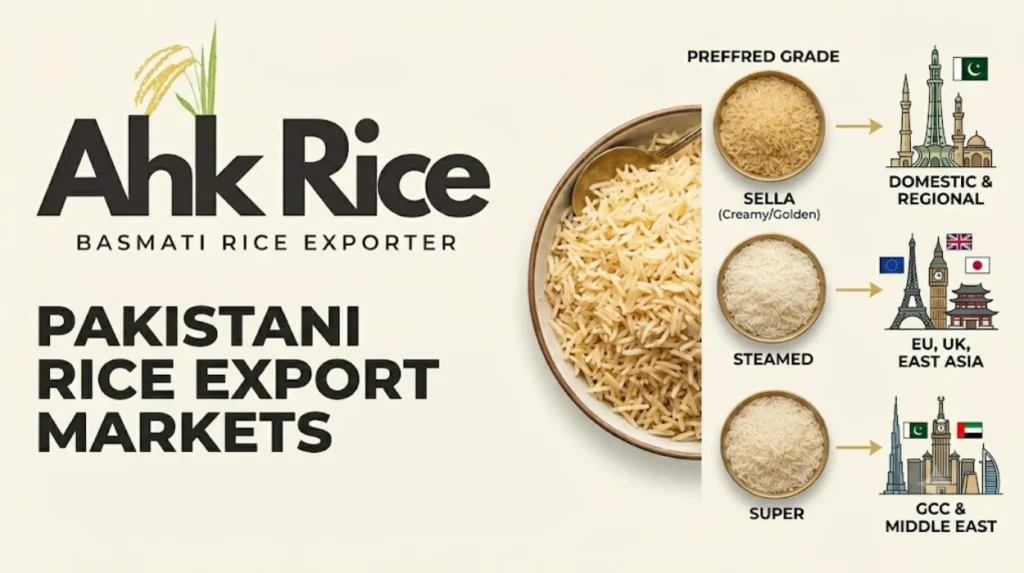
Qatari buyers generally prefer premium 1121 Golden Sella grades, while African and price-sensitive markets often prioritize value-oriented specifications. Market preference influences supplier selection because processing standards and grading requirements vary significantly.
Qatar Market Preferences
Qatari importers frequently procure:
1121 Golden Sella Basmati
Characteristics:
- 8.30 mm+ grain length
- 1–2% broken grains
- Premium visual appearance
- High elongation after cooking
- Long shelf stability
Primary users include:
- Hypermarkets
- Hotels
- Restaurants
- Catering companies
1121 Creamy Sella Basmati
Characteristics:
- Lighter color
- Premium presentation
- Consistent cooking results
Primary users include:
- Retail brands
- Premium distributors
East African Market Preferences
Buyers commonly prioritize:
- Competitive pricing
- Moderate grain length
- Higher volume procurement
- Standard packaging
GCC Market Preferences
Markets including Qatar, UAE, Kuwait, and Oman generally prioritize:
- Long grain appearance
- Consistent cooking quality
- Premium packaging
- Reliable documentation
Market preference directly influences price structures. The next section compares pricing considerations and total procurement costs.
How do price and shelf life comparisons influence supplier selection?
The lowest rice price rarely produces the lowest procurement cost. Shelf life, quality retention, breakage rates, and customer acceptance often create larger financial impacts than small differences in per-ton pricing.
Price Per Metric Ton Comparison
| Grade | Typical Export Price Range (USD/MT) |
|---|---|
| 1121 Golden Sella | $1,050–1,350 |
| 1121 Creamy Sella | $1,000–1,250 |
| Super Kernel Sella | $900–1,100 |
| 1509 Sella | $850–1,050 |
Prices fluctuate according to harvest conditions, freight rates, currency movements, and export demand (source: REAP export data, December 2025).
Shelf Life Comparison
| Grade | Shelf Life |
|---|---|
| Golden Sella | 18–24 months |
| Creamy Sella | 18–24 months |
| Steam Rice | 12–18 months |
| White Rice | 12–18 months |
Golden Sella lasts longer than Steam rice. In a non-climate-controlled warehouse operating above 40°C, Golden Sella typically retains cooking quality for a longer period. For Qatari distributors maintaining larger inventories, this specification reduces stock management risk.
Shelf life advantages become increasingly important when importers maintain inventory buffers for Ramadan demand peaks.
Pricing and shelf life provide useful evaluation metrics, but procurement decisions require a broader framework. The next section presents a structured decision model.
Which supplier selection method works best for different importing situations?
Supplier selection depends on business objectives. Large distributors prioritize consistency, retail brands prioritize customization, and foodservice operators prioritize reliable inventory availability. Matching procurement goals to supplier strengths produces better outcomes than pursuing the lowest quotation.
Decision Framework Table
| Importer Type | Priority | Best Supplier Type | Key Evaluation Factor | Recommended Grade |
|---|---|---|---|---|
| Retail Brand | Packaging | Direct Exporter | Branding Capability | 1121 Golden Sella |
| Foodservice Distributor | Consistency | Integrated Mill | Supply Stability | 1121 Creamy Sella |
| Catering Company | Cost Efficiency | Direct Exporter | Cooking Yield | Super Kernel Sella |
| Wholesaler | Volume Supply | Large Processor | Inventory Availability | 1121 Golden Sella |
| New Importer | Risk Reduction | Verified Exporter | Documentation Compliance | 1509 Sella |
Critical Decision Factors
Importers should compare suppliers using:
- Certifications
- Processing capacity
- Container loading capability
- Product consistency
- Quality records
- Packaging flexibility
- Export documentation
- Customer references
- Market experience
- Logistics performance
When certifications remain current and independently verified, compliance risks decrease substantially.
When processing capacity exceeds annual contract requirements, supply disruptions become less likely during peak demand periods.
Supplier evaluation becomes easier when advantages and disadvantages are assessed objectively. The final section compares the strengths and limitations of each sourcing approach.
What are the pros and cons of different supplier approaches?
Direct exporters provide the highest control, trading companies provide sourcing flexibility, and procurement agents provide verification support. The optimal approach depends on procurement scale, internal expertise, and risk tolerance.
Direct Exporters
Pros:
- Better quality visibility
- Direct communication
- Faster issue resolution
- Competitive pricing
- Custom packaging
Cons:
- Higher qualification effort
- Larger minimum orders
Trading Companies
Pros:
- Multiple sourcing options
- Flexible procurement
- Market knowledge
Cons:
- Reduced traceability
- Additional margins
Procurement Agents
Pros:
- Supplier verification
- Local representation
- Reduced sourcing burden
Cons:
- Additional costs
- Extra communication layer
Qatari importers achieve the best outcomes when supplier comparisons focus on measurable performance indicators rather than quotations alone. Grain quality, processing consistency, certifications, logistics reliability, and supply stability create greater long-term value than short-term price advantages.
Frequently Asked Questions
How do Qatari importers verify Pakistani rice suppliers?
Importers verify suppliers through export records, third-party inspections, certification reviews, factory audits, laboratory testing reports, and customer references. Verification reduces procurement risk and improves supplier reliability.
Which Sella Basmati grade is most popular in Qatar?
1121 Golden Sella remains the most demanded grade because of its extra-long grain length, visual appearance, cooking performance, and premium market positioning.
What certifications should Pakistani rice suppliers have?
Common certifications include ISO 22000, HACCP, Halal certification, phytosanitary compliance, and quality inspection reports. Requirements vary according to importer and retail standards.
Why do Qatari buyers prefer direct exporters?
Direct exporters provide greater visibility into processing, grading, packaging, and quality control. This transparency improves consistency and simplifies issue resolution.
How important is shelf life when comparing suppliers?
Shelf life directly affects inventory management and product quality. Longer shelf life reduces stock losses and supports seasonal demand planning.
What packaging options are commonly used for Qatar?
Common packaging formats include 1 kg, 2 kg, 5 kg, 10 kg, 20 kg, 25 kg, and 40 kg bags. Retail brands often require custom printed packaging with Arabic and English labeling.