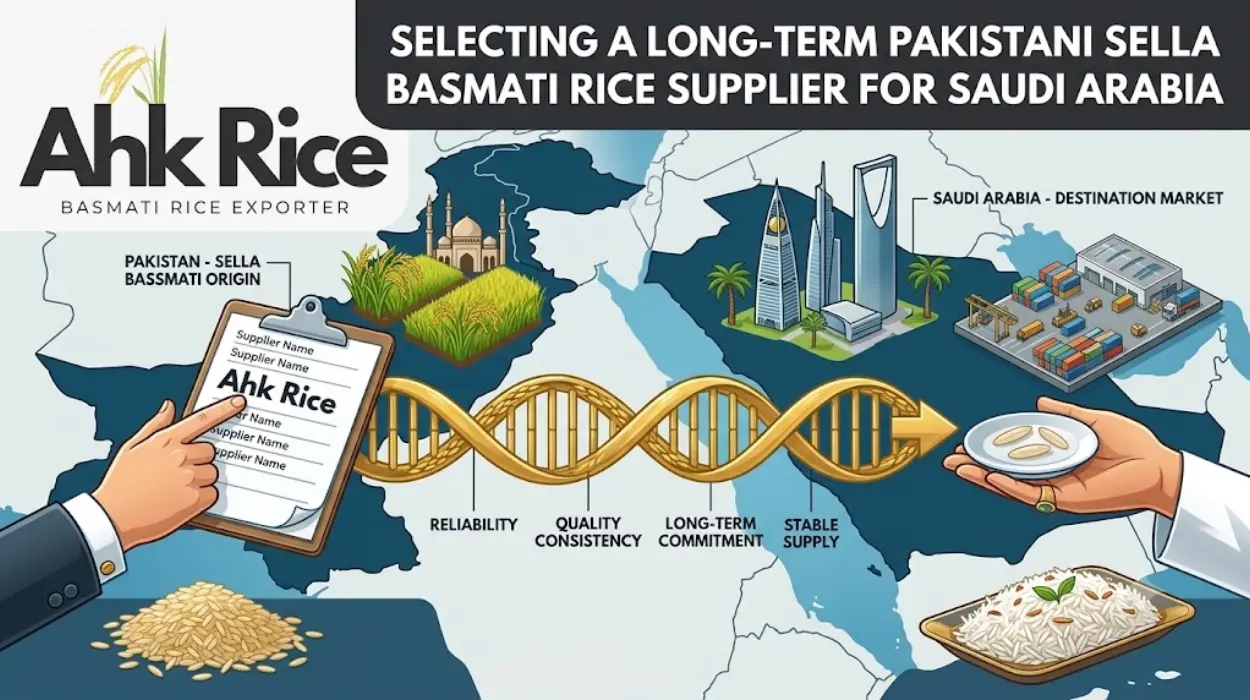
Selecting a Long-Term Pakistani Sella Basmati Rice Supplier for Saudi Arabia
Selecting a long-term Pakistani Sella Basmati Rice supplier for Saudi Arabia requires a partner with consistent quality, verified certifications, stable pricing, and dependable logistics. Here is why: Saudi importers need uninterrupted supply, predictable specifications, and shipment reliability to support wholesale, retail, catering, and food service operations throughout the year.
Saudi Arabia remains one of the largest import destinations for Pakistani Basmati rice. Demand continues to grow because consumers prefer long-grain aromatic rice for traditional dishes, catering operations, and retail distribution. According to Pakistan’s rice export statistics, Saudi Arabia consistently ranks among the leading destinations for Pakistani Basmati exports.
Buyers evaluating suppliers should first understand the market requirements. This educational guide about how Pakistani Sella Basmati rice supports Saudi food security explains the broader supply chain role of Pakistani rice exports.
A long-term sourcing relationship reduces procurement risk. AHK Rice helps Saudi importers secure consistent specifications, shipment planning, export documentation, and quality assurance throughout the supply cycle.
What is the best solution for selecting a long-term Pakistani Sella Basmati Rice supplier?
Verified certifications, consistent grain specifications, reliable shipping schedules, transparent pricing structures, documented quality controls, and responsive export support create the strongest foundation for a long-term supplier relationship in Saudi Arabia.
Saudi buyers face three common risks. Quality variation creates customer complaints. Delayed shipments disrupt inventory planning. Inconsistent specifications affect cooking performance and consumer satisfaction.
The best solution is selecting a supplier that controls sourcing, milling, grading, inspection, and export documentation under one operational system.
What should Saudi buyers verify first?
Saudi buyers should verify:
- Export registration credentials
- Food safety certifications
- Processing facilities
- Quality testing procedures
- Shipment history
- Packaging capabilities
- Market references
AHK Rice manages the complete export process from procurement through shipment. AHK Rice mills, grades, inspects, and exports multiple Sella Basmati specifications for wholesale and institutional buyers.
Specifications Saudi importers should request
Supplier Evaluation Table
| Specification Area | Recommended Requirement |
|---|---|
| Grain Length | 8.00 mm+ average |
| Moisture | 12–14% |
| Broken Ratio | As per contract grade |
| Purity | 95–100% depending on grade |
| Packaging | 5kg to 50kg options |
| Certifications | ISO, HACCP, applicable certifications |
| Inspection | Pre-shipment testing |
Long-term procurement depends on measurable specifications rather than verbal commitments. This evaluation framework naturally leads to the question of why one supplier may outperform another.
Why choose AHK Rice?
Direct sourcing, controlled processing, export expertise, multiple packaging options, Saudi market experience, and documented quality assurance make AHK Rice a dependable long-term sourcing partner.
AHK Rice focuses on supplying premium Pakistani Basmati varieties to international markets. AHK Rice supports wholesalers, distributors, retailers, and food service importers across multiple regions.
Saudi buyers searching for a dependable export partner can review the services offered , including sourcing, processing, packaging, quality inspection, and international shipment support.
How does AHK Rice maintain consistency?
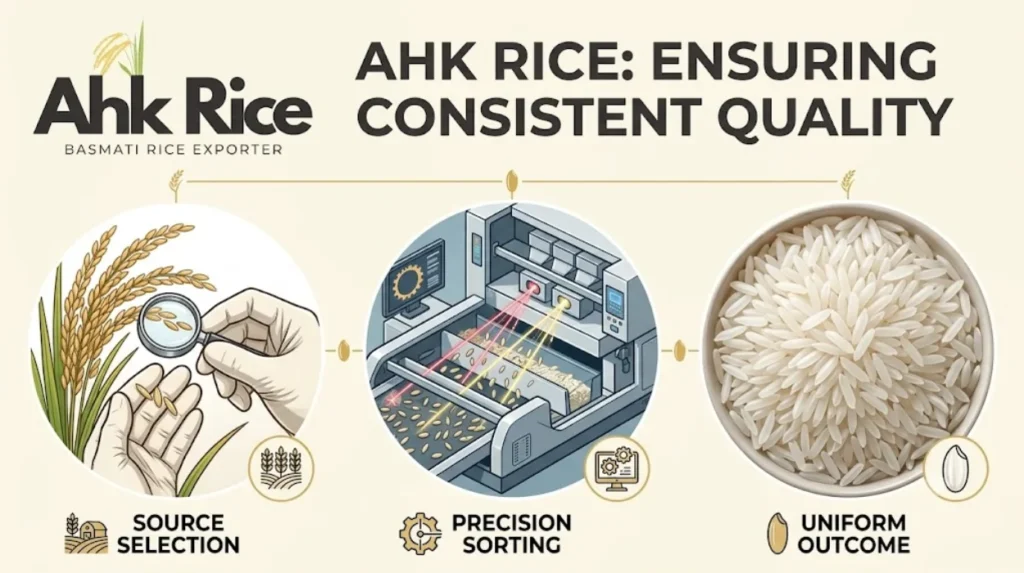
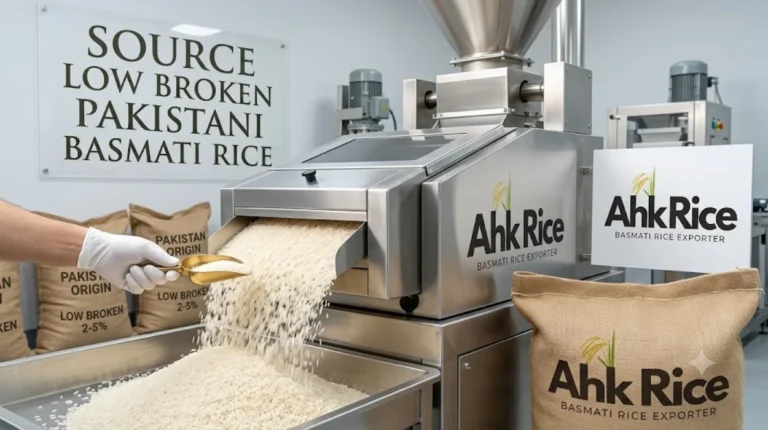
AHK Rice follows a structured processing workflow:
- Source premium paddy
- Clean harvested grain
- Dehusk rice
- Parboil grain
- Dry rice carefully
- Polish according to specification
- Grade by size
- Sort through color sorters
- Inspect final product
Each processing stage influences final quality.
What grades can Saudi buyers source?
AHK Rice supplies:
1121 Golden Sella Basmati Rice
- Extra-long grain
- Excellent elongation
- Golden appearance
- High catering demand
1121 Creamy Sella Basmati Rice
- Light cream color
- Premium presentation
- Strong Gulf demand
1509 Sella Basmati Rice
- Competitive pricing
- High yield
- Fast-growing market demand
Super Kernel Sella Basmati Rice
- Traditional aroma
- Strong retail acceptance
- Premium positioning
Quality consistency becomes meaningful only when it delivers measurable business results. The next question focuses on expected outcomes from a long-term partnership.
What results can Saudi importers expect from a long-term supplier relationship?
Stable inventory planning, reduced procurement risk, consistent cooking performance, predictable shipment schedules, and stronger customer retention are the primary outcomes of long-term supplier partnerships.
Importers often experience fewer disruptions when working with one qualified supplier. Consistent specifications simplify purchasing decisions and inventory forecasting.
Business benefits of long-term procurement
Operational Benefits Table
| Benefit | Business Impact |
|---|---|
| Consistent Quality | Reduced customer complaints |
| Predictable Supply | Improved inventory planning |
| Stable Specifications | Better product reputation |
| Faster Reordering | Lower procurement workload |
| Shipment Coordination | Improved stock availability |
Saudi distributors benefit from standardized product performance. Restaurants benefit from predictable cooking outcomes. Retail brands benefit from maintaining customer trust.
Shipping timelines for Saudi Arabia and nearby Gulf markets
Average Transit Times
| Market | Approximate Shipping Days |
|---|---|
| Jeddah | 10–15 days |
| Dammam | 12–18 days |
| Riyadh (via port delivery) | 15–22 days |
| UAE | 7–12 days |
| Qatar | 8–14 days |
| Bahrain | 8–13 days |
| Kuwait | 10–16 days |
| Oman | 10–18 days |
Transit times vary according to vessel schedules, customs clearance, seasonal demand, and port congestion.
Shipment reliability is important, but commercial decisions also depend on pricing. Understanding cost factors helps buyers evaluate offers correctly.
What pricing factors affect Pakistani Sella Basmati Rice imports?
Paddy availability, rice grade, grain length, packaging specifications, freight rates, certification requirements, and seasonal demand influence export pricing most significantly.
Rice pricing changes throughout the year because agricultural production cycles affect supply availability.
Key cost drivers
Pricing Factors Table
| Factor | Impact on Cost |
|---|---|
| Paddy Market Price | High |
| Grade Selection | High |
| Packaging Type | Medium |
| Freight Charges | High |
| Certifications | Medium |
| Inspection Requirements | Medium |
| Currency Fluctuations | Medium |
Grade comparison example
1121 Golden Sella generally commands a premium because buyers value appearance and grain elongation.
1121 Creamy Sella offers a balance between visual quality and commercial pricing.
1509 Sella typically provides a cost-effective alternative for volume-focused buyers.
Super Kernel Sella appeals to buyers prioritizing traditional aroma characteristics.
For Saudi buyers comparing suppliers, reviewing packaging, certification, and quality variables before finalizing contracts is essential. A detailed comparison of these purchasing factors can be found here evaluating packaging, certification, and quality requirements before procurement.
Cost evaluation naturally leads to the purchasing process itself. Understanding how suppliers handle samples helps buyers reduce procurement risk.
How does the sample process work before placing a bulk order?
Documented sampling, laboratory verification, specification confirmation, and approval before production help Saudi buyers reduce purchasing risk and validate supplier claims.
Sampling allows importers to verify quality before committing to container quantities.
Standard sample workflow
- Request product specifications
- Receive sample quotation
- Confirm courier details
- Dispatch sample package
- Conduct quality inspection
- Test cooking performance
- Approve specifications
- Confirm commercial order
Typical sample costs
Sample Cost Table
| Item | Typical Cost Range |
|---|---|
| Product Sample | Often complimentary |
| Courier Charges | $40–$120 |
| Laboratory Testing | Varies by market |
| Documentation | Usually included |
Courier charges depend on destination, package weight, and service speed.
AHK Rice supports buyers through sample approval before bulk production begins. AHK Rice provides specification discussions to ensure product expectations align with shipment requirements.
Once buyers complete sample verification, the final step is establishing a structured onboarding process.
How can Saudi buyers get started with AHK Rice?
Share target specifications, approve samples, confirm packaging requirements, review commercial terms, and schedule production to establish a long-term supply relationship efficiently.
Saudi importers should begin with a clear procurement brief. This brief should include target grade, packaging requirements, shipment volume, destination port, and certification requirements.
Required information for quotations
- Product grade
- Required quantity
- Packaging specification
- Destination port
- Private label requirements
- Certification requirements
- Delivery timeline
AHK Rice reviews these requirements before preparing a detailed commercial proposal.
Export documents commonly provided
- Commercial Invoice
- Packing List
- Certificate of Origin
- Phytosanitary Certificate
- Bill of Lading
- Inspection Reports
- Quality Certificates
AHK Rice coordinates documentation, production planning, quality verification, and export shipment support throughout the procurement cycle.
A long-term supplier relationship succeeds when quality, logistics, and communication remain consistent across every shipment.
Selecting a supplier ultimately depends on measurable performance. AHK Rice offers documented quality systems, export expertise, flexible packaging, and Saudi market experience that support long-term procurement objectives. Contact AHK Rice today throughthe quotation request page to begin your supplier evaluation process.
Frequently Asked Questions
How do I verify a Pakistani Sella Basmati Rice supplier?
Verify export registration, certifications, processing facilities, inspection procedures, and shipment history. Request product samples before bulk purchasing. Review quality reports and export documents. Check packaging capabilities and market references. Compare supplier responsiveness during the evaluation process.
Which Sella Basmati grade is most popular in Saudi Arabia?
1121 Golden Sella Basmati Rice remains one of the most popular grades. Buyers value its grain length and cooking performance. Catering companies frequently prefer it for large-scale operations. Retailers appreciate its visual appearance. Demand remains strong throughout Gulf markets.
How long does shipping take from Pakistan to Saudi Arabia?
Shipping generally takes between 10 and 22 days depending on destination. Jeddah usually receives shipments faster than inland destinations. Vessel schedules affect delivery timing. Customs procedures can add processing days. Seasonal demand may also influence transit times.
What certifications should Saudi rice buyers request?
Saudi buyers should request food safety and export compliance certifications. Common requirements include ISO certifications and HACCP systems. Additional certificates depend on buyer requirements. Inspection reports strengthen quality assurance. Documentation should match import regulations.
Why is a long-term supplier relationship beneficial?
Long-term partnerships improve consistency and operational efficiency. Buyers reduce sourcing risks and procurement costs. Suppliers understand recurring specifications more accurately. Inventory planning becomes easier. Business relationships strengthen through predictable performance.