Comparing Packaging and Private Label Options for UAE Rice Importers
Packaging and private label strategies for UAE rice importers determine cost per MT, retail positioning, and brand control. Here is why: packaging type directly affects import economics, shelf life stability in humid Gulf storage conditions, and supermarket shelf acceptance, while private label arrangements define margin ownership and long-term distribution leverage across UAE retail channels.
UAE rice importers increasingly align sourcing strategies with structured market education such as Pakistani Sella Basmati Rice Trade Opportunities in the UAE to understand how packaging impacts trade margins and buyer segmentation.
What are the available solutions?
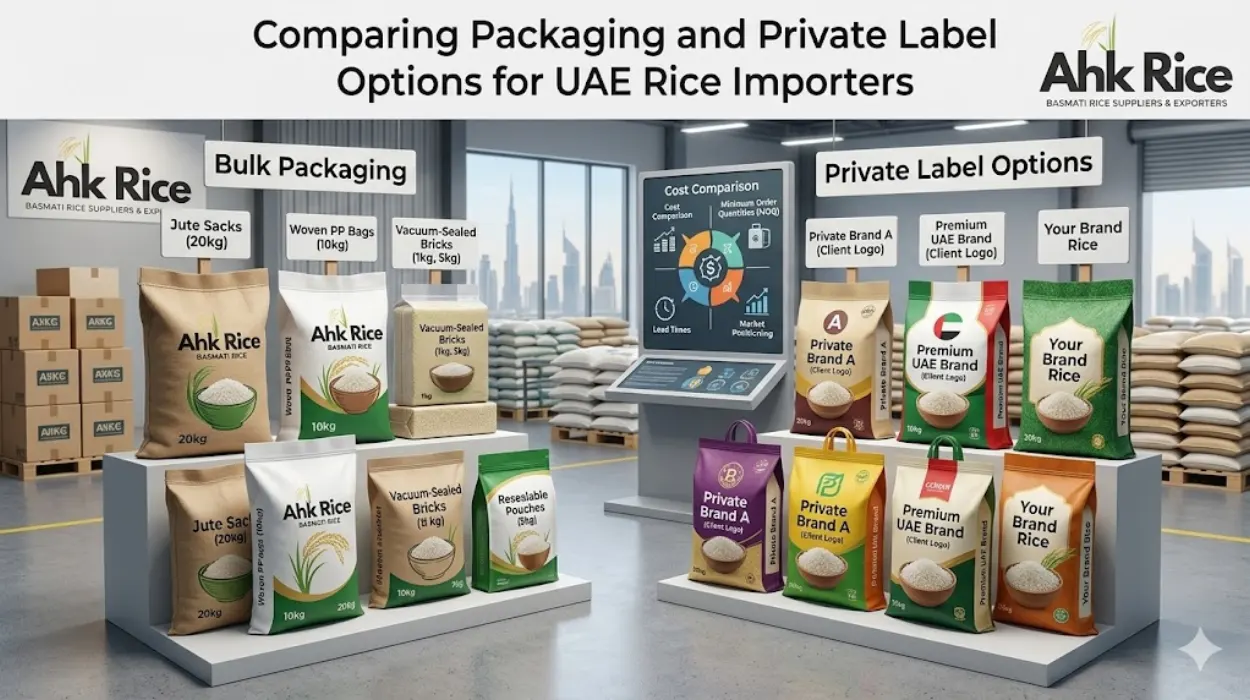
Importers in UAE choose between bulk shipment, exporter-branded packaging, and private label OEM solutions. Each option changes cost per MT, retail control, and branding flexibility. Private label provides highest margin control, while bulk supply offers lowest entry cost for buyers.
Bulk packaging defines the base-level procurement model for UAE rice importers. Rice loads and ships in 25kg, 40kg, or 50kg PP or jute bags. This method reduces packaging cost and speeds dispatch cycles from Pakistan mills.
Exporter-branded packaging positions rice under AHK Rice or similar exporter identity. The exporter mills, sorts, and grades rice, then prints standardized retail-ready branding for UAE distributors. This model improves trust in consistency but limits local brand ownership.
Private label OEM allows UAE importers to control brand identity. The exporter mills, dehusks, polishes, grades, and packages rice under buyer-owned labels. This model dominates supermarket chains where branding drives repeat purchases.
Bulk re-packaging in UAE enables importers to load rice in large bags, then repackage locally into 1kg–5kg retail packs. This method reduces shipping cost per MT but increases compliance requirements for UAE labeling laws.
How do different approaches compare?
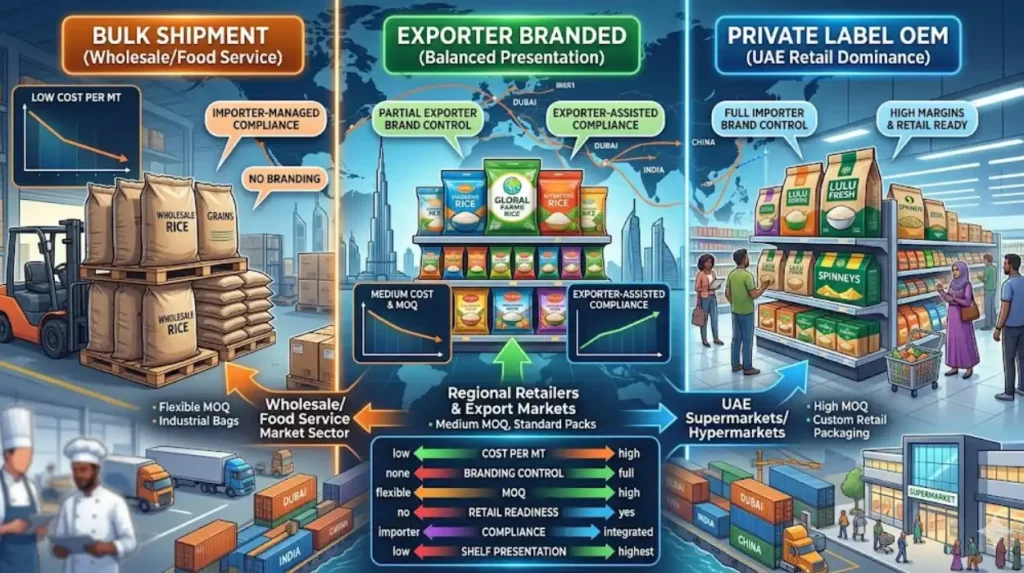
Bulk packaging reduces cost per MT but limits branding. Exporter-branded packs ensure consistent quality presentation. Private label enables full retail ownership and higher margins. In UAE retail channels, private label dominates supermarkets, while bulk dominates food service and wholesale distribution.
Specification comparison table (7 attributes)
| Attribute | Bulk Shipment | Exporter Branded | Private Label OEM |
|---|---|---|---|
| Packaging type | Industrial PP/jute bags | Standardized branded packs | Custom retail packaging |
| Branding control | None | Partial exporter control | Full importer control |
| Cost per MT | Lowest | Medium | Higher |
| Shelf presentation | Low | High | Highest |
| MOQ requirement | Flexible | Medium | High |
| Compliance handling | Importer-managed | Exporter-assisted | Fully integrated |
| Retail readiness | No | Yes | Yes |
Bulk shipment prioritizes cost efficiency for wholesalers. Private label prioritizes brand dominance in supermarkets. Exporter branding balances both with controlled presentation consistency.
Market region comparison (UAE vs Saudi Arabia)
| Factor | UAE Market | Saudi Arabia Market |
|---|---|---|
| Grade preference | 1121, 1509 premium basmati | 1509 medium grain demand |
| Packaging demand | 1kg–5kg retail packs | 5kg–10kg bulk retail |
| Price per MT | Higher due to retail demand | Moderate import pricing |
| Shelf life preference | 12–18 months | 10–16 months |
| Channel focus | Supermarkets + hospitality | Wholesale + retail hybrids |
UAE retail ecosystem demands stronger branding and smaller pack sizes. Saudi Arabia prioritizes cost efficiency and mid-volume packaging structures.
Shelf life comparison insight
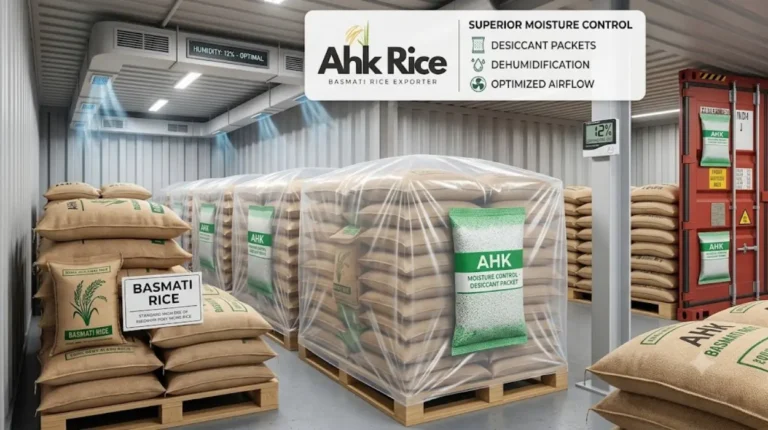
Golden Sella maintains stability longer due to parboiling and dehydration. In UAE warehouses with 40°C ambient heat, Golden Sella retains quality for up to 18 months. Steam rice typically maintains optimal quality for 12 months under similar conditions.
For Iraq and GCC re-export buyers using non-climate-controlled storage, Golden Sella remains the preferred specification due to extended shelf stability and reduced breakage risk.
Which method works best for different cases?
Food service buyers prefer bulk shipments due to lower cost and high volume usage. Retail supermarkets prefer private label for brand control and margins. Importers targeting mixed channels use hybrid models combining bulk sourcing with localized packaging and retail customization.
Food service distributors in UAE hotels and catering companies prioritize bulk supply. They mill, cook, and serve rice at scale, where branding has no impact on purchasing decisions.
Supermarket importers prioritize private label OEM. They require consistent bag design, barcode compliance, and retail shelf appeal to compete with established FMCG rice brands.
Hybrid importers combine both systems. They import bulk rice from Pakistan, then grade, sort, and repackage locally into multiple retail SKUs. This model increases flexibility across multiple sales channels.
Pros and cons (with examples)
Private label increases margins and strengthens brand ownership but requires packaging investment and regulatory compliance. Bulk supply minimizes setup cost and speeds procurement but limits branding. Exporter branded packaging ensures consistency yet reduces differentiation in competitive UAE rice retail markets.
Private label advantages include strong brand identity in UAE supermarkets. For example, retail chains prefer exclusive rice brands for shelf differentiation and customer loyalty.
Private label disadvantages include higher upfront cost. Importers must invest in packaging design, barcode systems, and labeling compliance aligned with UAE municipality regulations.
Bulk supply advantages include fast procurement cycles. Importers in Dubai wholesale markets load rice in large quantities for redistribution without packaging delays.
Bulk supply disadvantages include zero branding leverage. Importers compete only on price, which reduces long-term margin stability.
Exporter-branded packaging offers middle-ground efficiency. It ensures consistent mill quality from Pakistan exporters like AHK Rice but limits local brand expansion opportunities.
Decision factors
Decision factors include target market channel, budget per MT, required shelf life, packaging size, and branding strategy. UAE importers prioritize shelf stability for humid storage, compliance labeling for retail approval, and cost efficiency when selecting between bulk and private label.
Importers evaluate demand structure before selecting packaging strategy. Retail-focused businesses require branding-first models, while wholesale distributors prioritize cost-per-ton efficiency.
Read our BOFU Guide here:
How UAE Businesses Source Pakistani Sella Basmati Rice Directly from Exporters
Packaging size determines market entry success. UAE supermarkets prefer 1kg–5kg packs for household consumption, while catering buyers require 25kg bulk formats.
Shelf stability influences product positioning. Golden Sella performs better in long distribution cycles, especially in coastal humidity zones across UAE ports.
Compliance labeling determines retail approval speed. UAE authorities require barcode integration, nutritional labeling, and Arabic-English dual packaging for retail shelves.
Decision framework table (5-row)
| Factor | Bulk Model | Exporter Branded | Private Label | Hybrid Model | UAE Suitability |
|---|---|---|---|---|---|
| Cost efficiency | High | Medium | Low | Medium | High |
| Branding control | None | Medium | High | High | High |
| Shelf readiness | Low | High | High | High | High |
| Operational complexity | Low | Low | High | Medium | Medium |
| Profit margin potential | Low | Medium | High | High | High |
Hybrid models consistently perform best for diversified UAE importers handling both retail and food service channels.
AHK Rice continues to support UAE importers with structured milling, grading, and private label packaging systems designed for bulk, retail, and hybrid distribution models across 15+ export destinations.
Frequently Asked Questions
What is the difference between bulk and private label rice packaging?
Bulk packaging involves importing rice in large bags like 25kg to 50kg with no branding, mainly for wholesalers and food service buyers. Private label packaging means the rice is packed under the importer’s own brand with custom labeling, targeting retail supermarkets and higher margins.
Which packaging option is most cost-effective for UAE importers?
Bulk shipment is the most cost-effective option because it reduces packaging and branding costs per metric ton. However, it offers limited brand control, making it more suitable for wholesale and catering businesses rather than retail supermarkets.
Why is private label popular in UAE supermarkets?
Private label is popular because it gives retailers full control over branding, pricing, and customer loyalty. It also helps supermarkets differentiate their rice products from competitors and achieve higher profit margins per SKU.
Can importers combine bulk and private label strategies?
Yes, many UAE importers use a hybrid model. They import rice in bulk to reduce costs and then repackage it locally into private label retail packs. This approach supports both wholesale distribution and supermarket sales.
How does packaging affect rice shelf life in UAE conditions?
Packaging plays a key role in protecting rice from heat and humidity. High-quality sealed packaging, especially in private label formats, helps maintain freshness for up to 12–18 months in UAE storage conditions, depending on rice type.