Step-by-Step Guide for Chinese Importers Buying Rice Directly from Pakistan
Step-by-step direct importing from Pakistan gives Chinese buyers lower landed cost, stronger grade control, and predictable supply chains. This approach works because Pakistan’s basmati ecosystem is export-structured, mill-integrated, and quality-standardized for long grain rice demand in China and Asia.
The process becomes even clearer when buyers first understand demand patterns and grade performance. Read this foundation in the TOFU article: Which Pakistani Rice Varieties Are Driving Export Growth in China in 2026, which explains variety-level demand drivers and grading evolution in Chinese retail and wholesale channels.
What are the available solutions?
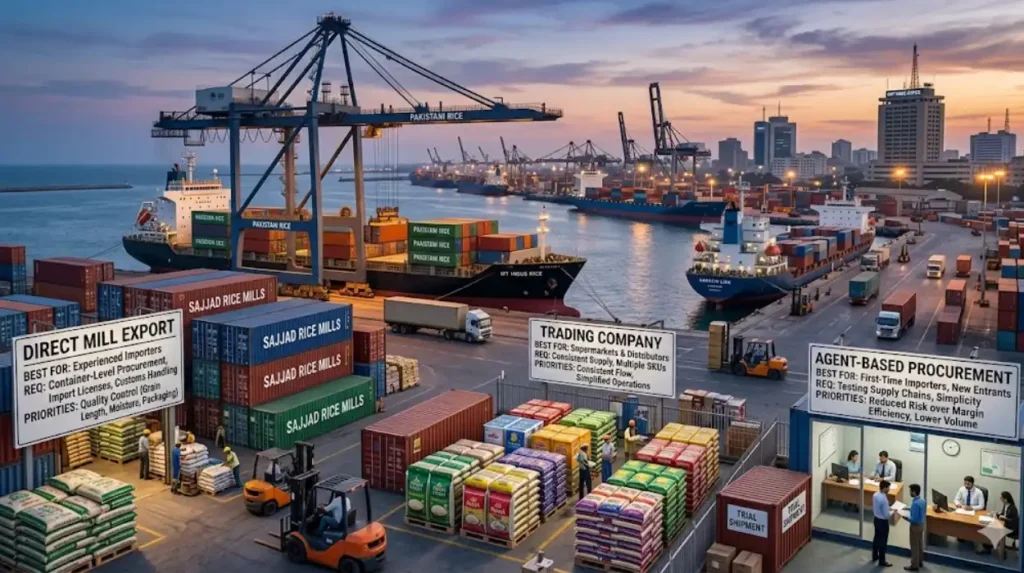
Chinese importers source Pakistani rice through three main channels: direct mill export, trading company aggregation, and agent-based procurement, each offering different control levels, pricing structures, and documentation handling speeds.
Direct mill export allows buyers to contract directly with exporters such as AHK Rice. Mills cultivate, mill, dehusk, polish, grade, and dispatch rice in export-ready containers. This method reduces intermediaries and improves price transparency.
Trading companies aggregate supply from multiple mills. They standardize quality, re-grade lots, and manage export documentation. This method stabilizes inconsistent harvest quality but adds margin layers.
Agent-based procurement works through intermediaries in China or Pakistan. Agents source, negotiate, and consolidate shipments. This method reduces buyer workload but limits control over milling and grading parameters.
Specification comparison of sourcing solutions
| Attribute | Direct Mill Export | Trading Company | Agent-Based Procurement |
|---|---|---|---|
| Price Control | High transparency | Medium markup | High markup |
| Quality Consistency | High control at source | Standardized lots | Variable control |
| Documentation Speed | Fast export cycle | Medium processing time | Slower due to layers |
| MOQ Flexibility | Medium to high | Low to medium | Low |
| Traceability | Full batch-level | Partial | Limited |
| Risk Level | Low operational risk | Medium | Higher mismatch risk |
| Custom Packaging | Fully customizable | Limited customization | Minimal control |
Direct mill export leads in traceability and customization because milling and grading occur at origin facilities under export supervision. Trading companies reduce variability by blending lots. Agents prioritize convenience over specification control.
With sourcing models defined, the next step is understanding how these approaches perform under real trade conditions.
How do different approaches compare?
Direct mill export delivers the lowest landed cost and highest specification control, while trading companies deliver smoother logistics, and agents deliver convenience at higher total procurement cost across shipment cycles.
Direct mill export reduces per-ton cost by eliminating intermediary margins. Buyers negotiate directly with mills on grading, moisture, and packing. This model improves control but requires stronger import compliance capability.
Trading companies add structured handling. They mill, grade, inspect, certify, and then consolidate shipments. This reduces buyer-side complexity but increases cost per metric ton.
Agent-based systems prioritize ease. Agents coordinate sourcing, dispatch, and shipping documentation. This reduces operational workload but increases dependency on third-party negotiation outcomes.
Market region comparison: China vs Gulf buyers
Chinese importers prioritize aroma retention, grain length consistency, and retail branding formats. Gulf buyers prioritize bulk durability, long storage life, and catering-scale packaging.
In China retail channels, 1121 Basmati and Super Kernel dominate premium shelves. In Gulf markets, Golden Sella and parboiled variants dominate institutional catering.
Price differences per MT:
- China premium imports: USD 950–1,250 per MT
- Gulf catering imports: USD 820–1,100 per MT
Shelf life differences:
- Golden Sella maintains quality for 18 months in 40°C storage conditions
- Steam rice maintains quality for 12 months under similar conditions
- Raw basmati retains aroma for 9–12 months depending on storage humidity
Golden Sella lasts longer than Steam. In UAE warehouse conditions at 40°C, Golden Sella maintains structural integrity for 18 months. Steam requires rotation within 12 months for stable cooking performance.
With performance differences established, the next step is selecting the best sourcing method for each buyer type.
Which method works best for different cases?
Direct mill export works best for experienced Chinese importers handling container-level procurement, while trading companies suit retail distributors, and agents suit new entrants testing Pakistani rice supply chains.
Direct mill export suits buyers with established import licenses and customs handling capability. These buyers require strict control over grain length, moisture level, and packaging design.
Trading companies suit supermarket chains and distributors. They need consistent supply across multiple SKUs without managing milling-level inspection.
Agent-based procurement suits first-time importers. These buyers prioritize simplicity over margin efficiency and accept higher per-ton cost for reduced operational risk.
Step-by-step import workflow for direct sourcing
Clean the paddy at mill intake to remove foreign matter.
De-husk the grain to separate brown rice layers.
Polish the grain to improve appearance and surface finish.
Grade the rice by length, broken percentage, and whiteness.
Sort batches using color sorting and density separation systems.
Inspect moisture content and certify export compliance.
Load containers under fumigation and temperature control standards.
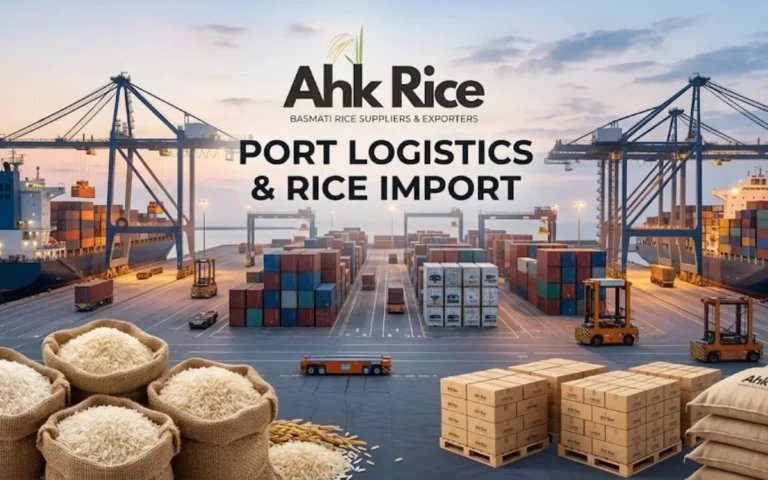
Dispatch shipments through Karachi or Port Qasim logistics corridors.
This workflow ensures consistent export compliance and aligns Pakistani milling systems with Chinese import inspection requirements.
With method selection clarified, the next step is evaluating strengths and weaknesses.
Pros and cons (with examples)
Direct mill export offers lowest cost and highest control but requires import expertise, while trading companies reduce complexity at moderate cost, and agents minimize effort but increase price and variability.
Direct mill export delivers strong pricing efficiency. A Chinese importer sourcing 10 containers monthly reduces per-MT cost by removing intermediary margins. This improves margin at retail level.
Trading companies improve consistency. A Guangzhou distributor receives uniform grain batches across shipments. This reduces customer complaints in supermarket supply chains.
Agent-based procurement simplifies entry. A new importer in Shanghai tests 1–2 containers without building direct supplier relationships. This reduces entry friction but increases long-term cost.
Golden Sella improves storage economics. In high-temperature logistics environments, Golden Sella maintains stability longer than Steam or Raw variants. This reduces spoilage risk in bulk storage systems.
Trade-offs appear in control and scalability. Higher control requires operational capacity. Lower control reduces efficiency at scale.
With pros and cons established, the next section focuses on decision-making factors.
Decision factors
Import decisions depend on procurement volume, storage environment, target market segmentation, and buyer operational capacity across customs, logistics, and quality inspection systems.
Procurement volume determines sourcing channel. Large-volume buyers select direct mill export for cost efficiency. Small buyers choose agents for flexibility.
Storage environment determines rice type. Hot climates require Golden Sella for longer shelf life. Controlled warehouses allow Steam or Raw basmati variants.
Market segmentation defines grade selection. Chinese retail prefers aromatic long grain. Gulf catering prefers parboiled durability grades.
Operational capacity defines sourcing complexity. Experienced importers manage direct mills. New importers rely on trading companies or agents.
5-row decision framework for importers
| Factor | Direct Mill Export | Trading Company | Agent-Based |
|---|---|---|---|
| Import Experience | High required | Medium required | Low required |
| Monthly Volume | High efficiency | Medium scale | Low scale |
| Storage Conditions | Flexible control | Moderate control | Limited control |
| Cost Optimization | Maximum savings | Balanced cost | Higher cost |
| Quality Control | Full control | Standardized control | Low control |
Direct mill export consistently ranks highest in cost efficiency and traceability. Trading companies rank highest in operational balance. Agents rank highest in simplicity.
With decision factors evaluated, the structured pathway for Chinese importers becomes clear: select sourcing channel, match rice grade to market, and align logistics with storage conditions.
The integrated sourcing model between Pakistan mills and Chinese importers continues evolving as demand for premium basmati expands across retail and food service sectors. This trend strengthens structured trade relationships and improves grade transparency across supply chains.
Final insight connects both demand evolution and sourcing strategy in the BOFU analysis: China’s Growing Appetite for Premium Imported Rice and What It Means for Pakistani Exporters.
FAQ
What is the best sourcing method for importing rice from Pakistan to China?
The best method depends on your experience and volume. Direct mill export is ideal for large importers who want lower costs and full control. Trading companies suit medium-scale buyers who need stable quality. Agents are better for beginners who want easier handling with less operational responsibility.
Which Pakistani rice varieties are most in demand in China?
Chinese buyers mostly prefer long-grain aromatic varieties like 1121 Basmati and Super Kernel Basmati. These types are popular in retail markets because of their fragrance, grain length, and cooking texture, which match premium consumer preferences in China.
What documents are required for importing rice from Pakistan?
Typical documents include the commercial invoice, packing list, bill of lading, phytosanitary certificate, and certificate of origin. Depending on regulations, import permits and quality inspection certificates may also be required by Chinese customs authorities.
How long does shipping rice from Pakistan to China take?
Shipping usually takes 15 to 30 days depending on the port of departure, shipping line, and destination port in China. Additional time may be required for customs clearance, inspection, and inland transportation.
What is the difference between direct mill export and agents?
Direct mill export connects buyers directly with rice mills, offering lower cost and better quality control. Agents act as intermediaries, managing sourcing and logistics but adding extra margins and reducing transparency over grading and production processes.