Super Kernel Basmati Rice Price Per Ton for Importers
Super Kernel Basmati Rice price per ton for importers is determined by grade selection, processing method, and destination market compliance. Here is why: export pricing varies with milling yield, grain length consistency, and shipment volume, while AHK Rice structures supply based on verified grading, inspection protocols, and logistics efficiency.
Importers evaluate Super Kernel Basmati based on aroma retention, elongation ratio, and shipment stability across long routes. AHK Rice ensures each consignment is milled, polished, graded, and dispatched under export-ready standards to maintain uniform pricing logic across UAE, Saudi Arabia, Iraq, and African markets.
Import decisions are rarely price-only. They depend on sample approval, shipping timelines, and certification readiness. To understand aroma strength behind this grade, read the foundational guide: Why Super Kernel Basmati Has a Naturally Strong Aroma.
What is the best solution for Super Kernel Basmati Rice Price Per Ton for Importers?
The best solution is sourcing directly from an export-integrated supplier like AHK Rice that controls milling, grading, and dispatch under one system, ensuring consistent per-ton pricing between $880–$1,250 depending on grade, polish level, and destination compliance requirements.
Super Kernel Basmati pricing becomes stable when the supply chain is vertically controlled. AHK Rice cultivates procurement channels, mills paddy, dehusks grain, polishes rice, and grades Super Kernel under export QC.
Importers face price volatility when intermediaries control sourcing. AHK Rice removes this by direct export contracting and standardized grading.
Processing control and price stability
- Clean paddy removal of foreign material
- De-husked grain separation by density
- Polished rice finishing for export gloss
- Graded length sorting for consistency
- Certified moisture stabilization under 13%
These steps stabilize export pricing and reduce rejection risk at destination ports.
AHK Rice ensures every shipment aligns with contract-grade specifications, which reduces renegotiation during customs inspection.
Bridge: With the optimal sourcing model defined, the next step is understanding why AHK Rice Super Kernel service structure directly affects importer profitability.
Why choose Super Kernel Basmati Rice from AHK Rice service page?
Importers choose AHK Rice because it delivers traceable Super Kernel Basmati with consistent export grading, contract-based pricing, and verified inspection reports, reducing procurement risk and ensuring repeat supply stability at scale across GCC and African bulk rice distribution channels.
The Super Kernel Basmati Rice service page centralizes procurement, sample booking, and export coordination.
AHK Rice integrates procurement, milling, and shipping under one operational framework. This reduces delays and eliminates fragmented supplier communication.
Export reliability features
- Milling consistency controlled under export-grade polishing lines
- Moisture balance maintained for long-distance shipment stability
- Grain length uniformity verified before loading containers
- Quality inspection completed before export certification release
- Packaging strength optimized for 25kg and 50kg PP bags
AHK Rice ensures all export batches pass inspection before dispatch, reducing rejection risk at destination ports.
Importers in UAE hospitality sector prefer AHK Rice because consistency reduces kitchen-level variation.
Iraq and Yemen buyers rely on AHK Rice due to non-climate-controlled storage conditions requiring stable grain integrity.
Bridge: With supplier advantages established, the next factor importers evaluate is shipping time and logistics reliability across different markets.
What shipping time and logistics should importers expect?
Shipping timelines from AHK Rice range between 8–28 days depending on destination, with UAE receiving within 8–12 days, Saudi Arabia 10–15 days, Iraq 18–22 days, and East Africa 22–28 days under standard FOB export scheduling and container availability.
AHK Rice loads containers after inspection, fumigates cargo, and dispatches via Karachi port under export documentation compliance.
Logistics timing depends on vessel schedule, port congestion, and customs clearance efficiency at destination ports.
Market shipping breakdown
- Load containers at Karachi port within 48–72 hours after final inspection
- Dispatch vessels weekly depending on freight allocation
- Ship UAE cargo via Jebel Ali corridor for fastest clearance
- Route Saudi shipments through Dammam or Jeddah entry points
- Deliver Iraq cargo via Umm Qasr with extended inland clearance time
AHK Rice coordinates freight forwarders to reduce layover delays in transshipment hubs.
UAE importers benefit from shortest cycle due to direct shipping lanes.
Iraq importers experience longer cycles due to inland logistics and border clearance.
Bridge: With logistics timelines defined, importers must also evaluate sampling procedures and inspection costs before confirming bulk orders.
What sample process and inspection costs apply before bulk import?
AHK Rice provides export-grade Super Kernel samples within 5–7 days, typically costing $50–120 per shipment depending on courier type, sample weight (5–10 kg), and destination, ensuring buyers verify grain quality, aroma, and elongation before committing to full container orders.
Sampling is the most critical decision stage in rice import contracts.
AHK Rice prepares samples from the same milling batch used for bulk export.
Sample preparation process
- Select representative paddy from export-grade lot
- Mill sample under identical polishing conditions
- Grade sample by grain length and broken ratio
- Pack sealed sample bags for international courier dispatch
- Dispatch via DHL, FedEx, or Aramex depending on region
Inspection certificates are attached with sample dispatch when required.
Buyers in Saudi Arabia and UAE typically approve within 3–5 days after sample receipt.
African buyers may request second-stage confirmation due to humidity variation concerns.
AHK Rice ensures all sample batches reflect actual export consignment quality to prevent deviation disputes.
Bridge: With sampling understood, the next decision factor is pricing structure and what drives per-ton cost variation in Super Kernel Basmati exports.
What pricing factors affect Super Kernel Basmati Rice per ton cost?
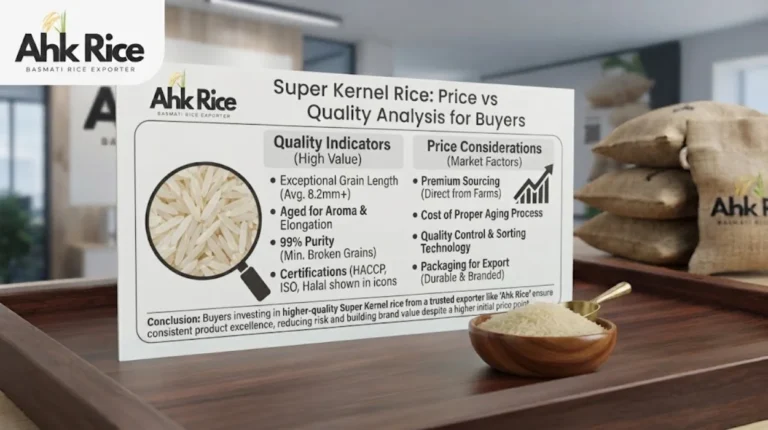
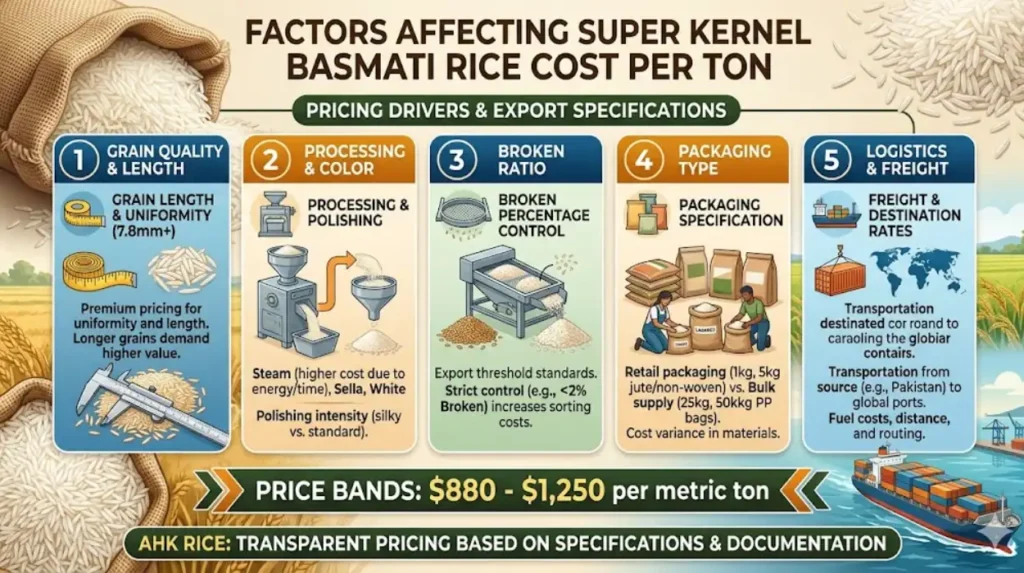
Super Kernel Basmati per-ton pricing is influenced by grain length, polishing level, broken ratio, export certification costs, packaging type, and destination freight rates, with AHK Rice maintaining structured pricing bands between $880 and $1,250 per metric ton depending on specification depth and market demand.
AHK Rice structures pricing based on measurable export parameters rather than fluctuating negotiation cycles.
Cost differences arise from processing intensity and logistics routing.
Key pricing drivers
- Grain length uniformity above 7.8 mm standard
- Polishing intensity for white or steam variants
- Broken percentage controlled under export thresholds
- Packaging specification for retail or bulk supply
- Freight charges depending on destination port distance
AHK Rice offers pricing transparency through contract-based export documentation.
Steam variants typically cost higher due to parboiling energy input and longer processing cycles.
White Super Kernel is preferred for GCC hospitality due to fast cooking behavior.
MOFU comparison insights between variants are available in Super Kernel White vs Steam Basmati: Which One Should You Import?.
AHK Rice ensures pricing consistency through batch-controlled milling schedules.
Bridge: With pricing drivers clarified, importers must now understand how to initiate procurement and structure their import process correctly.
How to get started with Super Kernel Basmati import from AHK Rice?
Getting started requires selecting grade specification, requesting sample approval, confirming contract pricing, arranging inspection clearance, and finalizing shipment booking, with AHK Rice managing full export documentation, container loading, and dispatch coordination for seamless import execution.
AHK Rice simplifies import onboarding by consolidating procurement steps into structured export workflows.
Importers reduce risk by following a standardized engagement model.
Import execution steps
- Select Super Kernel grade specification and packaging type
- Request sample shipment for quality verification
- Confirm per-ton pricing and contract volume
- Approve inspection and export certification documents
- Book container allocation and shipping schedule
AHK Rice coordinates customs documentation including phytosanitary certificates and fumigation reports.
UAE buyers typically complete full cycle within 10–14 days after sample approval.
African buyers may extend confirmation phase due to banking and LC processing timelines.
AHK Rice ensures documentation accuracy to prevent port delays and demurrage charges.
Each shipment is tracked from milling unit to port loading for transparency.
Super Kernel Basmati Rice pricing decisions become predictable when importers align with structured sourcing, controlled milling, and verified logistics systems.
AHK Rice integrates cultivation sourcing, milling precision, grading control, and export dispatch into a single procurement model that stabilizes cost and quality across global markets.
AHK Rice continues to supply consistent Super Kernel Basmati batches across GCC, African, and Asian trade corridors with contract-based reliability.
AHK Rice ensures every export cycle maintains specification integrity from mill to destination warehouse.
For bulk procurement and verified export pricing, connect directly through the official request channel at /request-a-quote/
Frequently Asked Questions
What is Super Kernel Basmati Rice price per ton for importers?
The price of Super Kernel Basmati Rice per ton usually ranges between $880 and $1,250 depending on grain quality, polish level, packaging, and destination requirements. Exporters like AHK Rice adjust pricing based on grade selection and shipping conditions.
What factors affect Super Kernel Basmati Rice pricing?
Pricing depends on grain length, broken percentage, polishing method, export certification costs, packaging type, and freight charges. Higher quality grading and stricter export compliance typically increase the per-ton cost.
What is the minimum order quantity for importers?
Most exporters require a minimum order of one full container load (usually 20–25 metric tons). This helps maintain stable pricing and ensures efficient logistics and shipping arrangements.
How long does shipping take for import orders?
Shipping time varies by destination. UAE typically takes 8–12 days, Saudi Arabia 10–15 days, Iraq 18–22 days, and African markets 22–28 days depending on port clearance and vessel schedules.
How can importers ensure rice quality before buying?
Importers can request pre-shipment samples, review inspection certificates, and verify grading reports. Reliable suppliers like AHK Rice provide batch-matched samples to ensure consistency with export shipments.