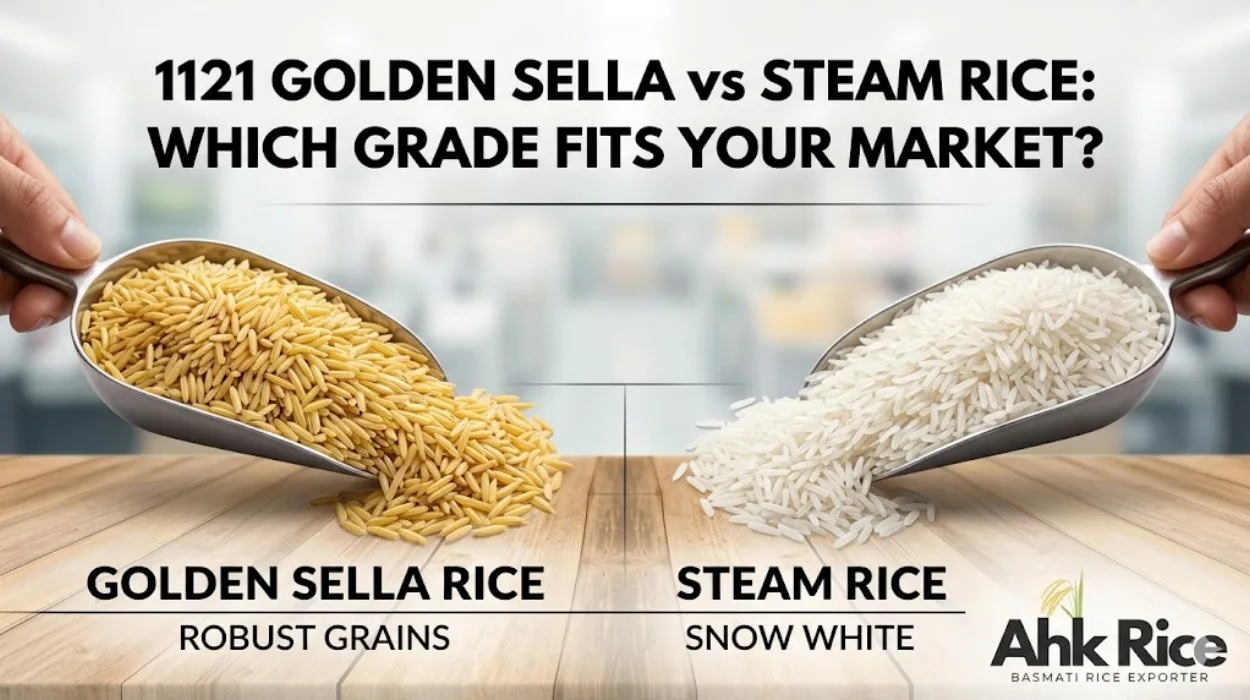
1121 Golden Sella vs Steam Rice: Which Grade Fits Your Market?
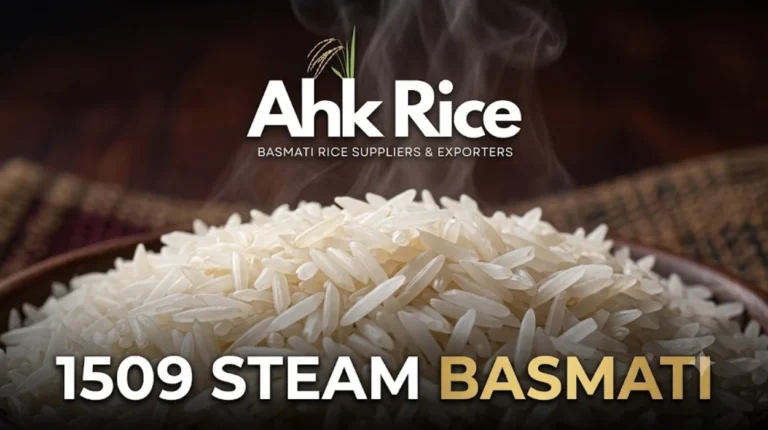
1121 Golden Sella fits high-heat bulk storage markets, while 1121 Steam Rice fits premium cooking quality markets with softer texture and faster hydration. Here is why: processing methods create different starch structure, moisture retention, grain strength, and export performance across climate-driven import regions and foodservice supply chains globally.
The difference becomes clearer when buyers evaluate processing stages, logistics constraints, and end-use cooking expectations. A detailed understanding of basmati rice processing standards is essential for correct selection, as explained in this foundational guide: understanding basmati rice processing and export grades.
What are available solutions?
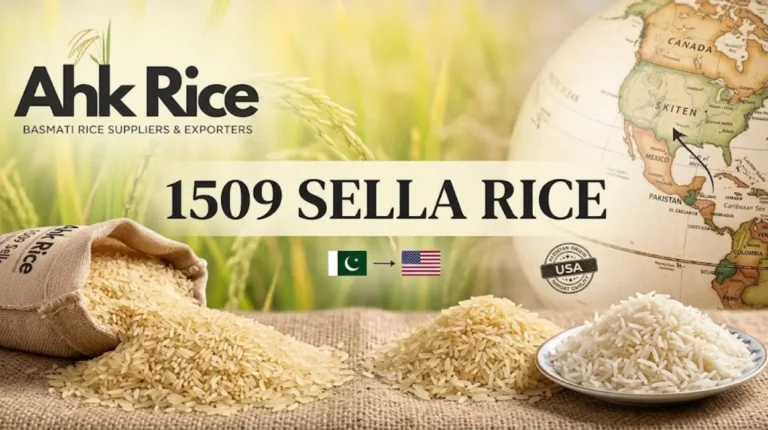
Available solutions include 1121 Golden Sella parboiled rice, 1121 Steam rice, and 1121 white raw rice, each processed through different milling and heat treatments that control texture, cooking time, shelf life, and export suitability for distinct market requirements globally today.
1121 Golden Sella rice goes through parboiling before milling. The process forces nutrients into the grain and strengthens starch structure. 1121 Steam rice uses controlled steaming after dehusking to retain aroma and softness. White raw rice is milled directly without thermal treatment.
Clean the paddy before processing begins.
De-husk the grain to remove the outer shell.
Parboil or steam the rice to stabilize starch.
Dry the grain under controlled moisture conditions.
Mill and polish to achieve export grade standards.
Sort by length and broken percentage levels.
Grade by export specification requirements per market.
Processing contrast defines product behavior in trade. Golden Sella shows higher resistance to breakage during transport. Steam rice shows better aroma release during cooking. White rice shows faster cooking but lower shelf stability in humid environments.
Colour sorting ensures uniform grain appearance.
Moisture control stabilizes storage performance.
Fumigation protects against insect contamination.
Length grading separates 1121 premium kernels.
Polishing defines final grain surface texture.
How do different approaches compare?
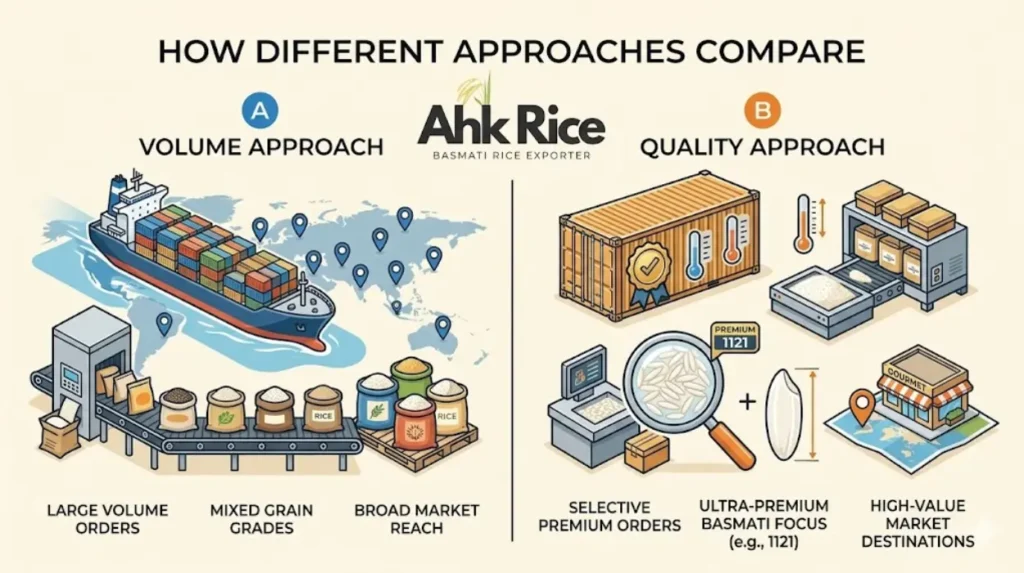
Golden Sella rice delivers firmer texture, longer shelf life, and higher tolerance to heat, while Steam rice offers softer grain separation, faster cooking, and higher aroma retention, making each suitable for distinct import markets and processing requirements across regions globally.
Golden Sella rice undergoes partial gelatinization during parboiling. Steam rice retains more natural starch behavior. These differences directly impact grain elongation, hydration speed, and cooking stability in large-scale foodservice operations and retail packaging systems.
Specification Comparison Table (1121 Golden Sella vs Steam Rice)
| Attribute | 1121 Golden Sella | 1121 Steam Rice |
|---|---|---|
| Grain Strength | High resistance to breakage | Medium resistance |
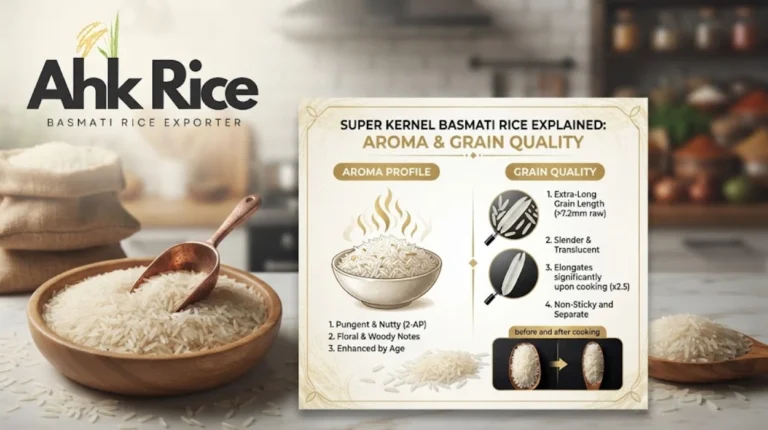
| Aroma Retention | Moderate | High |
| Cooking Time | 18–22 minutes | 12–15 minutes |
| Shelf Stability | 18–24 months | 10–14 months |
| Moisture Level | 12–13% controlled | 13–14% retained |
| Expansion Ratio | High volume expansion | Moderate expansion |
| Export Suitability | Bulk and hot climates | Premium retail markets |
Golden Sella performs better in logistics-heavy supply chains. Steam rice performs better in aroma-sensitive culinary markets. This comparison directly influences pricing, storage strategy, and buyer segmentation across importers.
With comparative attributes established, the next focus is identifying where each rice type performs best in real market conditions.
Which method works best for different cases?
Golden Sella performs best in bulk catering, hot climates, and long storage markets such as Iraq and UAE, while Steam rice performs best in premium retail, aromatic dishes, and restaurant service environments in Southeast Asia and European import channels today.
Golden Sella rice maintains structural integrity in non-climate-controlled warehouses. Steam rice performs better in controlled retail packaging environments where aroma and softness drive consumer preference and premium pricing.
Market Region Comparison
| Region | Preferred Grade | Price per MT (USD) | Shelf Life | Use Case |
|---|---|---|---|---|
| Middle East (UAE, Iraq, Saudi) | Golden Sella | 950–1150 | 18–24 months | Catering & bulk supply |
| Southeast Asia (Indonesia, Malaysia) | Steam Rice | 1050–1300 | 10–14 months | Retail & hospitality |
| Europe (ethnic markets) | Steam Rice | 1100–1350 | 12–16 months | Premium retail |
| Africa (West Africa imports) | Golden Sella | 900–1100 | 18–24 months | Food aid & bulk |
| South Asia re-export hubs | Mixed grades | 880–1200 | Variable | Trading distribution |
Golden Sella reduces spoilage risk in hot climates. Steam rice increases consumer satisfaction in aroma-driven markets. These trade-offs define procurement strategy for importers.
With market performance clarified, the next step is evaluating advantages and limitations in operational trade environments.
Pros and cons (with examples)
Golden Sella offers durability, high swelling capacity, and storage stability, while Steam rice offers aroma retention, softer bite, and faster hydration, creating trade-offs between logistics efficiency and culinary performance across import-driven foodservice and retail supply chains worldwide in global markets.
Golden Sella rice supports long-distance shipping with minimal breakage. Steam rice supports premium dining experiences with improved flavor release. These differences directly affect importer profit margins and customer satisfaction scores.
Pros of Golden Sella
High durability reduces transport loss.
High swelling improves plate yield.
High stability supports long-term storage.
Low breakage improves bulk efficiency.
Pros of Steam Rice
High aroma retention improves taste.
High softness improves eating experience.
Fast hydration reduces cooking time.
Uniform grain improves presentation quality.
Cons of Golden Sella
Lower aroma intensity reduces premium appeal.
Slightly firmer texture reduces softness preference.
Longer cooking time increases preparation cost.
Cons of Steam Rice
Lower shelf stability increases storage risk.
Higher price limits bulk procurement.
Higher moisture sensitivity affects logistics planning.
Golden Sella is preferred in institutional catering contracts. Steam rice is preferred in branded retail packaging. Both serve distinct supply chain roles rather than competing directly.
With strengths and weaknesses defined, the next step is identifying decision factors that determine final buyer selection.
Decision factors
Decision factors include climate conditions, storage duration, end-use cooking method, import regulations, and price sensitivity, which determine whether buyers select Golden Sella for durability or Steam rice for aroma and premium culinary presentation across international trade channels globally today markets.
Climate conditions determine grain stability during storage. Hot and humid regions require stronger parboiled structure. Controlled environments allow softer aromatic rice to maintain quality longer.
Storage duration defines grade selection. Long-term storage favors Golden Sella. Short-term retail turnover favors Steam rice due to sensory appeal.
Import regulations influence grading compliance. Some markets require maximum broken percentage thresholds. Others prioritize cooking expansion ratios for catering efficiency.
Price sensitivity impacts procurement strategy. Bulk buyers prioritize cost per MT efficiency. Retail buyers prioritize brand positioning and consumer demand.
Decision Framework Table
| Factor | Golden Sella | Steam Rice |
|---|---|---|
| Climate Resistance | High | Medium |
| Storage Duration | Long-term (18–24 months) | Medium-term (10–14 months) |
| Cooking Preference | Firm grain | Soft aromatic grain |
| Buyer Type | Bulk importers | Retail brands |
| Logistics Risk | Low | Medium |
Golden Sella is selected when logistics efficiency dominates procurement logic. Steam rice is selected when culinary quality dominates market positioning.
Frequently Asked Questions
What is the main difference between Golden Sella and Steam rice?
Golden Sella uses parboiling before milling, creating firmer grains, while Steam rice uses controlled steaming, preserving aroma and softness.
Which rice has a longer shelf life?
Golden Sella has a longer shelf life of 18–24 months due to lower moisture and stronger starch structure.
Which rice is better for hot climates?
Golden Sella performs better in hot climates because it resists breakage and moisture damage during storage.
Which rice is more suitable for retail markets?
Steam rice is more suitable for retail markets because it delivers stronger aroma and softer texture preferred by consumers.
Which rice is cheaper per metric ton?
Golden Sella is generally cheaper per MT in bulk export markets due to higher supply efficiency and storage stability.