Global Rice Trade Faces New Supply Chain Challenges
What is Pakistani Basmati rice?
Pakistani Basmati rice is a premium long-grain aromatic cereal crop grown exclusively in the fertile Indus River basin of the Punjab province. The product features a distinct natural fragrance, a dry fluffy texture, and a minimum pre-cooked grain length of 6.61 millimeters.
The term Basmati derives from the Sanskrit word meaning the perfumed one. This specific agricultural commodity possesses a unique genetic makeup that produces the aroma compound 2-acetyl-1-pyrroline at a natural concentration of 0.09 parts per million or higher. Upon cooking, the grains exhibit an elongation ratio of at least 1.7x without increasing in width.
The geographical indication of this product restricts its cultivation to the specific climatic conditions of the Punjab region. The combination of mineral-rich soil, canal-based irrigation systems, and specific temperature fluctuations during the ripening phase defines its grain elongation properties. Top global culinary markets select this specific grain for premium dishes such as biryani, pilaf, and traditional Middle Eastern rice platters.
Where is Pakistani Basmati rice grown?
Pakistani Basmati rice grows exclusively within the designated Basmati Zone of the Punjab province, which is fed by the Indus River irrigation system. This region comprises specific districts including Gujranwala, Sialkot, Sheikhupura, Nankana Sahib, Narowal, and Mandi Bahauddin.
The topography of northern and central Punjab provides the exact semi-aquatic environment required for this crop. The regional cultivation zone benefits from the five major rivers of the province, which deposit mineral-dense alluvial soil across the plains annually. The specific microclimate of this zone features high humidity during the vegetative growth phase followed by cooler, dry nights during the grain-filling stage.
Farmers plant the crop in muddy, submerged fields during the monsoon season between June and July. The geography ensures that the water levels remain stable during the early growth cycle. The soil retains the necessary clay-loam texture that holds water efficiently while supplying essential micro-nutrients to the developing root systems.
How does the step-by-step export processing work?
The step-by-step export processing transforms raw paddy into polished, graded, and shelf-stable grain through a series of sequential mechanical operations. The entire procedure removes impurities, separates the husk, mills the bran layers, and sorts the grains by color and size.
1. Harvesting and Field Drying
Farmers harvest the mature paddy when the grain moisture content reaches 20% to 22%. The crop undergoes slow, natural sun-drying on large concrete platforms until the inner moisture content drops to a stable 14% to ensure safe storage.
2. Cleaning and De-stoning
The dried paddy passes through mechanical vibratory screens, aspiration channels, and magnetic separators. This step removes organic debris such as straw particles, leaves, dust, weed seeds, and metallic contaminants.
3. De-husking or Shelling
The clean paddy enters rubber-roll shellers that apply precise counter-rotational pressure. This mechanical action strips away the tough outer husk, yielding brown rice while leaving the inner nutrient-rich bran layer completely intact.
4. Milling and Polishing
The brown rice moves into abrasive and friction milling chambers that remove the bran layer to produce white rice. Automated mist polishers apply a fine water spray to friction-clean the surface, giving the grain a translucent appearance.
5. Length Grading and Sifting
The polished rice passes through a series of rotating indented cylinders called length graders. These machines separate the premium full-length head rice from broken grain fragments based on the specific millimeter dimensions required for export.
6. Optical Color Sorting
The uniform grains pass down gravity chutes into computerized monochromatic or trichromatic optical sorters. High-speed cameras detect visual defects such as chalky grains, yellow discolorations, black tips, and immature green seeds.
7. Quality Testing and Certification
Laboratory technicians draw random samples from each processed batch to verify specific technical metrics. The testing protocols measure the exact moisture percentage, purity levels, average grain length, and the total broken grain ratio.
8. Automated Packaging
The verified grain moves into automated packing lines that weigh and seal the product into export-compliant materials. The standard packaging formats include polypropylene bags, multi-layer jute sacks, non-woven fabrics, and high-barrier retail packages.
What are the key components of the Basmati export trade?
The key components of the Basmati export trade consist of specific seed varieties, automated milling machinery, international logistics infrastructure, and official trade associations. These elements coordinate the production, quality verification, and delivery of the commodity to global buyers.
Premium Crop Varieties
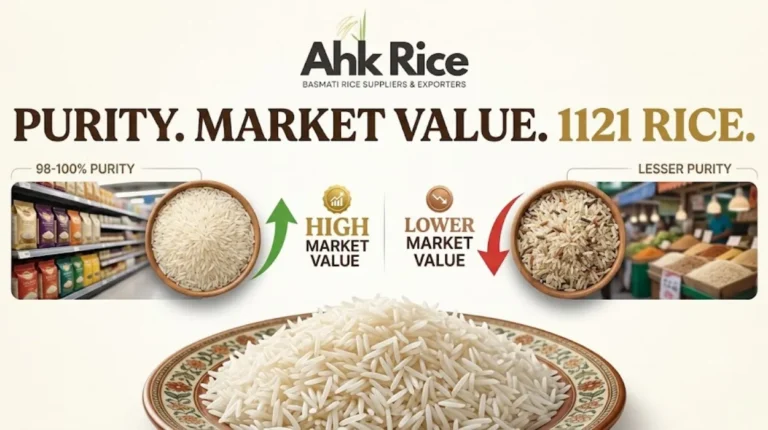
The export trade relies on three dominant grain varieties that cater to distinct buyer preferences. The 1121 Basmati variety features an exceptional pre-cooked grain length averaging 8.35 millimeters to 8.40 millimeters. The Super Kernel variety serves as the traditional benchmark for intense natural aroma and superior cooking elongation. The 1509 Basmati variety offers an early-maturing crop cycle that yields long, slender grains with excellent processing efficiency.
Industrial Processing Infrastructure
Modern export mills utilize specialized machinery groups to handle high-volume processing. These include high-capacity multi-stage color sorters, precision length graders, forced-air drying silos, and pneumatic cleaning systems. The integrated technical setup prevents grain breakage during high-speed milling operations.
Regulatory and Trade Bodies
Official institutions govern the compliance, standardization, and documentation of the export process. The Rice Exporters Association of Pakistan sets the minimum export price thresholds and registers commercial exporters. The Pakistan Standards and Quality Control Authority enforces national food safety parameters and grade definitions.
What are the commercial benefits of importing this product?
The commercial benefits of importing this product include a low glycemic index for health-conscious consumers, high commercial volumetric expansion during cooking, and long storage stability. These attributes lower business losses for distributors and command high premium retail prices.
High Volumetric Expansion
The grain expands to over 2.5x its dry volume during the boiling process. This physical trait provides food service establishments, such as commercial catering companies, restaurants, and hotels, with a higher number of served portions per kilogram compared to standard long-grain white rice.
Extended Storage Shelf Life
The low moisture content of 12% to 14% prevents microbial spoilage and insect infestation during extended transoceanic shipments. Well-milled Basmati rice undergoes a natural aging process during storage, which hardens the starch structure and enhances the fluffiness of the cooked grain over time.
Low Glycemic Index
The starch composition of the grain contains a high ratio of amylose to amylopectin. This biochemical structure results in a low glycemic index rating of 50 to 58, which slows down the conversion of carbohydrates into glucose within the human bloodstream.
What are the primary global use cases for this commodity?
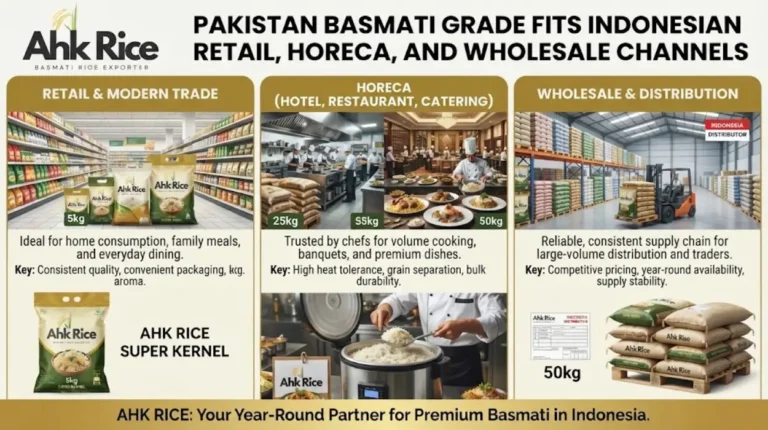
The primary global use cases for this commodity span commercial ethnic catering operations, bulk consumer retail distribution networks, and premium industrial food manufacturing. The structural integrity of the grain makes it suitable for intensive cooking methods.
High-End Commercial Catering
Gourmet restaurants and luxury hotels utilize this specific grain for elaborate rice preparations that require visual appeal and premium aroma. The structural durability of the parboiled or aged version prevents the grains from breaking or becoming sticky during prolonged steam-table holding periods.
Consumer Retail Branding
International supermarket chains pack the grain into private-label consumer bags ranging from 1 kilogram to 5 kilograms. The distinct grain length and premium classification attract high-margin retail buyers who prioritize culinary authenticity.
Industrial Ready-to-Eat Meals
Large-scale food processing facilities use the grain to manufacture frozen entrees, shelf-stable canned rice meals, and pre-packaged pilaf mixes. The grain maintains its distinct shape, texture, and separation after undergoing industrial retort sterilization processes.
What are the common misconceptions about this export grain?
The common misconceptions about this export grain involve the belief that all long grains are authentic Basmati, that parboiling destroys natural nutrients, and that broken grains indicate rotten product. These misunderstandings affect procurement decisions and consumer valuation.
The Long-Grain Identity Confusion
A common error is assuming that any long-grain rice variety qualifies as Basmati. Non-aromatic varieties, such as IRRI-6 or long-grain white rice, lack the 2-acetyl-1-pyrroline aroma compound and the unique elongation properties of true Basmati. Importers utilize DNA purity testing to confirm the botanical authenticity of their shipments.
Misunderstandings of the Parboiling Process
Many buyers believe that parboiled or sella rice is an artificial product or lacks nutritional value. The hydrothermal parboiling process actually drives the water-soluble vitamins and minerals from the outer bran layer deep into the starchy endosperm before the milling stage.
Misinterpretation of Broken Percentages
Inexperienced buyers often view the presence of broken grains as a sign of poor quality or crop disease. Broken grains occur naturally due to mechanical friction during the husking and polishing phases. Exporters control this factor by adjusting the length grading machinery to meet specific contract tolerances.
Which global markets import this product?
The primary importing markets for this product include the nations of the Gulf Cooperation Council, the European Union member states, the United Kingdom, and the emerging Central Asian republics. These regions maintain strict regulatory frameworks for incoming shipments.
The Middle Eastern Hub
The Gulf Cooperation Council nations, such as Saudi Arabia, the United Arab Emirates, Oman, Kuwait, and Qatar, import over 65% of the total export volume from Punjab. These markets consume the premium 1121 sella and Super Kernel grades for daily traditional dishes.
The European Union and the United Kingdom
European buyers demand strict adherence to maximum residue limits for pesticides and require mandatory DNA testing to verify purity levels. The United Kingdom operates under the Basmati Code of Practice, which allows tax-free import quotas for verified pure varieties.
Central Asian Growth Markets
Direct rail and road trade links have expanded shipments to Central Asian countries, such as Kazakhstan, Uzbekistan, and Azerbaijan. This geographical shift bypasses old transit routes and provides direct access to landlocked consumer markets.