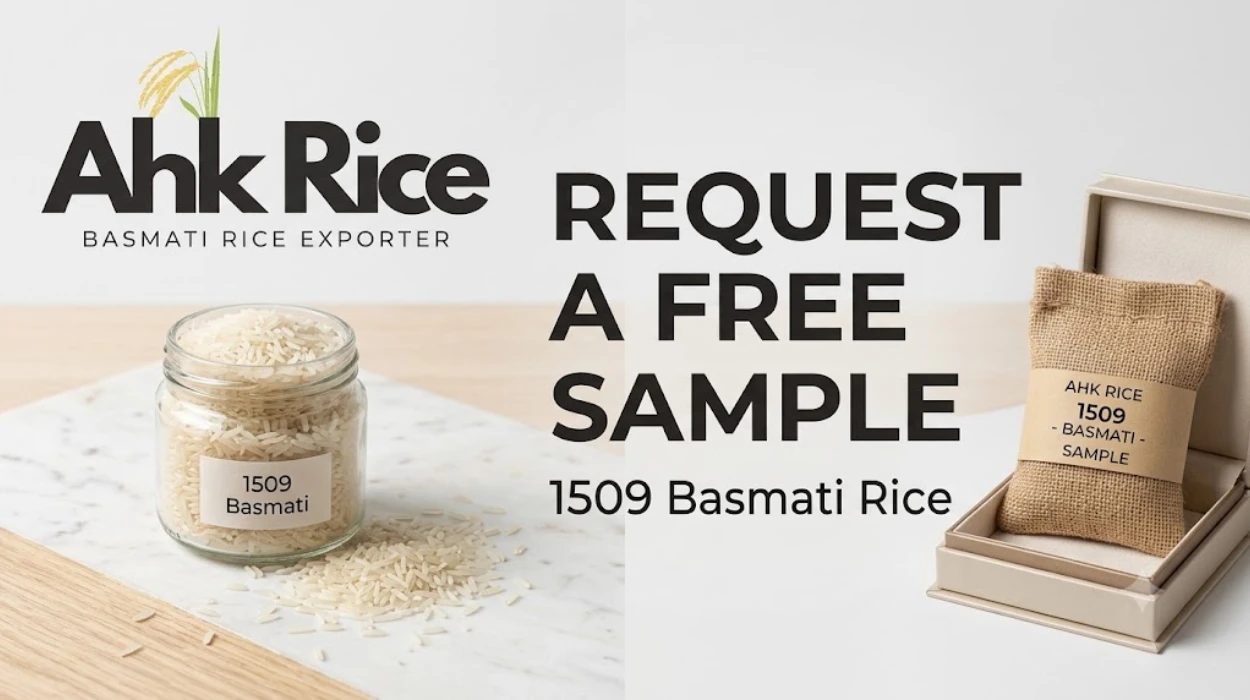
Request a Free Sample of 1509 Basmati Rice
Importers should request a free sample of 1509 Basmati Rice before placing a container order. A physical sample verifies grain length, cooking performance, aroma, moisture level, and grade consistency. Here is why: laboratory specifications alone cannot confirm market suitability. Buyers need to inspect and cook the rice before approving commercial production. Before requesting a sample, review our detailed guide on how grain length and cooking performance affect 1509 Basmati Rice selection.
1509 Basmati Rice remains one of the fastest-growing Pakistani Basmati varieties. The variety offers long grains, high cooked elongation, and competitive pricing. AHK Rice supplies multiple processing grades to importers, distributors, wholesalers, caterers, and private-label brands across international markets.
What is the best way to evaluate 1509 Basmati Rice before importing?
Requesting a physical sample, testing cooking results, reviewing laboratory specifications, and comparing grades provides the most reliable purchasing decision for commercial rice buyers worldwide.
Commercial buyers face a common challenge. Product photos and specification sheets cannot fully demonstrate cooking behavior. Rice may appear identical on paper while performing differently during preparation.
1509 Basmati Rice should be evaluated through a structured sample process. AHK Rice provides representative samples from actual production lots. Buyers can inspect grain dimensions, color consistency, moisture levels, and cooking performance before approving a shipment.
Why sample testing matters
Buyers should verify:
- Grain length
- Broken percentage
- Moisture content
- Foreign matter level
- Cooking elongation
- Aroma profile
- Color uniformity
- Packaging suitability
Typical 1509 Basmati Rice specifications
| Specification | Typical Value |
|---|---|
| Average Grain Length | 8.10–8.40 mm |
| Moisture | 12–13% |
| Broken Rice | 0–5% |
| Purity | 95–100% |
| Crop Origin | Punjab, Pakistan |
| Shelf Life | 18–24 Months |
AHK Rice supplies Steam, White, Golden Sella, and other export grades according to destination market requirements.
The evaluation process establishes product suitability. The next question is understanding why buyers choose a specific supplier.
Why choose AHK Rice for a free 1509 Basmati Rice sample?
Direct mill sourcing, export-grade processing, documented quality controls, international shipping experience, and responsive buyer support make AHK Rice a practical sourcing partner.
AHK Rice focuses on export-quality Pakistani Basmati rice. The company cultivates long-term relationships through transparent quality verification and specification-based production.
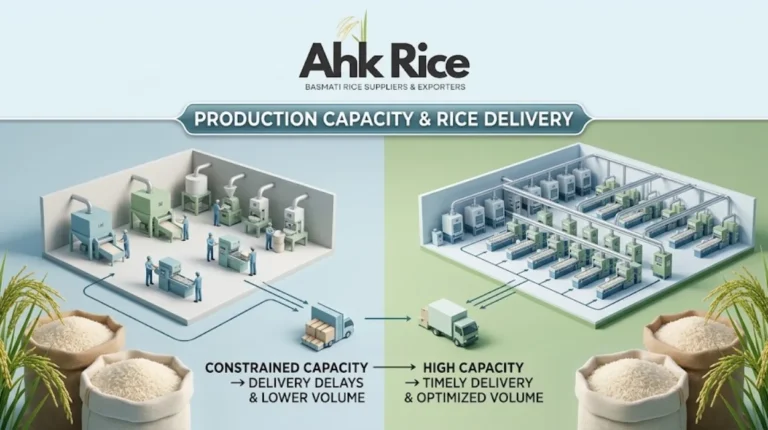
AHK Rice processes rice through a structured production system.
Processing steps used by AHK Rice
- Clean the harvested paddy.
- De-husk the grain.
- Dry the rice to target moisture.
- Polish the kernels.
- Grade by size.
- Sort by color.
- Inspect the finished product.
- Test laboratory parameters.
- Pack according to buyer requirements.
Each stage reduces quality variation and improves consistency.
Export grades available
AHK Rice supplies:
- 1509 White Rice
- 1509 Steam Rice
- 1509 Golden Sella Rice
- 1509 Creamy Sella Rice
- Customized blending grades
Buyers comparing processing options can also review our guide explaining the differences between Steam and Golden Sella grades for international markets.
Quality assurance features
- Laboratory testing
- Moisture verification
- Color sorting
- Length grading
- Metal detection
- Batch inspection
- Export documentation
AHK Rice supports buyers in more than 15 countries. Different markets require different specifications. Gulf importers often prefer Golden Sella grades. African wholesalers frequently prioritize value-oriented Steam grades. European buyers typically request stricter documentation and packaging standards.
Supplier capability matters after product evaluation. The next consideration is expected business outcomes.
What results can buyers expect after approving a sample?
Consistent grain quality, reduced procurement risk, improved customer satisfaction, and smoother import operations are the primary outcomes of sample-approved purchasing decisions.
A sample approval process reduces uncertainty.
Buyers who approve samples before production create a clear quality benchmark. Production batches can then be matched against approved standards.
Benefits for wholesalers
Wholesalers gain:
- Better stock consistency
- Lower complaint rates
- Easier market positioning
- Stronger customer retention
Benefits for retailers
Retailers benefit from:
- Predictable packaging quality
- Consistent shelf appearance
- Reliable cooking performance
- Reduced return rates
Benefits for foodservice buyers
Foodservice operators require consistent cooking results.
1509 Basmati Rice performs well in:
- Catering operations
- Hotel kitchens
- Restaurant chains
- Institutional food supply
Market-specific shipping timelines
| Market | Estimated Transit Time |
|---|---|
| UAE | 10–15 Days |
| Saudi Arabia | 15–20 Days |
| Oman | 12–18 Days |
| Qatar | 12–18 Days |
| Iraq | 18–25 Days |
| East Africa | 20–30 Days |
| West Africa | 25–40 Days |
| United Kingdom | 28–40 Days |
| Europe | 30–45 Days |
| North America | 35–50 Days |
Transit times vary according to vessel schedules, customs clearance, and port congestion.
AHK Rice coordinates shipment planning with buyers before container loading.
The expected results demonstrate value. The next factor affecting decisions is total procurement cost.
What factors affect the cost of 1509 Basmati Rice orders?
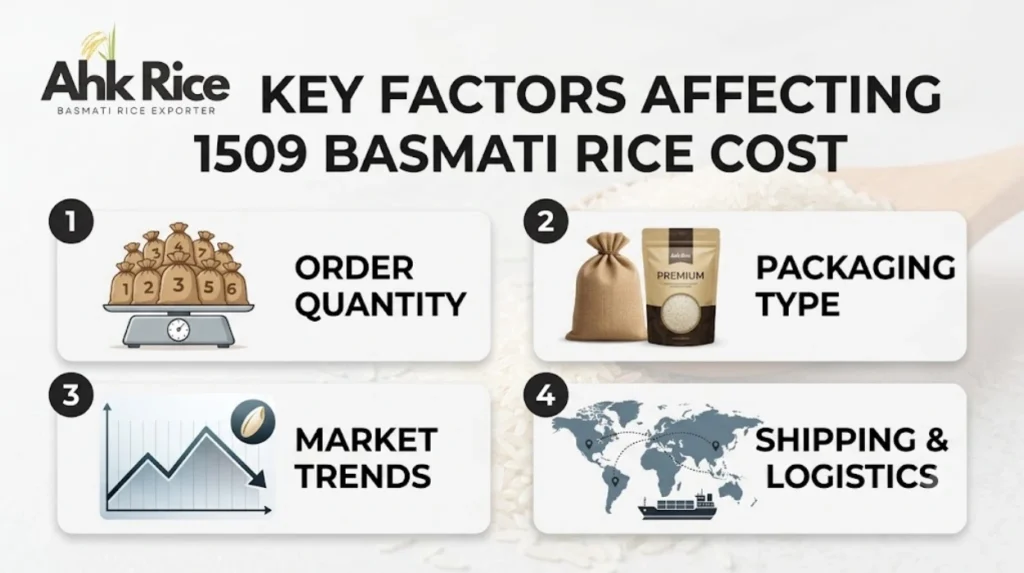
Grade selection, processing type, packaging requirements, destination market, freight rates, order volume, and certification requirements determine final export pricing.
Rice pricing changes according to specifications.
1509 White Rice typically offers the lowest processing cost. Golden Sella grades generally command higher prices because parboiling adds processing steps and storage stability.
Major pricing factors
| Factor | Impact on Cost |
|---|---|
| Processing Grade | High |
| Broken Percentage | High |
| Packaging Type | Medium |
| Container Quantity | Medium |
| Freight Cost | High |
| Certifications | Medium |
| Seasonal Supply | High |
Packaging options
AHK Rice offers:
- 1 kg retail bags
- 2 kg retail bags
- 5 kg retail bags
- 10 kg retail bags
- 25 kg PP bags
- 40 kg PP bags
- 50 kg PP bags
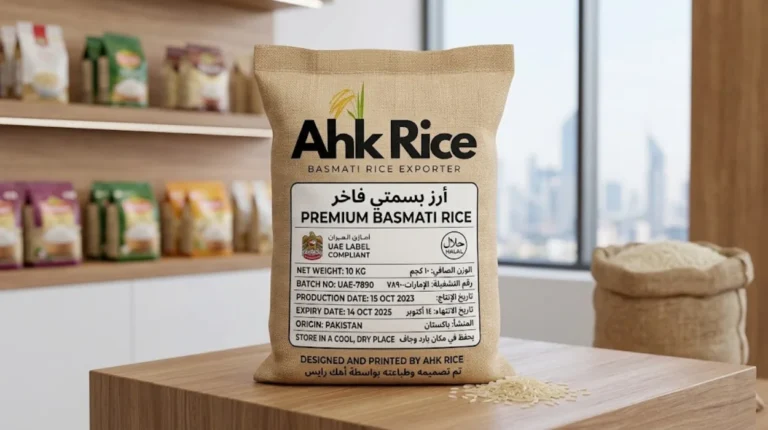
Customized private-label packaging affects final pricing because packaging materials, printing requirements, and compliance standards vary by market.
Sample cost structure
AHK Rice typically provides the rice sample itself without charge. Buyers generally cover courier expenses.
Typical courier costs:
| Region | Estimated Courier Cost |
|---|---|
| GCC | $25–$60 |
| Europe | $40–$90 |
| Africa | $35–$80 |
| North America | $50–$120 |
Courier charges vary according to weight, destination, and shipping provider.
Cost considerations lead directly to the final purchasing step. The next section explains how buyers can start the process.
How do buyers request a free sample from AHK Rice?
Submit product requirements, receive specifications, approve sample dispatch, evaluate the rice, confirm specifications, and proceed with commercial production.
The process is straightforward and designed for international buyers.
Step 1: Submit requirements
Provide:
- Target market
- Required grade
- Packaging preference
- Quantity estimate
- Destination port
Step 2: Receive specifications
AHK Rice shares available grades and technical specifications.
Step 3: Approve sample shipment
Confirm courier details and shipping address.
Step 4: Evaluate the sample
Inspect:
- Grain appearance
- Aroma
- Cooking performance
- Elongation
- Packaging suitability
Step 5: Confirm order specifications
Approve:
- Grade
- Quantity
- Packaging
- Delivery terms
- Shipment schedule
Step 6: Begin commercial production
AHK Rice schedules production, inspection, container loading, and export documentation.
Required export documents
- Commercial Invoice
- Packing List
- Certificate of Origin
- Phytosanitary Certificate
- Fumigation Certificate
- Bill of Lading
- Quality Inspection Report
AHK Rice manages documentation according to destination requirements to support smooth customs clearance.
The sample process removes uncertainty and creates a clear quality benchmark before shipment approval.For buyers ready to evaluate quality before placing a container order, contact AHK Rice today and request a quote and sample shipment.
Frequently Asked Questions
How long does it take to receive a free sample of 1509 Basmati Rice?
Sample delivery normally takes between 3 and 10 business days depending on destination. GCC countries usually receive samples faster than Europe or North America. Courier schedules also affect delivery times. AHK Rice shares tracking details after dispatch. Buyers can monitor shipment progress directly with the courier.
What quantity is included in a rice sample?
Sample quantities vary according to buyer requirements and product grade. Most commercial evaluations require enough rice for visual inspection and cooking tests. AHK Rice prepares representative samples from export-grade inventory. The sample reflects actual production specifications. Buyers can request additional samples when comparing multiple grades.
Can I request multiple 1509 rice grades?
Yes. Importers often compare Steam, White, and Golden Sella grades before making a decision. AHK Rice can prepare multiple samples for side-by-side evaluation. This process helps buyers identify the best option for their target market. Comparative testing reduces procurement risk and improves purchasing accuracy.
Does AHK Rice support private-label buyers?
Yes. AHK Rice supplies rice for wholesalers, distributors, retailers, and private-label brands. Packaging specifications can be customized according to market requirements. Buyers can review packaging materials during the sample approval stage. Early packaging review prevents delays during commercial production.
What should buyers test before approving a sample?
Buyers should inspect grain length, moisture, color consistency, cooking performance, aroma, and elongation ratio. Packaging suitability should also be reviewed. Laboratory reports provide additional verification. Combining physical testing and specification review creates a reliable purchasing decision. This approach helps ensure shipment consistency.