What Rice Specifications Do Saudi Wholesale Distributors Look for in Pakistani Basmati?
Saudi Arabia is one of the largest import markets for Pakistani Basmati rice. Wholesale distributors in Saudi Arabia evaluate rice using measurable specifications that affect cooking performance, shelf life, consumer acceptance, and retail distribution. The most important criteria include grain length, purity, moisture content, broken percentage, milling quality, aroma, certifications, packaging standards, and compliance with Saudi import regulations.
What rice specifications do Saudi wholesale distributors evaluate before importing Pakistani Basmati?
Saudi wholesale distributors assess grain length, broken percentage, moisture content, purity, aroma, milling quality, aging status, packaging standards, food safety compliance, and export certifications. These specifications determine market suitability, pricing structure, storage stability, and acceptance within retail, foodservice, and wholesale channels.
Pakistani Basmati rice is a long-grain aromatic rice cultivated primarily in Punjab, Pakistan. The region’s soil composition, irrigation systems, and climate conditions create the characteristics associated with authentic Basmati rice.
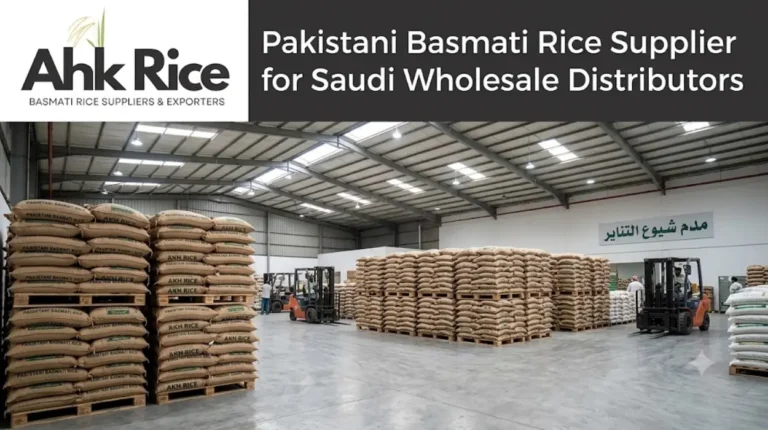
Saudi distributors purchase rice for supermarkets, hypermarkets, catering companies, restaurants, food processors, and government procurement programs. Each buyer category uses specific quality benchmarks.
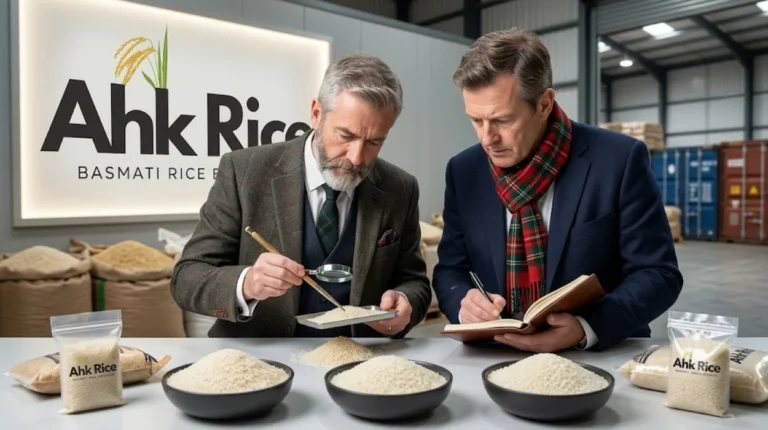
The evaluation process begins before shipment. Importers review laboratory reports, specification sheets, milling reports, packaging details, and certification documents before approving a purchase contract.
Why is grain length one of the most important Basmati specifications in Saudi Arabia?
Grain length directly influences consumer perception, cooking expansion, visual appearance, and retail value. Saudi buyers prioritize extra-long grain Basmati varieties because longer grains command stronger market demand and higher wholesale pricing.
Grain length is measured before milling and after milling. Premium Pakistani Basmati varieties often exceed 8.0 mm average grain length.
Consumers in Saudi Arabia commonly associate longer grains with premium quality. This preference affects wholesale purchasing decisions across modern retail and traditional trade channels.
Which Pakistani Basmati varieties meet Saudi grain length requirements?
The most commonly imported varieties include:
- 1121 Basmati White Rice
- Super Kernel Basmati Rice
- 1509 Basmati Rice
Among these varieties, 1121 Basmati is known for exceptional grain length and elongation after cooking.
Many Saudi buyers compare grain dimensions before finalizing supply agreements because grain appearance affects shelf presentation and consumer confidence.
How does moisture content affect wholesale rice imports?
Moisture content determines storage stability, shelf life, transportation performance, and resistance to spoilage. Saudi distributors generally prefer moisture levels that support long-term warehousing and maintain grain quality during shipping.
Moisture content is measured as the percentage of water present in rice grains.
Excess moisture increases the risk of:
- Mold development
- Insect activity
- Grain discoloration
- Quality deterioration
Export-grade Pakistani rice commonly undergoes drying procedures before storage and shipment. Processing facilities continuously monitor moisture levels using calibrated testing equipment.
Saudi importers often request laboratory verification because moisture stability directly affects inventory management across large warehouse networks.
How is broken percentage evaluated by Saudi rice importers?
Broken percentage indicates the proportion of fractured rice kernels within a shipment. Lower broken percentages reflect superior milling quality, stronger visual consistency, and greater market value in premium Basmati segments.
Broken rice kernels result from handling, milling, transportation, or processing operations.
Common export specifications include:
- 1% broken
- 2% broken
- 5% broken
Premium retail channels typically prefer lower broken percentages.
Distributors supplying restaurants, catering companies, and institutional buyers sometimes select higher broken levels when cost efficiency is prioritized.
The broken percentage significantly influences wholesale pricing and market positioning.
What role does rice purity play in Saudi wholesale distribution?
Rice purity measures the absence of foreign matter, mixed varieties, damaged grains, and contaminants. High purity levels support product consistency, regulatory compliance, and consumer satisfaction throughout the Saudi distribution network.
Purity testing evaluates several factors:
- Foreign material presence
- Paddy grain content
- Damaged kernels
- Chalky grains
- Discolored grains
Saudi importers seek uniformity because mixed shipments create inconsistencies during cooking and packaging.
Modern rice processing facilities use multiple sorting technologies.
How is rice purified before export?
The purification process includes:
- Pre-cleaning
- Destoning
- Husking
- Whitening
- Polishing
- Length grading
- Color sorting
- Metal detection
- Final inspection
Each stage removes specific impurities while improving uniformity.
How does aroma influence purchasing decisions in the Saudi market?
Aroma serves as a defining characteristic of authentic Basmati rice. Saudi distributors consider fragrance an essential quality attribute because consumers associate aromatic rice with traditional Middle Eastern and South Asian cuisine.
Basmati aroma originates from naturally occurring aromatic compounds developed during cultivation and storage.
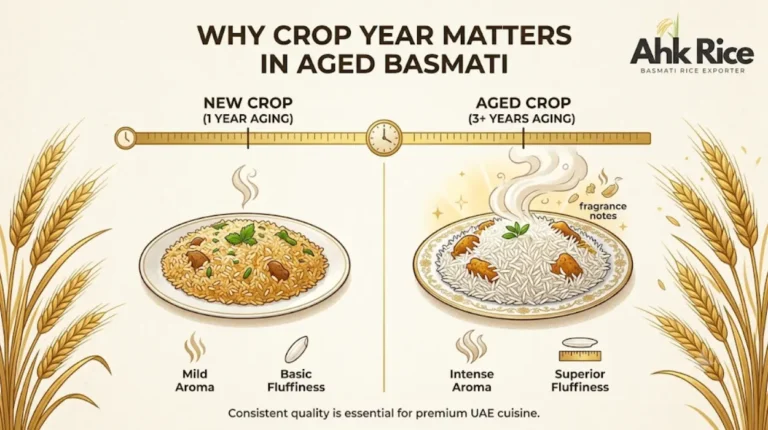
Aged Basmati rice generally exhibits stronger fragrance compared to newly harvested rice.
Popular Saudi dishes requiring aromatic rice include:
- Kabsa
- Mandi
- Bukhari Rice
Retailers often market aromatic characteristics as a premium product feature.
As a result, fragrance consistency becomes a major purchasing consideration.
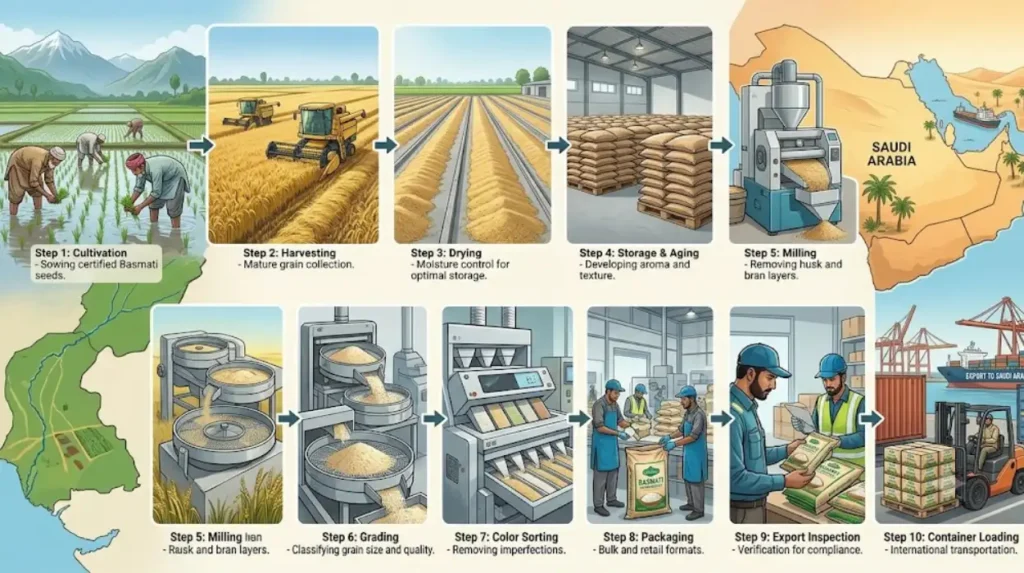
How is Pakistani Basmati rice processed before export to Saudi Arabia?
Export-quality Pakistani Basmati rice passes through cultivation, harvesting, drying, storage, milling, grading, sorting, packaging, inspection, and container loading stages before shipment to Saudi importers.
The process begins in Punjab, Pakistan, where most Basmati production occurs.
Step 1: Cultivation
Farmers sow certified seed varieties in irrigated agricultural fields.
Step 2: Harvesting
Rice is harvested after reaching physiological maturity.
Step 3: Drying
Freshly harvested paddy rice undergoes controlled drying to achieve target moisture levels.
Step 4: Storage and Aging
Many premium Basmati grades undergo aging to improve cooking characteristics and aroma.
Step 5: Milling
The outer husk and bran layers are removed.
Step 6: Grading
Machines classify grains according to size and quality.
Step 7: Color Sorting
Optical sorting systems remove defective grains.
Step 8: Packaging
Rice is packed into retail or bulk packaging formats.
Step 9: Export Inspection
Quality inspections verify compliance with buyer specifications.
Step 10: Container Loading
Approved shipments are loaded into export containers for international transportation.
What grades of Pakistani Basmati rice are commonly imported into Saudi Arabia?
Saudi distributors import multiple Basmati grades based on consumer segments, pricing objectives, and distribution channels. The most common grades include premium, standard, retail, catering, and institutional classifications.
The principal Pakistani Basmati varieties include:
1121 Basmati White Rice
Known for extra-long grains and high cooked elongation.
1121 Steam Rice
Processed using controlled steaming before milling.
1121 Sella Rice
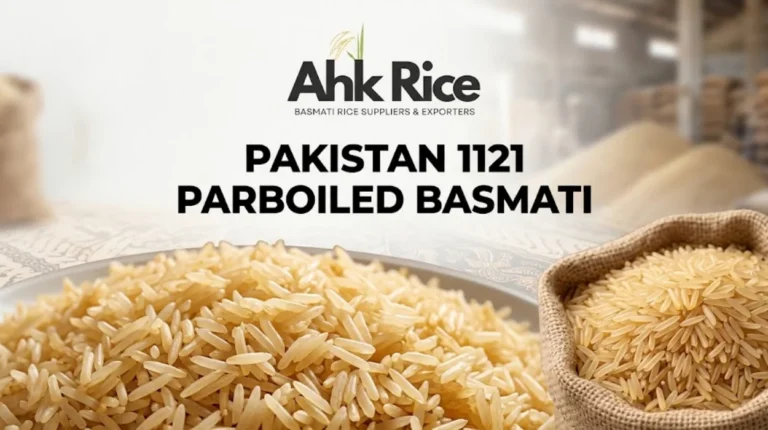
Parboiled rice with enhanced grain strength.
Super Kernel Basmati Rice
Traditional premium Basmati variety with strong aroma.
1509 Basmati Rice
Earlier maturity variety with excellent grain appearance.
Brown Basmati Rice
Whole-grain rice retaining bran layers.
Different market segments require different specifications.
Large catering companies often prioritize consistency and volume.
Retail brands frequently prioritize appearance and aroma.
Readers interested in comparing grain characteristics between leading export varieties can explore a detailed comparison in the article about choosing between 1121 and 1509 white rice for Saudi wholesale distribution.
Which certifications do Saudi wholesale distributors require for Pakistani Basmati rice?
Certifications verify food safety, traceability, quality management, religious compliance, and regulatory conformity. Saudi buyers frequently request internationally recognized certification frameworks before approving suppliers.
Certification requirements vary by importer category.
Common certifications include:
HACCP
Hazard Analysis and Critical Control Points focuses on food safety risk management.
ISO 22000
ISO 22000 establishes food safety management systems.
Halal Certification
Halal certification confirms compliance with Islamic dietary requirements.
Phytosanitary Certification
This document confirms agricultural health compliance for export shipments.
Certificate of Origin
This certificate verifies the producing country.
Quality Inspection Reports
Independent testing validates shipment specifications.
Certification documents support customs clearance and importer confidence.
Which international markets import Pakistani Basmati rice alongside Saudi Arabia?
Pakistani Basmati rice is imported by markets across the Middle East, Europe, North America, Africa, and Asia. Import demand reflects the rice’s aroma, grain length, cooking quality, and cultural relevance.
Major importing regions include:
Gulf Cooperation Council Countries
Examples include:
- Saudi Arabia
- United Arab Emirates
- Kuwait
- Qatar
- Oman
- Bahrain
European Markets
Examples include:
- United Kingdom
- Germany
- France
- Netherlands
North American Markets
Examples include:
- United States
- Canada
African Markets
Examples include:
- South Africa
- Kenya
Each market establishes specific import regulations and quality specifications.
Saudi Arabia remains one of the most influential destinations because of strong consumer demand for premium Basmati rice.
What misconceptions exist about Saudi Basmati rice specifications?
Many buyers assume all Basmati varieties perform identically, all long grains qualify as premium rice, and certifications alone guarantee quality. Saudi import standards evaluate multiple measurable specifications simultaneously.
One common misconception is that grain length alone defines quality.
Quality evaluation includes:
- Moisture content
- Purity
- Aroma
- Broken percentage
- Milling quality
- Packaging integrity
- Certification compliance
Another misconception is that newer rice always performs better.
Aged Basmati frequently delivers stronger aroma and superior cooking performance.
A third misconception is that all export-grade rice targets the same market segment.
Different grades serve different applications.
Retail consumers, restaurants, catering companies, and institutional buyers often purchase distinct specifications.
Understanding these technical requirements explains why Saudi wholesale distributors rely on comprehensive specification sheets before selecting Pakistani Basmati rice suppliers. Grain quality, processing standards, certifications, and export compliance collectively determine whether a shipment satisfies commercial import requirements in the Saudi market.
Frequently Asked Questions
What grain length do Saudi distributors prefer in Pakistani Basmati rice?
Saudi distributors generally prefer extra-long grain Basmati rice because it offers strong visual appeal and excellent cooked grain elongation. Varieties such as 1121 Basmati Rice are widely traded due to their long grain characteristics and consistency in retail and foodservice markets.
Why is aged Basmati rice important for the Saudi market?
Aged Basmati rice develops stronger aroma, improved cooking performance, and better grain separation. Saudi consumers often prefer rice that produces fluffy, separate grains after cooking, making aged Basmati a preferred choice for traditional rice dishes.
Which Pakistani Basmati varieties are most commonly exported to Saudi Arabia?
The most commonly exported varieties include 1121 Basmati White Rice, 1121 Steam Rice, 1121 Sella Rice, Super Kernel Basmati Rice, and 1509 Basmati Rice. Each variety serves different market segments based on grain appearance, cooking characteristics, and price positioning.
What certifications are required for exporting Basmati rice to Saudi Arabia?
Saudi importers commonly request Halal Certification, HACCP Certification, ISO 22000 Certification, Phytosanitary Certificates, Certificates of Origin, and laboratory quality reports. These documents verify food safety, traceability, and compliance with import regulations.
How is Pakistani Basmati rice transported to Saudi Arabia?
After processing and packaging, rice is loaded into export containers and shipped through international sea freight routes. Before shipment, exporters conduct quality inspections and prepare export documentation to ensure compliance with Saudi customs and import requirements.