Fresh Crop vs Aged Crop Pakistan 1121 Rice for UAE Wholesale Buyers
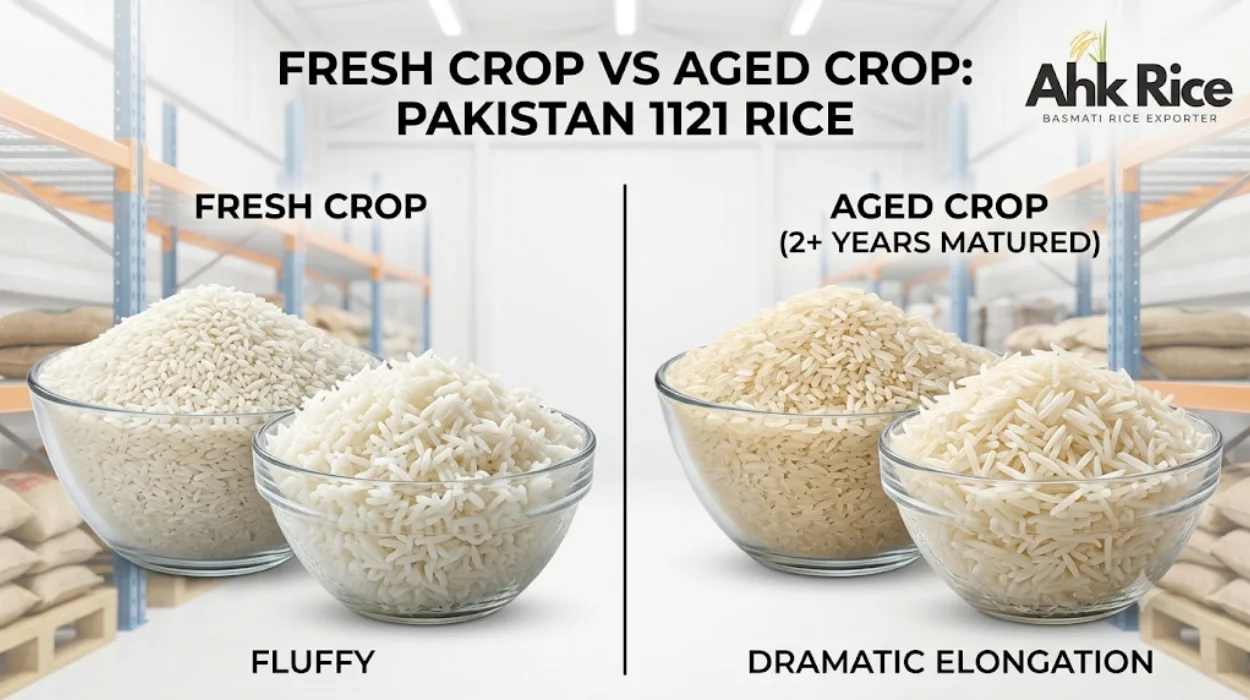
Fresh crop and aged crop Pakistan 1121 Basmati rice serve different wholesale purposes. Fresh crop delivers higher moisture and softer texture for quick distribution, while aged crop provides stronger aroma, longer grains after cooking, lower moisture, and better consistency for UAE retail and food service markets. Here is why: the aging process changes starch structure, improves cooking performance, and reduces grain breakage, making aged 1121 the preferred specification for premium buyers.
Pakistan produces some of the world’s finest 1121 Basmati rice. The variety is cultivated in Punjab, harvested once each season, then milled, graded, sorted, tested, and exported worldwide. UAE importers evaluate every shipment based on grain length, moisture, purity, aroma, cooking quality, certification, and shelf stability before procurement decisions. Understanding the difference between fresh and aged crop prevents costly purchasing mistakes.
Before comparing crop ages, learn how harvest timing influences grain quality in our guide on how Pakistan Basmati crop year affects export quality . When sourcing Pakistan 1121 Basmati Rice, review our Pakistan 1121 Basmati Rice Export Service to understand available grades, processing options, and export specifications offered by AHK Rice.
AHK Rice is a trusted Pakistani Basmati rice exporter based in Punjab, supplying 1121, Super Kernel, and 1509 varieties to more than 15 countries. The company manages cultivation partnerships, milling, grading, packaging, quality inspection, documentation, and export logistics under one supply chain.
What are the available solutions for UAE wholesale buyers?
Fresh crop suits short-term inventory, while aged crop delivers premium cooking quality, stronger aroma, improved grain elongation, lower moisture, and better storage stability. The correct choice depends on your customer segment, warehouse conditions, and product positioning.
Pakistan 1121 rice enters export markets in two commercial categories.
Fresh Crop Pakistan 1121 Rice
Fresh crop refers to rice exported shortly after harvesting and milling. The grains retain higher moisture. The aroma continues developing after harvest.
Fresh crop usually contains moisture between 12.5% and 14%. This level supports softer cooked texture but reduces long-term warehouse stability under Gulf temperatures.
Fresh crop commonly serves:
- Bulk wholesalers
- Government tenders
- Price-sensitive distributors
- Fast inventory turnover
- Immediate consumption markets
Fresh crop offers competitive pricing because storage costs remain lower.
Aged Crop Pakistan 1121 Rice
Aged crop remains stored under controlled warehouse conditions before export. Professional storage allows natural moisture reduction and starch stabilization.
Most premium exporters age rice between 12 and 24 months.
During aging:
- Moisture gradually decreases.
- Aroma becomes stronger.
- Grain hardness improves.
- Cooking elongation increases.
- Stickiness decreases.
- Milling quality remains stable.
Premium supermarkets across the UAE often specify aged crop because customers associate stronger aroma with authentic Basmati.
AHK Rice inspects every lot before milling, verifies moisture, grades grain length, removes foreign matter, and certifies export quality before dispatch.
With the available options defined, the next question becomes how both crop types compare under identical commercial specifications.
How do fresh crop and aged crop compare?
Aged crop outperforms fresh crop in aroma, grain elongation, shelf stability, and premium retail value, while fresh crop provides lower procurement cost and faster market availability.
Pakistan 1121 Fresh Crop vs Aged Crop Specifications
| Specification | Fresh Crop | Aged Crop |
|---|---|---|
| Moisture | 12.5–14% | 10–12% |
| Aroma | Mild | Strong |
| Grain Elongation | 1.8–2.0× | 2.2–2.5× |
| Cooking Texture | Softer | Fluffier |
| Breakage Resistance | Moderate | Higher |
| Shelf Life | 12–18 months | 24 months |
| Typical UAE Market | Wholesale distribution | Retail & Food Service |
Lower moisture improves warehouse performance.
Lower moisture also reduces fungal risk during long-distance shipping.
Longer grain elongation improves plate presentation.
Premium restaurants therefore prefer aged 1121.
Stronger aroma creates higher consumer satisfaction.
Retail brands often highlight aged Basmati on packaging because aroma influences purchasing decisions.
Storage requires additional investment.
Aged rice therefore commands a higher export price than fresh crop.
The comparison establishes quality differences. The next consideration is selecting the correct specification for each regional market.
Which option works best across different UAE market segments?
Retail buyers usually select aged crop, while bulk trading companies often purchase fresh crop because purchasing priorities differ between premium branding and wholesale pricing.
Different buyers evaluate rice differently.
UAE Retail Market
Retail brands emphasize:
- Premium aroma
- Long cooked grains
- Attractive packaging
- Consumer satisfaction
- Repeat purchases
Aged Pakistan 1121 consistently meets these expectations.
UAE Food Service Market
Hotels, restaurants, and catering companies prioritize:
- Consistent cooking
- Uniform grain size
- High volume preparation
- Low breakage
- Stable inventory
Many premium restaurants choose aged crop because every batch delivers predictable cooking performance.
Budget catering companies frequently purchase fresh crop to reduce procurement costs.
Market Preference Comparison
| Market Region | Preferred Grade | Primary Reason |
|---|---|---|
| UAE Retail Chains | Aged 1121 | Premium aroma and shelf appeal |
| UAE Hotels & Restaurants | Aged 1121 | Consistent cooking performance |
According to REAP export trends, Gulf countries continue importing premium Pakistani Basmati for retail and hospitality sectors due to growing consumer demand for authentic long-grain rice (Source: REAP Export Data).
Which option offers better value for UAE wholesale buyers?
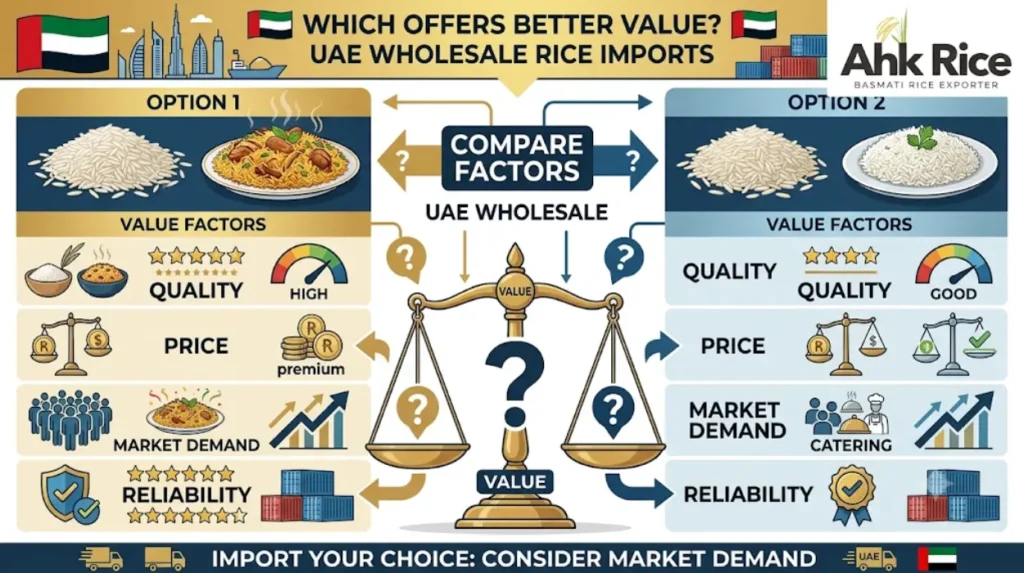
Aged Pakistan 1121 Basmati rice delivers higher long-term value because it provides stronger aroma, longer grain elongation, lower moisture, fewer quality claims, and better consumer acceptance. Fresh crop offers lower procurement costs and suits buyers targeting fast inventory turnover and price-sensitive markets.
Wholesale buyers compare more than the purchase price. They evaluate total landed cost, warehouse performance, customer satisfaction, and repeat orders. A shipment that costs slightly more but generates fewer complaints often delivers better profitability over an entire selling season.
Price per MT Comparison
Export prices fluctuate according to crop size, freight rates, and international demand. The following ranges represent typical wholesale differences rather than fixed market quotations.
| Specification | Fresh Crop 1121 | Aged Crop 1121 |
|---|---|---|
| Average Export Price | US$950–1,100/MT | US$1,100–1,300/MT |
| Storage Cost | Low | Higher |
| Retail Selling Potential | Moderate | High |
| Customer Repeat Purchase | Moderate | High |
| Profit Margin Potential | Medium | Higher |
Aged crop commands a premium because storage requires controlled warehouses, regular moisture monitoring, and continuous quality inspection. These additional costs create higher commercial value for importers serving premium consumers.
Fresh crop remains competitive for distributors supplying institutional buyers that prioritize pricing over aroma.
Shelf Life Comparison
Proper storage significantly affects export quality.
| Factor | Fresh Crop | Aged Crop |
|---|---|---|
| Recommended Shelf Life | 12–18 months | Up to 24 months |
| Moisture Stability | Moderate | High |
| Aroma Retention | Moderate | Excellent |
| Warehouse Performance | Good | Excellent |
Lower moisture improves warehouse stability in the UAE, where temperatures often exceed 40°C during summer months. Reduced moisture also lowers the risk of quality deterioration during extended storage.
With pricing and storage performance established, buyers can compare the operational advantages and disadvantages of each option.
What are the advantages and disadvantages of each option?
Fresh crop provides lower purchasing costs and immediate availability, while aged crop offers premium cooking performance, stronger aroma, and better retail positioning. Selecting the correct option depends on customer expectations rather than price alone.
Fresh Crop Advantages
- Lower procurement cost
- Immediate export availability
- Faster inventory turnover
- Competitive wholesale pricing
- Suitable for government tenders
Example
A food distributor supplying institutional kitchens may prioritize competitive pricing over premium aroma. Fresh crop satisfies this requirement while maintaining acceptable cooking performance.
Fresh Crop Disadvantages
- Shorter storage life
- Higher moisture
- Less developed aroma
- Lower grain elongation
- Greater variation during cooking
Aged Crop Advantages
- Strong natural Basmati aroma
- Better grain elongation
- Lower moisture
- Improved cooking consistency
- Longer warehouse stability
- Premium retail positioning
Example
A UAE supermarket selling branded premium Basmati benefits from aged crop because consumers expect fragrant rice with long, separate cooked grains. Higher product quality supports repeat purchases.
Aged Crop Disadvantages
- Higher purchase price
- Longer production planning
- Limited availability during certain seasons
AHK Rice manages both fresh and aged inventories through controlled storage, quality inspection, milling, grading, sorting, packaging, and export documentation. Every shipment undergoes moisture testing, foreign matter inspection, grain length grading, and certification before dispatch.
The strengths and limitations of both options lead naturally to the final purchasing decision.
Which factors should wholesale buyers evaluate before selecting a crop?
Customer segment, inventory duration, pricing strategy, warehouse conditions, packaging format, and brand positioning determine the correct purchasing decision. Matching rice specifications to commercial objectives reduces operational risk and improves long-term profitability.
Every importer has different priorities. The following framework simplifies the selection process.
Decision Framework
| Buying Situation | Recommended Choice | Reason |
|---|---|---|
| Premium supermarket brand | Aged Crop | Better aroma and presentation |
| Hotel and restaurant supply | Aged Crop | Consistent cooking quality |
| Government tender | Fresh Crop | Competitive pricing |
| High-volume wholesaler | Fresh Crop | Faster inventory turnover |
| Premium private label | Aged Crop | Strong consumer preference |
Buyers should also verify:
- Moisture percentage
- Grain length specification
- Broken percentage
- Foreign matter limits
- Quality inspection reports
- Phytosanitary certification
- Packaging specification
- Container loading plan
These factors influence product consistency far more than price alone.
Fresh crop and aged crop Pakistan 1121 rice each serve specific wholesale applications. Fresh crop supports competitive pricing and rapid distribution. Aged crop delivers premium aroma, longer cooked grains, lower moisture, and stronger consumer acceptance. UAE wholesale buyers supplying supermarkets, hotels, restaurants, and premium retail brands generally achieve greater long-term value with aged Pakistan 1121 Basmati rice.
To evaluate premium specifications before procurement, continue reading our guide on choosing aged Pakistan Basmati rice for UAE retail and food service markets.
Frequently Asked Questions
Is aged Pakistan 1121 rice better than fresh crop?
Yes. Aged crop develops stronger aroma, lower moisture, improved grain elongation, and better cooking consistency after controlled storage.
How long is Pakistan 1121 rice aged?
Most premium exporters age rice between 12 and 24 months before export.
Why do UAE buyers prefer aged Basmati rice?
Retail customers value stronger aroma, longer cooked grains, and consistent quality. Aged rice delivers these characteristics more reliably.
Does aged rice cost more?
Yes. Controlled storage, regular inspection, and inventory management increase production costs, resulting in a higher export price.
Which crop is suitable for food service?
Premium hotels and restaurants generally prefer aged Pakistan 1121 because it cooks consistently and produces longer, separate grains.