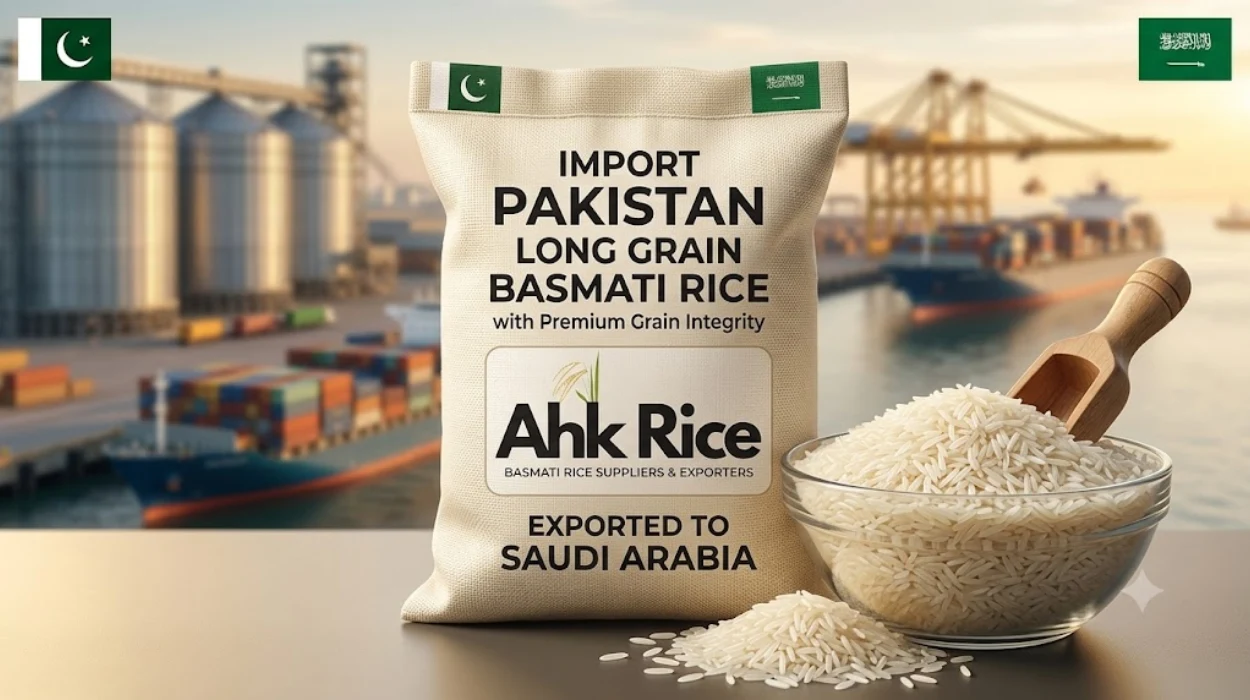
Import Pakistan Long Grain Basmati Rice with Premium Grain Integrity into Saudi Arabia
Importing Pakistan long grain Basmati rice with premium grain integrity into Saudi Arabia is best achieved through a supplier that controls cultivation, grading, quality testing, packaging, and export logistics. Here is why: premium grain integrity depends on processing precision, low broken percentages, verified quality standards, and consistent shipment execution. Buyers that source through a detailed grain preservation process designed for Saudi imports reduce quality risks and improve market acceptance.
Saudi Arabia remains one of the largest destinations for Pakistani Basmati rice exports because consumers value extra-long grain appearance, elongation after cooking, and authentic Basmati aroma. According to REAP export data and Pakistan export statistics, Saudi demand for premium Basmati grades continued to grow through 2025 and into 2026 due to retail, catering, hospitality, and private label requirements (source: REAP export data, December 2025).
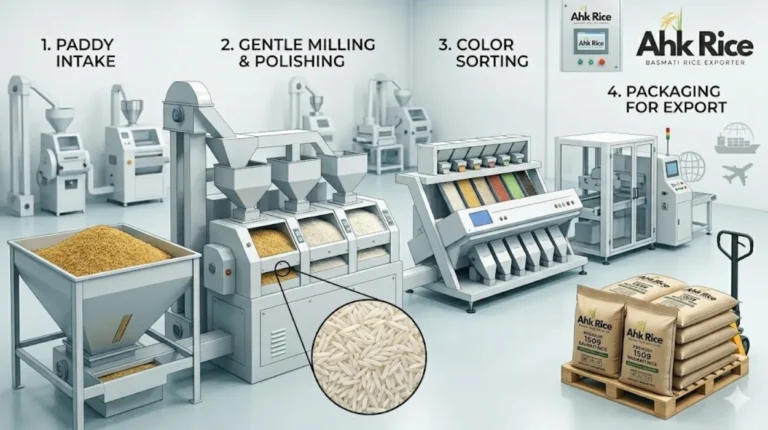
AHK Rice supplies premium long grain Basmati rice to Saudi importers through controlled processing, strict quality verification, and structured export documentation. AHK Rice manages each stage from paddy procurement to final shipment. This approach helps Saudi buyers maintain grain integrity from Pakistan to destination warehouses.
What is the best solution for importing premium grain integrity Basmati rice into Saudi Arabia?
1121 Basmati, Super Kernel Basmati, low broken percentages, controlled moisture levels, certified processing, and direct export management provide the most reliable solution for Saudi importers seeking premium grain integrity.
Premium grain integrity means grains arrive with minimal breakage, uniform appearance, consistent colour, and strong cooking performance. Saudi wholesalers often face quality variation when suppliers depend on multiple third-party processors. Grain damage increases during handling, storage, and shipment.
AHK Rice solves this issue through integrated processing and export management. AHK Rice cultivates sourcing relationships in Punjab’s major Basmati-growing regions. AHK Rice then mills, grades, sorts, inspects, and packages rice under controlled conditions before export.
1121 Steam Basmati Rice
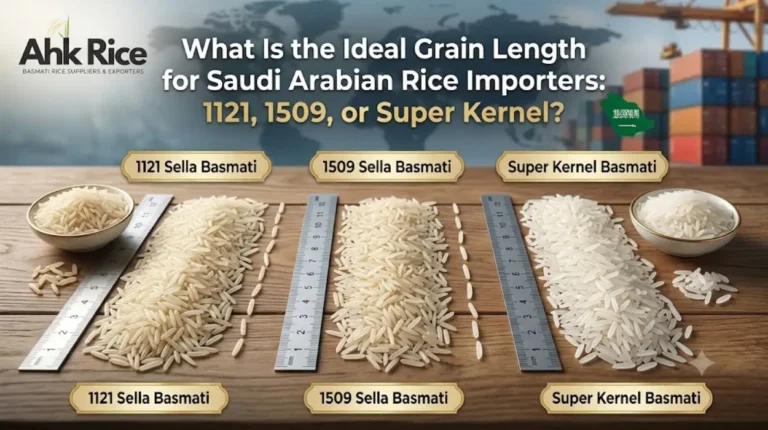
1121 Steam Basmati delivers exceptional grain length and premium presentation. Saudi supermarkets often select this grade because it combines natural appearance with strong elongation after cooking.
Specification Table
| Attribute | Specification |
|---|---|
| Grain Length | 8.30 mm+ |
| Broken Rice | 2%–5% |
| Moisture | 12%–13% |
| Purity | 95%–100% |
| Crop Type | New Crop |
| Packaging | 5kg–50kg |
| Market Use | Retail & Hospitality |
1121 Golden Sella Basmati Rice
1121 Golden Sella Basmati offers stronger durability during storage and transport. Saudi catering buyers frequently choose this grade because the parboiling process strengthens grain structure.
Specification Table
| Attribute | Specification |
|---|---|
| Grain Length | 8.20 mm+ |
| Broken Rice | 2%–5% |
| Moisture | 12%–13% |
| Purity | 95%–100% |
| Shelf Life | 18–24 months |
| Packaging | 5kg–50kg |
| Market Use | Catering & Food Service |
Golden Sella lasts longer than Steam rice. In high-temperature warehouse environments, Golden Sella maintains quality for extended storage periods. Saudi catering distributors often prefer this specification because inventory turnover can vary throughout the year.
AHK Rice provides both grades according to buyer specifications. AHK Rice also supports customized broken percentages, packaging formats, and branding requirements.
With the correct grade identified, the next question concerns proof of performance and expected business results.
What results can Saudi importers expect from premium grain integrity rice?
Lower customer complaints, stronger retail acceptance, reduced warehouse losses, higher cooking yield, and repeat purchase rates are the primary commercial outcomes.
Premium grain integrity directly influences consumer perception. Saudi consumers associate long, unbroken grains with quality and authenticity.
Rice with lower broken percentages improves shelf presentation. Retail buyers often compare packaging visually before purchase. Uniform grain appearance increases product attractiveness.
Hospitality businesses benefit differently. Hotels and restaurants focus on cooking performance. Premium Basmati grains elongate significantly during cooking while maintaining separation.
AHK Rice documents each stage to ensure consistency across shipments. Saudi importers gain predictable product quality and improved supply chain confidence.
How do low broken percentages affect commercial performance?
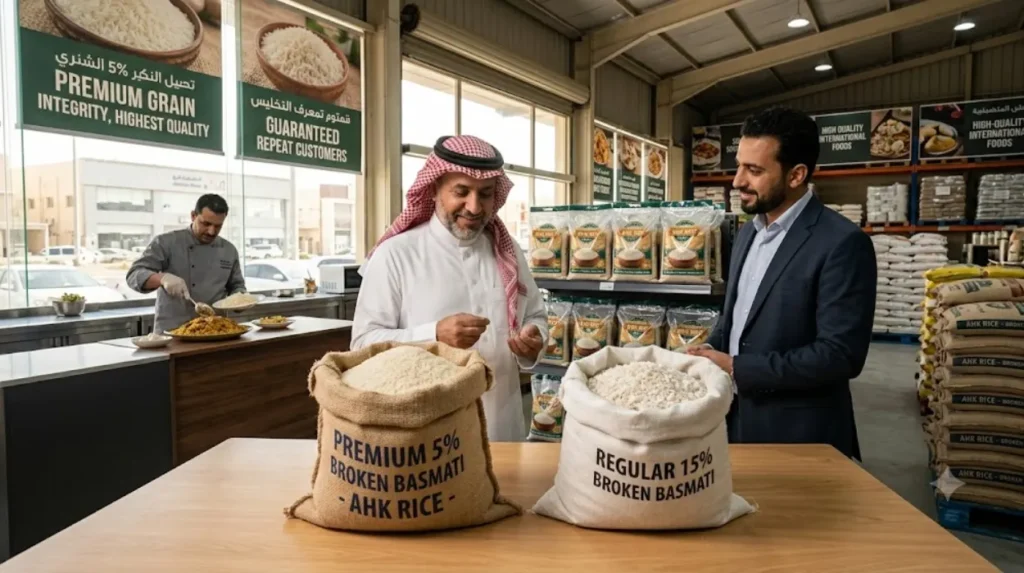
Broken percentages below 5% increase market value and improve customer satisfaction.
Broken grains reduce visual appeal. Retail customers often perceive higher broken levels as lower quality.
Saudi distributors importing premium brands generally request low broken specifications. Buyers seeking deeper technical comparisons can review the comparison of Pakistani Basmati grades with the lowest broken percentages for Saudi buyers.
AHK Rice offers multiple broken specifications according to contract requirements. AHK Rice verifies these specifications before shipment release.
With expected performance established, importers must evaluate pricing and cost drivers before making a sourcing decision.
What factors affect the cost of importing Pakistani long grain Basmati rice into Saudi Arabia?
Rice grade, broken percentage, crop quality, packaging format, container volume, freight rates, and customization requirements have the greatest impact on landed cost.
Rice pricing changes according to supply conditions and market demand. Premium grain integrity products command higher prices because processing losses increase when mills remove broken kernels.
Major Cost Factors
| Cost Factor | Impact on Price |
|---|---|
| Grain Length | High |
| Broken Percentage | High |
| Packaging Type | Medium |
| Freight Costs | High |
| Purity Level | Medium |
| Crop Season | High |
| Private Label Requirements | Medium |
Saudi importers purchasing full container loads often achieve better pricing efficiency. Larger annual contracts typically improve production planning and freight coordination.
AHK Rice works with buyers to determine specifications before pricing. This process reduces misunderstandings and creates accurate quotations.
Typical 2026 Shipping Transit Times to Saudi Arabia
15–28 days depending on destination port and vessel schedule.
| Saudi Destination | Estimated Transit Time |
|---|---|
| Jeddah Islamic Port | 15–20 Days |
| Dammam Port | 18–24 Days |
| Riyadh via Dammam | 22–28 Days |
| Jizan Region | 20–28 Days |
Transit schedules vary according to vessel availability, customs processing, and seasonal shipping conditions.
AHK Rice coordinates export documentation before vessel departure to minimize avoidable delays.
Cost evaluation naturally leads to the next decision factor: sampling and supplier verification.
How does the sample process work before placing a commercial order?
Physical samples, laboratory verification, specification approval, and pre-shipment confirmation create the safest purchasing process for Saudi importers.
Professional rice procurement begins with sampling. Samples allow buyers to verify grain length, aroma, cooking characteristics, colour, and broken percentages before committing to container purchases.
AHK Rice follows a structured sample process.
Sample Approval Process
Typical Sample Costs
| Item | Typical Cost Range |
|---|---|
| Sample Material | Often Complimentary |
| Courier Charges | USD 35–100 |
| Laboratory Testing | Optional |
| Cooking Evaluation | Buyer Managed |
| Commercial Quotation | Included |
Courier expenses vary by destination and shipment speed. Express delivery generally reaches Saudi Arabia within several business days.
AHK Rice supports buyers during evaluation by providing specification sheets, quality reports, and packaging details.
AHK Rice also helps private label clients review packaging designs before production begins.
With supplier verification complete, the final step is placing an order and launching commercial supply.
How can Saudi importers get started with AHK Rice?
Define specifications, approve samples, confirm packaging, review documentation, and schedule production to begin importing premium Pakistani Basmati rice.
Saudi buyers should begin by identifying the intended sales channel. Retail distribution, wholesale trading, food service, and hospitality sectors require different specifications.
AHK Rice assists buyers in selecting the correct grade for their target market. AHK Rice then prepares product specifications, packaging options, and commercial quotations.
Required Export Documents
AHK Rice verifies shipment requirements before dispatch. AHK Rice also coordinates production schedules to align with delivery timelines.
Saudi importers benefit from consistent specifications, transparent documentation, and reliable shipment management. AHK Rice combines quality control, export experience, and Saudi market understanding into a single sourcing solution.
Premium grain integrity determines long-term customer satisfaction. Premium grain integrity influences brand reputation. Premium grain integrity also affects profitability across retail and food service channels.
AHK Rice helps importers secure these advantages through verified quality standards, controlled processing, and efficient export execution. Contact AHK Rice today to discuss your specifications and submit a request through /request-a-quote/.
Frequently Asked Questions
How much broken grain percentage is acceptable for premium Saudi Arabian Basmati rice imports?
Premium Saudi importers typically prefer 2% to 5% broken grain specifications for retail and hospitality markets. Lower broken percentages improve visual appeal, enhance customer satisfaction, and support premium pricing. Many Saudi distributors choose 1121 Basmati grades with strict grading standards to maintain brand reputation.
Which Pakistani Basmati rice grade is most popular in Saudi Arabia?
1121 Steam Basmati Rice and 1121 Golden Sella Basmati Rice are the most popular grades in Saudi Arabia. Steam rice is widely used in retail channels because of its natural appearance and aroma, while Golden Sella is preferred by catering and food-service buyers because of its durability and longer shelf life.
How long does it take to ship Pakistani Basmati rice to Saudi Arabia?
Shipping times generally range from 15 to 28 days, depending on the destination port and vessel schedule. Jeddah shipments often arrive within 15–20 days, while inland deliveries through Dammam can require additional transit time. Customs clearance and seasonal shipping demand can also affect delivery schedules.
What documents are required to import Basmati rice into Saudi Arabia?
Saudi importers commonly require a Commercial Invoice, Packing List, Certificate of Origin, Phytosanitary Certificate, Bill of Lading, and quality-related documents. Requirements may vary based on import regulations and buyer specifications. Exporters should verify all documentation before shipment dispatch.
Can Saudi buyers request private label packaging for Pakistani Basmati rice?
Yes. Many Saudi wholesalers, retailers, and distributors import Pakistani Basmati rice under their own brand names. Exporters can provide customized packaging sizes, branded bags, private label printing, and tailored product specifications to match market requirements.