How Long Does Basmati Rice Shipping Take from Pakistan to UAE?
Basmati rice shipping from Pakistan to the UAE typically takes 10–18 days from container loading to delivery at a UAE port. Here is why: sea transit usually requires 3–7 days, while processing, inspection, documentation, and container loading require an additional 7–11 days before vessel departure.
Pakistan ranks among the world’s largest Basmati rice exporters, and the UAE remains one of its biggest import destinations (source: Pakistan Bureau of Statistics, FY2024-25). Understanding shipping timelines helps importers, wholesalers, distributors, and food service companies plan inventory accurately.
Basmati rice shipping involves cultivation, processing, grading, certification, loading, customs clearance, ocean transport, and destination handling. Each stage affects delivery schedules. Understanding these stages creates a realistic expectation for shipment planning and inventory management.
What Is Basmati Rice Shipping from Pakistan to UAE?
Shipping Basmati rice from Pakistan to the UAE means processing rice, loading export containers, completing customs procedures, and transporting cargo through Arabian Sea routes within approximately 10–18 days.
Basmati rice is a long-grain aromatic rice cultivated primarily in Punjab, Pakistan. Major export varieties include 1121 Basmati, Super Kernel Basmati, and 1509 Basmati. These varieties are harvested, milled, graded, packed, and prepared for export.
Rice exporters dispatch containers mainly from Karachi Port and Port Qasim. Containers travel to major UAE ports such as Jebel Ali, Khalifa Port, and Port Rashid.
Shipping timelines include both pre-shipment and transit activities. Many buyers focus only on sea transit. Export preparation often consumes more time than ocean transportation.
With the shipping concept established, the next question is how the complete export timeline works.
How Does the Basmati Rice Export Timeline Work?
The complete timeline usually requires 7–11 days for export preparation and 3–7 days for sea transit, creating a total shipping cycle of 10–18 days.
How Is Rice Prepared Before Export?
Rice processing begins after paddy arrives at the mill. Export-quality rice passes through several controlled stages.
- Clean the paddy.
- De-husk the grain.
- Polish the rice.
- Grade by length.
- Sort by color.
- Test moisture levels.
- Inspect quality parameters.
- Pack export bags.
- Load containers.
These nine processing steps ensure consistency and compliance with buyer specifications.
How Is the Container Prepared?
Container preparation normally requires 1–2 days.
Export teams perform the following activities:
- Container inspection
- Fumigation verification
- Packaging verification
- Weight confirmation
- Pallet arrangement
- Seal application
Quality teams inspect containers before loading. Clean containers reduce contamination risks and maintain product integrity.
How Is Export Clearance Completed?
Export clearance generally requires 1–3 days.
Required export documents include:
- Commercial Invoice
- Packing List
- Certificate of Origin
- Phytosanitary Certificate
- Fumigation Certificate
- Bill of Lading
- Quality Inspection Report
Customs authorities verify shipment details before vessel loading.
With export preparation complete, the next question is which factors influence shipping duration.
What Factors Affect Shipping Time?
Port schedules, customs clearance, container availability, documentation accuracy, and vessel frequency create the largest impact on shipping duration.
Port congestion affects loading schedules. Busy shipping periods increase waiting times at terminals.
Container availability influences booking confirmation. Exporters secure containers before dispatching cargo to ports.
Documentation accuracy prevents clearance delays. Missing certificates extend processing times significantly.
Weather conditions occasionally influence vessel schedules. Arabian Sea routes remain relatively stable compared to longer international routes.
Religious holidays also affect logistics operations. Reduced working hours slow customs and terminal activities.
Transit planning becomes easier after understanding these factors. The next question focuses on the specific components involved.
What Are the Key Components of Rice Shipping?
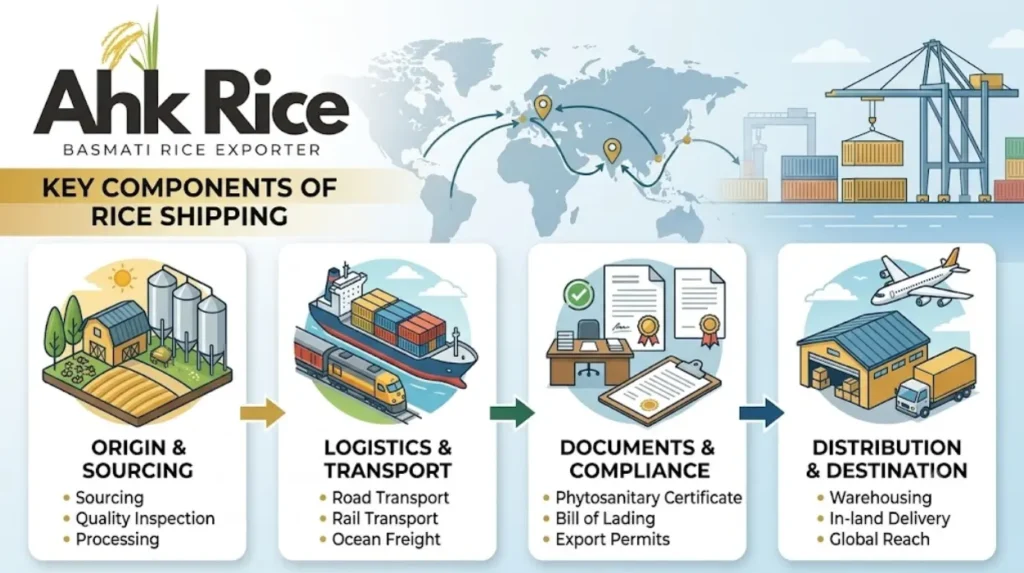
Rice shipping depends on five core components: processing, grading, packaging, certification, and logistics management.
Processing
Processing converts harvested paddy into export-ready rice. Processing determines grain appearance, purity, and market suitability.
Grading
Grading separates rice according to length, purity, and broken percentage.
Common export grades include:
- Extra Long Grain
- Long Grain
- Premium Grade
- Sortex Grade
- Double Sortex Grade
- Low Broken Grade
- Customized Buyer Grade
Each grade serves different market requirements.
Packaging
Packaging protects rice during transportation.
Common packaging options include:
- 1 kg bags
- 5 kg bags
- 10 kg bags
- 20 kg bags
- 25 kg bags
- 40 kg bags
- 50 kg bags
Certification
Certification confirms compliance with importing country regulations.
Logistics
Logistics coordinates vessel booking, container movement, customs clearance, and final delivery.
Understanding these components leads naturally to the benefits of efficient shipping systems.
What Benefits Come from Efficient Rice Shipping?
Efficient rice shipping reduces inventory shortages, improves product freshness, lowers logistics costs, and supports predictable supply chain planning.
Inventory planning improves when delivery schedules remain consistent. Importers can forecast stock requirements more accurately.
Product quality remains stable during controlled transportation. Proper packaging and container preparation preserve grain characteristics.
Logistics efficiency reduces storage costs. Faster movement minimizes warehouse holding periods.
Retailers benefit from reliable supply continuity. Food service companies maintain uninterrupted procurement schedules.
Distributors gain better purchasing control. Consistent lead times support long-term procurement planning.
These benefits explain why buyers closely monitor shipping schedules. The next question examines practical use cases.
Where Is Pakistani Basmati Rice Commonly Used After Import?
Imported Pakistani Basmati rice serves retail markets, restaurants, catering companies, wholesalers, distributors, and food manufacturers throughout the UAE.
Retail Distribution
Retailers package rice for supermarkets and grocery chains.
Popular retail examples include:
- 1 kg packs
- 5 kg packs
- 10 kg packs
Restaurant Supply
Restaurants prefer premium grades with long grain elongation.
Examples include:
- Biryani restaurants
- Fine dining establishments
- Hotel kitchens
Catering Operations
Catering businesses often purchase larger packaging formats.
Examples include:
- Wedding caterers
- Corporate caterers
- Institutional kitchens
Wholesale Distribution
Wholesalers import full container loads and distribute across regional markets.
The diversity of use cases highlights the importance of reliable logistics. The next section addresses common misconceptions.
What Common Misconceptions Exist About Rice Shipping Timelines?
The most common misconception is that sea transit alone determines delivery time. Processing, inspection, loading, and documentation often consume more time than transportation itself.
Many buyers assume containers depart immediately after purchase confirmation. Export preparation requires several operational stages.
Some buyers believe all rice grades follow identical timelines. Customized specifications often require additional grading and inspection procedures.
Another misconception involves certification requirements. UAE imports require document verification before customs processing.
Many importers expect vessel departures every day. Shipping lines operate according to scheduled sailings, not buyer preferences.
Some buyers assume packaging does not affect timelines. Custom packaging frequently requires additional production scheduling.
Understanding these misconceptions creates a clearer picture of realistic shipping expectations.
Which Certifications Apply to Basmati Rice Exports to UAE?
Phytosanitary certificates, certificates of origin, fumigation certificates, quality inspection reports, and customs documents represent the most common export certifications.
Phytosanitary Certificate
Agricultural authorities issue phytosanitary certificates after inspection. These certificates verify plant health compliance.
Certificate of Origin
Certificates of origin confirm the rice was cultivated and processed in Pakistan.
Fumigation Certificate
Fumigation certificates verify pest-control treatment before shipment.
Quality Inspection Report
Inspection reports verify buyer specifications, including grain length, purity, moisture, and broken percentage.
Certification requirements vary by importer and regulatory procedures. Documentation accuracy remains essential for smooth customs clearance.
With certifications covered, the complete shipping timeline becomes easier to understand.
Basmati rice shipping from Pakistan to the UAE generally requires 10–18 days. Export preparation accounts for 7–11 days, while sea transit normally requires 3–7 days. Processing, grading, certification, documentation, container loading, customs clearance, and vessel scheduling all influence delivery speed. Understanding each stage helps importers plan inventory accurately and avoid supply chain disruptions.
Frequently Asked Questions
How many days does rice shipping take from Pakistan to UAE?
Basmati rice shipments usually require 10–18 days, including export preparation and sea transit.
Which Pakistani ports handle Basmati rice exports?
Most rice exports depart through Karachi Port and Port Qasim.
How long does sea transit from Pakistan to UAE take?
Sea transit generally requires 3–7 days, depending on vessel schedules and destination ports.
What documents are required for rice export to UAE?
Common documents include a Commercial Invoice, Packing List, Certificate of Origin, Phytosanitary Certificate, Fumigation Certificate, and Bill of Lading.
Which Basmati varieties are commonly exported to UAE?
The most imported varieties include 1121 Basmati, Super Kernel Basmati, and 1509 Basmati.
What causes delays in rice shipments?
Common causes include documentation errors, container shortages, port congestion, vessel schedule changes, and customs processing delays.
Does packaging affect shipping timelines?
Yes. Custom packaging specifications require additional preparation and quality inspection time before container loading.