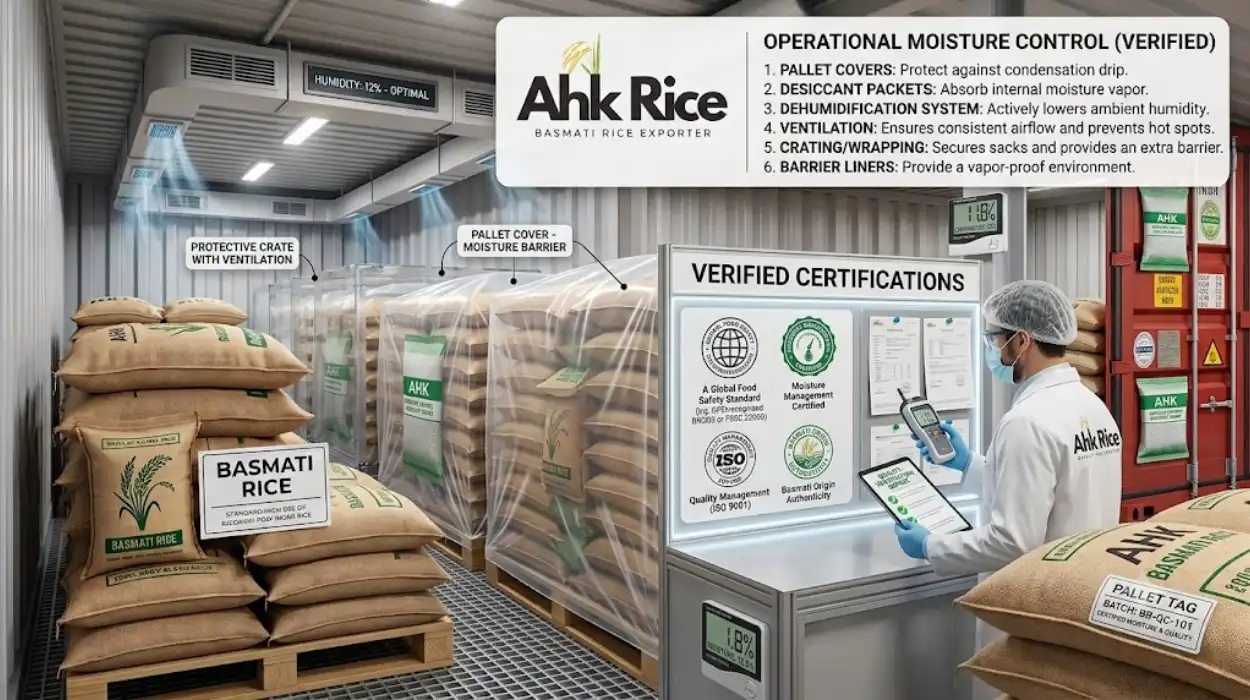
Source Export-Grade Low Moisture Basmati Rice for UK Importers
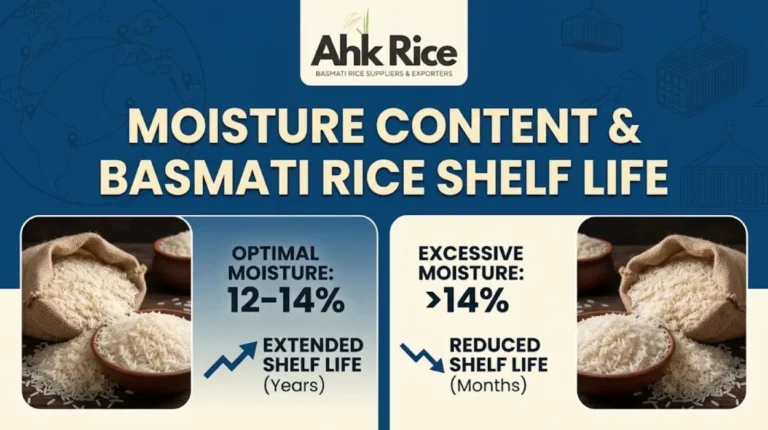
Source export-grade low moisture Basmati rice from a verified Pakistani exporter. Here is why: low moisture rice reduces transit risk, improves shelf life, supports UK food compliance, and lowers quality claims during shipping. UK importers prefer moisture-controlled Basmati because long transit periods can affect grain appearance, aroma, and cooking performance.
UK buyers reviewing moisture specifications often begin by understanding why the parameter matters before purchase. Our guide on rice import quality requirements and moisture specifications explains the procurement risks that importers evaluate before placing orders.
For UK wholesalers, retailers, ethnic food distributors, and foodservice suppliers, AHK Rice supplies export-grade low moisture Basmati rice with documented quality testing, shipment preparation, and export documentation. AHK Rice works with importers seeking consistent specifications, transparent sampling, and dependable shipping schedules from Pakistan.
What Is the Best Solution for UK Importers Seeking Low Moisture Basmati Rice?
The best solution is rice tested at 12–13% moisture, quality verified before loading, and shipped with export documentation supporting UK import requirements.
Low moisture Basmati rice maintains grain integrity throughout international transportation. Extended sea transit can expose containers to changing temperatures. Moisture-controlled rice reduces the risk of condensation-related quality issues.
AHK Rice inspects every shipment before dispatch. AHK Rice tests moisture levels, verifies grain specifications, and confirms packaging suitability before loading containers.
Export Grades Available
AHK Rice supplies:
- 1121 Steam Basmati Rice
- 1121 Golden Sella Basmati Rice
- 1121 White Basmati Rice
- Super Kernel Basmati Rice
- PK 385 Basmati Rice
- Traditional Basmati Rice
- Brown Basmati Rice
Key Export Specifications
| Specification | Typical Range |
|---|---|
| Moisture | 12–13% |
| Grain Length | 8.2–8.4 mm |
| Purity | 95–100% |
| Broken Grains | 0.5–5% |
| Foreign Matter | Near Zero |
| Packaging | 1kg–50kg |
| Shelf Life | 18–24 Months |
AHK Rice verifies these specifications through pre-shipment inspection reports.
With export specifications established, the next question is why supplier selection matters for long-term importing success.
Why Choose AHK Rice for UK Basmati Rice Imports?
AHK Rice offers verified specifications, export experience, sampling support, documentation assistance, and reliable shipment scheduling for UK buyers.
AHK Rice cultivates sourcing relationships within Pakistan’s Basmati-growing regions. Punjab remains the primary production area for premium export Basmati.
AHK Rice follows a structured processing sequence:
- Clean the paddy
- De-husk the grain
- Dry the rice
- Polish the kernels
- Grade by size
- Sort by colour
- Inspect the batch
- Test moisture levels
- Load export containers
Each step contributes to consistency.
Quality Control Features
- Moisture control
- Colour sorting
- Metal detection
- Laboratory testing
- Pre-shipment inspection
- Container verification
- Export certification
AHK Rice verifies quality before dispatch rather than after shipment. This approach reduces disputes and protects importer margins.
UK buyers also compare shipping protection measures. The article <a href=”/how-does-moisture-control-protect-rice-during-international-shipping/”>how moisture management safeguards rice during overseas transport</a> explains why moisture stability remains critical during sea freight.
With supplier capabilities reviewed, the next consideration is the measurable results importers can expect.
What Results Can UK Importers Expect from Low Moisture Basmati Rice?
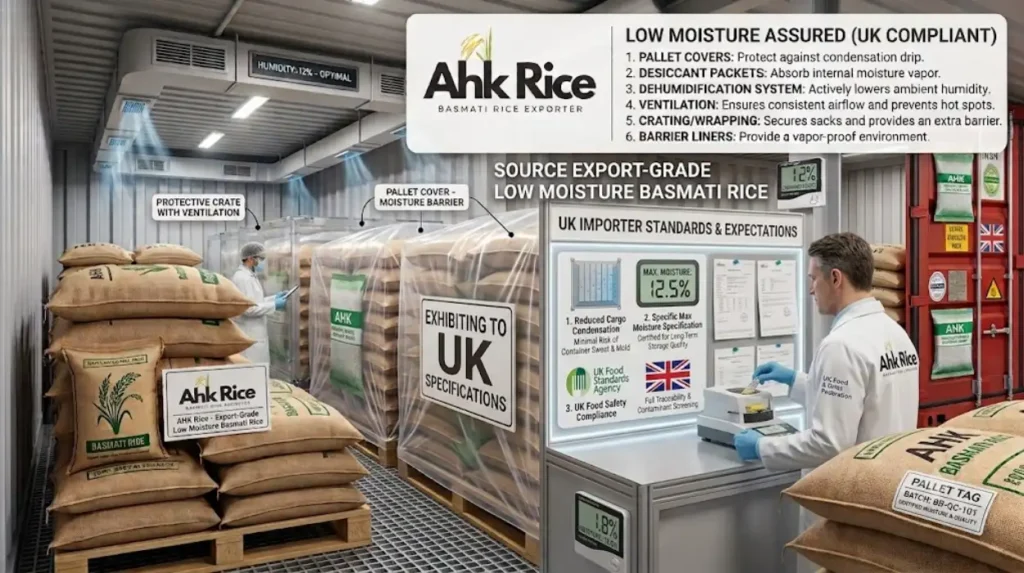
Expected outcomes include fewer quality claims, longer shelf life, stronger customer satisfaction, and more predictable inventory performance.
Low moisture rice performs consistently in wholesale distribution. Retailers benefit from stable packaging conditions. Foodservice operators benefit from predictable cooking results.
Improved Shelf Life
Rice containing controlled moisture stores longer. Properly packed export-grade Basmati typically maintains quality for 18–24 months.
Higher moisture rice may experience quality deterioration sooner. Long-distance shipments increase this risk.
Better Grain Appearance
Low moisture rice preserves grain shape. Long kernels remain visually attractive after cooking.
Premium UK retailers often prefer long-grain presentation because appearance influences purchasing decisions.
Reduced Commercial Risk
Importers face fewer customer complaints when specifications remain consistent. Consistency supports repeat orders and stronger retailer relationships.
AHK Rice provides specification reports before shipment confirmation. This documentation supports purchasing confidence.
With expected outcomes understood, cost considerations become the next decision factor.
What Factors Affect the Cost of Export-Grade Low Moisture Basmati Rice?
Price depends on rice grade, crop quality, packaging format, order volume, processing method, and shipping destination.
Several variables influence export pricing.
Rice Grade
1121 Basmati generally commands premium pricing because of its extra-long grain characteristics.
Traditional Basmati and Super Kernel grades may follow different pricing structures depending on market demand.
Processing Method
Processing affects export value.
- White Rice Processing
- Steam Processing
- Golden Sella Processing
- Brown Rice Processing
Golden Sella often attracts buyers seeking stronger grain durability.
Steam rice remains popular among retail markets requiring lighter colour profiles.
Packaging Requirements
Packaging influences costs.
- Retail packs
- Printed bags
- PP woven bags
- Non-woven bags
- Private label packaging
Custom branding generally increases production expenses.
Freight Costs
Shipping costs vary by destination port, fuel conditions, and container availability.
According to Pakistan’s rice export sector data, the UK remains a consistent destination for premium Basmati imports (source: REAP export data, December 2025).
With pricing factors covered, buyers usually want to understand shipping schedules before placing orders.
How Long Does Shipping Take from Pakistan to the UK?
Most UK shipments arrive within 25–40 days depending on port selection, vessel schedules, and customs clearance requirements.
Transit planning affects inventory management.
Typical Shipping Times
| Market | Estimated Transit Time |
|---|---|
| United Kingdom | 25–40 Days |
| Germany | 25–35 Days |
| Netherlands | 25–35 Days |
| France | 25–40 Days |
| Saudi Arabia | 12–18 Days |
| UAE | 10–15 Days |
| Iraq | 15–25 Days |
| Canada | 35–50 Days |
| United States | 35–55 Days |
| Australia | 30–45 Days |
AHK Rice coordinates documentation before loading to reduce avoidable delays.
Shipping performance matters most when supported by proper product approval procedures, which begins with sampling.
What Is the Sample Process and Associated Cost?
Most export samples are prepared within 3–5 working days, while courier delivery typically requires another 3–7 days.
Sampling allows UK buyers to verify specifications before placing larger orders.
Sample Process
- Request the required grade
- Confirm specification targets
- Prepare representative samples
- Test moisture and quality
- Pack sample materials
- Dispatch through courier service
- Review buyer feedback
- Finalise commercial quotation
Typical Sample Quantities
| Sample Type | Quantity |
|---|---|
| Evaluation Sample | 500g–1kg |
| Commercial Sample | 2–5kg |
| Approval Sample | 5–10kg |
Sample Costs
| Cost Item | Typical Range |
|---|---|
| Product Sample | Often Free |
| Courier Charges | £25–£80 |
| Special Testing | Additional Cost |
| Custom Packaging Sample | Additional Cost |
AHK Rice frequently provides product samples while buyers cover courier expenses. Final arrangements depend on project requirements.
With sampling complete, the final step involves beginning the sourcing process.
How Do UK Importers Get Started?
The process begins with specification confirmation, sample approval, commercial quotation, and shipment scheduling.
AHK Rice works with importers seeking long-term sourcing relationships rather than one-time transactions.
Required Buyer Information
- Required rice grade
- Target moisture specification
- Packaging format
- Annual volume
- Destination port
- Private label requirements
- Delivery schedule
Export Documents Provided
- Commercial Invoice
- Packing List
- Certificate of Origin
- Phytosanitary Certificate
- Bill of Lading
- Fumigation Certificate
- Inspection Reports
AHK Rice prepares export documentation before shipment dispatch to support smooth customs processing.
AHK Rice supports buyers throughout sourcing, sampling, contracting, loading, and delivery. AHK Rice focuses on specification consistency. AHK Rice prioritises moisture control. AHK Rice verifies quality before shipment. AHK Rice supplies multiple Basmati grades for UK commercial requirements. Contact AHK Rice through the request a quote form to receive pricing and sample information.
Frequently Asked Questions
What moisture level should UK importers request?
UK importers commonly request rice with moisture levels between 12% and 13%. This range supports stable shipping performance and extended shelf life. Lower moisture reduces condensation risks during transit. Consistent moisture also improves grain appearance after arrival. Many wholesale buyers use this specification as a procurement benchmark.
Which Basmati grade is most popular in the UK?
1121 Basmati remains one of the most demanded grades in the UK market. The variety offers extra-long grains and strong cooking performance. Retailers prefer its visual appearance and premium positioning. Foodservice distributors value consistency across batches. Demand remains strong throughout ethnic and mainstream retail channels.
How quickly can samples be shipped?
Most samples are prepared within three to five working days. Courier transit generally requires three to seven additional days. Delivery speed depends on destination and courier selection. Testing requirements may add preparation time. Early specification confirmation helps accelerate dispatch.
What packaging options are available?
Export packaging ranges from retail consumer packs to bulk commercial bags. Common formats include 1kg, 5kg, 10kg, 20kg, and 50kg packaging. Private label solutions are also available. Packaging can be customised for specific market requirements. Buyers should confirm branding needs before production.
Why is low moisture rice important for imports?
Low moisture rice performs better during long international shipments. Controlled moisture helps preserve grain quality and aroma. Stable specifications reduce the risk of customer complaints. Importers benefit from longer storage periods and predictable inventory performance. Moisture control also supports overall product consistency.