Why Do Premium Saudi Arabian Rice Brands Prioritize Purity in Pakistan Basmati Rice?
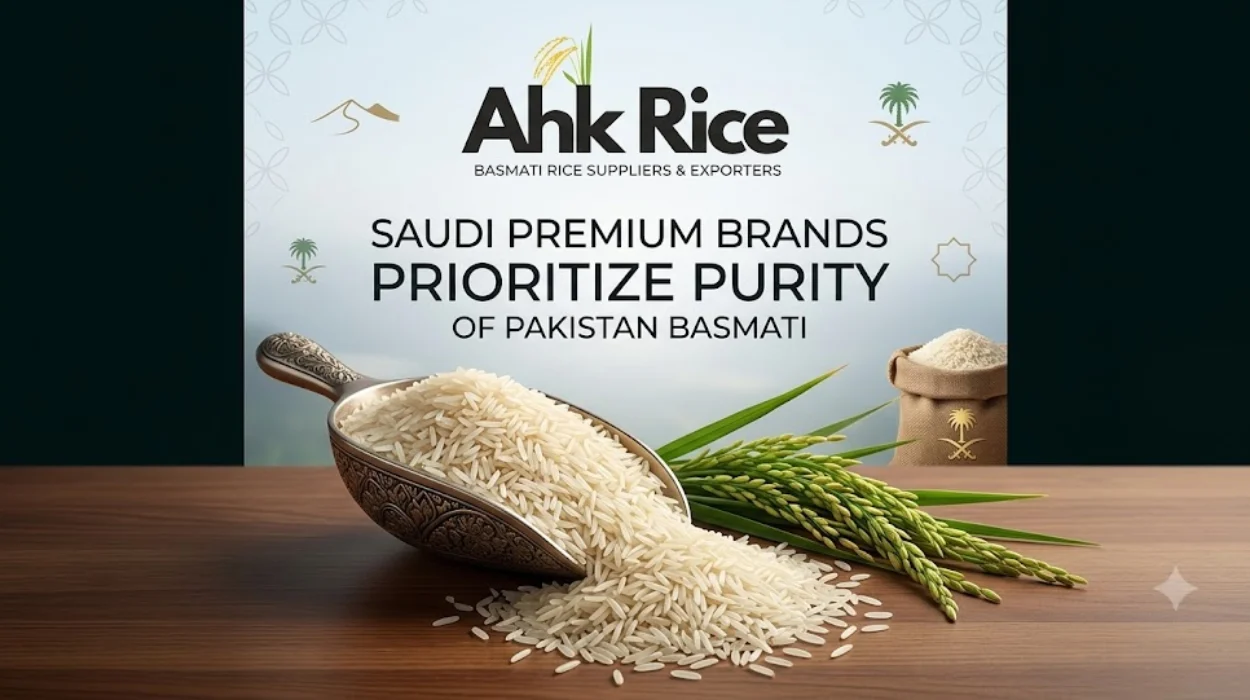
Premium Saudi Arabian rice brands prioritize purity in Pakistan Basmati rice because it determines product consistency, cooking performance, food safety, consumer trust, and compliance with Saudi food import standards. Rice with high varietal purity delivers uniform grain length, consistent aroma, predictable water absorption, and stable quality throughout storage and distribution.
Saudi Arabia remains one of the largest import markets for Pakistani Basmati rice in 2026. Retail brands, food service distributors, hotels, catering companies, and private-label businesses purchase large quantities of 1121, Super Kernel, and 1509 Basmati rice every year. These buyers evaluate purity before shipment because it directly affects the appearance and performance of every package sold to consumers.
Pakistan grows authentic Basmati rice primarily in Punjab, where fertile alluvial soil, glacier-fed irrigation, and favorable temperatures create ideal growing conditions. Modern exporters process harvested paddy through grading, sorting, polishing, laboratory testing, and packaging before international shipment. Every processing stage contributes to maintaining varietal purity.
Understanding purity helps importers evaluate quality beyond grain size alone. It explains why premium Saudi brands consistently choose suppliers capable of maintaining strict quality specifications from cultivation to container loading.
What Does Purity Mean in Pakistan Basmati Rice?
Purity in Pakistan Basmati rice refers to the percentage of grains belonging to one declared rice variety without unwanted mixtures, damaged kernels, foreign materials, immature grains, or excessive broken rice. High purity produces consistent cooking quality, appearance, aroma, and commercial value for importers.
Purity describes the composition of a rice shipment. A rice lot labeled as Pakistan 1121 should primarily contain genuine 1121 grains rather than a mixture of different varieties such as Super Kernel or 1509.
Purity also includes the absence of contaminants.
Examples include:
- Stones
- Husk particles
- Dust
- Weed seeds
- Metal fragments
- Foreign cereal grains
Modern rice laboratories evaluate purity through physical inspection, laboratory sampling, and varietal identification. Export quality reports measure admixture percentages, broken grain percentages, damaged kernels, moisture content, and foreign matter.
Saudi Arabian importers frequently include purity specifications within purchase contracts because premium retail packaging depends on uniform grain appearance.
Why Do Premium Saudi Arabian Rice Brands Place So Much Importance on Purity?
Premium Saudi rice brands depend on purity because consumers expect identical cooking performance, long grains, rich aroma, attractive appearance, and stable quality in every package. Maintaining purity protects brand reputation, minimizes customer complaints, and supports consistent retail shelf performance throughout Saudi Arabia.
Consumers immediately notice differences in cooked rice.
Mixed varieties absorb water differently.
Different grain lengths cook at different speeds.
Different starch structures create inconsistent texture.
These differences reduce consumer confidence in premium brands.
Saudi supermarkets compete heavily in the premium food category. Rice brands differentiate themselves through visual quality, grain length, aroma, and consistency instead of price alone.
Hotels, restaurants, and catering companies also require predictable cooking performance. Uniform grains produce consistent serving portions, attractive presentation, and repeatable recipes across thousands of meals.
Brand owners therefore prioritize purity before shipment rather than correcting quality problems after import.
How Is High-Purity Pakistan Basmati Rice Produced?
High-purity Pakistan Basmati rice results from controlled cultivation, separate harvesting, scientific drying, precision milling, optical sorting, laboratory inspection, and secure packaging. Every production stage removes impurities while preserving the natural characteristics of the selected Basmati variety throughout processing.
Rice purity begins before harvesting.
Seed Selection
Certified seed ensures fields contain one intended variety.
Using mixed seed produces mixed harvests.
Professional growers maintain varietal separation from planting until harvest.
Cultivation
Punjab farmers prepare land through laser leveling, irrigation management, and balanced fertilizer application.
Healthy crops produce mature grains with fewer defects.
Disease monitoring reduces damaged kernels.
Harvesting
Harvesting occurs when grain moisture reaches appropriate maturity.
Separate harvesting equipment prevents different varieties from mixing.
Transportation also follows variety-specific handling procedures.
Drying
Fresh paddy contains elevated moisture.
Mechanical or controlled drying reduces moisture to safe processing levels.
Uniform drying protects grain structure and preserves milling quality.
Milling
Rice mills remove:
- Husk
- Bran layer
- Surface impurities
Carefully adjusted milling equipment minimizes grain breakage.
Color Sorting
Optical color sorters identify defective kernels using high-speed cameras.
The machines remove:
- Discolored grains
- Chalky kernels
- Foreign materials
- Damaged rice
Length Grading
Length graders separate grains according to physical dimensions.
Uniform grain size improves cooking consistency.
Laboratory Testing
Quality laboratories inspect every production batch.
Typical testing includes:
- Moisture
- Broken percentage
- Foreign matter
- Chalkiness
- Grain dimensions
- Purity percentage
Packaging
Clean packaging protects rice from contamination during transportation.
Proper sealing preserves quality until arrival in Saudi Arabia.
Which Components Determine Rice Purity?
Rice purity depends on several measurable quality components including varietal identity, grain uniformity, foreign matter percentage, broken grain level, moisture content, damaged kernels, and laboratory compliance. Together these specifications determine commercial quality and export acceptance.
Varietal Purity
Varietal purity measures how much of the shipment belongs to one rice variety.
Higher varietal purity creates uniform cooking.
Grain Uniformity
Uniform grains improve appearance.
Examples include identical length, similar width, and consistent maturity.
Foreign Matter
Foreign matter includes non-rice materials.
Examples include stones, straw, dust, and weed seeds.
Premium export specifications maintain extremely low foreign matter levels.
Broken Rice
Broken kernels cook differently from whole grains.
Premium retail brands prefer lower broken percentages because package appearance improves.
Damaged Kernels
Damaged kernels include cracked, insect-affected, heat-damaged, or discolored grains.
Removing damaged rice improves shelf quality.
Moisture
Proper moisture preserves storage stability.
Controlled moisture also reduces spoilage during ocean transportation.
Laboratory Certification
Independent testing confirms compliance with buyer specifications before shipment.
Laboratory reports provide measurable quality evidence.
What Benefits Does High-Purity Pakistan Basmati Rice Provide?
High-purity Pakistan Basmati rice delivers superior appearance, consistent cooking, longer shelf stability, reduced processing losses, stronger consumer satisfaction, and better commercial performance. These advantages explain why premium Saudi brands specify strict purity requirements in supply contracts.
Uniform grains absorb water evenly.
Cooking becomes predictable.
Consumers receive consistent texture every time.
Premium packaging also benefits.
Straight, long grains create attractive shelf presentation.
Visual quality influences purchasing decisions.
Higher purity reduces sorting work for food processors.
Industrial kitchens spend less time removing defective grains before cooking.
Food safety improves because foreign materials remain at very low levels.
Distribution efficiency also increases.
Retail returns decrease when product consistency remains stable.
Brand reputation grows through repeat customer satisfaction.
Where Is High-Purity Pakistan Basmati Rice Used?

High-purity Pakistan Basmati rice serves premium retail brands, supermarkets, hotels, restaurants, catering companies, luxury hospitality businesses, private-label food companies, and food manufacturing industries that require consistent grain quality, cooking performance, and attractive finished products.
Retail packaging represents one major application.
Consumers purchasing premium rice expect long, aromatic grains.
Hotels require consistent presentation.
Examples include banquet services, wedding catering, and luxury dining.
Restaurants depend on uniform cooking.
Examples include Kabsa preparation, Biryani service, Mandi restaurants, and buffet operations.
Food manufacturers also value consistency.
Examples include frozen meal production, packaged ready-to-eat meals, and seasoned rice products.
Private-label supermarket brands require stable specifications because identical products must remain available throughout the year.
What Problems Reduce Rice Purity?
Rice purity declines because of mixed cultivation, poor harvesting practices, inadequate cleaning, equipment contamination, improper storage, excessive moisture, and insufficient quality inspection. Each problem introduces unwanted variation that reduces commercial quality and export value.
Mixed seed planting produces different rice varieties within one field.
Harvesting multiple varieties using unclean machinery transfers grains between batches.
Improper storage introduces contaminants.
Examples include dust, insects, rodents, and moisture.
Poor milling adjustments increase broken rice percentages.
Insufficient color sorting allows damaged kernels to remain inside finished products.
Weak quality inspection fails to identify specification deviations before shipment.
Each problem reduces consistency.
Professional processing minimizes these risks through standardized quality control systems.
What Misconceptions Exist About Rice Purity?
Several misconceptions confuse rice buyers. Purity does not mean chemical treatment, expensive pricing, or identical grain color alone. It represents measurable varietal consistency, physical cleanliness, and quality conformity verified through recognized inspection procedures and laboratory testing.
Larger Grain Always Means Higher Purity
Long grain length alone does not define purity.
A shipment can contain very long grains while still including mixed varieties or foreign materials.
White Rice Is Automatically Pure
Color alone does not measure quality.
Purity depends on laboratory-tested composition.
Aroma Determines Purity
Natural aroma reflects varietal characteristics.
It does not replace physical purity evaluation.
Premium Price Guarantees Purity
Price reflects market conditions, demand, logistics, processing costs, and quality.
Laboratory specifications remain the objective measurement.
Visual Inspection Alone Is Enough
Human inspection identifies obvious defects.
Laboratory testing provides numerical quality verification.
Combining both methods creates reliable evaluation.
How Do International Certifications Support Rice Purity?
International certifications strengthen rice purity by standardizing production, processing, food safety, traceability, and quality management. Certification systems establish documented procedures that help exporters maintain consistent product specifications throughout the supply chain for international buyers.
Food safety certification documents processing controls.
Quality management systems establish standardized production procedures.
Traceability systems record every production stage from paddy reception to finished packaging.
Export inspections verify compliance before shipment.
Many Pakistani exporters also maintain laboratory documentation covering moisture, broken percentage, foreign matter, grain dimensions, and physical quality.
Government export regulations and internationally recognized management standards strengthen buyer confidence through documented compliance rather than visual inspection alone.
Why Does Purity Continue to Shape Saudi Arabia’s Premium Rice Market?
Purity remains central to Saudi Arabia’s premium rice market because consumers consistently associate uniform grains, reliable cooking, attractive appearance, and authentic Basmati quality with trusted retail brands. Higher purity strengthens customer satisfaction while supporting efficient distribution across modern food supply chains.
Saudi Arabia imports significant volumes of premium Pakistani Basmati every year.
Consumer expectations continue increasing.
Retail competition rewards consistent quality.
Modern laboratory technology also improves quality verification.
Optical sorting, digital grading systems, automated packaging, and traceability software allow exporters to monitor purity with greater precision than previous decades.
As premium food demand expands in 2026, purity remains one of the most important technical quality indicators for Pakistan Basmati rice exported to Saudi Arabia.
For readers who want to understand how different Pakistani Basmati varieties compare under Saudi import specifications, the next logical topic explores the quality differences between:
1121, 1509, and Super Kernel rice and how their purity standards are evaluated for commercial purchasing decisions.
Frequently Asked Questions
Why is purity important for premium Saudi Arabian rice brands?
Purity ensures consistent grain appearance, cooking performance, aroma, and quality, helping premium Saudi brands meet consumer expectations and maintain brand reputation.
How is the purity of Pakistan Basmati rice measured?
Purity is measured through laboratory analysis, physical inspection, varietal identification, and testing for foreign matter, broken grains, damaged kernels, and admixture levels.
Does grain length alone determine rice purity?
No. Long grain length is only one quality characteristic. True purity also depends on varietal consistency, cleanliness, and the absence of unwanted materials.
Which Pakistan Basmati varieties are commonly exported to Saudi Arabia?
The most commonly exported premium varieties are 1121 Basmati, 1509 Basmati, and Super Kernel Basmati, each serving different market preferences.
Can mixed rice varieties affect cooking quality?
Yes. Different varieties absorb water and cook differently, resulting in uneven texture, inconsistent grain length, and reduced presentation quality.
What processing steps improve rice purity?
Key processing steps include separate harvesting, controlled drying, milling, optical color sorting, length grading, laboratory testing, and hygienic packaging.
Which certifications support high-purity rice exports?
Food safety, quality management, and traceability certifications, along with export inspection reports and laboratory quality certificates, support high-purity rice exports.
Does higher purity increase shelf life?
Yes. High-purity rice with proper moisture levels and minimal contamination maintains quality longer during storage and international transportation.
Why do Saudi importers request laboratory quality reports?
Laboratory reports verify purity, moisture, broken percentage, foreign matter, and other specifications before shipment, ensuring compliance with contract requirements.
Is pure Pakistan Basmati rice suitable for food service businesses?
Yes. Hotels, restaurants, catering companies, and institutional kitchens prefer high-purity rice because it delivers consistent cooking results and attractive presentation.