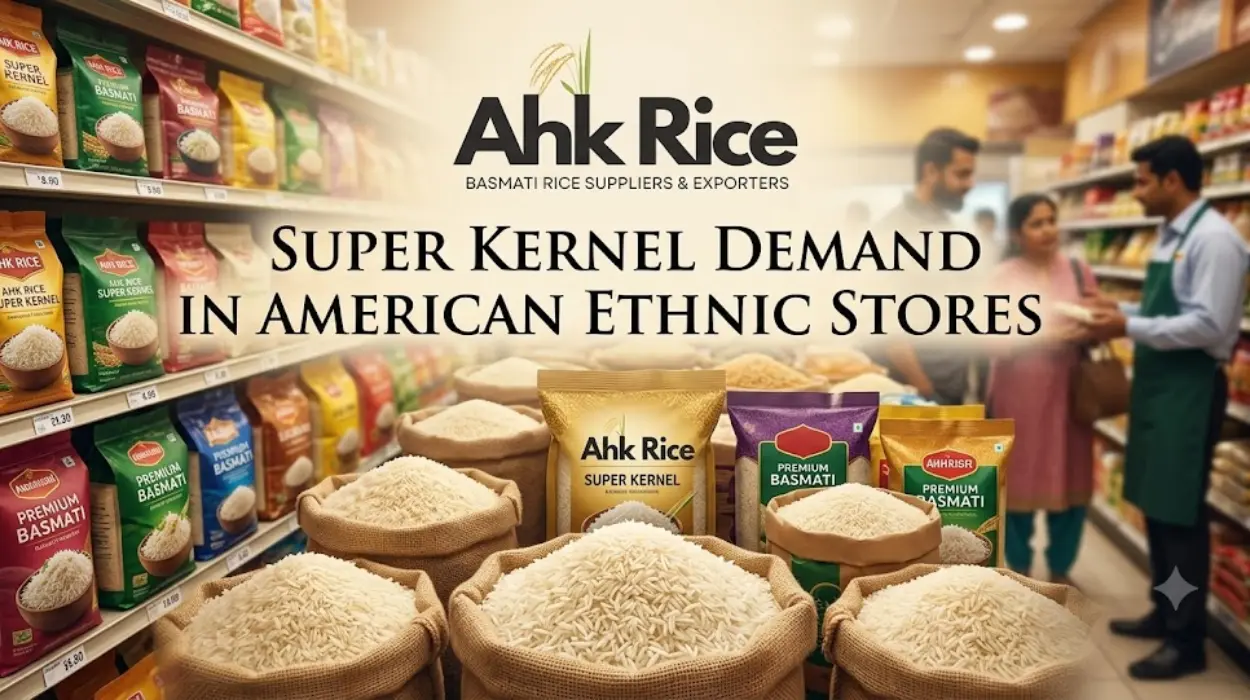
How Super Kernel Rice Built Demand Across American Ethnic Stores
Super Kernel Rice built demand across American ethnic stores because its long, slender grains, recognizable Basmati aroma, separate cooked texture, and suitability for South Asian, Middle Eastern, and halal-focused retail channels match the buying habits of customers seeking familiar rice varieties from Pakistan.
What is Super Kernel Rice?
Super Kernel Rice is a premium long-grain Basmati rice from Pakistan, known for its slender kernels, aromatic profile, elongated cooked grains, and separate texture. It is sold through ethnic grocery stores serving South Asian, Middle Eastern, and halal food customers across the United States.
Super Kernel is a commercial name used for a long-grain Basmati rice category produced in Pakistan. Basmati rice is a specialty aromatic rice associated with the Himalayan foothill region of Pakistan and India. In Pakistan, important Basmati-growing areas include Punjab districts such as Sheikhupura, Gujranwala, Hafizabad, Sialkot, Narowal, and Lahore.
Super Kernel is different from ordinary long-grain rice. Its market identity depends on aroma, kernel shape, cooking behavior, and grain elongation. Retail buyers evaluate these attributes because consumers often recognize Basmati through the cooked grain rather than the raw appearance alone.
The raw grain is slender and elongated. After cooking, a good Basmati grain expands mainly in length while retaining a separate appearance. This cooking behavior supports dishes such as biryani, pulao, pilaf, kabsa, and rice served with curries.
American ethnic stores helped establish a reliable retail channel for this product. These stores include Pakistani grocery stores, Indian grocery stores, Bangladeshi markets, Middle Eastern supermarkets, halal supermarkets, and international food retailers.
The product also fits a repeat-purchase category. Rice is a staple food, so households that prefer a specific grain type often repurchase the same variety. A recognizable package, consistent grain quality, and predictable cooking performance reinforce this behavior.
Where is Super Kernel Rice grown and produced?
Super Kernel Rice is primarily associated with Pakistan’s Punjab rice belt, where Basmati cultivation benefits from suitable soil, irrigation, climate, and seasonal conditions. Paddy is harvested, dried, milled, graded, packed, and prepared for export through Pakistan’s rice-processing industry.
Punjab provides the main production base for Pakistan Basmati rice. The crop is planted during the Kharif season and harvested after the rice plant reaches maturity.
Production begins with paddy cultivation rather than polished rice. Farmers grow rice plants in fields, manage irrigation, control weeds, and harvest mature paddy. The harvested material contains husk, bran, moisture, and impurities that must be removed during processing.
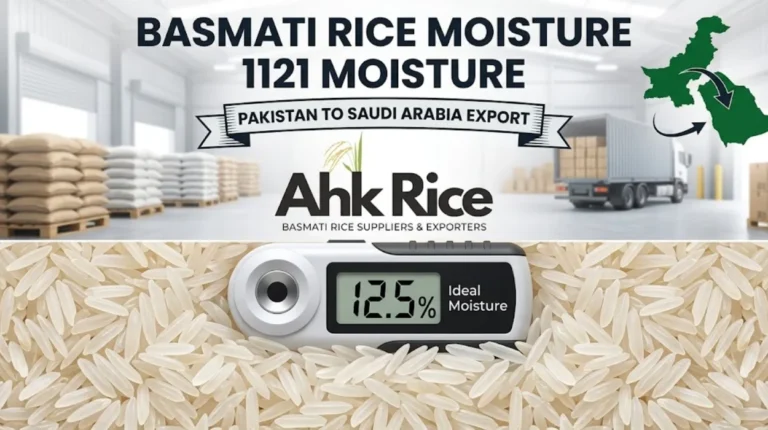
The harvested paddy then enters the post-harvest chain. Moisture control is important because excessive moisture increases storage and milling risks, while excessive drying affects milling yield and grain quality.
Pakistan’s rice mills use mechanical equipment to clean and process paddy. The objective is to produce uniform kernels with controlled foreign matter, broken grains, chalky grains, and other defects.
Super Kernel rice is therefore not simply a field crop name. It represents a commercial rice specification that depends on the interaction between cultivation, milling, grading, quality control, packaging, and export handling.
How is Super Kernel Rice processed step by step?
Super Kernel Rice moves through a controlled chain from paddy reception to cleaning, drying, husking, whitening, polishing, grading, sorting, inspection, packaging, and export preparation. Each stage removes a specific defect or controls a specific quality attribute required by retail and food-service buyers.
1. Paddy reception and inspection
The mill receives harvested paddy and checks its physical condition. Initial inspection identifies moisture, foreign material, damaged grains, immature kernels, and other quality factors.
2. Cleaning
Mechanical cleaners remove stones, dust, straw, metal particles, and other foreign materials. Cleaning reduces contamination risks before the paddy enters the milling system.
3. Drying and moisture control
Paddy is dried to an appropriate milling and storage condition. Moisture management affects milling efficiency, breakage, storage stability, and final product quality.
4. Husking
A husker removes the outer rice husk. The result is brown rice, which still contains the bran layer and germ.
5. Whitening
Whitening removes the bran layer from the brown rice. The degree of whitening affects the appearance and classification of the finished rice.
6. Polishing
Polishing improves surface appearance and produces the smooth white appearance expected from conventional white Super Kernel rice.
7. Length grading
Length grading separates whole kernels from broken kernels. This stage matters because retail customers associate premium Basmati with long, intact grains.
8. Color sorting
Optical sorters identify discolored grains and other visual defects. The machine uses cameras and controlled ejection systems to separate unwanted kernels from the finished stream.
9. Final inspection
Quality teams inspect the finished rice for grain appearance, broken percentage, foreign matter, moisture, and other contractual specifications.
10. Packaging
Finished rice is packed into retail or bulk formats. American ethnic stores commonly stock consumer packages ranging from smaller household bags to larger family-oriented formats.
11. Export preparation
Export orders require documentation, container preparation, labeling, customs procedures, and shipment coordination. The exact documentation depends on the destination, buyer, product, packaging, and applicable regulations.
This sequence explains why the grain sold on an American retail shelf represents more than a harvested crop. It is the final output of an agricultural, milling, grading, packaging, and export system.
What are the key quality components of Super Kernel Rice?
The main quality components are grain length, grain slenderness, whole-kernel percentage, broken percentage, moisture, aroma, color, foreign matter, cooking performance, and packaging integrity. Retail buyers evaluate these attributes together rather than relying on grain length alone.
Grain length and shape
Long, slender kernels create the visual identity associated with premium Basmati. Buyers compare raw and cooked grain appearance when evaluating different suppliers.
Whole-kernel percentage
Whole kernels have greater retail value than excessive broken rice. A high proportion of intact grains produces a more uniform appearance after cooking.
Broken grains
Broken kernels are normal in rice milling, but excessive broken content changes the commercial grade and consumer perception. Retail specifications therefore define acceptable limits.
Moisture
Moisture affects storage stability and milling performance. Buyers use moisture specifications as part of quality control because rice must remain stable during transportation and storage.
Aroma
Basmati is recognized for its characteristic aroma. Aroma becomes particularly noticeable during cooking and contributes to the product’s identity in dishes such as biryani and pulao.
Color and cleanliness
Uniform white appearance, low foreign matter, and controlled discoloration support retail presentation. Optical sorting plays an important role in achieving visual consistency.
Cooking performance
The cooked grain should remain separate and retain its elongated appearance. Cooking performance is a practical test of whether the rice meets consumer expectations.
Retail buyers that focus specifically on grain dimensions should also evaluate the measurable specifications discussed in:
Super Kernel Rice Grain Length Standards Retail Buyers Expect.
What grades and forms of Super Kernel Rice are available?
Super Kernel Rice is sold in different commercial forms based on processing method, grain condition, and buyer specification. Common forms include Super Kernel White Rice, Steam Rice, Sella or parboiled rice, and brown rice, with exact specifications established by contract.
Super Kernel White Rice
White rice is milled and polished to remove the bran layer. It provides the familiar white appearance found in many ethnic grocery stores.
Super Kernel Steam Rice
Steam processing partially gelatinizes the starch structure before drying and milling. The process improves grain firmness and reduces breakage during subsequent handling.
Super Kernel Sella Rice
Sella refers to parboiled rice. Paddy is treated with water and heat before drying and milling. This process changes the grain structure and produces a firmer cooked texture.
Super Kernel Brown Rice
Brown rice retains the bran layer after husk removal. It has a darker appearance and different cooking characteristics from white rice.
Grades can also differ according to whole kernels, broken percentage, grain dimensions, moisture, sorting requirements, and buyer specifications. A retail buyer should therefore treat “Super Kernel” as the product identity and the contractual specification as the quality definition.
Why did Super Kernel Rice gain demand in American ethnic stores?
Super Kernel Rice gained demand because American ethnic stores serve concentrated consumer groups with established preferences for Basmati aroma, long grains, separate cooking, and familiar South Asian meals. Retailers also benefit from a staple product that supports frequent household repurchases.
The United States has a large network of ethnic grocery businesses. Pakistani, Indian, Bangladeshi, Middle Eastern, and halal-oriented stores create specialized retail environments where customers actively search for familiar ingredients.
Rice is particularly suited to this channel because it appears in everyday meals and traditional dishes. A household buying rice for biryani requires a different cooking profile from a household buying generic short-grain rice for sushi.
Super Kernel also fits restaurant and catering demand. Ethnic stores often serve customers who operate restaurants, catering businesses, food trucks, and community kitchens. A retail product can therefore connect household demand with small-business food demand.
Packaging contributes to product recognition. Retailers can stock branded or private-label bags that communicate the rice type, origin, grain characteristics, cooking instructions, and package weight.
Pakistan’s geographic proximity to the Basmati production identity also matters. Customers familiar with Pakistani cuisine often recognize Pakistan-origin Basmati as a relevant product category rather than treating it as an interchangeable commodity.
Which American markets use Super Kernel Rice?
Super Kernel Rice is relevant to U.S. retail markets with established South Asian, Middle Eastern, and halal consumer bases. Major demand centers include metropolitan areas such as New York, New Jersey, Chicago, Houston, Dallas–Fort Worth, Los Angeles, Washington, D.C., and Northern Virginia.

The strongest retail opportunities follow population concentration and established ethnic food distribution networks.
New York and New Jersey have large South Asian and Middle Eastern communities. Retailers in these markets commonly carry multiple Basmati varieties because shoppers compare brands, origins, grain lengths, and processing types.
Chicago has a substantial South Asian retail network. Super Kernel fits stores serving Pakistani, Indian, Bangladeshi, and broader international customers.
Houston and Dallas–Fort Worth have large and growing international food markets. Retailers in these areas serve South Asian households alongside Middle Eastern and halal consumers.
Los Angeles and surrounding Southern California markets have diverse Asian and Middle Eastern food channels. Basmati rice competes with other rice categories but remains relevant in specialty grocery stores.
The Washington, D.C., metropolitan area and Northern Virginia also support South Asian grocery demand. Retailers serve customers from Pakistan, India, Bangladesh, Afghanistan, and other communities where long-grain aromatic rice is a household staple.
These markets are not defined only by ethnicity. American consumers increasingly purchase international ingredients based on cuisine, dietary habits, recipe preferences, and restaurant experiences. Super Kernel therefore operates within both ethnic retail and broader specialty-food channels.
What are the benefits of Super Kernel Rice for retail consumers?
Super Kernel Rice provides long cooked grains, recognizable Basmati aroma, separate texture, versatility across cuisines, and a familiar cooking profile. These properties make it suitable for household meals, restaurant dishes, festive cooking, catering, and retail consumers seeking premium aromatic rice.
Its strongest benefit is versatility. The same rice can support biryani, pulao, pilaf, curry meals, grilled meat dishes, and rice-based side dishes.
Its long grain also improves visual presentation. Separate, elongated grains create the appearance expected in many South Asian and Middle Eastern rice dishes.
Aroma provides another point of differentiation. Basmati rice develops its characteristic fragrance during cooking, which distinguishes it from many standard long-grain rice products.
The product also works across meal occasions. Consumers use Basmati for everyday meals, while restaurants and families use premium grades for weddings, religious celebrations, parties, and catered events.
What are the main use cases for Super Kernel Rice?
Super Kernel Rice serves household cooking, ethnic grocery retail, restaurants, catering, food service, wholesale distribution, and international cuisine preparation. Its long grain and aromatic cooking profile support dishes requiring separate, visually elongated rice kernels.
Household use includes biryani, pulao, steamed rice, curry meals, and rice bowls.
Restaurant use includes Pakistani, Indian, Bangladeshi, Afghan, Persian, and Middle Eastern dishes.
Catering use is important because large-volume cooking requires rice that retains a consistent appearance across large batches.
Wholesale distribution connects importers with supermarkets, independent ethnic stores, restaurants, and food-service businesses.
Private-label retail is another use case. Importers can purchase bulk rice and distribute it under a store-owned or distributor-owned brand, subject to labeling and regulatory requirements.
What certifications and compliance requirements apply to Super Kernel Rice exports to the USA?
U.S.-bound Super Kernel Rice must satisfy applicable food-safety, labeling, import, facility-registration, and phytosanitary requirements. Importers and exporters also need documentation that matches the product, shipment, packaging, origin, and U.S. regulatory requirements.
The U.S. Food and Drug Administration regulates imported food entering the United States. The Foreign Supplier Verification Programs framework requires covered U.S. importers to verify that foreign suppliers produce food in a manner meeting applicable U.S. food-safety standards.
Food facilities generally require FDA registration where applicable. Imported food also requires appropriate prior notice and entry documentation.
Rice shipments can also involve U.S. Department of Agriculture requirements, including plant-health controls administered through APHIS. The exact requirements depend on the commodity and shipment conditions.
Labeling must comply with U.S. requirements. Retail packages need accurate product identity, net quantity, manufacturer, packer or distributor information where applicable, country-of-origin information, and other required declarations.
Certifications such as HACCP-based food-safety systems, ISO 22000, BRCGS, halal certification, or laboratory test reports can support buyer requirements. These should not be treated as automatically mandatory for every shipment. The legal requirement depends on the product, importer, facility, and applicable U.S. rules.
What are common misconceptions about Super Kernel Rice?
The most common misconceptions concern the meaning of “Super Kernel,” grain length, aging, Basmati identity, and grade. Super Kernel does not mean every grain has an identical length, and a product name alone does not establish its complete contractual specification.
One misconception is that Super Kernel means every kernel has exactly the same dimensions. Milling naturally creates some variation, so buyers use defined tolerances and grading specifications.
Another misconception is that longer raw rice automatically means better rice. Grain length matters, but aroma, cooking performance, whole-kernel percentage, moisture, cleanliness, and consistency also determine commercial quality.
A third misconception is that all Basmati rice performs identically. Variety, processing method, aging, storage conditions, milling quality, and cooking method influence the final result.
A fourth misconception is that “premium” is a universal technical grade. Premium is a commercial positioning term unless the buyer defines measurable specifications.
A final misconception is that American ethnic stores demand only one type of rice. These retailers often stock several forms, including white, steam, Sella, brown, and different grain-length specifications.
Super Kernel Rice built demand because it connects measurable grain characteristics with established food traditions. Its commercial strength comes from a combination of Pakistani Basmati identity, long-grain appearance, aroma, cooking performance, retail familiarity, and demand across multiple U.S. ethnic food channels.
Frequently Asked Questions
What is Super Kernel Rice?
Super Kernel Rice is a Pakistani long-grain Basmati rice known for its slender kernels, aromatic profile, elongated cooked grains, and separate texture.
Where is Super Kernel Rice grown?
Super Kernel Rice is primarily associated with Pakistan’s Punjab rice-growing region, including districts such as Sheikhupura, Gujranwala, Hafizabad, Sialkot, Narowal, and Lahore.
How is Super Kernel Rice processed?
Super Kernel Rice is processed through paddy cleaning, drying, husking, whitening, polishing, length grading, color sorting, quality inspection, packaging, and export preparation.
What makes Super Kernel Rice different from ordinary long-grain rice?
Super Kernel Rice has the characteristic Basmati combination of long slender grains, aroma, grain elongation after cooking, and a separate cooked texture.
What are the main grades of Super Kernel Rice?
Common commercial forms include Super Kernel White Rice, Super Kernel Steam Rice, Super Kernel Sella Rice, and Super Kernel Brown Rice. Specifications vary by processing method and buyer requirements.
Why is Super Kernel Rice popular in American ethnic stores?
Super Kernel Rice matches the cooking preferences of South Asian, Middle Eastern, and halal-food consumers who use aromatic long-grain rice for dishes such as biryani, pulao, pilaf, and curry meals.
Which U.S. markets have demand for Super Kernel Rice?
Major demand centers include New York and New Jersey, Chicago, Houston, Dallas–Fort Worth, Los Angeles, Washington, D.C., and Northern Virginia, where established ethnic grocery networks serve South Asian and Middle Eastern communities.
What dishes are prepared with Super Kernel Rice?
Super Kernel Rice is used for biryani, pulao, pilaf, steamed rice, curry meals, rice bowls, grilled-meat dishes, catering menus, and other South Asian and Middle Eastern recipes.
What quality factors do retail buyers check?
Retail buyers commonly evaluate grain length, grain shape, whole-kernel percentage, broken grains, moisture, aroma, color, foreign matter, cooking performance, and packaging condition.
Does longer grain always mean better Super Kernel Rice?
No. Grain length is important, but commercial quality also depends on whole-kernel percentage, aroma, moisture, cleanliness, grain uniformity, and cooking performance.
What certifications apply to Super Kernel Rice exported to the USA?
U.S. shipments must meet applicable FDA food-safety and labeling requirements and relevant USDA or APHIS requirements. Buyers can also request certifications such as HACCP, ISO 22000, BRCGS, or halal certification.
What is the difference between Super Kernel White and Sella Rice?
Super Kernel White Rice is conventionally milled and polished, while Sella Rice is parboiled before milling. Sella generally produces a firmer cooked grain and different texture.
Why does moisture matter in Super Kernel Rice?
Moisture affects milling performance, grain breakage, storage stability, and product quality during transportation. Importers therefore specify moisture limits in purchasing contracts.
Is Super Kernel Rice suitable for U.S. restaurants?
Yes. Its long grain, aroma, and separate cooked texture make it suitable for Pakistani, Indian, Bangladeshi, Afghan, Middle Eastern, and other international restaurant cuisines.