Why Is Foreign Matter Testing Important Before Rice Export?
Foreign matter testing is essential before rice export. Here is why: foreign materials such as stones, dust, husk particles, metal fragments, weed seeds, and damaged grains reduce product safety, lower market value, and cause shipment rejection during import inspections. Foreign matter testing verifies rice purity, protects buyers, and ensures compliance with importing country regulations.
Rice exporters, importers, food manufacturers, and government authorities use foreign matter testing to verify grain cleanliness. International buyers expect rice shipments to meet defined specifications before loading. Clean rice supports food safety, customer satisfaction, and regulatory compliance. Foreign matter testing therefore acts as a critical quality control checkpoint before export.
What Is Foreign Matter Testing in Rice Export?
Foreign matter testing identifies and measures non-rice materials present in rice lots before shipment.
Foreign matter refers to any material that does not belong in the final rice product. Examples include stones, sand, straw pieces, weed seeds, dust particles, metal fragments, plastic pieces, and husk remnants. Testing determines the percentage of these contaminants within a sample.
Rice quality standards define acceptable foreign matter limits. Importers specify these limits in purchase contracts. Many premium markets require foreign matter levels below 0.1% to 0.5%, depending on rice grade and destination country.
Foreign matter testing involves collecting representative samples from production batches. Inspectors separate contaminants manually or mechanically. Laboratories then calculate the percentage of foreign material against total sample weight.
Rice exporters conduct this testing before loading containers. Importers repeat testing upon arrival. Consistent results reduce disputes and strengthen trade relationships.
With the definition established, the next question is how foreign matter testing works throughout the rice export process.
How Does Foreign Matter Testing Work Before Rice Export?
Sampling, separation, measurement, and verification form the four core stages of foreign matter testing.
Rice processors inspect rice at multiple stages before export. Testing begins after milling and continues until final packaging. Each stage removes different contamination risks.
Sampling Procedures
Sampling ensures laboratory results represent the entire rice lot. Inspectors collect rice from different bags, silos, or production lines. Multiple samples create a composite sample for analysis.
Representative sampling prevents inaccurate results. A single sample from one bag cannot represent a shipment containing 25 metric tonnes.
Separation Procedures
Inspectors separate contaminants from rice using visual inspection and specialized equipment. Foreign particles differ in size, colour, density, or shape.
Testing teams identify:
- Stones
- Sand particles
- Husk fragments
- Straw pieces
- Weed seeds
- Plastic particles
- Metal fragments
- Dust accumulation
Measurement Procedures
Laboratories weigh the separated contaminants. Analysts compare contaminant weight against total sample weight.
The calculation follows a simple formula:
Foreign Matter (%) = Foreign Material Weight ÷ Sample Weight × 100
A sample weighing 1,000 grams with 2 grams of contaminants contains 0.2% foreign matter.
Verification Procedures
Independent inspection companies verify test results before shipment. Exporters often request third-party verification for high-value contracts.
Inspection reports become part of export documentation. Buyers use these reports to confirm compliance before dispatch.
With testing procedures explained, the next step is understanding the equipment and systems used to remove contaminants.
What Components Help Remove Foreign Matter from Rice?
Colour sorters, gravity separators, magnets, de-stoners, graders, and aspiration systems remove most contaminants.
Modern rice processing facilities use multiple cleaning systems because different contaminants require different removal methods.
Colour Sorters
Colour sorting machines detect visual defects. Optical sensors identify discoloured grains, foreign seeds, and unwanted particles.
Colour sorters improve rice appearance and reduce contamination simultaneously.
De-Stoners
De-stoners separate stones from rice through density differences. Stones move differently than rice grains under controlled vibration.
This process removes one of the most common contaminants found after harvesting.
Magnetic Separators
Magnetic separators remove ferrous metal particles from rice streams.
Metal contamination creates food safety risks and damages processing equipment. Magnets eliminate these hazards before packaging.
Gravity Separators
Gravity separators sort materials based on weight differences.
Heavier contaminants move separately from rice grains. This system removes dense foreign particles efficiently.
Aspiration Systems
Aspiration equipment removes lightweight contaminants using controlled airflow.
Dust, husk fragments, and straw particles separate from rice during aspiration.
Rice Graders
Graders classify rice by size and shape.
Size separation helps remove broken particles and non-uniform materials before export packaging.
With contamination control systems covered, the next question is why buyers and exporters place such importance on testing results.
What Benefits Does Foreign Matter Testing Provide?
Higher food safety, regulatory compliance, shipment acceptance, customer confidence, and export profitability result from effective testing.
Foreign matter testing protects every participant in the supply chain.
Improved Food Safety
Food safety begins with contamination control. Stones, metal fragments, and plastic particles create physical hazards for consumers.
Testing identifies these risks before products reach retail shelves.
Better Regulatory Compliance
Many importing countries enforce strict food safety regulations. Customs authorities inspect imported rice for contamination.
Compliant shipments clear customs faster and avoid detention.
Reduced Shipment Rejections
Rejected containers generate substantial costs. Exporters pay additional storage, inspection, and return freight charges.
Foreign matter testing reduces rejection risks by identifying problems before dispatch.
Increased Buyer Confidence
Importers purchase rice based on documented specifications.
Verified testing results provide measurable evidence of quality. Consistent compliance strengthens long-term commercial relationships.
Enhanced Brand Reputation
Quality consistency influences buyer loyalty.
Exporters who maintain low contamination levels earn stronger reputations in competitive markets.
With the benefits understood, the next question concerns the markets that rely most heavily on foreign matter testing.
Which Export Markets Require Strict Foreign Matter Testing?
European, North American, Gulf, Australian, and East Asian markets enforce detailed rice cleanliness requirements.
Importing countries establish quality standards to protect consumers and maintain food safety systems.
European Union
European buyers apply strict food safety regulations.
Rice imports undergo inspections for contaminants, pesticide residues, and quality compliance. Non-compliant shipments face rejection or additional testing requirements.
United Kingdom
UK food importers require documented quality assurance programs.
Rice suppliers provide laboratory reports verifying foreign matter compliance before shipment.
Gulf Cooperation Council Markets
Countries such as Saudi Arabia, UAE, Qatar, Kuwait, Bahrain, and Oman import large rice volumes annually.
Cleanliness standards remain important because rice serves both retail and hospitality sectors.
Australia
Australian biosecurity regulations focus heavily on contamination control.
Foreign seeds, plant materials, and agricultural residues receive special scrutiny during import inspections.
North America
United States and Canadian importers require documented quality specifications.
Inspection procedures verify compliance with food safety requirements and commercial contracts.
With market requirements explained, the next question addresses common misunderstandings about rice cleanliness testing.
What Common Misconceptions Exist About Foreign Matter Testing?
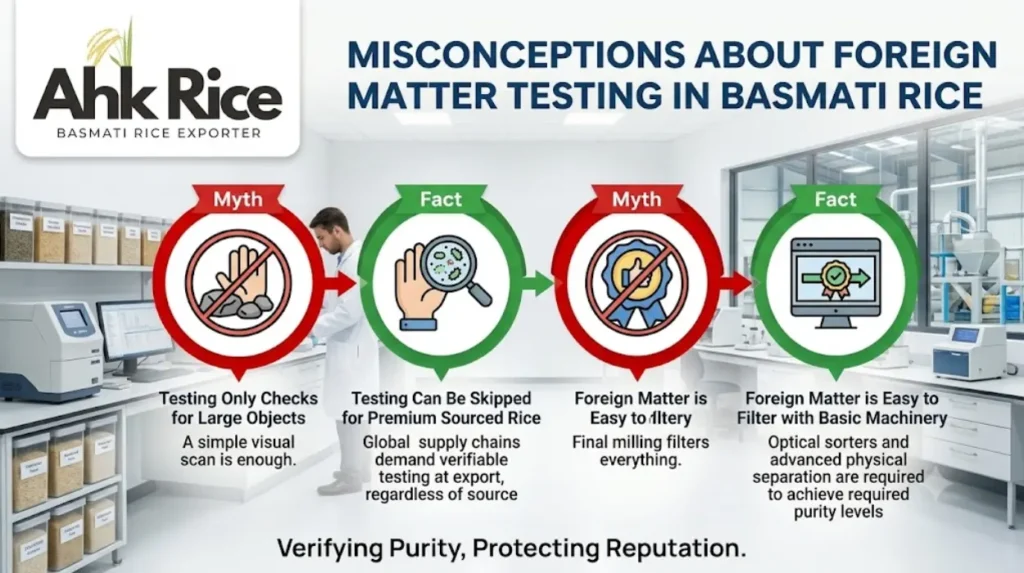
Visual cleanliness alone does not guarantee compliance, and modern processing does not eliminate testing requirements.
Several misconceptions create confusion among exporters and buyers.
Clean Rice Does Not Always Mean Tested Rice
Rice can appear clean while still containing microscopic contaminants.
Laboratory testing provides measurable evidence that visual inspection cannot deliver.
Processing Equipment Does Not Replace Verification
Modern machinery removes most contaminants.
Verification testing confirms that equipment achieved the required performance level.
Low Foreign Matter Levels Still Matter
Some exporters assume small contamination levels are insignificant.
Import contracts specify exact limits. Even minor deviations can trigger disputes.
Testing Is Not Only for Premium Rice
All rice categories require contamination control.
Premium Basmati, long-grain white rice, parboiled rice, and broken rice shipments all undergo cleanliness verification.
One Inspection Is Not Enough
Rice quality changes throughout processing and storage.
Multiple inspections maintain consistent quality from milling through container loading.
With misconceptions clarified, the final question concerns how foreign matter testing supports the broader rice export supply chain.
Why Does Foreign Matter Testing Matter for the Entire Rice Supply Chain?
Testing protects consumers, supports regulatory compliance, preserves product value, and enables international trade.
Rice moves through several stages before reaching consumers. Farmers cultivate and harvest paddy. Mills dehusk and polish grains. Exporters package and dispatch shipments. Importers distribute products to retailers and food service companies.
Foreign matter testing connects every stage through measurable quality verification.
Rice exporters use testing to meet contractual specifications. Importers use testing to verify received goods. Regulators use testing to enforce food safety standards. Consumers benefit from cleaner and safer food products.
Global rice trade depends on trust. Testing creates documented evidence that supports that trust. Reliable testing therefore remains one of the most important quality control activities before rice export.
Frequently Asked Questions
What is considered foreign matter in rice?
Foreign matter includes stones, sand, straw, husk fragments, weed seeds, dust, plastic particles, and metal fragments that are not part of the rice grain.
Why do rice importers require foreign matter testing?
Importers require testing to verify food safety, confirm contract compliance, and reduce the risk of receiving contaminated shipments.
How is foreign matter measured in rice?
Laboratories separate contaminants from a representative sample, weigh them, and calculate their percentage against the total sample weight.
Which equipment removes foreign matter from rice?
De-stoners, colour sorters, magnetic separators, gravity separators, aspiration systems, and graders remove different types of contaminants.
Can a rice shipment be rejected because of foreign matter?
Yes. Shipments exceeding contractual or regulatory contamination limits can face rejection, detention, or additional inspections.
How often should foreign matter testing be performed?
Testing should occur during processing, before packaging, and before container loading to maintain consistent quality.