Source Quality Inspected Basmati Rice for UK Distribution Networks
UK distribution networks require consistent quality, verified specifications, and reliable supply. Source-quality inspected Basmati rice reduces import risk, protects distributor reputation, and ensures compliance with retail, wholesale, and foodservice standards across the United Kingdom.
Distributors that purchase rice without documented inspection often face issues such as foreign matter, broken grain variation, moisture inconsistencies, and customer complaints. Businesses that first understand the importance of quality verification through resources such as How Do Inspection Procedures Verify Rice Cleanliness Standards foreign matter testing before rice export are better positioned to make informed sourcing decisions.
What is the best solution for sourcing Basmati rice for UK distribution networks?
The most effective solution is sourcing independently inspected Basmati rice from an experienced exporter that follows documented quality controls, provides laboratory verification, supports sampling programs, and maintains consistent specifications across every shipment destined for UK wholesale, retail, and foodservice distribution channels.
UK distributors operate in a competitive environment where consistency matters as much as price. A single shipment containing quality deviations can create operational problems throughout the supply chain.
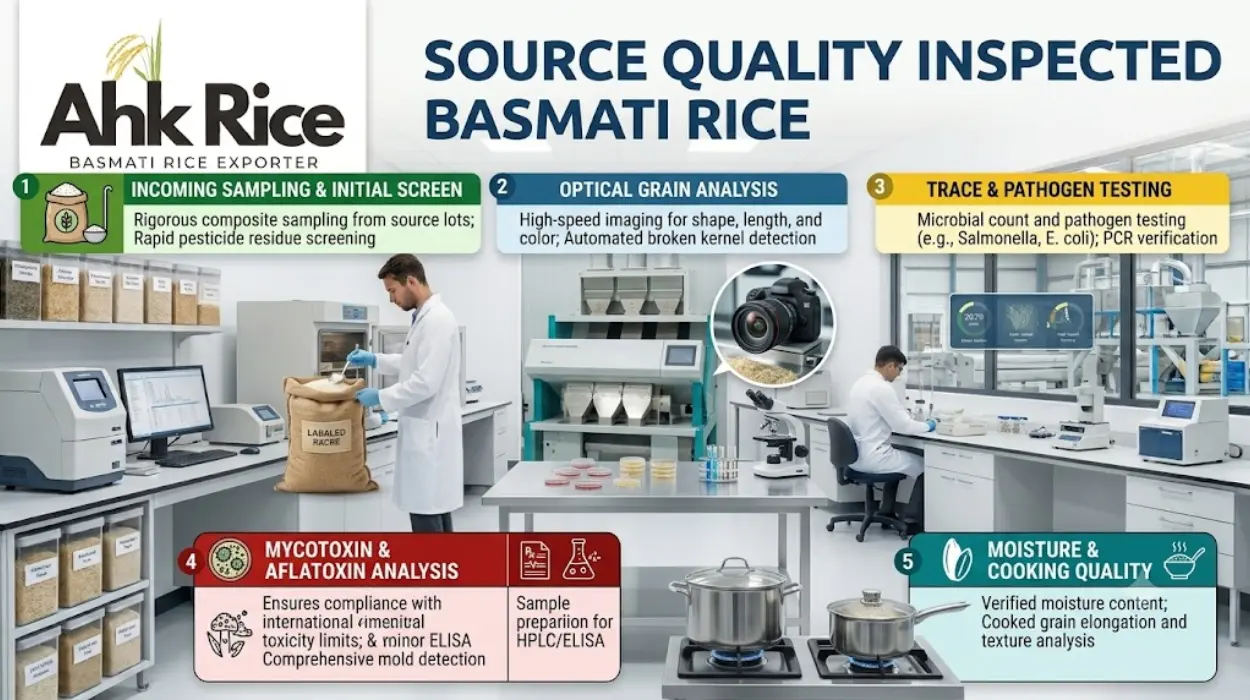
The best approach is to source rice that undergoes structured inspection before packing and loading. This process verifies grain length, moisture levels, purity, broken percentage, and foreign matter content. The resulting inspection records provide confidence before cargo leaves the origin country.
AHK Rice supplies source-quality inspected Basmati rice specifically for international buyers who require predictable product performance. By implementing inspection controls before shipment, AHK Rice helps distributors reduce uncertainty and improve inventory planning.
For businesses comparing inspection standards and cleanliness verification methods, understanding how <a href=”/how-do-inspection-procedures-verify-rice-cleanliness-standards/”>inspection procedures verify rice cleanliness standards</a> provides useful insight into supplier evaluation.
The goal is simple. Buyers should receive exactly the specification they ordered. This reduces claims, improves customer satisfaction, and strengthens long-term distributor relationships.
Why is source inspection important before rice reaches the UK market?
Source inspection confirms that rice meets agreed specifications before export, reducing quality disputes, minimizing financial risk, improving regulatory confidence, and helping distributors receive consistent inventory that matches commercial agreements, packaging requirements, and customer expectations throughout the supply chain.
Inspection at origin provides an additional layer of protection for importers. Instead of discovering issues after container arrival, buyers receive documented verification before shipment.
Typical inspection points include:
- Grain length analysis
- Moisture testing
- Foreign matter evaluation
- Broken grain measurement
- Color sorting verification
- Packaging inspection
- Container loading supervision
AHK Rice incorporates these controls to ensure shipments align with buyer specifications. This process is particularly important for distributors supplying supermarkets, ethnic food retailers, and foodservice operators.
When quality verification happens before export, corrective actions can be implemented immediately. This saves time, prevents disputes, and protects profit margins.
Many UK importers now require documented inspection records as part of their procurement procedures. AHK Rice supports this requirement through transparent quality documentation and shipment records.
Why choose AHK Rice for UK distribution supply programs?
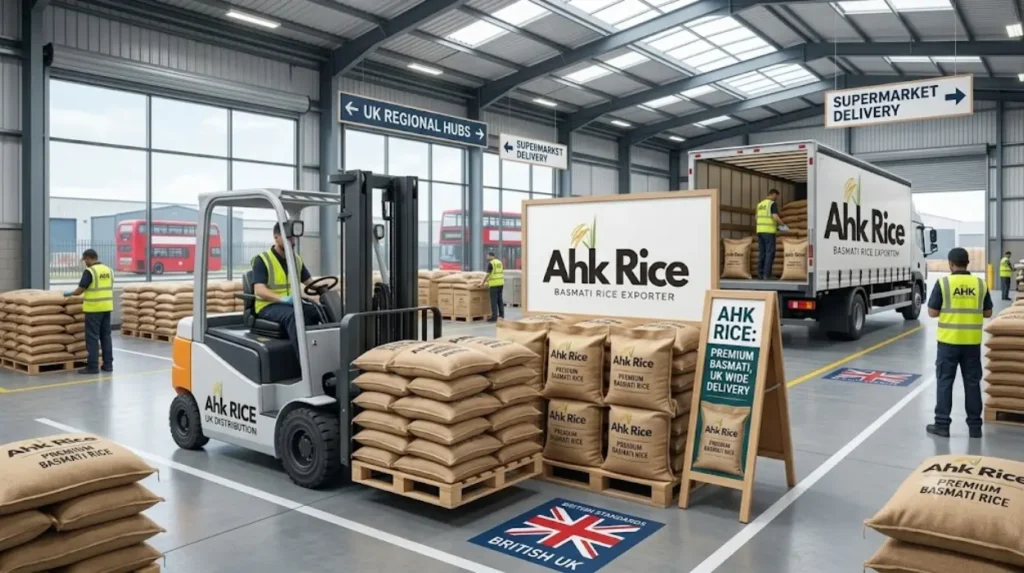
AHK Rice combines export experience, quality inspection procedures, flexible packaging options, reliable logistics coordination, and responsive customer support to help UK distributors secure consistent Basmati rice supplies while reducing procurement risks and maintaining supply chain stability.
Choosing a supplier is more than comparing prices.
Importers need confidence that every shipment will meet agreed specifications. AHK Rice focuses on building long-term supply relationships through quality consistency and transparent communication.
Buyers sourcing through AHK Rice gain access to export-grade Basmati rice processed under controlled conditions. Product specifications can be customized according to distributor requirements.
AHK Rice supports multiple packaging formats, including retail packs and bulk wholesale packaging. This flexibility allows distributors to serve different market segments efficiently.
Another advantage is shipment planning. AHK Rice coordinates production schedules and logistics timelines to help distributors maintain inventory availability throughout the year.
Because UK distribution networks often operate under strict delivery expectations, dependable shipment management becomes a major purchasing factor.
AHK Rice also provides documentation support required for international trade and customs processing, helping buyers streamline import operations.
What inspection process does AHK Rice follow?
A structured inspection process evaluates raw material quality, processing performance, cleanliness standards, packaging integrity, and loading conditions to ensure every shipment conforms to buyer specifications before export documentation and container dispatch are completed.
The inspection journey begins with raw paddy selection.
Only suitable raw materials proceed into processing. During milling, multiple quality checkpoints monitor grain appearance, size consistency, and cleanliness.
Advanced sorting systems remove impurities and improve product uniformity. Samples are collected during processing and evaluated against agreed specifications.
After processing, packaging inspections verify:
- Bag quality
- Label accuracy
- Weight consistency
- Seal integrity
- Pallet condition
Final inspections occur before loading. Containers are checked for cleanliness and suitability before cargo placement.
AHK Rice maintains these controls to support quality assurance and customer confidence throughout the export process.
What sample process should UK buyers expect?
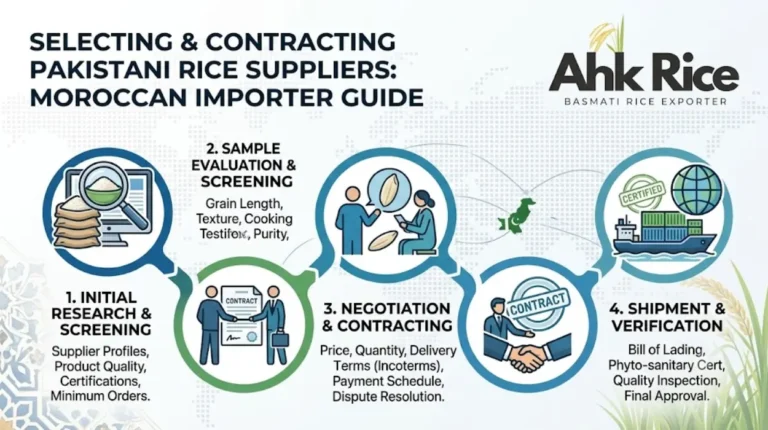
A professional sampling process allows distributors to evaluate product quality before committing to bulk orders, reducing purchasing risk and enabling specification confirmation through physical examination, laboratory testing, and commercial assessment procedures before shipment approval.
Sampling is one of the most important stages in international rice procurement.
The standard process generally includes:
Step 1: Initial Inquiry
The buyer provides required specifications, target market requirements, packaging preferences, and expected order volume.
Step 2: Sample Preparation
AHK Rice prepares representative samples based on requested specifications.
Step 3: Sample Dispatch
Samples are shipped internationally using courier services.
Step 4: Buyer Evaluation
The importer evaluates grain length, aroma, appearance, cooking performance, and packaging suitability.
Step 5: Commercial Confirmation
Once approved, commercial negotiations proceed toward production and shipment scheduling.
Typical Sample Costs
| Item | Estimated Cost |
|---|---|
| Product sample | Usually complimentary |
| Courier charges | USD 40–120 |
| Laboratory testing (optional) | USD 50–300 |
| Advanced certification testing | Varies by requirement |
Costs vary depending on destination, courier service, and testing requirements.
AHK Rice works closely with buyers to ensure sample evaluation accurately reflects commercial shipment quality.
What shipping timelines can UK distributors expect?
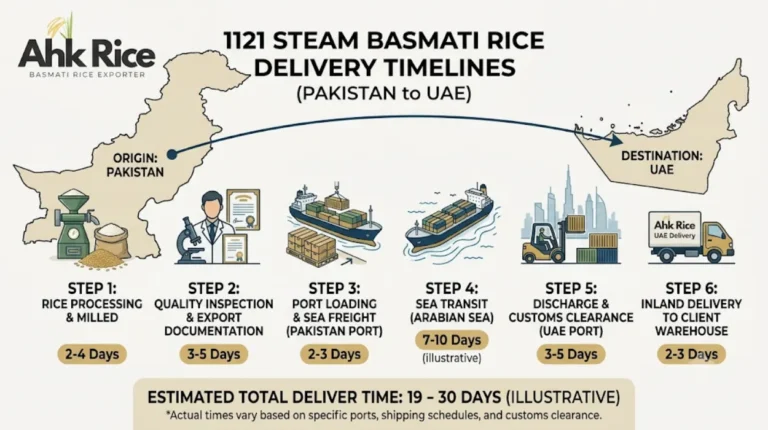
Shipping schedules depend on destination ports, production requirements, documentation processing, and vessel availability, but experienced exporters can provide predictable transit planning that supports inventory management and reduces supply chain disruptions.
Shipping times matter for distributors managing warehouse stock and customer commitments.
Typical transit estimates include:
| Market | Average Transit Time |
|---|---|
| United Kingdom | 25–35 days |
| Germany | 25–35 days |
| Netherlands | 24–32 days |
| France | 25–35 days |
| Spain | 28–38 days |
| Ireland | 28–40 days |
| Middle East | 10–20 days |
| North America | 30–45 days |
Production lead times should also be considered before vessel departure.
AHK Rice provides shipment planning support to help buyers coordinate procurement schedules more effectively.
What results can distributors expect from inspected Basmati rice?
Distributors using source-inspected Basmati rice typically experience improved quality consistency, reduced customer complaints, stronger retailer confidence, lower rejection rates, and greater operational predictability across purchasing, warehousing, sales, and inventory management activities.
Quality consistency directly affects profitability.
When product specifications remain stable, distributors can improve forecasting accuracy and reduce operational disruptions.
Benefits commonly include:
- Fewer quality claims
- Reduced shipment disputes
- Better retailer relationships
- Improved customer retention
- Stronger brand reputation
- More predictable inventory management
AHK Rice focuses on these outcomes because long-term distributor success depends on dependable product quality.
Importers who prioritize inspection often spend less time managing quality issues and more time expanding market opportunities.
What factors affect pricing for inspected Basmati rice?
Pricing depends on rice variety, grain specifications, inspection requirements, packaging format, order volume, certifications, logistics costs, and prevailing market conditions that influence production, export operations, and international freight rates.
No single price applies to every buyer.
Several variables influence final export pricing.
Key factors include:
- Basmati variety selection
- Grain length specification
- Broken percentage
- Packaging requirements
- Inspection scope
- Certification requirements
- Order quantity
- Freight market conditions
- Seasonal crop availability
Premium specifications generally command higher prices due to stricter quality requirements and processing standards.
AHK Rice provides customized quotations based on buyer requirements rather than generic pricing assumptions.
This approach helps distributors receive pricing aligned with their exact commercial objectives.
How can UK distributors get started?
The fastest path involves sharing product specifications, packaging requirements, annual volume expectations, and destination details so a supplier can prepare samples, provide documentation, develop pricing proposals, and establish shipment schedules tailored to business needs.
The procurement process begins with clear communication.
Buyers should define:
- Product specifications
- Packaging requirements
- Expected annual demand
- Destination port
- Certification requirements
- Target delivery schedules
After reviewing these requirements, AHK Rice can prepare samples and develop a tailored supply proposal.
Once samples are approved, production planning and shipment scheduling can begin.
For distributors seeking reliable, source-quality inspected Basmati rice for UK distribution networks, the next step is requesting a customized quotation through the quotation request page.
Frequently Asked Questions
How does source inspection reduce import risk?
Source inspection identifies quality issues before shipment leaves the exporting country. This allows corrections to be made before containers are loaded. Importers receive documented evidence of compliance with agreed specifications. The process reduces disputes and unexpected quality claims. It also improves confidence in long-term procurement programs.
Can UK distributors request customized specifications?
Yes. Many distributors require specific grain lengths, moisture levels, packaging formats, and quality grades. Suppliers can prepare production plans according to these requirements. Detailed specifications help ensure consistency between samples and commercial shipments. This approach improves customer satisfaction and purchasing confidence.
Are laboratory tests available before shipment?
Laboratory testing can be arranged depending on buyer requirements. Common tests include moisture analysis, purity verification, and quality assessments. Additional testing may be performed for regulatory or customer-specific needs. Reports provide objective quality verification. These results support purchasing decisions before shipment.
What packaging options are commonly available?
Exporters typically offer retail packs, wholesale bags, and private-label packaging. Packaging formats vary according to distribution strategy and target market requirements. Labeling can often be customized. Proper packaging protects product quality during transportation. It also supports branding and retail presentation objectives.
Why is supplier experience important in rice exports?
Experienced exporters understand quality control, logistics coordination, documentation requirements, and international trade procedures. This expertise helps prevent delays and quality issues. Buyers benefit from smoother procurement processes and improved shipment reliability. Strong export experience contributes to long-term supply chain stability. It also supports consistent business growth.