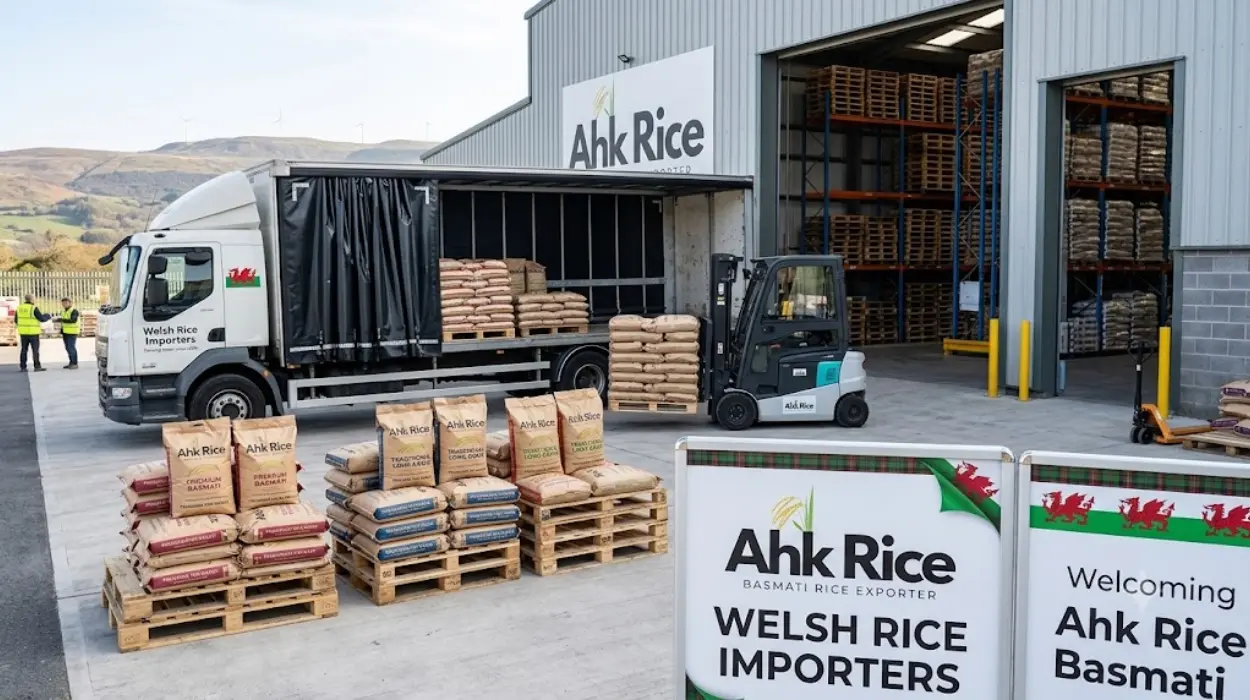
Why Are Factory Certifications Important for Welsh Rice Importers?
Factory certifications are essential for Welsh rice importers. Here is why: certified facilities follow documented food safety, quality control, traceability, and export compliance systems that reduce supply chain risk and simplify UK import requirements. Certifications verify that rice is processed, tested, packed, and shipped under recognized international standards.
Rice importers in Wales source products for supermarkets, wholesalers, ethnic food distributors, restaurants, and catering companies. Every shipment enters a regulated food market. Certified rice facilities provide evidence that production processes meet international requirements. This evidence supports customs clearance, retailer approval, and consumer trust.
Global rice trade increasingly depends on certification. Importers evaluate processing standards before evaluating price. Food safety systems, traceability records, and documented inspections help buyers assess supplier reliability. Understanding factory certifications explains why certified rice facilities remain preferred partners across the UK food supply chain.
What Are Factory Certifications in Rice Processing?
Factory certifications are documented third-party approvals that verify food safety, quality management, traceability, hygiene, and operational compliance within rice processing facilities.
Factory certification confirms that a rice mill follows specific standards during processing and packaging. Independent auditors inspect facilities and verify compliance against recognized requirements.
Certification covers the complete processing chain. Auditors inspect receiving areas, storage warehouses, milling equipment, packaging lines, laboratories, pest control systems, and employee hygiene practices.
Rice facilities maintain records to demonstrate compliance. Documentation includes inspection reports, laboratory results, cleaning schedules, supplier records, and product traceability logs.
Which Certifications Are Common in Rice Export Facilities?
Several certifications appear frequently in international rice trade.
- Food Safety System Certification (FSSC 22000)
- ISO 22000 Food Safety Management
- HACCP Certification
- BRCGS Food Safety Certification
- ISO 9001 Quality Management
- Halal Certification
- Sedex Ethical Compliance Audits
- Organic Certification for organic rice products
UK food importers often request multiple certifications because each standard addresses different operational requirements.
With factory certifications defined, the next question is how these systems function inside a rice processing facility.
How Do Factory Certifications Work in Rice Processing Facilities?
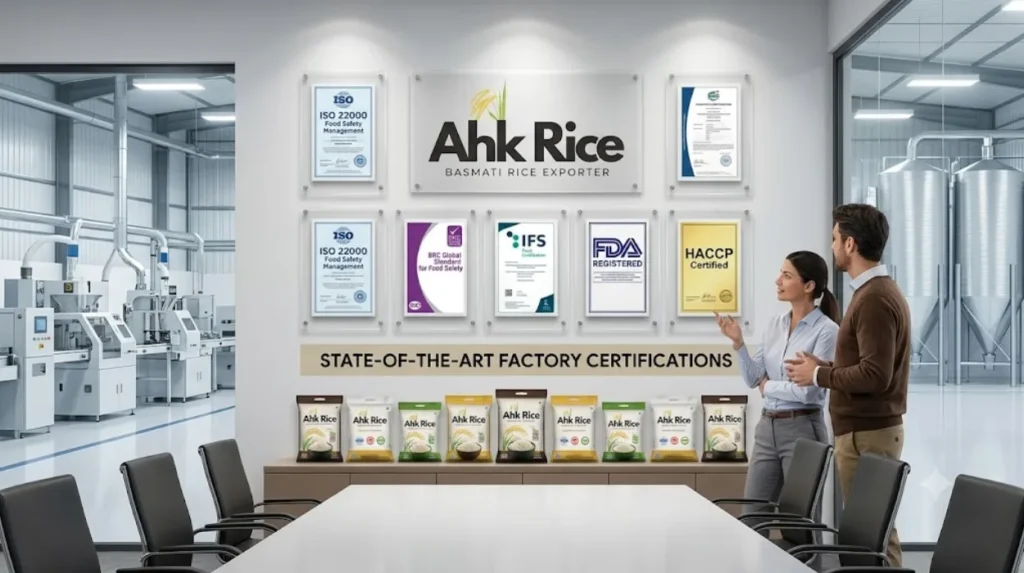
Certified facilities follow documented procedures, regular inspections, laboratory testing, traceability controls, and independent audits throughout the production cycle.
Certification systems operate through structured processes rather than one-time inspections. Facilities must demonstrate continuous compliance.
What Processing Steps Are Audited?
Auditors examine every stage of rice processing.
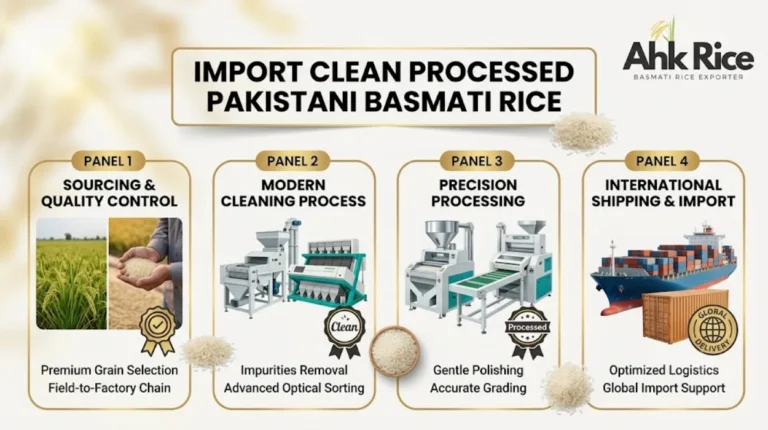
- Clean the harvested paddy.
- Dry the paddy to target moisture levels.
- De-husk the grain.
- Polish the rice.
- Grade the kernels.
- Sort by length and quality.
- Inspect for defects.
- Test laboratory samples.
- Pack finished products.
Each step requires documented controls. Auditors verify that employees follow approved procedures.
How Is Traceability Maintained?
Traceability connects finished rice packages to their production records.
Batch numbers identify production dates, processing lines, laboratory tests, and warehouse locations. Importers can track products throughout the supply chain.
Traceability becomes critical during food recalls. Certified systems allow rapid identification and isolation of affected batches.
With certification processes established, the next question concerns the specific components that Welsh importers evaluate.
What Key Components Do Welsh Rice Importers Assess in Certified Facilities?
Food safety controls, quality testing, traceability systems, hygiene management, documentation accuracy, and audit performance represent the primary evaluation criteria.
Importers assess operational controls before approving suppliers. Certification provides a standardized framework for evaluation.
What Food Safety Controls Are Important?
Food safety systems prevent contamination during processing and packaging.
Key controls include:
- Moisture monitoring
- Pest management
- Metal detection
- Laboratory testing
- Cleaning procedures
- Employee hygiene protocols
- Packaging inspections
These controls reduce contamination risks and support regulatory compliance.
Why Is Quality Testing Important?
Quality testing confirms that rice meets agreed specifications.
Laboratories inspect:
- Grain length
- Moisture percentage
- Broken grain percentage
- Foreign matter levels
- Color consistency
- Purity standards
Testing provides objective measurements instead of subjective assessments.
Why Does Documentation Matter?
Documentation creates accountability.
Importers often review audit reports, laboratory certificates, production records, and shipment documents before procurement decisions.
With evaluation criteria explained, the next question focuses on importer benefits.
What Benefits Do Factory Certifications Provide for Welsh Rice Importers?
Lower supply chain risk, faster supplier approval, stronger compliance assurance, improved traceability, and greater buyer confidence represent the main benefits.
Certified facilities reduce uncertainty. Importers gain confidence that products meet established standards before shipment.
How Do Certifications Improve Compliance?
UK food import regulations require documented evidence of product safety.
Certified facilities maintain records that support customs procedures and regulatory reviews. Documentation simplifies verification processes.
Compliance advantages become especially important when supplying large retailers and food service chains.
How Do Certifications Improve Buyer Confidence?
Buyer confidence increases when independent organizations verify operational standards.
Third-party audits provide external validation. Importers rely on objective assessments rather than supplier claims.
Confidence supports long-term supplier relationships and repeat purchasing decisions.
How Do Certifications Support Brand Reputation?
Importers protect brand reputation through supplier selection.
Certified facilities demonstrate commitment to consistent standards. Consistency reduces operational disruptions and customer complaints.
With benefits explained, the next question examines practical applications across Welsh supply chains.
Where Are Certified Rice Facilities Most Important in Welsh Supply Chains?
Supermarket supply chains, wholesale distribution networks, restaurant suppliers, public sector procurement programs, and food manufacturing operations rely heavily on certified facilities.
Different market segments require different levels of compliance documentation.
Why Do Supermarkets Prefer Certified Suppliers?
Supermarkets operate under strict food safety requirements.
Retail buyers often require internationally recognized certifications before approving suppliers. Certification simplifies supplier qualification processes.
Large retailers prioritize consistency, traceability, and documented compliance.
Why Do Food Manufacturers Require Certification?
Food manufacturers use rice as an ingredient in packaged products.
Ingredient suppliers must provide evidence of quality and food safety controls. Certified facilities supply supporting documentation.
Why Is Certification Important for Public Procurement?
Public sector food contracts often require documented compliance systems.
Schools, hospitals, and government food programs evaluate supplier standards alongside pricing considerations.
With practical applications covered, the next question addresses common misconceptions.
What Misconceptions Exist About Factory Certifications?
Certification does not guarantee perfect products, eliminate inspections, or replace supplier evaluation processes.
Several misconceptions create confusion among new importers.
Does Certification Guarantee Product Quality?
Certification verifies systems and controls.
Certification does not guarantee that every grain meets a buyer’s specification. Importers still inspect samples and review laboratory results.
Quality verification remains a separate procurement activity.
Does Certification Eliminate Buyer Audits?
Importers frequently conduct additional supplier assessments.
Many buyers review facilities independently even after certification approval. Internal evaluations complement external audits.
Is One Certification Enough?
Different certifications address different requirements.
A facility holding ISO 9001 focuses on quality management. A facility holding HACCP focuses on food safety hazards. Importers often evaluate multiple certifications together.
Understanding these misconceptions helps buyers interpret certifications correctly and leads naturally to a broader discussion of supplier confidence and compliance systems. Readers interested in how certification strengthens procurement decisions can explore the related article on how certified rice facilities improve buyer trust, supplier verification, and regulatory compliance.
Frequently Asked Questions
Why do Welsh rice importers ask for factory certifications?
Welsh importers request certifications to verify food safety systems, quality controls, traceability procedures, and regulatory compliance.
Which certification is most important for rice exporters?
Food safety certifications such as FSSC 22000, ISO 22000, HACCP, and BRCGS are commonly requested by international buyers.
Do certifications help with UK import compliance?
Yes. Certifications provide documented evidence of food safety and quality management practices that support compliance reviews.
How often are certified rice facilities audited?
Most certification schemes require annual audits, surveillance inspections, and periodic recertification assessments.
Can certified facilities still produce non-compliant products?
Yes. Certification verifies management systems and operational controls. Product testing and buyer inspections remain necessary.
Why do supermarkets prefer certified rice suppliers?
Supermarkets require documented food safety, traceability, and quality management systems to protect consumers and maintain compliance standards.