Why Do England Importers Prepare for Rice Border Inspections?
England importers prepare for rice border inspections because Pakistani rice is subject to official controls for pesticide residues, aflatoxins, and ochratoxin A. Here is why: Great Britain requires controlled consignments to undergo documentary checks plus sampling, analysis, or examination before clearance.
What Are Rice Border Inspections in England?
Rice border inspections verify that imported rice meets Great Britain’s food safety, documentation, and import-control requirements before customs clearance. These checks examine shipment identity, documents, food safety risks, and selected physical samples.
Rice border inspection is part of the wider Great Britain import-control system. England follows GB rules for food imports. The Food Standards Agency maintains a country and commodity list covering foodstuffs with import restrictions.
Pakistani rice has specific controls. The current GB list identifies rice from Pakistan as subject to controls for pesticide residues, aflatoxins, and ochratoxin A. This status was updated on 10 July 2026.
Border inspection does not simply judge whether rice looks clean. Official controls examine regulatory compliance. A shipment can therefore require laboratory evidence even when the grains appear visually acceptable.
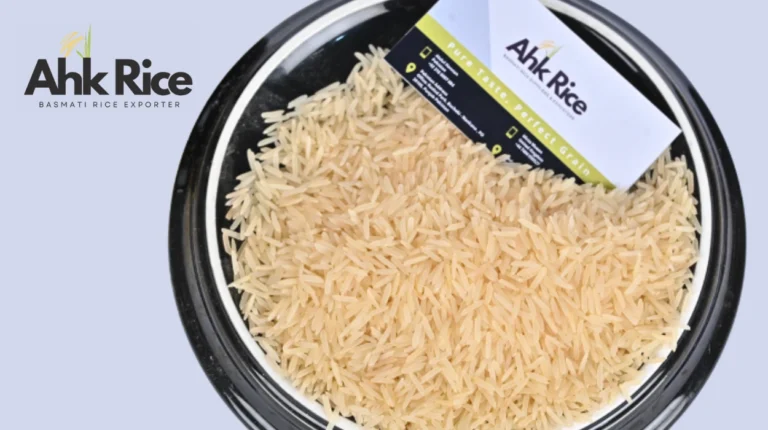
Basmati rice describes an aromatic long-grain rice category associated with the Indian subcontinent. Pakistani Basmati includes varieties such as 1121, Super Kernel, and 1509. These varieties differ in grain characteristics, processing options, and commercial specifications.
How Does a Rice Border Inspection Work?
A rice border inspection moves through document verification, identity checks, physical examination, sampling, laboratory analysis, and release or enforcement. Each stage connects the shipment identity with its declared food-safety requirements.
Which Documents Support a Rice Shipment?
Commercial and regulatory documents identify the product, exporter, importer, quantity, origin, and compliance evidence needed for the shipment. Accurate documents allow authorities to connect laboratory results with the correct consignment.
Common shipment documents include:
- Commercial invoice
- Packing list
- Bill of lading
- Customs declaration
- Product specification
- Certificate of analysis
- Health certificate where applicable
- Laboratory test results
- Origin documentation
- Import notification records where required
High-risk food imports use IPAFFS for pre-notification where the rules require it. The Food Standards Agency states that pre-notification supports sampling, traceability, and food-safety compliance.
What Happens During Official Checks?
Official checks compare the declared shipment against its documents, identity, physical condition, and applicable food-safety controls. Authorities then determine whether the consignment satisfies the relevant requirements.
Border Control Posts perform documentary checks for controlled consignments. They also conduct sampling, analysis, or examination according to the applicable control. The shipment is cleared only after the required official controls are completed.
A document check confirms shipment information. An identity check connects documents with the actual consignment. A physical examination examines the goods themselves. Laboratory testing provides measurable evidence for controlled contaminants.
With the inspection sequence established, the next question is which components determine rice compliance.
What Are the Key Components of Rice Border Compliance?
Rice border compliance depends on product identity, origin, food safety, laboratory evidence, documentation, packaging, traceability, and import procedures. Each component connects the physical rice with its legal import status.
How Does Product Identity Affect Inspection?
Product identity establishes the rice type, processing condition, origin, quantity, and tariff classification used during import procedures. Accurate identity prevents confusion between different rice products.
A shipment can contain white Basmati, Steam Rice, or Sella Rice. Each product must match its commercial and regulatory description. Examples include 1121 White Basmati, 1121 Golden Sella, Super Kernel Steam, and 1509 Sella.
Origin also matters. Pakistani rice remains subject to the Pakistan-specific controls listed by Great Britain. Routing the rice through another country without processing does not change its country of origin for these restrictions.
Which Contaminants Matter for Pakistani Rice?
Pakistani rice entering Great Britain is controlled for pesticide residues, aflatoxins, and ochratoxin A. These contaminants form a central part of the current official-control framework for Pakistani rice.
Pesticide residues are traces of agricultural chemicals remaining on food. Aflatoxins are mycotoxins produced by certain fungi. Ochratoxin A is another mycotoxin associated with food contamination.
Laboratory testing measures these substances against applicable regulatory limits. The result provides evidence that the shipment meets the relevant food-safety requirements.
How Does Rice Traceability Support Inspection?
Traceability connects the imported rice with its origin, production records, processing batch, packaging, and shipment documents. This connection allows a specific consignment to be identified during an investigation or food-safety event.
A traceable batch can link harvested paddy to milling, grading, sorting, packaging, and dispatch records. Examples include lot numbers, production dates, crop information, container numbers, and packing records.
Traceability also supports recall procedures. Food businesses remain responsible for ensuring imported food complies with national rules.
With the main compliance components defined, the next question is how rice moves from cultivation to an inspection-ready export shipment.
How Is Pakistani Basmati Rice Prepared Before Export?
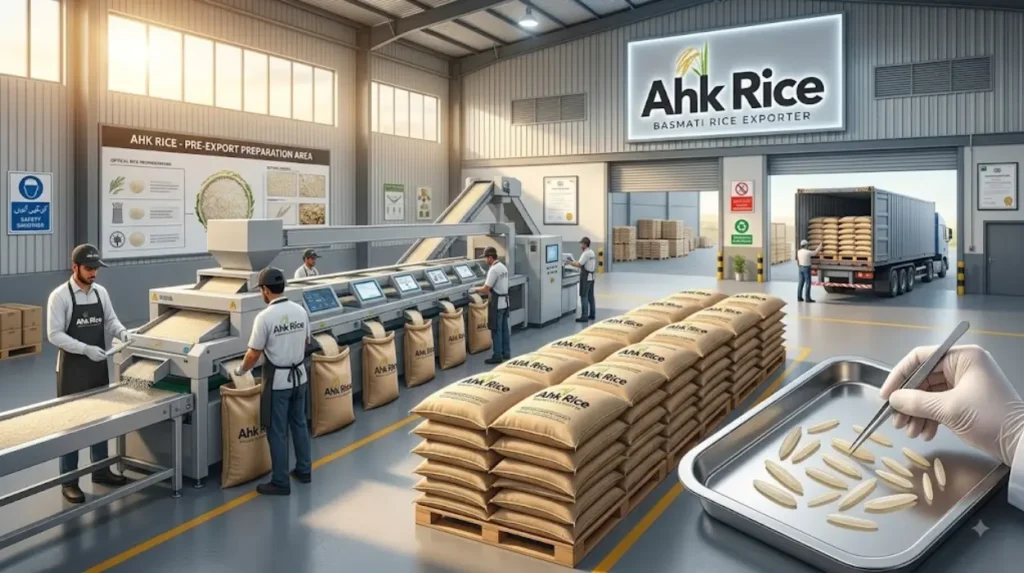
Pakistani Basmati moves through cultivation, harvesting, cleaning, de-husking, polishing, grading, sorting, testing, packaging, and dispatch before reaching England. Each stage controls a different physical or quality attribute.
How Is Basmati Rice Cultivated and Harvested?
Basmati rice grows in agricultural areas of Punjab and other suitable Pakistani rice-growing regions, then farmers harvest mature paddy for milling. Paddy quality begins before the grain enters the processing plant.
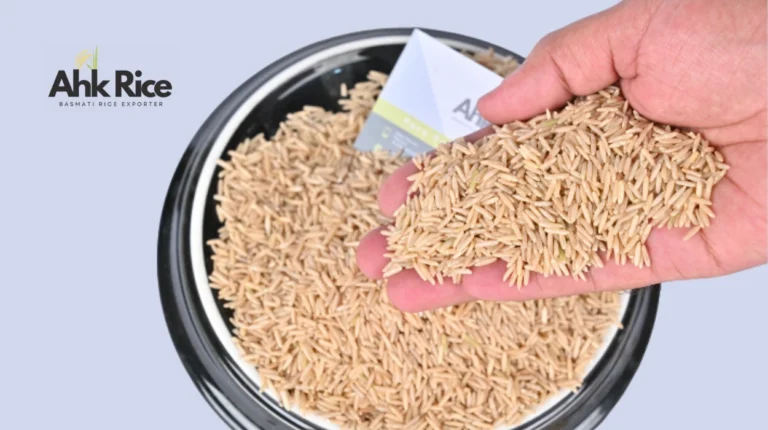
Harvesting separates mature rice from the field. The harvested paddy contains husk, foreign material, immature grains, and other components that processing must remove.
How Is Rice Processed?
Rice processing removes unwanted material and separates grains into consistent commercial grades through cleaning, de-husking, polishing, grading, and sorting. Processing creates the physical specification required for export.
The main processing sequence is:
- Clean the paddy to remove stones, dust, straw, and foreign material.
- De-husk the grain to remove the outer rice husk.
- Polish the grain to produce the required surface appearance.
- Grade the rice according to length, broken percentage, and other specifications.
- Sort the rice to remove discoloured or unwanted grains.
- Test the rice against defined quality and food-safety parameters.
- Pack the rice in the specified export packaging.
- Load the shipment into the approved transport unit.
- Dispatch the container with its supporting export documents.
Processing technology does not replace border inspection. Milling and sorting establish product quality before export. Border authorities verify regulatory compliance after arrival.
Which Basmati Grades Are Commonly Exported?
Common Pakistani Basmati export grades include 1121, Super Kernel, and 1509, with white, steam, and Sella processing options. Each grade serves different wholesale and retail requirements.
1121 Basmati
1121 Basmati is a long-grain Pakistani variety valued for its grain length, cooking expansion, and aromatic characteristics. Exporters supply it as white, steam, and Sella rice.
Super Kernel Basmati
Super Kernel Basmati is a traditional Pakistani Basmati variety supplied in multiple processing forms for international food markets. Its specification depends on grain length, broken percentage, moisture, purity, and processing type.
1509 Basmati
1509 Basmati is an export-oriented Pakistani variety available in white, steam, and Sella processing forms. Buyers specify the grade according to cooking requirements, market positioning, and price expectations.
AHK Rice supplies 1121, Super Kernel, and 1509 varieties from Punjab. Its export process includes processing, packaging, testing, and shipment preparation.
With processing established, the next question is why these controls matter to English rice importers.
What Benefits Do Rice Border Inspections Provide?
Rice border inspections protect consumers, strengthen traceability, verify regulatory compliance, and reduce the entry of contaminated food into the English market. They also create measurable checkpoints for imported commodities.
How Do Inspections Protect Consumers?
Food controls identify regulated hazards before affected consignments enter the wider food distribution system. Laboratory analysis provides evidence that visual inspection alone cannot provide.
A clean-looking grain does not prove compliance with pesticide or mycotoxin limits. Laboratory testing measures contaminants against defined requirements.
How Do Inspections Support Importers?
Inspection preparation helps importers identify documentation gaps, testing requirements, product risks, and shipment-control obligations before arrival. Preparation therefore reduces avoidable compliance problems.
Importers also gain better traceability. Records connect the shipment to its origin, batch, documents, and laboratory evidence.
How Do Inspections Support the Food Supply Chain?
Official controls create a common compliance framework for importers, exporters, laboratories, border authorities, wholesalers, and retailers. Each participant works from identifiable product and safety information.
The system also supports enforcement. Non-compliant food can face additional controls or other regulatory action rather than entering normal distribution.
With these benefits understood, the next question is where inspection knowledge becomes most useful.
Where Are Rice Border Inspections Most Important?
Rice border inspection knowledge matters most for importers, wholesalers, retailers, food manufacturers, distributors, and businesses sourcing Pakistani Basmati for England. Each user depends on consistent compliance evidence.
How Do Wholesale Importers Use Inspection Information?
Wholesale importers use inspection information to verify that incoming rice matches the declared product and applicable safety requirements. They also use records to support supplier and batch traceability.
A wholesaler receiving 1121 Basmati needs the shipment identity to match the purchase specification. The same principle applies to Super Kernel and 1509.
How Do Retailers Use Compliance Information?
Retailers use traceability and product records to support food-safety management, supplier verification, and customer assurance. Packaging and batch information connect retail stock with its imported consignment.
Retail buyers also distinguish between product specifications. A 1121 Steam shipment and a 1121 Golden Sella shipment require different commercial descriptions.
How Do Food Manufacturers Use Imported Rice?
Food manufacturers use controlled rice supplies as raw materials for prepared meals, catering products, packaged foods, and restaurant distribution. Consistent specifications support production planning.
Manufacturers require stable grain characteristics and reliable food-safety documentation. Laboratory evidence becomes particularly important when the imported rice enters a larger food production system.
With these use cases identified, the final issue is understanding the common misconceptions surrounding border inspections.
What Are Common Rice Border Inspection Problems and Misconceptions?
The most common problems involve incomplete documents, incorrect product descriptions, insufficient testing evidence, misunderstood controls, and confusion between commercial certification and legal compliance. These problems create avoidable delays.
Does Passing a Supplier Test Guarantee Border Clearance?
A supplier laboratory report provides evidence, but border authorities retain responsibility for official controls and import clearance. A private test does not automatically replace regulatory requirements.
Importer preparation therefore requires current regulatory verification. Great Britain states that import conditions can change and places responsibility on the importer to check the latest requirements.
Does Packaging Certification Replace Food-Safety Testing?
Packaging certification does not replace contaminant controls, documentary checks, or official sampling required for the shipment. Each certification addresses a defined requirement.
Commercial certifications such as food-safety management standards can support supplier qualification. They do not automatically remove statutory import controls.
Is Every Rice Shipment Physically Inspected?
Official controls depend on the applicable commodity rules, risk framework, and inspection requirements; documentary checks and prescribed sampling remain separate controls. Importers should not assume visual inspection alone determines clearance.
Current GB guidance specifically states that restricted consignments undergo documentary checks alongside sampling, analysis, or examination before clearance.
Does Pakistani Rice Face the Same Rules as Every Origin?
Pakistani rice has specific GB controls for pesticide residues, aflatoxins, and ochratoxin A. Country of origin therefore forms an important part of the compliance assessment.
Rice import requirements can also involve tariff quotas and licensing procedures. UK Rural Payments Agency notices in 2026 continued to publish rice import quota application periods and supporting-document requirements.
Understanding these distinctions prevents importers from treating every rice shipment as having identical requirements.
What Should England Importers Remember About Rice Border Inspections?
England importers should treat rice border inspection as a compliance process covering documents, origin, identity, contaminants, sampling, traceability, and applicable import procedures. Pakistani rice receives specific controls for three major contaminant categories.
The key sequence is straightforward. Rice is cultivated and harvested in Pakistan. Paddy is cleaned, de-husked, polished, graded, sorted, tested, packed, loaded, and dispatched.
England importers then verify the applicable Great Britain requirements. They prepare shipment documents and required regulatory evidence. Authorities inspect controlled consignments through the prescribed border procedures.
The current GB framework lists Pakistani rice under controls for pesticide residues, aflatoxins, and ochratoxin A.
Importers should also distinguish food-safety controls from plant-health requirements. Great Britain states that certain grains, including rice, are exempt from phytosanitary certification under its plant-health rules.
The correct requirement therefore depends on the exact product, origin, processing status, route, and applicable regulation. Importers should verify the current rules before each shipment.
For readers moving from general understanding toward the practical shipment process, the next useful resource is how Basmati rice shipments pass UK border inspection checks.
Where Should the MOFU Article Link Be Inserted?
Insert the MOFU internal link in the opening section after the paragraph explaining documentary checks and before “How Does a Rice Border Inspection Work?” Use the contextual anchor:
how Basmati rice shipments pass UK border inspection checks
Recommended placement:
“Understanding these requirements also helps importers follow the complete inspection sequence. A detailed guide explains [how Basmati rice shipments pass UK border inspection checks] before the shipment reaches final clearance.”
Primary and Secondary Keywords
Primary keyword: rice border inspections England
Secondary keywords:
- England rice import inspections
- UK rice border inspection
- Pakistani rice import UK
- Basmati rice border checks
- UK rice import requirements
- rice import compliance England
- Pakistani Basmati rice UK
- rice contaminant testing UK
- rice pesticide residue testing
- rice aflatoxin testing
- rice ochratoxin A testing
- Great Britain rice imports
- UK Border Control Post rice
- rice import documentation UK
Frequently Asked Questions
Why do England importers prepare for rice border inspections?
England importers prepare because Great Britain applies official controls to certain imported foods. Pakistani rice is currently controlled for pesticide residues, aflatoxins, and ochratoxin A.
What does a rice border inspection check?
A rice border inspection checks shipment documents, identity, physical goods, and applicable food-safety requirements. Authorities also conduct sampling and laboratory analysis where the control requires it.
What contaminants are controlled in Pakistani rice?
Great Britain currently lists pesticide residues, aflatoxins, and ochratoxin A as contaminants controlled for rice from Pakistan.
Does Pakistani Basmati rice need a phytosanitary certificate?
Rice is listed among certain grains that can enter Great Britain without a phytosanitary certificate under the plant-health rules. Food-safety controls remain separate requirements.
What Pakistani Basmati grades are commonly exported?
Common Pakistani Basmati export varieties include 1121, Super Kernel, and 1509. Processing options include white, steam, and Sella forms.
Does a laboratory report guarantee UK clearance?
No. A laboratory report provides compliance evidence, while official border controls determine whether the consignment satisfies the applicable import requirements.
What system is used for high-risk food pre-notification?
Importers and import agents use IPAFFS for required high-risk food and feed pre-notification in Great Britain.