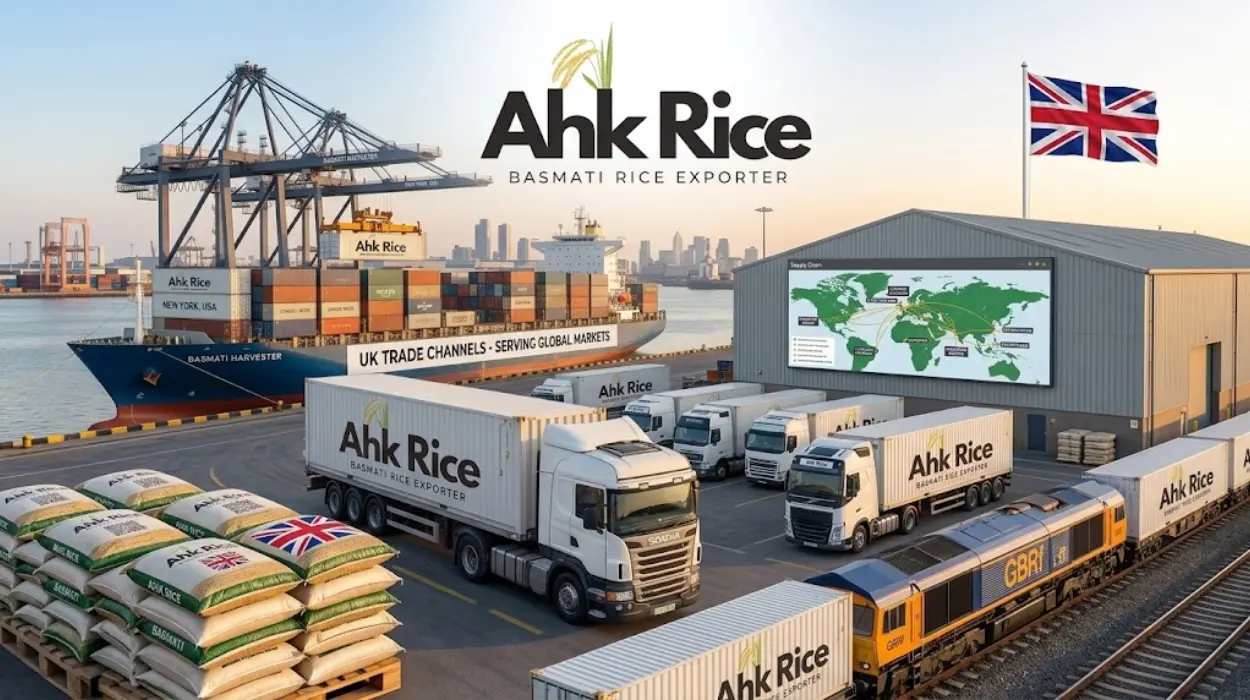
How Does International Rice Shipping Move Through UK Trade Channels?
International rice shipping into the UK works best through direct container sourcing, controlled documentation, compliant customs clearance, and planned inland distribution. Here is why: UK rice trade combines port logistics, tariff procedures, food controls, and importer requirements.
UK buyers also need to understand the difference between sourcing rice for Britain and sourcing for shorter-distance Gulf trade. For a practical explanation of UK importing requirements, see this UK Pakistani Basmati import guide before comparing supplier and shipping options.
What are the available solutions for moving rice into the UK?
Direct container shipping provides the clearest route for commercial UK buyers, while distributor sourcing reduces import administration but adds intermediary costs. Containerised sourcing offers stronger specification control, predictable documentation, and direct visibility from Pakistani milling to UK delivery.
Direct container importing starts with a Pakistani exporter and ends with a UK importer or distributor. The exporter mills, grades, sorts, packs, loads, and dispatches the rice from Pakistan.
The shipment normally moves by sea from Karachi toward a UK entry port. Felixstowe is a major option for containerised trade. Southampton also serves international cargo movements. AHK Rice states that its UK shipments move directly from Karachi to UK ports.
A second solution uses a UK-based distributor. The distributor already handles customs, warehousing, and local delivery. The buyer receives rice from domestic stock rather than importing directly.
A third solution uses a trading intermediary between the exporter and importer. This structure can simplify supplier discovery. It also adds another commercial layer between the mill and final buyer.
Direct sourcing normally provides stronger control over rice specifications. Distributor sourcing normally provides greater convenience for smaller buyers. Intermediary sourcing can suit buyers who lack established international procurement systems.
The correct channel depends on volume, compliance capability, required grade, working capital, and delivery frequency. These factors become clearer through a specification comparison.
How do direct importing and distributor sourcing compare?
Direct importing usually provides better specification control and lower intermediary exposure, while distributor sourcing simplifies customs and inventory management. The strongest choice depends on volume, documentation capability, cash flow, and required delivery frequency.
| Attribute | Direct Container Import | UK Distributor | Trading Intermediary |
|---|---|---|---|
| Supplier relationship | Direct exporter | Distributor | Intermediary |
| Specification control | High | Medium | Medium |
| Documentation responsibility | Importer and exporter | Distributor | Shared |
| Minimum volume | Usually higher | Usually lower | Variable |
| Price structure | FOB/CFR/CIF | Distributor price | Intermediary margin |
| Inventory position | Buyer-controlled | Distributor-controlled | Depends on structure |
| Best application | Wholesale and private label | Smaller regular buyers | Buyers needing sourcing support |
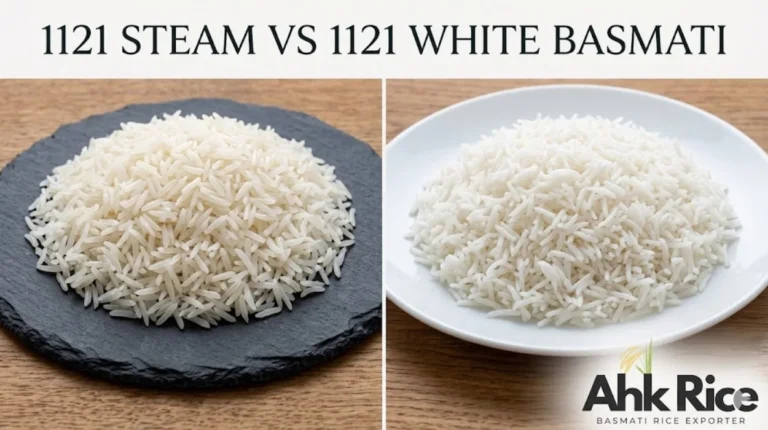
Direct container importing works well for wholesalers buying recurring volumes. A buyer can specify 1121, Super Kernel, or 1509 before milling and packing.
Distributor sourcing works well for restaurants and smaller retailers. The buyer avoids direct vessel booking and import documentation management.
Intermediary sourcing works where supplier discovery presents the main difficulty. The buyer accepts additional commercial margin in exchange for procurement support.
The UK system also creates a specific distinction around rice import quotas. UK government notices identify milled rice under CN code 1006 30 and include Pakistan within relevant quota arrangements. Some quota applications require proof of previous rice trade and UK establishment.
That makes direct importing more attractive for established commercial buyers. The next comparison concerns the markets that Pakistani exporters commonly serve.
How do UK and Gulf rice markets differ in grade preferences?
UK buyers commonly prioritize 1121 White, 1121 Steam, Super Kernel, and retail-ready grades, while Gulf buyers strongly use 1121, Super Kernel, and Sella grades for retail, catering, and re-export.
The UK market rewards clean appearance, long grain, aroma, packaging consistency, and documented compliance. AHK Rice lists 1121, Super Kernel, and 1509 among its export varieties and identifies the UK among its served markets.
UK buyers can select white, steam, and parboiled specifications according to their customer segment. The UK government classification system distinguishes rice by processing condition, grain size, and grain length.
The Gulf market has a different logistics advantage. Jebel Ali provides a major redistribution point for GCC, African, and Middle Eastern trade. Pakistan-to-UAE shipping can reach the destination substantially faster than Pakistan-to-UK sea freight.
UK market specification
UK wholesale buyers commonly evaluate 1121 White, 1121 Steam, Super Kernel, and 1509. Premium retail products focus heavily on grain appearance and cooking performance.
AHK Rice lists a UK 1121 specification with average grain length above 8.3 mm, moisture below 12.5%, and low broken-grain requirements. Its UK product page also identifies Felixstowe as a destination port.
Gulf market specification
Gulf buyers commonly use 1121 and Super Kernel. Sella grades also have strong commercial relevance because parboiling improves grain strength and creates a distinctive appearance.
Jebel Ali functions as a redistribution hub. Importers use the port for GCC consumption and onward regional distribution.
Price per metric ton comparison
Indicative July 2026 FOB Karachi prices for Pakistani Basmati sit around $1,135–$1,205 per MT, depending on variety and specification. The same origin price benchmark applies before destination freight.
UK and UAE landed prices therefore differ mainly through freight, insurance, port costs, customs treatment, packaging, and local handling. UK shipments generally require a longer sea movement than Jebel Ali shipments. AHK Rice reports approximately 28–40 days for Pakistan-to-UK sea transit through Felixstowe.
| Market | Common grades | Indicative FOB Karachi price | Typical sea transit | Commercial focus |
|---|---|---|---|---|
| UK | 1121 White, 1121 Steam, Super Kernel, 1509 | $1,135–$1,205/MT | 28–40 days | Retail, wholesale, catering |
| Gulf | 1121, Super Kernel, Sella | $1,135–$1,205/MT | 4–10 days to Jebel Ali | Retail, catering, re-export |
These are origin-price benchmarks, not final landed prices. Actual quotations depend on grade, crop, packaging, freight, insurance, inspection, and commercial terms.
Shelf-life comparison
Shelf life depends on moisture, processing, packaging, warehouse conditions, crop age, and storage management. Parboiled Sella grades can offer strong handling performance because the processing strengthens the grain.
UK buyers typically need stable stock across longer supply cycles. Gulf re-export buyers also value durability because rice may move through additional warehouses before reaching the final market.
A specification should therefore state moisture, processing grade, packaging, crop information, and storage conditions. These details provide a stronger purchasing basis than using shelf life as a single generic number.
With the market differences established, the next question is which shipping structure fits each buyer profile.
Which method works best for different buyer cases?
Direct container importing suits established wholesalers and private-label buyers, distributor sourcing suits smaller businesses, and intermediary procurement suits buyers prioritizing supplier access over maximum commercial control.
A UK wholesaler ordering multiple containers benefits from direct sourcing. The buyer can approve samples, confirm specifications, select packaging, and coordinate vessel schedules.
A supermarket private-label buyer also benefits from direct sourcing. Custom packaging can be aligned with the buyer’s retail specification before container loading.
A restaurant group with smaller monthly requirements can use a distributor. Local stock reduces the need to manage international freight for every order.
A new importer can use an intermediary during supplier development. The structure provides sourcing support while the buyer builds its own international procurement capability.
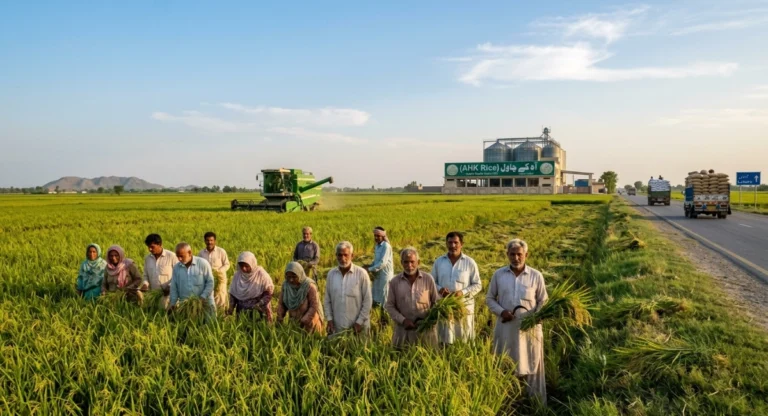
AHK Rice combines sourcing, processing, packaging, documentation support, and container loading from its Punjab operation. Its stated model covers the export process from paddy procurement through container loading. When selecting Pakistani Basmati products, buyers can review AHK Rice’s export and processing service before finalising the product specification.
The solution should therefore match the buyer’s operational capability rather than simply the lowest quoted rice price.
What are the advantages and disadvantages of each shipping approach?
Direct importing delivers control and potentially better unit economics, but it requires stronger compliance management. Distribution reduces administrative work but introduces inventory dependence, while intermediaries simplify sourcing but add commercial cost.
Direct importing provides direct access to the exporter. The buyer controls specifications, packaging, quantity, inspection requirements, and shipping terms.
The disadvantage is administrative responsibility. The importer must coordinate customs, documentation, food controls, payment, and inland delivery.
Distributor sourcing removes much of this administration. The distributor holds stock and manages local delivery.
The disadvantage is reduced control over the original mill specification. The buyer also pays for local warehousing, handling, financing, and distribution.
Intermediary sourcing provides supplier discovery and negotiation support. It can reduce the time required to identify suitable exporters.
The disadvantage is an additional commercial margin. Communication can also become less direct between the buyer and the actual processor.
UK food controls create another important consideration. The Food Standards Agency maintains specific import restrictions for certain foodstuffs. Its July 2026 update specifically added aflatoxins and ochratoxin A to controls concerning rice from Pakistan.
That makes testing and documentation part of the commercial specification. Price alone cannot determine the best shipping method.
What decision factors should UK rice buyers evaluate?

UK buyers should evaluate grade, annual volume, compliance capacity, landed cost, delivery frequency, and supplier control before choosing a shipping channel. These factors determine whether direct importing or domestic distribution produces the stronger commercial result.
1. Required rice grade
Define the exact variety before requesting quotations. Specify 1121, Super Kernel, or 1509. Then specify white, steam, Sella, or another processing grade.
2. Annual purchase volume
Estimate total annual consumption before selecting the channel. Container importing becomes more practical as recurring volume increases.
3. Landed cost
Compare FOB, freight, insurance, customs costs, port charges, inspection, and inland delivery. A lower FOB price does not automatically create a lower landed cost.
4. Compliance capacity
Confirm the importer can manage required customs and food documentation. UK systems include specific rice quota arrangements and food-control requirements.
5. Delivery frequency
Match shipment frequency to warehouse capacity. Larger direct shipments require stronger inventory planning. Smaller distributor purchases provide greater delivery flexibility.
| Decision factor | Direct import | Distributor |
|---|---|---|
| Annual volume | High | Low to medium |
| Specification control | High | Medium |
| Import administration | High | Low |
| Working capital | Higher | Lower |
| Supplier relationship | Direct | Indirect |
This framework turns a general shipping question into a measurable procurement decision.
How should a UK buyer move from quotation to delivery?
A controlled import process starts with specification approval, continues through sampling and documentation, then moves into production, container loading, sea freight, customs clearance, and inland delivery.
Start with the product specification. State variety, processing grade, broken percentage, moisture, packaging, quantity, crop, destination port, and delivery term.
Request a sample before confirming production. Test the sample for appearance, aroma, cooking performance, moisture, broken grains, and other agreed parameters.
Approve the commercial specification before production. The exporter can then mill, grade, sort, pack, and prepare the agreed quantity.
Prepare the export documents before vessel departure. Documentation can include commercial invoices, packing lists, certificates of origin, phytosanitary documentation where required, and inspection records.
Load the containers after quality verification. Seal each container and record the container numbers against the shipping documentation.
Ship the cargo from Karachi to the selected UK port. AHK Rice identifies Karachi-to-UK direct shipment capability and UK port delivery options.
Complete UK customs procedures before release. Rice importers must also account for applicable food controls and quota arrangements.
Deliver the cleared cargo to the buyer’s warehouse. The final stage connects international shipping with local inventory management.
This sequence reduces specification gaps between procurement, processing, shipping, and final delivery.
What is the final comparison for UK rice importers?
Direct container importing is the strongest option for established UK buyers requiring specification control, recurring volumes, custom packaging, and direct exporter communication. Distribution remains practical for smaller purchasing programmes.
UK rice shipping is not simply a sea-freight transaction. It connects agricultural sourcing, milling, grading, packaging, inspection, export documentation, customs, port handling, and inland distribution.
The UK and Gulf markets demonstrate why the same Pakistani Basmati variety can require different commercial planning. The UK involves longer transit and UK-specific import procedures. Jebel Ali offers shorter transit and a strong re-export structure.
For established UK wholesalers, direct container sourcing provides the strongest combination of specification control and supply visibility. For smaller buyers, distributors can reduce administrative complexity.
The purchasing decision should therefore begin with grade and volume. The buyer should then calculate landed cost and compliance responsibility.
Frequently Asked Questions
How long does rice take to ship from Pakistan to the UK?
Pakistan-to-UK sea freight through Felixstowe generally takes around 28–40 days, according to AHK Rice’s current UK shipping guidance. Actual transit depends on vessel schedules, port conditions, and routing.
Which Pakistani Basmati grades are suitable for UK buyers?
Common commercial choices include 1121 White, 1121 Steam, Super Kernel, and 1509. The correct grade depends on retail positioning, foodservice use, cooking characteristics, and target price.
What is the indicative price of Pakistani Basmati rice per MT?
Current indicative FOB Karachi benchmarks for premium Pakistani Basmati are approximately $1,135–$1,205 per MT. Destination freight and import costs must be added to calculate landed cost.
Is direct container importing better than buying from a UK distributor?
Direct importing is generally stronger for recurring wholesale volumes and private-label programmes. Distribution is more convenient for smaller buyers that prefer local inventory and reduced import administration.
What documents are important for UK rice imports?
Typical documentation can include commercial invoices, packing lists, origin documentation, phytosanitary documentation where applicable, inspection records, and customs information. UK rice quota arrangements can also require specific licensing and proof of trade.
Does Pakistan rice face food-control requirements in Great Britain?
Yes. Great Britain maintains specific controls for certain imported foodstuffs. The July 2026 update identifies controls concerning aflatoxins and ochratoxin A for rice from Pakistan.